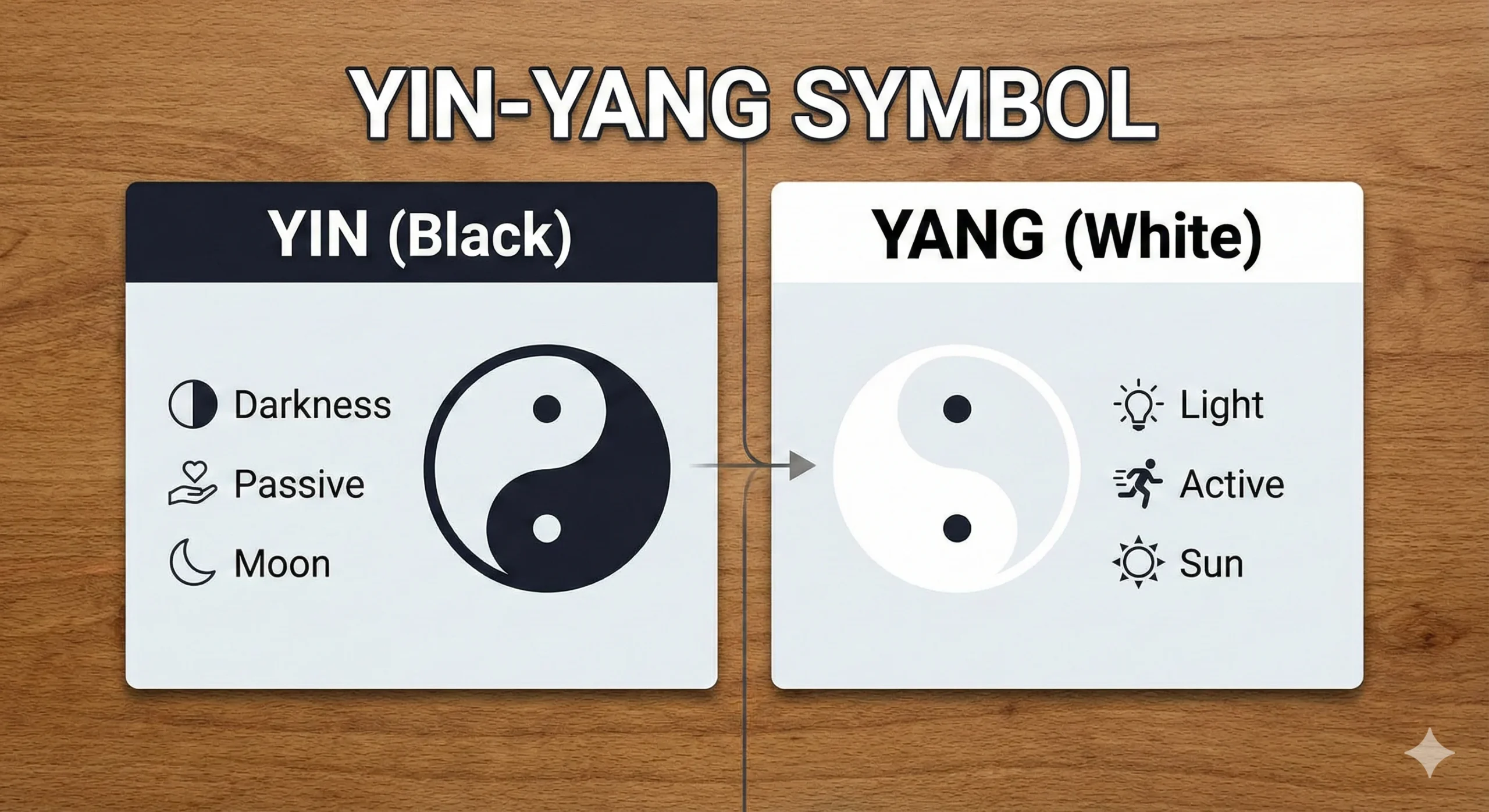
Yin is black. Yang is white.
In the famous Yin-Yang symbol, Yin = black side with a white dot, and Yang = white side with a black dot.
This article explains why, their meanings, differences, examples, and how to remember them forever.
Many people search “yin black or white” because the Yin-Yang symbol is everywhere — in art, tattoos, movies, and school books — but its colors still confuse many learners. Is Yin the black part? Is it the white part? What do the colors even mean?
This guide makes everything simple.
We will explain:
- What Yin means
- What Yang means
- Which one is black and why
- The difference between Yin and Yang
- Easy examples
- Visual ways to remember the colors forever
Everything is written in simple English, so even a class-4 student can understand it easily. By the end, you’ll confidently know the true meaning of Yin and Yang — and you’ll never mix their colors again.
🟣 What Does Yin Mean?
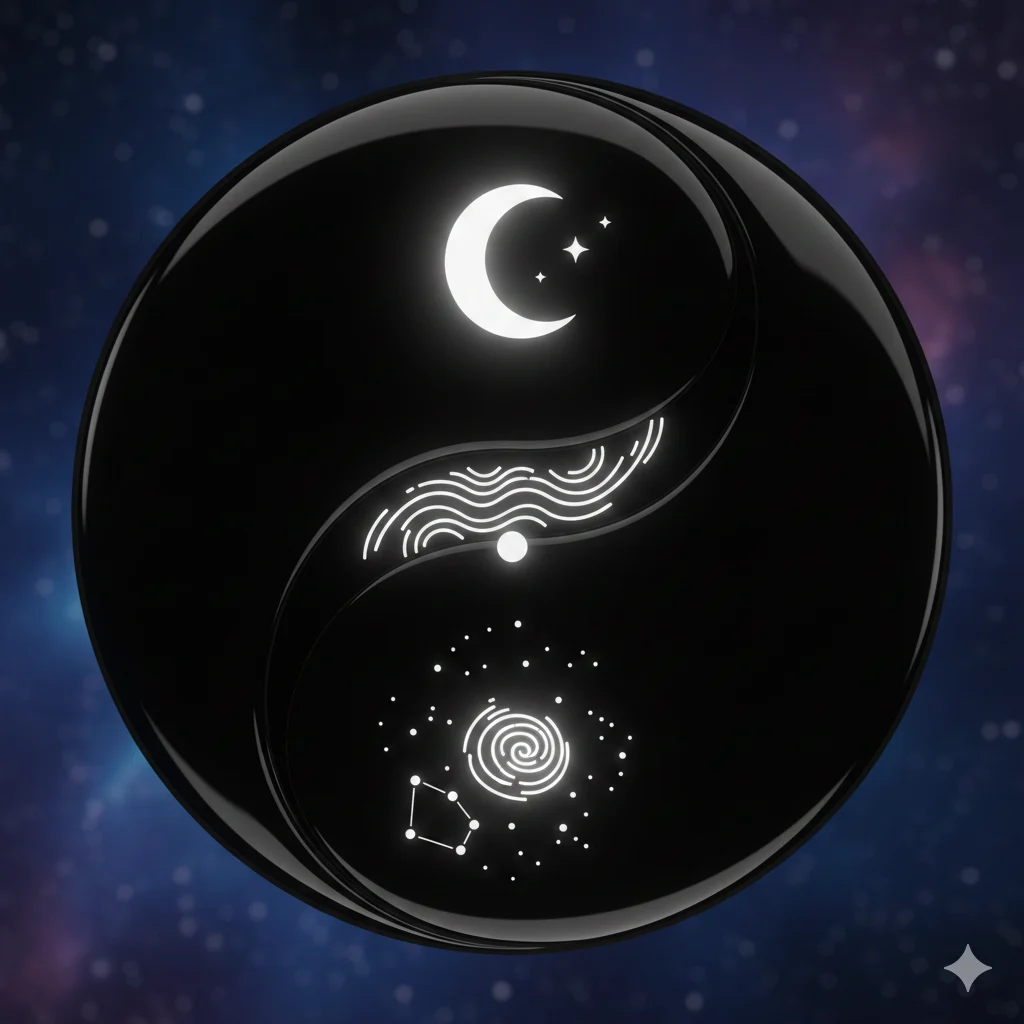
Yin = the black side of the Yin-Yang symbol.
Yin represents qualities that are cool, calm, quiet, dark, soft, and gentle.
Part of concept:
Yin is not a grammar word. It is a philosophical concept from ancient Chinese culture.
Meaning of Yin (easy)
Think of Yin as:
- Night
- Moon
- Rest
- Quiet places
- Shadows
- Softness
3 Easy Examples:
- Night is Yin because it’s dark and calm.
- Cool water is Yin because it feels soft and relaxing.
- Sitting quietly is Yin because it uses gentle energy.
🟣 What Does Yang Mean?
Yang = the white side of the Yin-Yang symbol.
Yang represents qualities that are bright, active, warm, loud, strong, and energetic.
Meaning of Yang (easy)
Think of Yang as:
- Day
- Sun
- Activity
- Light
- Heat
- Movement
3 Easy Examples:
- Daytime is Yang because it’s bright and full of activity.
- Running is Yang because it uses energy and motion.
- Sunlight is Yang because it is warm and bright.
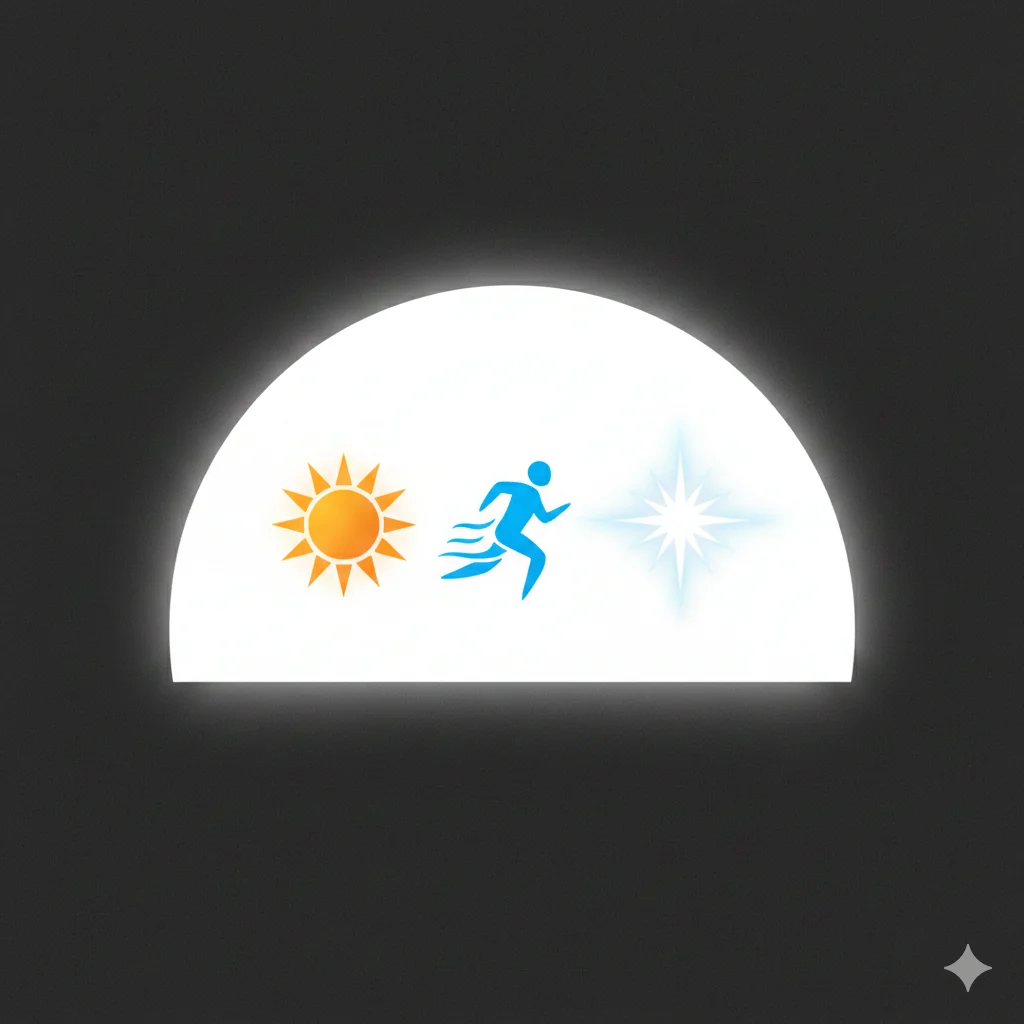
Visual Suggestion:
Show the white half of the symbol with icons: sun, running figure, bright light.
🟣 The Key Difference Between Yin and Yang (Simple Table)
| Feature | Yin (Black) | Yang (White) |
|---|---|---|
| Color | Black | White |
| Energy | Calm, soft, passive | Active, bright, strong |
| Symbol Icons | Moon, water, shadows | Sun, fire, motion |
| Time | Night | Day |
| Nature | Cool | Warm |
| Example | Resting quietly | Running or working |
Quick Tip to Remember
👉 Yin sounds like “in.”
Things in the dark = Yin → Black.
👉 Yang sounds like “young.”
Young people are full of energy and brightness → White.
🟣 Common Mistakes and How to Avoid Them
❌ Mistake 1: Thinking Yin = White
Many people think white means “calm,” but in Yin-Yang philosophy:
✔ Calm = Yin = Black.
❌ Mistake 2: Thinking Dark = Negative
Dark does not mean bad.
Yin simply means soft and calm, not negative.
❌ Mistake 3: Mixing colors of the symbol
People look at stylized designs where colors change.
How to fix:
Always remember:
✔ Original symbol → Yin is black, Yang is white.
🟣 When to Use Yin (with Simple Examples)
Use Yin when describing things that are:
- Dark
- Quiet
- Soft
- Cool
- Calm
- Restful
Examples:
- “The room felt Yin because it was dim and peaceful.”
- “Her voice was soft and Yin.”
- “The cool night breeze is a Yin feeling.”
- “Meditation brings Yin energy.”
- “Shadows in the garden show Yin qualities.”
Memory Hack:
Yin = “In”
Think: In the dark. In the quiet. In the cool.
→ Yin is black.
🟣 When to Use Yang (with Simple Examples)
Use Yang when describing things that are:
- Bright
- Hot
- Fast
- Loud
- Energetic
Examples:
- “The sun gives strong Yang energy.”
- “His laughter was bright and Yang.”
- “Running outside feels very Yang.”
- “A hot fire is full of Yang power.”
- “Morning sunshine brings Yang warmth.”
Memory Hack:
Yang = “Young”
Young people have:
- Energy
- Brightness
- Warmth
→ Yang is white.
🟣 Quick Recap: Yin vs Yang (Easy Summary)
- Yin = Black
- Yang = White
- Yin is calm, cool, quiet, soft
- Yang is bright, warm, active, loud
- Yin is night
- Yang is day
- Yin feels like rest
- Yang feels like motion
🟣 Advanced Tips & Extra Understanding
The Dots Matter
Yin has a white dot inside the black.
Yang has a black dot inside the white.
This shows that:
- Nothing is fully dark
- Nothing is fully light
- Everything has a little bit of its opposite
Usage in Daily Life
People use “Yin energy” and “Yang energy” to describe:
- Moods
- Weather
- Food
- Work style
- Exercise
Usage in Exams or Essays
A formal line could be:
“Yin represents the dark, calm, and passive aspects of nature, while Yang represents bright, active, and energizing qualities.”
Why People Confuse the Colors
Because many modern designs change the original colors.
Always trust the traditional symbol:
✔ Yin = black
✔ Yang = white
🟣 Mini Quiz: Test Yourself!
Fill in the blanks:
- Yin is the ______ side of the symbol.
- Yang is the ______ side.
- Night is an example of ______ energy.
- Running and sunlight are examples of ______.
- Yin means calm and quiet, while Yang means ______ and ______.
- Yin sounds like “______,” helping you remember it relates to darkness.
- Yang sounds like “______,” helping you remember it is bright and energetic.
(Answers: black, white, Yin, Yang, bright & active, in, young)
Poinsettia Indoor or Outdoor: The Shocking Truth Revealed 😮🌱
🟣 FAQs
1. Is Yin black or white?
Yin is black. Yang is white.
2. Why is Yin black?
Because it represents darkness, calmness, and quiet energy.
3. Is Yin negative?
No. Yin is calm and peaceful — not negative.
4. Does the Yin-Yang symbol change color?
Stylized versions may, but the original colors are:
✔ Yin = black
✔ Yang = white
5. Why does Yin have a white dot?
It shows that nothing is 100% dark. Everything has a little bit of light inside it.
🟣 Conclusion
Now you clearly understand the answer to “yin black or white.” Yin is always the black side, and it represents calm, cool, quiet, and peaceful energy. Yang is the white side, symbolizing brightness, warmth, and activity. These two ideas balance each other, just like day and night or rest and movement.
If you remember the simple hints — Yin = “in” the dark, Yang = “young” and bright — you will never confuse them again. Keep practicing these ideas in daily life, and soon the meanings will feel natural.

Isla Merrin is a language and writing expert at Definevs.com, creating simple, engaging guides to help readers master words, grammar, and modern English usage.