“Window seal or sill?”
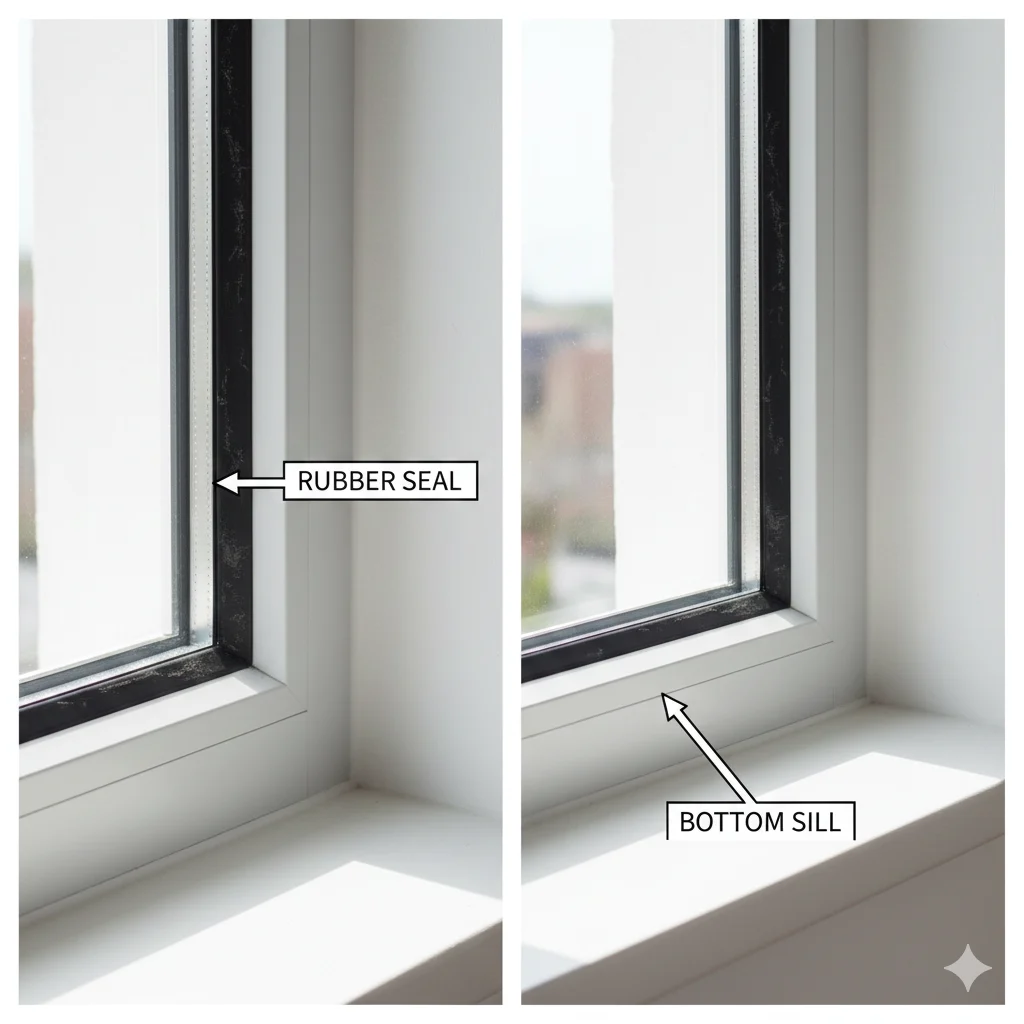
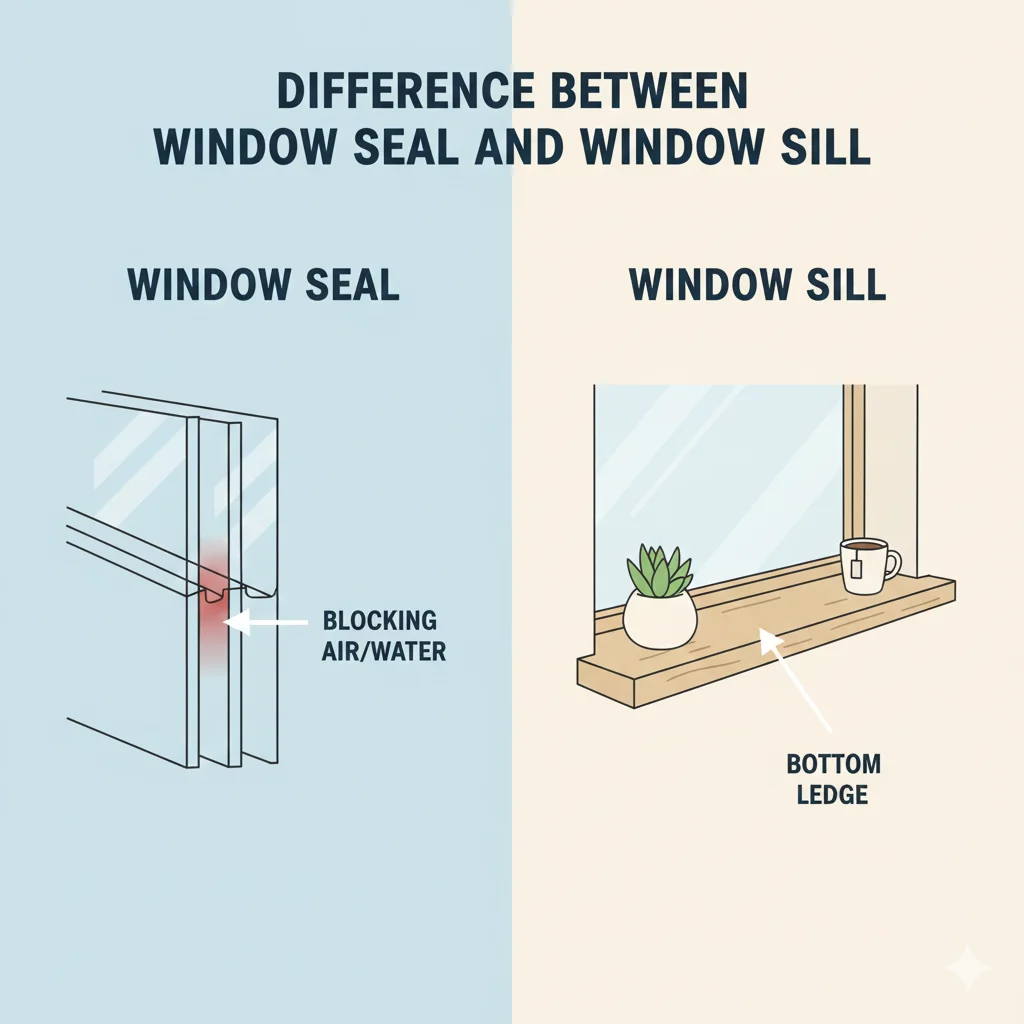
A window seal stops air, dust, and water from coming inside. It makes the window airtight.
A window sill is the flat ledge at the bottom of the window that you can touch or place things on.
If it blocks air, use window seal.
If it’s the bottom ledge, use window sill.
Many people get confused between window seal and window sill because they sound almost the same and both are related to windows. But in reality, these two words mean very different things. One is about protection, and the other is a part of the window’s structure.
In this beginner-friendly guide, you’ll learn the clear meanings of both words, their real-life usage, easy examples, and smart tricks to remember the difference. Even a Class 4 student will understand this with no trouble. Let’s make English simple, stress-free, and fun!
What Does Each Word Mean?
What Is a Window Seal?
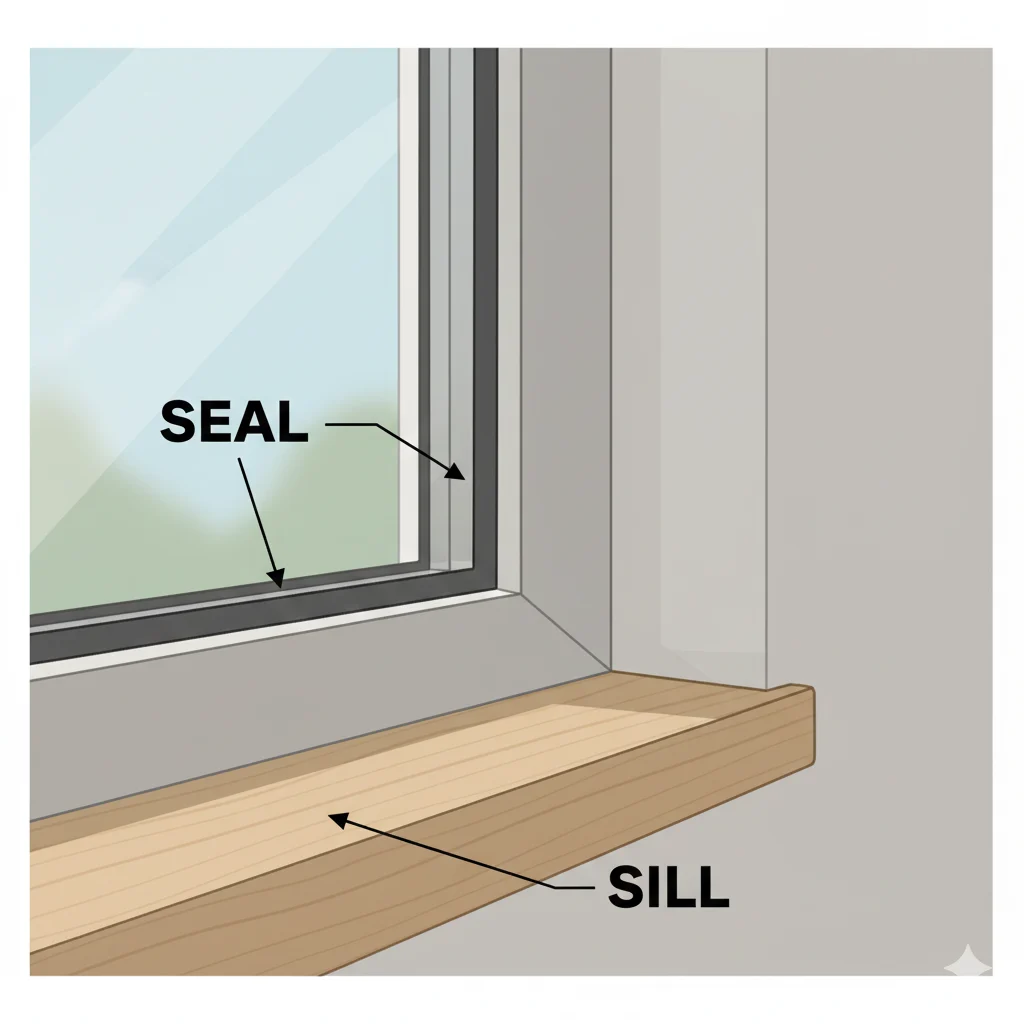
A window seal is the soft or rubbery part around the edges of a window. Its job is simple:
It blocks air, water, dust, and noise from entering your home.
Think of it like the “protective shield” of a window.
Part of Speech: Noun
Easy Examples of “Window Seal”:
- The window seal broke during the storm, so cold air came inside.
- We need to replace the seal to stop the water leak.
- A tight window seal keeps the room warm in winter.
Memory Trick:
A seal “seals” or locks something.
If it blocks air → it’s a seal.
What Is a Window Sill?
A window sill is the flat shelf-like part at the bottom of the window.
You can place plants, books, or decorations on it. It also holds the window frame in place.
Part of Speech: Noun
Easy Examples of “Window Sill”:
- She kept her flower pot on the window sill.
- Dust gathered on the sill, so I cleaned it.
- The cat likes to sit on the window sill and watch birds.
Memory Trick:
A sill is like a shelf.
If you can place things on it → it’s a sill.
The Key Difference Between Window Seal and Window Sill
To make things super clear, here’s a comparison table:
| Feature | Window Seal | Window Sill |
|---|---|---|
| Meaning | Keeps air, water, and dust out | The bottom ledge of a window |
| Function | Protection | Support + decoration |
| Material | Rubber, silicone, foam | Wood, metal, stone, or plastic |
| Where it is located | Around window edges | Bottom part of the window |
| Example | “The seal is broken.” | “Put the plant on the sill.” |
Quick Tip to Remember:
Seal = Stops air
Sill = Shelf-like ledge
Common Mistakes and How to Avoid Them
❌ Mistake 1:
“The window sill is leaking cold air.”
This is wrong because the sill does not block air.
✔ Correct:
“The window seal is leaking cold air.”
❌ Mistake 2:
“Clean the window seal before putting the plants.”
This is incorrect because plants sit on the sill, not the seal.
✔ Correct:
“Clean the window sill before putting the plants.”
❌ Mistake 3:
“We painted the window seal yesterday.”
You usually paint the sill, not the seal.
✔ Correct:
“We painted the window sill yesterday.”
When to Use “Window Seal”
Use window seal when talking about anything that:
- Stops air
- Prevents water leaks
- Reduces dust
- Keeps noise out
- Is made of rubber or silicone
- Is inside the window frame
Simple Example Sentences
- The window seal is loose, so the room feels cold.
- A good seal makes the house more energy-efficient.
- I called a technician to fix the broken window seal.
- Without a tight seal, rainwater can enter the room.
- The rubber seal around the glass is wearing out.
Memory Hack:
Imagine a superhero sticker that seals cracks.
If it protects → seal.
When to Use “Window Sill”
Use window sill when referring to:
- The bottom ledge of a window
- A place where things are kept
- Part of the window frame structure
- Anything that can be decorated or used as a small shelf
Simple Example Sentences
- My cat sits on the window sill every morning.
- The paint on the sill is peeling off.
- I placed my alarm clock on the window sill.
- A flower vase looks beautiful on the sill.
- Birds sometimes rest on the outside window sill.
Visual Memory Trick:
Think of sill as “still shelf.”
A shelf sits still → so does a sill.
Quick Recap: Window Seal vs Window Sill
- Window Seal
- Blocks air, water, dust
- Made of rubber
- Found around window edges
- Window Sill
- Bottom shelf-like ledge
- Holds decorations
- Part of the frame structure
If it protects → Seal
If it’s a ledge → Sill
Advanced Tips (For Writers & Homeowners)
1. Where the Words Come From
- Seal comes from the idea of “closing tightly.”
- Sill is an old English word meaning “foundation beam.”
2. How They Are Used in Formal Writing
In house inspection reports:
- “The window seals are damaged.”
- “The window sill needs repainting.”
3. Why These Words Matter in Home Repair
Using the wrong word can confuse workers.
If you say “fix the sill” but the seal is damaged, they will repair the wrong part.
4. Online Messages & Texting
Many people casually type “sill” when they mean “seal.”
This can change the meaning completely.
Mini Quiz (With Answers Below)
Fill in the blanks:
- The rubber ______ keeps cold air out.
- My books are on the window ______.
- The ______ is leaking, so we need a repair.
- Cats love sitting on the window ______.
- A broken ______ can cause water to enter the house.
- We painted the ______ to make it look new.
- The technician fixed the glass ______ today.
Answers:
- seal
- sill
- seal
- sill
- seal
- sill
- seal
FAQs
1. What is the difference between a window seal and sill?
A window seal stops air and water from coming in. A window sill is the ledge at the bottom of the window.
2. Which part usually leaks air — the seal or the sill?
The seal leaks air, not the sill.
3. Can you place objects on the window seal?
No, objects are placed on the window sill, not the seal.
4. Do all windows have seals and sills?
Yes. Modern windows have both protective seals and a bottom sill.
5. How can I remember the difference?
Seal = seals air
Sill = shelf-like ledge
Conclusion
Now you know the clear and simple difference between a window seal and a window sill. One protects your home by blocking air and water, while the other acts like a little shelf at the bottom of the window. When you understand these two terms, you can use them correctly in conversations, school work, home repairs, and even online posts.
Keep practicing, notice these parts around your home, and soon the difference will feel completely natural. Every small step you take makes your English stronger and clearer.

Kael Donovan is a language enthusiast and writer at Definevs.com, simplifying complex words and grammar rules into fun, easy-to-understand guides for readers.