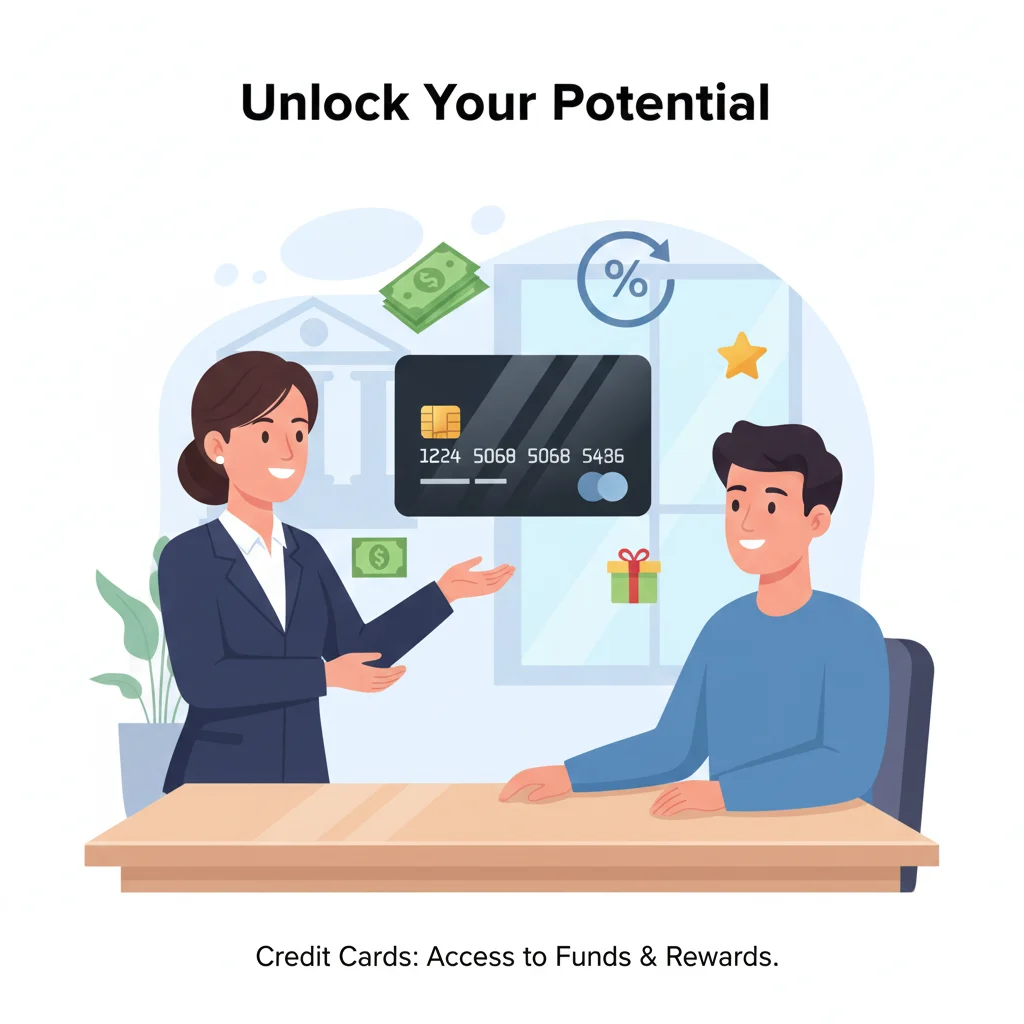
Have you ever wondered why banks keep offering credit cards and personal loans, even when you didn’t ask for them? 🤔
Both seem similar — you borrow money and repay later — but they’re actually very different financial tools. Yet, many people confuse the two or use them without understanding how they work.
In this simple guide, you’ll learn:
- What credit cards and personal loans really mean
- The key difference between them
- When to use each one wisely
- Common mistakes people make
- Easy examples anyone can understand
By the end, you’ll know exactly why banks sell both, how they benefit from them, and how you can use them smartly — for real-life situations.
💡 What Does Each Term Mean?
Before comparing, let’s understand what each one means in simple words.
💳 What Is a Credit Card?
A credit card lets you borrow small amounts of money to buy things now and pay later.
It’s like having a short-term loan in your wallet that you can use anytime.
Key Points:
- It has a credit limit (the maximum you can spend).
- You can repay in full each month or pay part and carry the rest (with interest).
- Best for daily spending like groceries, bills, or travel.
Examples:
- You buy shoes for $100 with a credit card and pay later.
- You use your card to book movie tickets online.
- You earn reward points every time you spend.
💰 What Is a Personal Loan?
A personal loan gives you a fixed amount of money for a specific purpose — like buying a car, paying medical bills, or consolidating debt.
Key Points:
- It’s a one-time loan with fixed monthly payments.
- You repay it over a set time (e.g., 1–5 years).
- Interest rates are usually lower than credit cards.
Examples:
- You take a $5,000 personal loan to pay school fees.
- You use it to renovate your home.
- You repay it in fixed installments every month.
⚖️ The Key Difference Between Credit Cards and Personal Loans
Here’s a simple side-by-side comparison to understand how they differ:
| Feature | Credit Card | Personal Loan |
|---|---|---|
| Type | Revolving credit | One-time loan |
| Usage | Daily spending | Large, planned expenses |
| Repayment | Flexible (monthly minimum) | Fixed monthly payments |
| Interest Rate | Usually higher | Usually lower |
| Loan Term | No fixed end date | 1–5 years |
| Approval Time | Instant | Few hours to days |
| Example | Buying groceries | Paying for surgery |
✅ Quick Tip:
Use a credit card for short-term purchases and rewards.
Use a personal loan for big, planned expenses that you can repay slowly.
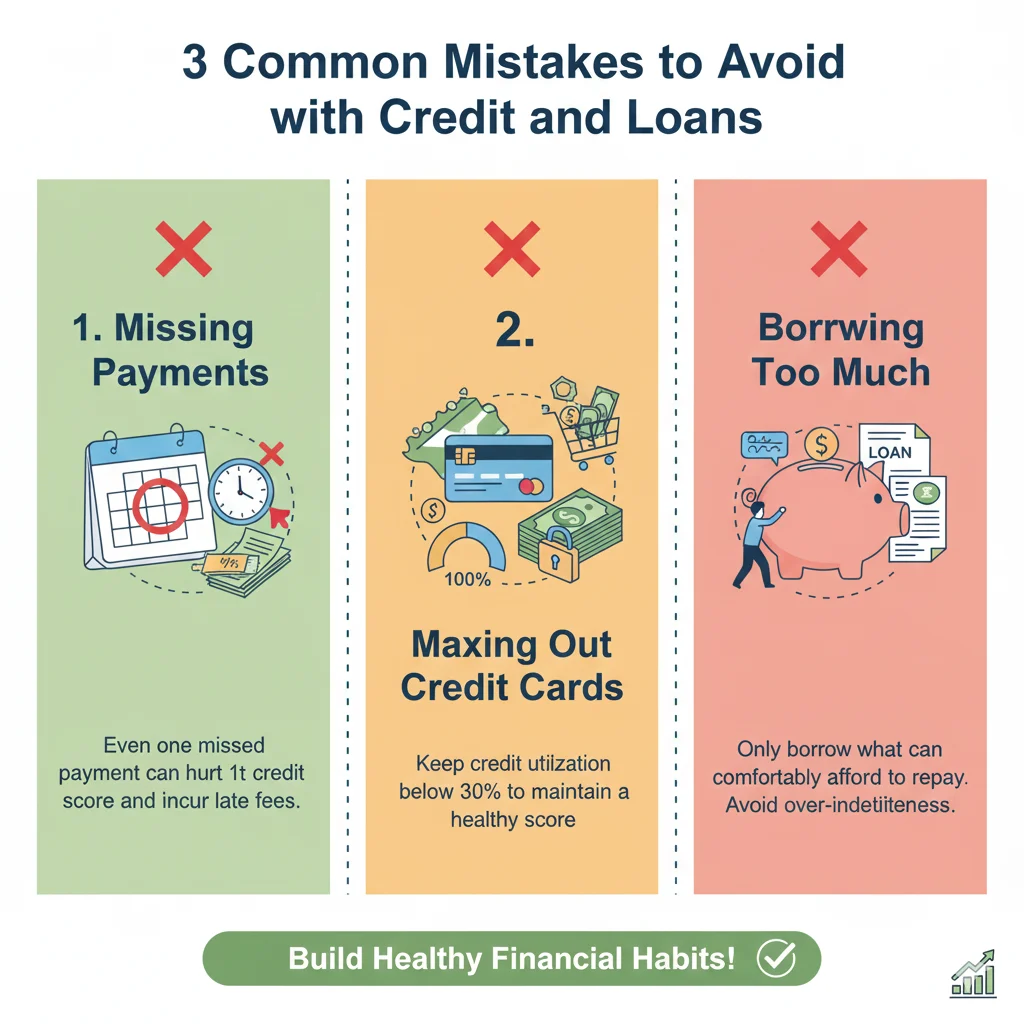
🚫 Common Mistakes and How to Avoid Them
Here are the top 3 mistakes people make:
1. Using credit cards like free money
- ❌ Mistake: Spending without planning and missing payments.
- ✅ Fix: Treat it like a short-term loan and repay in full each month.
2. Taking personal loans for luxuries
- ❌ Mistake: Borrowing for vacations or parties.
- ✅ Fix: Use loans for genuine needs — emergencies, education, or investments.
3. Ignoring interest rates
- ❌ Mistake: Not checking how much you’ll actually repay.
- ✅ Fix: Compare interest rates and total repayment before borrowing.
True or False Questions for Kids: Can You Get Them All Right? 🤔
🏦 When to Use a Credit Card
A credit card is best when:
- You want convenience and flexibility.
- You need to build credit history.
- You want rewards or cashback.
Examples:
- Buying groceries or gas.
- Paying for monthly subscriptions.
- Booking flights or hotel rooms.
- Making online purchases safely.
- Handling small emergencies (then repaying soon).
💡 Memory Hack:
Think of a credit card as a “mini-loan” you borrow and repay quickly.
💵 When to Use a Personal Loan
A personal loan is ideal when:
- You need a large amount at once.
- You want lower interest rates and predictable payments.
- You’re planning something specific (home repair, education, debt consolidation).
Examples:
- Paying off multiple credit cards (debt consolidation).
- Financing a wedding.
- Covering medical expenses.
- Buying electronics or a used car.
- Funding small business needs.
💡 Memory Trick:
Think of a personal loan as a “planned project loan.”
🧠 Why Banks Sell Credit Cards and Personal Loans
You might wonder — if both are loans, why do banks promote both so much?
Here’s why:
- Banks earn interest and fees.
- Credit cards bring interest from unpaid balances.
- Personal loans earn from fixed monthly interest.
- Cross-selling opportunities.
- When you have a credit card, banks can offer you a loan — and vice versa.
- Customer loyalty.
- Multiple products mean customers stay longer with the bank.
- Different customer needs.
- Credit cards suit short-term spenders.
- Loans suit long-term planners.
In short: credit cards = frequent small profits, personal loans = one-time large profits.
🧾 Quick Recap: Credit Card vs Personal Loan
- Credit Card: Use for small, everyday expenses.
- Personal Loan: Use for larger, planned needs.
- Interest: Credit cards charge higher rates.
- Repayment: Credit cards = flexible; loans = fixed.
- Goal: Credit card builds credit; loan finances big goals.
✅ Quick Rule:
“If you can repay next month — use a credit card.
If you need months or years — take a personal loan.”
📚 Advanced Tips
- History: Credit cards became popular in the 1950s; personal loans existed long before that.
- Formal writing: In essays, say “credit facilities” or “unsecured personal lending.”
- Digital banking: Today, you can apply for both online within minutes.
- In texting: People may say “CC” for credit card and “PL” for personal loan.
🧩 Mini Quiz
Choose the correct answer:
- You need $1000 for travel and can repay next month → Use a _____.
- You need $10,000 for education → Take a _____.
- You want cashback rewards → Get a _____.
- You want fixed monthly payments → Choose a _____.
- You can’t pay full balance monthly → Avoid using a _____.
(Answers: 1. Credit card, 2. Personal loan, 3. Credit card, 4. Personal loan, 5. Credit card)
❓ FAQs
1. What’s the main difference between a credit card and a personal loan?
A credit card offers flexible spending up to a limit, while a personal loan gives a fixed lump sum repaid over time.
2. Which is cheaper — a credit card or personal loan?
Usually, a personal loan has lower interest rates, making it more affordable for long-term use.
3. Why do banks push credit cards so much?
Because credit cards generate ongoing profit through interest and fees every time customers spend.
4. Can I take both a credit card and a personal loan?
Yes, but manage them wisely. Use credit cards for short-term spending and personal loans for bigger needs.
5. Does using a credit card build my credit score?
Yes, if you pay on time. Responsible credit card use improves your credit history over time.
🏁 Conclusion
Now you know the real difference between credit cards and personal loans — and why banks sell both.
Credit cards are flexible for short-term use, while personal loans are steady for long-term goals.
Use them wisely, repay on time, and they can help you manage your money — not trap you in debt.
Keep learning about finance, because every small understanding brings you closer to financial freedom. 💡

Kael Donovan is a language enthusiast and writer at Definevs.com, simplifying complex words and grammar rules into fun, easy-to-understand guides for readers.