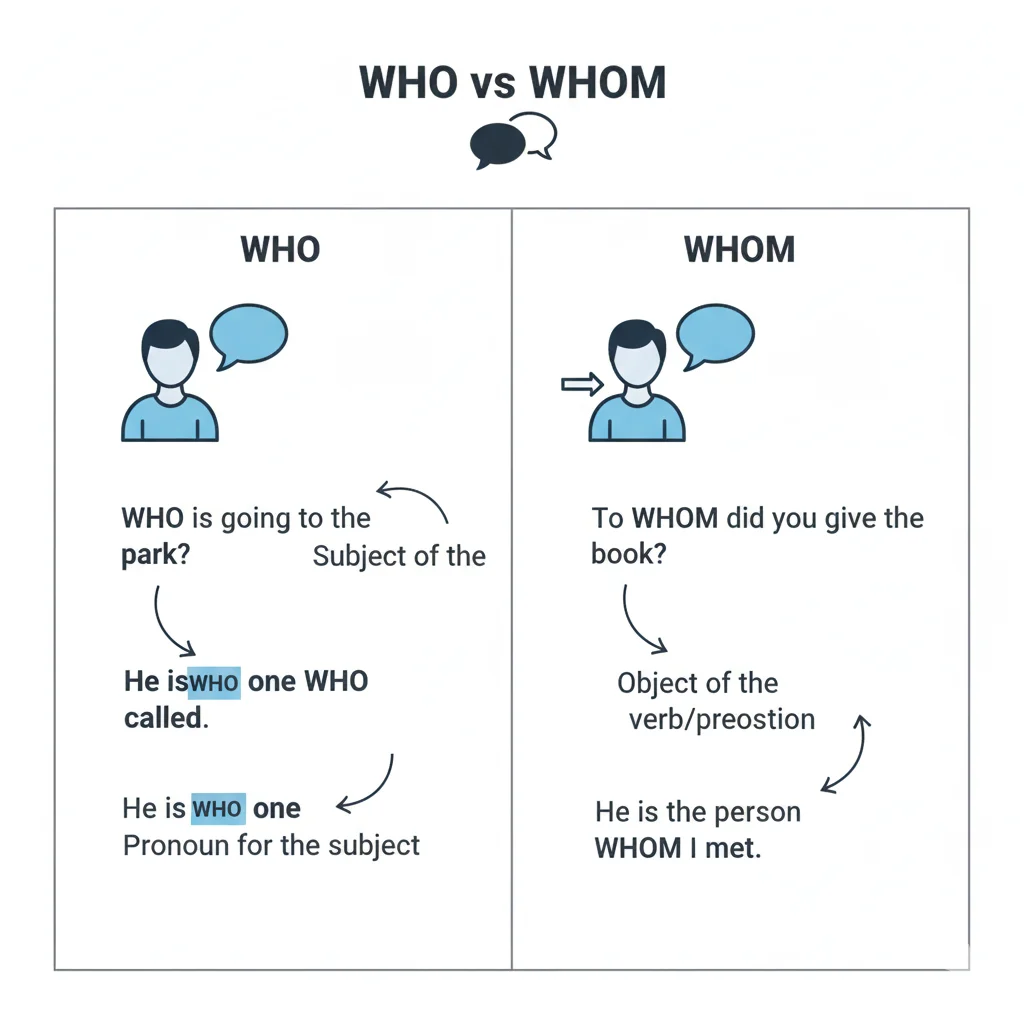
Who is used for the subject of a sentence.
Whom is used for the object of a verb or preposition.
Examples:
- Who is calling me? (subject)
- To whom should I reply? (object)
Easy trick:
If you can replace the word with he/she, use who.
If you can replace it with him/her, use whom.
Who vs whom is one of the most searched grammar questions in English—and for good reason. Even native speakers hesitate before choosing the right word. You might pause while writing an email, a social media post, or a formal document and think: Is it who or whom here? That confusion is exactly why people search for this keyword. The rules sound complicated, teachers explain it differently, and modern English often ignores “whom” altogether. Some people even wonder if using whom sounds pretentious. This article clears that confusion once and for all. You’ll get a quick answer, a simple trick that actually works, real-life examples, and professional advice on when whom truly matters. By the end, you’ll know how to use who vs whom confidently—without overthinking or second-guessing your writing.
The Origin of Who vs Whom
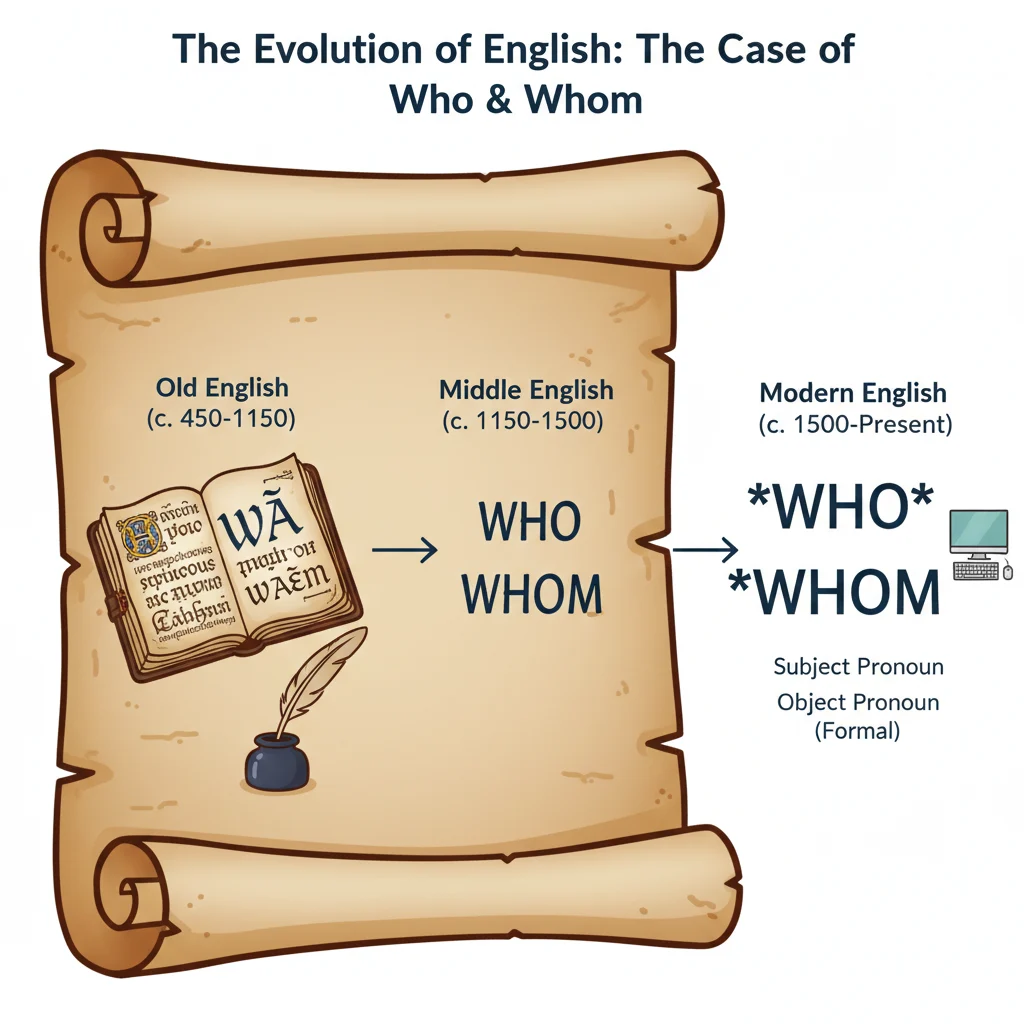
The difference between who vs whom comes from Old English case grammar. English once had clear forms for subjects and objects, just like modern German. Who was the subject form, while whom was the object form. Over time, English simplified. Many case endings disappeared, but whom survived in formal writing. There is no spelling difference between British and American English here—only a grammatical role difference. Modern spoken English often drops whom completely, but formal grammar rules still recognize it. This history explains why whom feels old-fashioned and why people debate whether it should still be used today.
British English vs American English Spelling
There is no spelling difference between British and American English for who vs whom. The difference is in usage preference.
| Aspect | British English | American English |
|---|---|---|
| Everyday speech | Mostly “who” | Mostly “who” |
| Formal writing | Uses “whom” more often | Uses “whom” less often |
| Academic/legal text | “Whom” common | “Whom” acceptable but declining |
Which Spelling Should You Use?
Since spelling is the same, the real question is formality.
- For US audiences, use who in casual writing and whom only in formal contexts.
- For UK and Commonwealth audiences, whom appears slightly more often in professional writing.
- For a global audience, clarity matters more than strict grammar. Using who is usually safe unless the sentence is very formal.
Professional editors agree: correct usage matters in academic, legal, and business writing, but flexibility is acceptable elsewhere.
Common Mistakes with Who vs Whom
A common mistake is using whom just to sound smart. This often leads to incorrect sentences.
❌ Whom is calling?
✅ Who is calling?
Another mistake is avoiding whom completely in formal writing.
❌ The candidate who we interviewed was selected.
✅ The candidate whom we interviewed was selected.
People also struggle with prepositions:
❌ Who did you speak to? (formal writing)
✅ To whom did you speak?
Who vs Whom in Everyday Examples
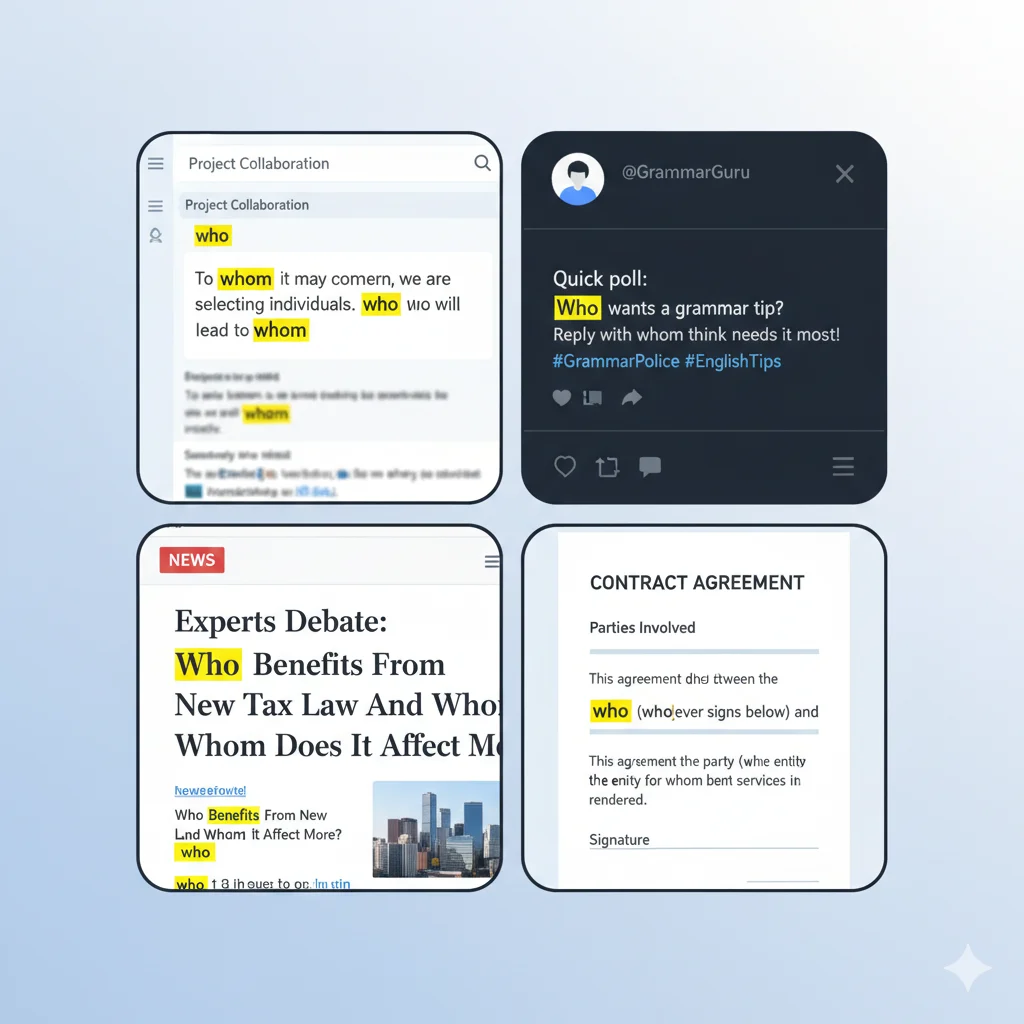
In emails:
- Who should I contact for support?
- Whom should I cc on this email?
In news writing:
- The man who reported the incident…
- The witness whom police questioned…
On social media:
- Who else agrees?
- Whom are you voting for? (often simplified to who)
In formal writing:
- Applicants whom we shortlisted will be notified.
This is why people search for who vs whom examples sentences and whom in a sentence—real context makes the rule clearer.
Who vs Whom – Google Trends & Usage Data
Search data shows who vs whom spikes during exam seasons, job application periods, and writing projects. The keyword is more popular in English-learning countries and among professionals. In the US, “whom” usage is declining, while the UK shows steadier interest. Online discussions, including who vs whom Reddit, reveal that many users rely on the he/him trick rather than memorizing grammar rules. This proves user intent: people want a fast, reliable method—not theory.
Weather vs Whether 🌦️ A Simple Fix for a Costly Error
Who vs Whom Comparison Table
| Sentence Role | Correct Word | Example |
|---|---|---|
| Subject | Who | Who wrote this article? |
| Object | Whom | Whom did you hire? |
| After preposition | Whom | For whom is this gift? |
| Casual speech | Who | Who are you talking to? |
FAQs About Who vs Whom
1. Who vs whom trick—does it always work?
Yes, the he/him test works in most cases and is trusted by editors.
2. Is using ‘whom’ pretentious?
Not in formal writing. In casual speech, it can sound unnatural.
3. Who vs whom vs whose—what’s the difference?
Who is subject, whom is object, whose shows possession.
4. Who vs whom plural—does number matter?
No. The rule depends on sentence role, not singular or plural.
5. Which sentence uses who or whom correctly?
Try replacing with he/him. The correct option will sound right.
6. Are there who vs whom exercises or quizzes?
Yes. Practice questions help reinforce object vs subject roles.
7. Should I avoid ‘whom’ completely?
No. Use it correctly in professional and formal contexts.
Conclusion
Understanding who vs whom doesn’t require memorizing complex grammar rules. The key takeaway is simple: who is for subjects, whom is for objects. The he/him trick makes this decision fast and practical, which is why it remains popular among writers, students, and professionals. Language evolves, and modern English increasingly favors who in everyday speech. Still, whom holds value in formal, academic, and professional writing where clarity and correctness matter. Choosing the right word improves credibility and confidence, especially in emails, reports, and published content. If you’re writing for a global audience, prioritize clarity over strict formality, but don’t be afraid to use whom when the sentence truly requires it. Mastering this small grammar point can instantly polish your writing and remove hesitation. With consistent practice and real-life examples, who vs whom becomes a skill—not a struggle.

Mira Loxley is a passionate language and writing expert at Definevs.com, turning tricky words and grammar into clear, engaging guides for every reader.