Have you ever wondered when is the best time to take vitamins — morning or night? You’re not alone! Many people buy vitamins to boost their health but aren’t sure when to take them for the best results.
Some experts say vitamins work better in the morning, while others suggest taking them with meals or before bed. So, what’s the truth?
In this simple guide, you’ll learn:
- What each type of vitamin does
- The difference between morning and night use
- When to take each vitamin for maximum absorption
- Common mistakes and how to avoid them
- Easy tips to build a healthy routine
By the end, you’ll know exactly how to take your vitamins the right way — and why timing really matters.
🧠 What Does “When to Take Vitamins” Really Mean?
The phrase “when to take vitamins” refers to the best time of day to take specific vitamins so your body can absorb and use them effectively.
Timing affects how your body breaks down and uses nutrients. For example, some vitamins dissolve in water, while others need fat to be absorbed properly.
Let’s explore what each type of vitamin is and how they work.
💊 Types of Vitamins and Their Meanings
There are two main types of vitamins — water-soluble and fat-soluble.
1. Water-Soluble Vitamins
These dissolve easily in water and are quickly absorbed by the body. Since your body doesn’t store them, you need them daily.
Examples:
- Vitamin C (for immunity and skin health)
- B vitamins (for energy and metabolism)
Simple examples:
- Drinking a glass of water with your Vitamin C tablet in the morning.
- Taking B-complex with breakfast to stay energized during the day.
2. Fat-Soluble Vitamins
These dissolve in fat and are stored in your body for later use. Taking them with food helps your body absorb them better.
Examples:
- Vitamin A (good for eyes and skin)
- Vitamin D (helps bones and immunity)
- Vitamin E (protects cells)
- Vitamin K (helps with blood clotting)
Simple examples:
- Taking Vitamin D with eggs or avocado toast.
- Having Vitamin A after dinner with a small amount of healthy fat like olive oil.
☀️ The Key Difference Between Morning and Night
Here’s a simple way to understand the difference between taking vitamins in the morning vs. night:
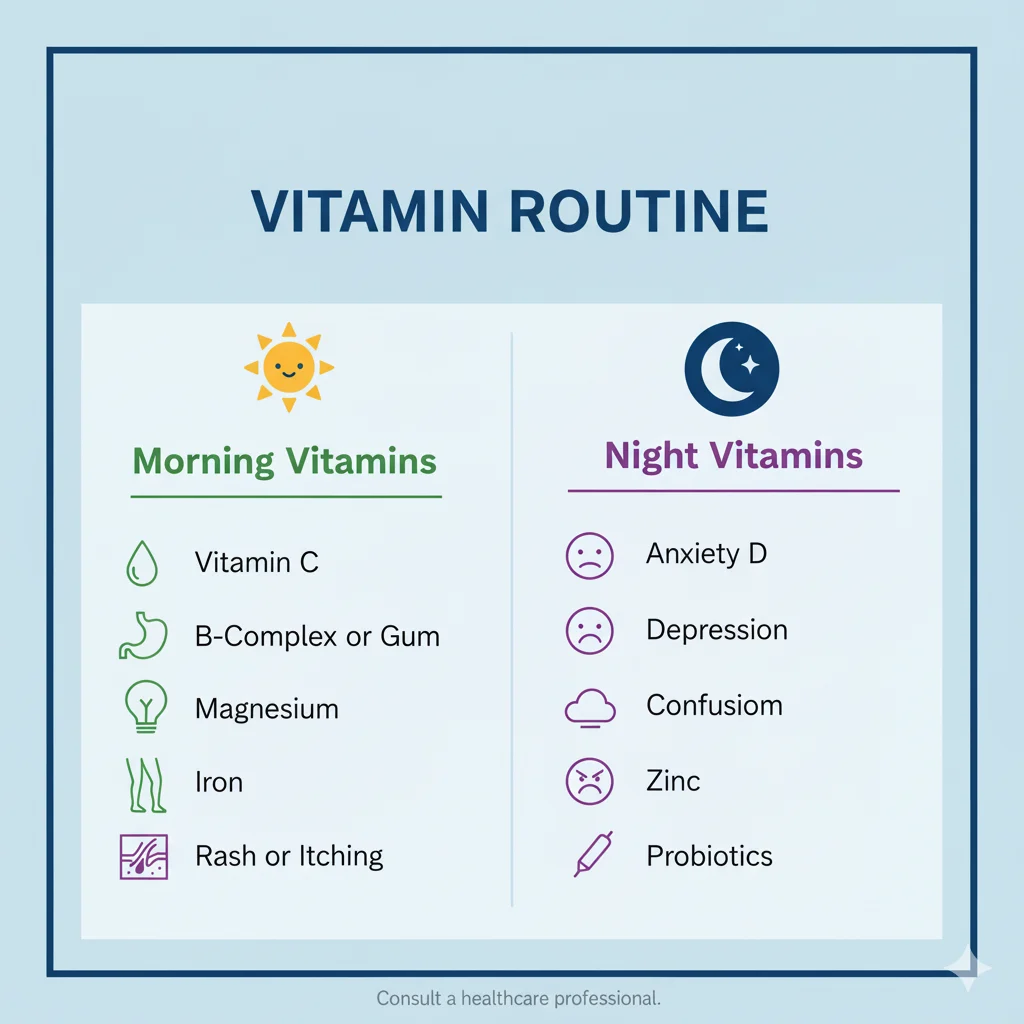
| Time of Day | Best For | Why It Works | Example |
|---|---|---|---|
| Morning | Water-soluble vitamins (B, C) | Boosts energy and focus | Take B-complex after breakfast |
| Night | Fat-soluble vitamins (A, D, E, K) | Works with food and body repair | Take Vitamin D or E after dinner |
Quick Tip:
💡 If a vitamin gives you energy (like B12), take it in the morning. If it supports relaxation or repair (like Vitamin D or magnesium), take it at night.
🚫 Common Mistakes and How to Avoid Them
Even though vitamins are simple, many people make small mistakes that reduce their effectiveness. Let’s fix them!
Mistake 1: Taking vitamins on an empty stomach.
- ❌ Wrong: Swallowing Vitamin D right after waking up.
- ✅ Right: Take it with food, especially meals containing healthy fats.
Mistake 2: Mixing all vitamins at once.
- Some vitamins block others when taken together.
Example: Too much calcium can reduce iron absorption. - ✅ Solution: Separate morning and evening doses.
Mistake 3: Skipping days.
- Vitamins work best when taken regularly.
- ✅ Solution: Set a reminder or pair it with a daily habit like brushing teeth.
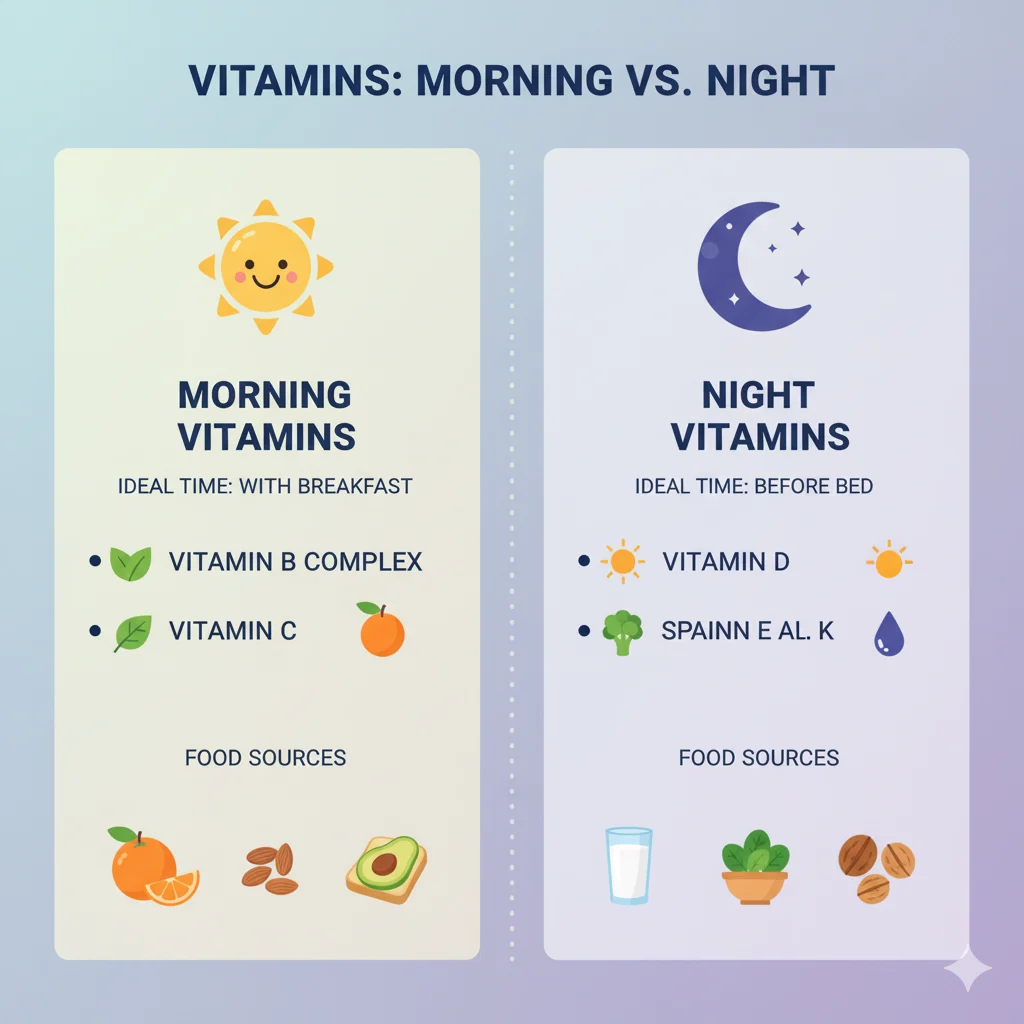
🌞 When to Take Vitamins in the Morning
Morning is the best time for energy-boosting vitamins or those that may disturb sleep.
Best Morning Vitamins:
- Vitamin B complex – helps with energy and focus.
- Vitamin C – boosts immunity and fights fatigue.
- Multivitamins – contain a mix of nutrients for daily support.
How to Take Morning Vitamins:
- Always take them after breakfast (never on an empty stomach).
- Pair them with a light meal like oatmeal, toast, or fruit.
- Drink a full glass of water.
Example Sentences:
- “I take my Vitamin C with breakfast to start my day strong.”
- “Taking B12 in the morning keeps me alert at work.”
- “My multivitamin goes with my morning smoothie.”
🌙 When to Take Vitamins at Night
Evening is perfect for vitamins that help your body recover or work best with fats.
Best Nighttime Vitamins:
- Vitamin D – supports bones and sleep quality.
- Vitamin E – protects skin and cells during rest.
- Vitamin K – helps with bone and heart health.
- Magnesium (not a vitamin, but a helpful mineral) – relaxes muscles and supports sleep.
How to Take Night Vitamins:
- Take them after dinner with healthy fats like nuts or olive oil.
- Avoid combining with caffeine or energy boosters.
Example Sentences:
- “I take Vitamin D with dinner so it absorbs better.”
- “Magnesium helps me unwind before bed.”
- “Nighttime vitamins make me feel recharged in the morning.”
🧩 Quick Recap: Morning vs. Night Vitamins
Here’s a fast summary to remember:
✅ Morning Vitamins:
- B Vitamins
- Vitamin C
- Multivitamins
✅ Night Vitamins:
- Vitamins A, D, E, K
- Magnesium, Zinc
🕑 Simple Rule:
“If it gives you energy → morning.”
“If it supports rest or repair → night.”
💡 Advanced Tips for Better Vitamin Absorption
Want to make your vitamins work even better? Follow these expert-backed tips:
- Pair with the right foods:
- Take fat-soluble vitamins with meals containing eggs, cheese, nuts, or avocado.
- Water-soluble vitamins go best with a glass of water or juice.
- Check the form:
- Some vitamins (like D3 instead of D2) absorb better.
- Avoid caffeine and alcohol right after.
- They can reduce vitamin absorption.
- Store vitamins properly.
- Keep them away from heat and sunlight.
- Be consistent.
- Taking vitamins at the same time daily helps your body get used to the routine.
🧠 Mini Quiz: Test Your Vitamin Knowledge
- You should take Vitamin C in the _____.
- Fat-soluble vitamins work best when taken with _____.
- Which vitamin helps you relax before bed?
- What happens if you take vitamins on an empty stomach?
- “If it boosts energy, take it in the _____.”
(Answers: Morning, Fat, Magnesium, May cause nausea, Morning)
❓ FAQs About When to Take Vitamins
1. What’s the best time to take vitamins?
Morning for energy vitamins (B, C) and night for fat-soluble ones (A, D, E, K).
2. Can I take all my vitamins at once?
It’s better to separate morning and night doses for better absorption.
3. Should I take vitamins with or without food?
Always with food — especially those that dissolve in fat.
4. Is it bad to take vitamins before bed?
Not at all! Just avoid energy vitamins like B12 at night.
5. How long does it take for vitamins to work?
Usually a few weeks of consistent use before you notice visible effects.
🩺 Conclusion
Knowing when to take vitamins can make a big difference in how your body absorbs and uses them.
Remember:
- Morning for energy (B and C).
- Night for rest and recovery (A, D, E, K).
With the right timing and habits, your vitamins will do their job — helping you feel stronger, healthier, and more energized every day. 🌿
Now you know the right time to take your vitamins — for real results that last!

Mira Loxley is a passionate language and writing expert at Definevs.com, turning tricky words and grammar into clear, engaging guides for every reader.