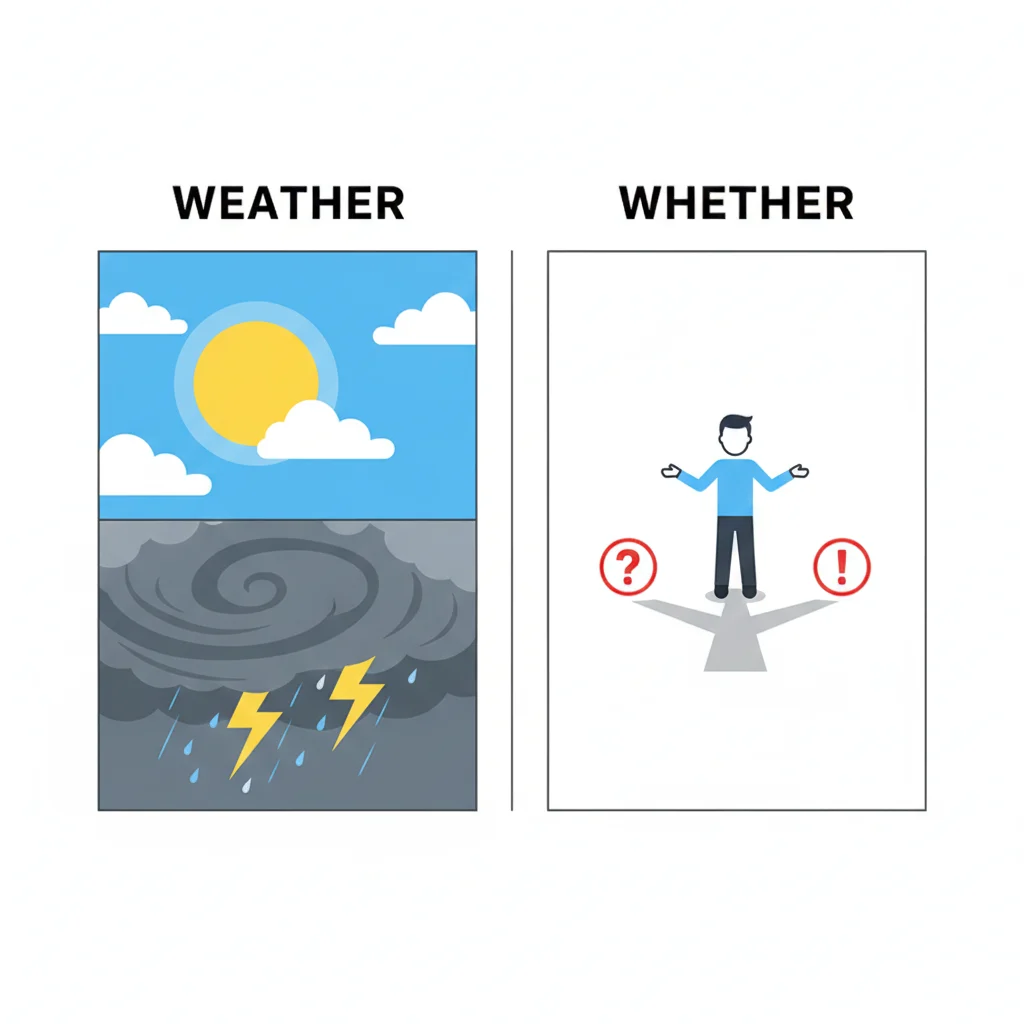
Weather talks about climate, rain, sun, or storms.
Whether is used to show a choice, doubt, or decision.
Examples:
- The weather is cold today.
- I don’t know whether to stay or leave.
Have you ever paused while writing an email, wondering weather vs whether is correct? You’re not alone. This is one of the most searched English grammar confusions because both words sound the same but mean very different things. A single wrong choice can change your sentence or make it look unprofessional. People search for weather vs whether meaning to get a quick answer, but they often leave with more doubt. This guide solves that problem clearly and simply.
You’ll learn when to use weather and when to use whether, how to remember the difference, and how each word works in real life. From daily emails to formal writing, this article gives you a quick answer, detailed explanation, and expert advice—without complex grammar rules. By the end, you’ll never hesitate again, whether you’re writing about rain outside or making a choice between two options.
The Origin of Weather vs Whether
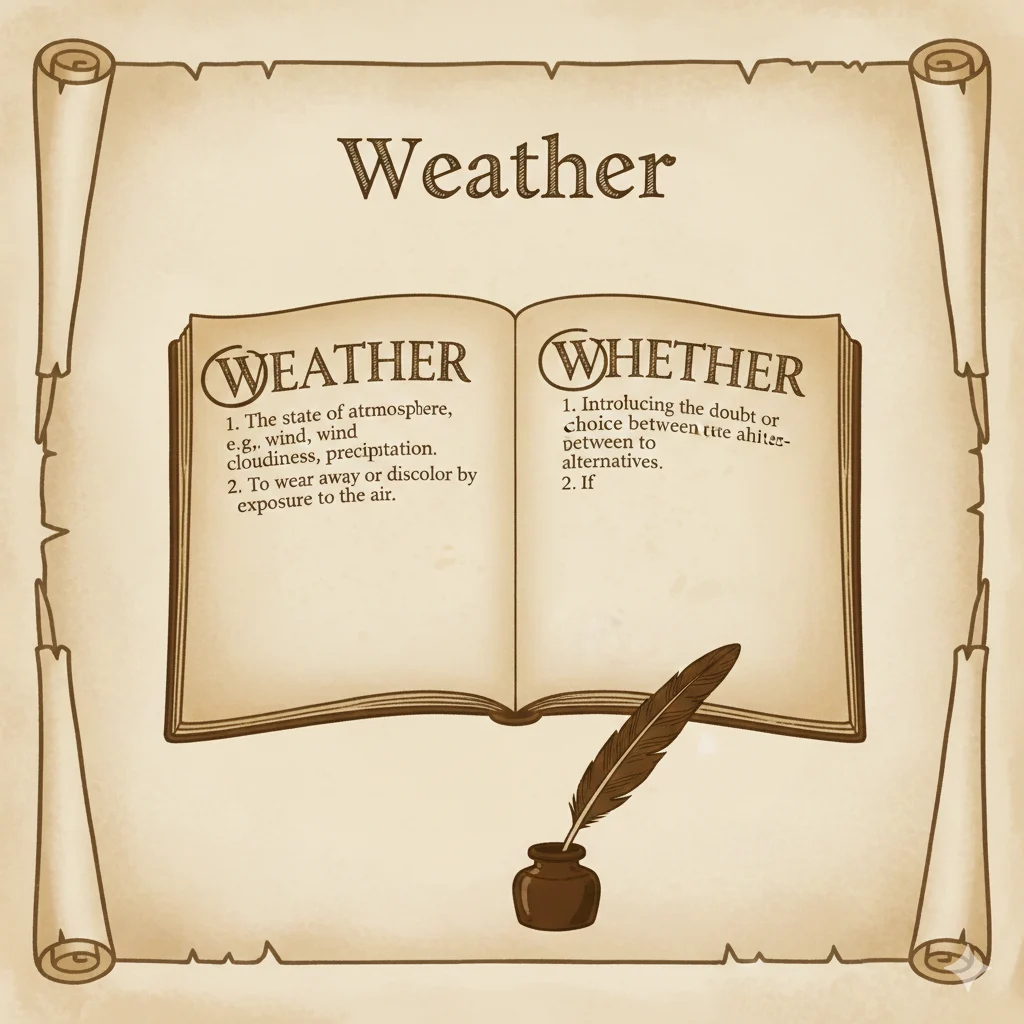
The confusion between weather vs whether comes from history and sound. Both words come from Old English but grew apart in meaning over time. Weather comes from the Old English word weder, which meant air, sky, or storm. That meaning stayed the same for centuries. Whether, however, comes from hwæther, a word used to ask questions or show choices. As spoken English evolved, pronunciation became similar, but meanings stayed different. English kept both spellings because they served different purposes. One stayed connected to nature and climate. The other stayed linked to logic, decisions, and doubt. This shared sound but separate meaning is why learners still confuse them today.
British English vs American English Spelling
There is no spelling difference between British and American English for weather vs whether. Both follow the same rules.
| Feature | British English | American English |
|---|---|---|
| Weather | Weather | Weather |
| Whether | Whether | Whether |
| Meaning | Climate | Choice or doubt |
| Pronunciation | Same | Same |
The confusion is not regional. It is purely about meaning and usage.
Stank vs Stunk 🔥 Which One Is Actually Correct?
Which Spelling Should You Use?
Your choice depends on what you are talking about, not where you live. If your audience is in the US, UK, or anywhere globally, the rule stays the same. Use weather when writing about rain, heat, storms, or climate. Use whether when writing about options, uncertainty, or decisions. Professional writers, journalists, and editors all follow this rule. Search engines also expect correct usage for clarity and trust. Using the wrong word can hurt credibility, especially in formal or business writing.
Common Mistakes with Weather vs Whether
Many errors happen because people write the word they hear. A common mistake is writing weather or not instead of whether or not. Another error appears in phrases like weather it be good or bad, which should be whether it be good or bad. People also confuse phrases like whether tomorrow with weather tomorrow when talking about forecasts. Remember: if the sentence can be replaced with “if,” you probably need whether. If it talks about the sky or climate, you need weather.
Weather vs Whether in Everyday Examples
In emails:
- Please confirm whether you can attend the meeting.
- The weather caused a delay in travel.
In news:
- Scientists study weather patterns closely.
- Lawmakers debate whether the bill will pass.
On social media:
- Love this rainy weather today.
- Can’t decide whether to go out or stay home.
In formal writing:
- The report examines whether the policy is effective.
- Extreme weather events are increasing worldwide.
Vail vs Veil 🧠 The Truth Schools Rarely Teach
Weather vs Whether – Google Trends & Usage Data
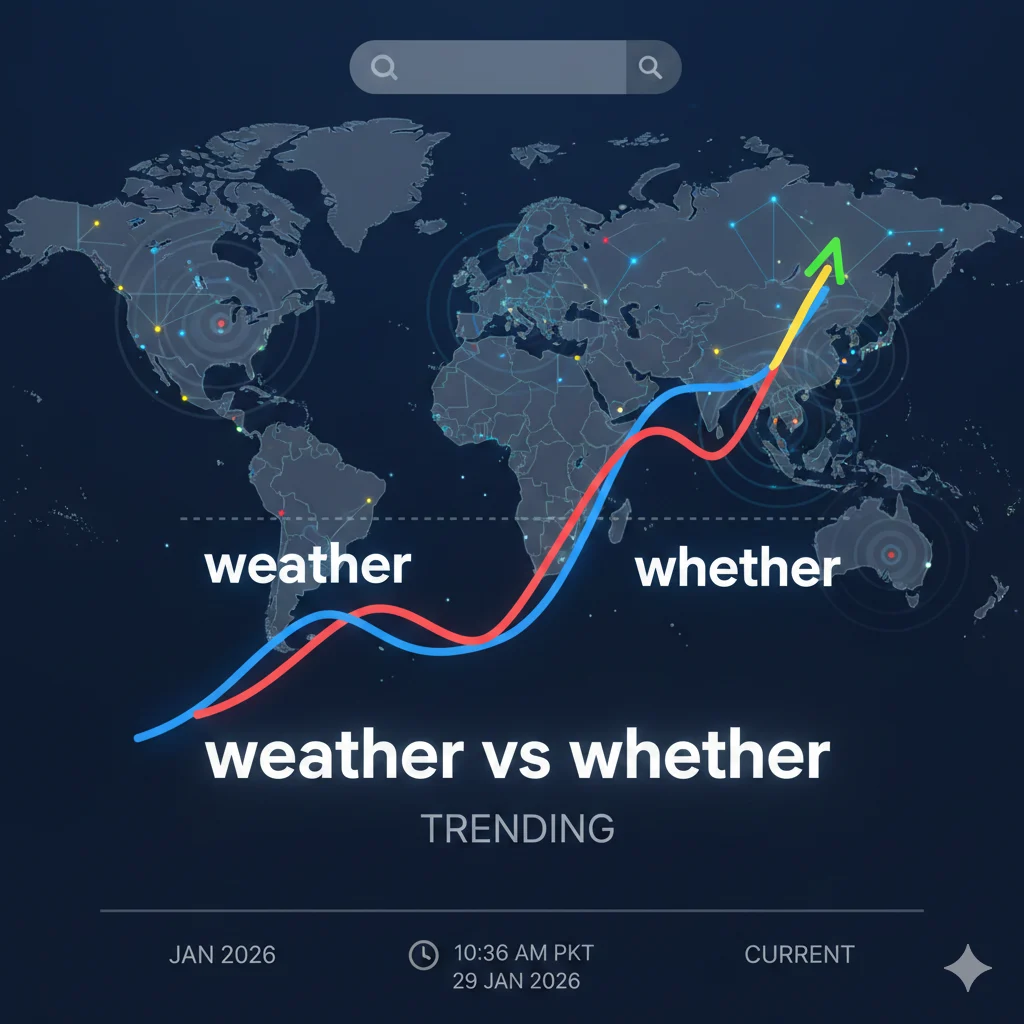
Search data shows weather vs whether examples and weather vs whether definition and examples are most searched by students, writers, and non-native speakers. Countries with high English-learning populations search this topic more often. “Weather” is searched daily due to forecasts, while “whether” spikes during academic seasons. This shows people want both quick clarity and deeper understanding. Clear grammar improves trust, which aligns with Google’s E-E-A-T standards for helpful content.
Comparison Table: Weather vs Whether
| Aspect | Weather | Whether |
|---|---|---|
| Meaning | Climate or conditions | Choice or doubt |
| Used for | Rain, sun, storms | Decisions, options |
| Replace with “if”? | No | Yes |
| Example | Bad weather today | Decide whether to go |
FAQs
1. When to use weather or whether?
Use weather for climate. Use whether for choices or uncertainty.
2. How to use whether in a sentence?
Use it when showing options: “I don’t know whether to call or text.”
3. Is it “whether or not” or “weather or not”?
Correct form is whether or not.
4. When should I use “whether” instead of “if”?
Use whether in formal writing or when presenting clear alternatives.
5. What is the difference in pronunciation?
Weather vs whether pronunciation is the same, which causes confusion.
6. How to remember the difference between weather and whether?
Think weather = wind and rain, whether = choice.
7. Is “weather it be good or bad” correct?
No. Correct form is whether it be good or bad.
Conclusion
Understanding weather vs whether is easier than it seems once you focus on meaning instead of sound. Weather always relates to nature, climate, and outdoor conditions. Whether always introduces a choice, doubt, or decision. This rule never changes across countries, writing styles, or platforms. Remembering this difference improves clarity, confidence, and professionalism in your writing. It also helps readers trust your message, which is important for academic, business, and online content. If you can replace the word with “if,” choose whether. If you are talking about rain, storms, or sunshine, choose weather. With regular practice and real examples, this confusion disappears quickly. Clear grammar is not about perfection—it’s about making your message easy to understand. Whether you write emails, articles, or social posts, using the right word every time makes your writing stronger, clearer, and more credible.

Kael Donovan is a language enthusiast and writer at Definevs.com, simplifying complex words and grammar rules into fun, easy-to-understand guides for readers.