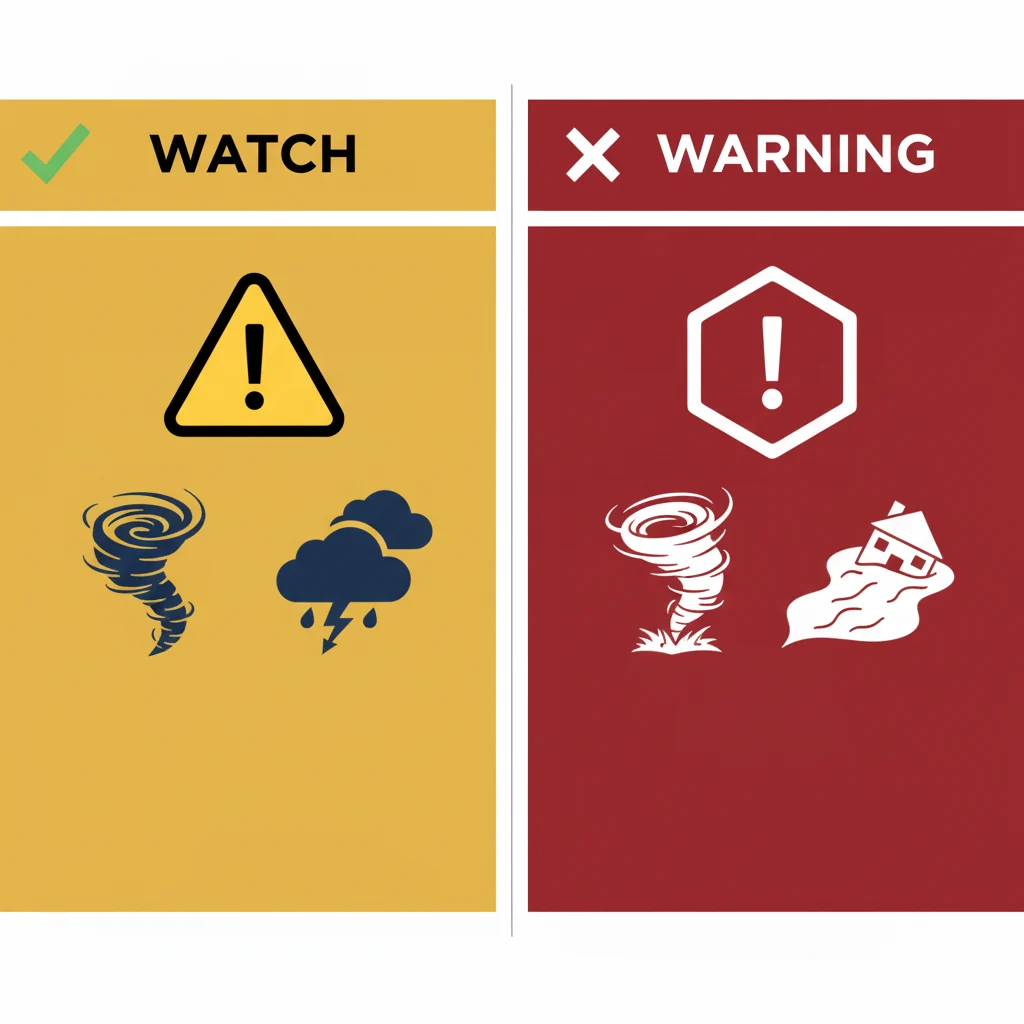
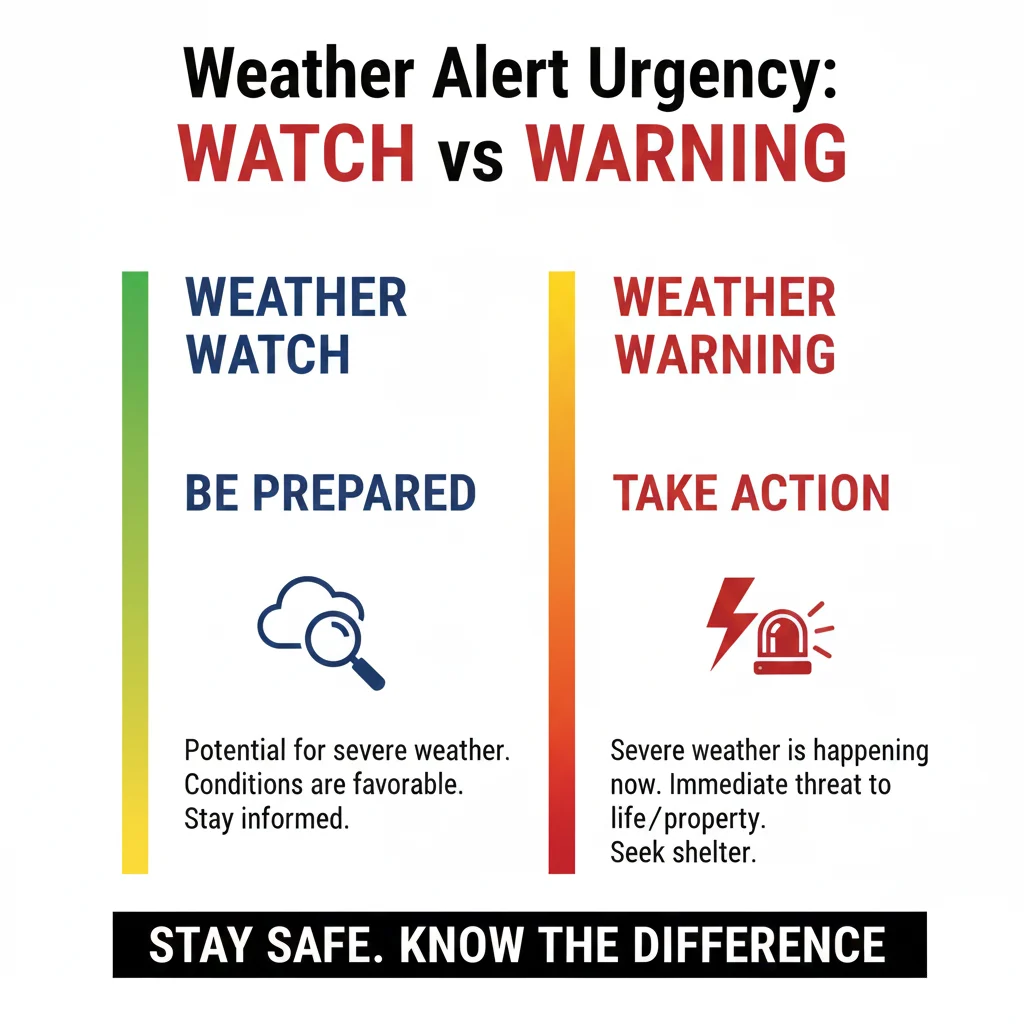
A watch means “conditions are possible,” while a warning means “danger is happening now—take action immediately.”
People often get confused about the words watch and warning, especially when hearing them in weather reports, safety messages, or everyday conversation. Both words sound similar, and both relate to danger or risk. But they do not mean the same thing. One word means “be alert,” while the other means “take action now.”
In this simple and friendly guide, you’ll learn the difference between watch and warning, their meanings, how to use each word correctly, and the most common mistakes people make. Every explanation is written in easy English so that even a 4th-grade student can understand it. You’ll find examples, comparison tables, memory tricks, and a short quiz to test yourself.
By the end, you will confidently know when to use watch and when to use warning—in school, writing, conversations, or safety situations.
🧩 What Does Each Word Mean? (Simple Explanation)

Meaning of “Watch”
Watch is a noun.
A watch means that conditions are possible, but nothing dangerous is happening yet.
You should stay alert and pay attention, but you don’t need to take action right away.
Easy Examples:
- A storm watch means a storm might happen.
- A teacher puts students on watch during a game.
- A flood watch means you should prepare just in case.
Meaning of “Warning”
Warning is a noun.
A warning means the danger is happening now or will happen very soon.
You must act immediately to stay safe.
Easy Examples:
- A tornado warning means a tornado is already happening or near.
- A “no swimming” warning means it is not safe right now.
- A storm warning means the storm is already forming.
🆚 The Key Difference Between Watch or Warning
| Feature | Watch | Warning |
|---|---|---|
| Meaning | Conditions might happen | Danger is happening now |
| Action | Stay alert, be ready | Take action immediately |
| Urgency | Low to medium | High and serious |
| Example (weather) | Flood watch | Flood warning |
| Simple sentence | “A storm watch was issued.” | “A storm warning was issued.” |
⭐ Quick Tip to Remember
Think of watch like: “Watch out… something might happen.”
Think of warning like: “Warning! Something is happening now.”
❌ Common Mistakes and How to Avoid Them
❌ Mistake 1:
“The teacher gave a watch to the class to stay quiet.”
✔ Correct: “The teacher gave a warning to the class to stay quiet.”
➡ Why? A teacher gives a warning, not a watch.
❌ Mistake 2:
“A tornado warning means a tornado may form later.”
✔ Correct: “A tornado warning means the tornado is already happening or close.”
➡ People mix this up often, but a warning is immediate.
❌ Mistake 3:
“We must leave now because there is a flood watch.”
✔ Correct: “We must leave now because there is a flood warning.”
➡ A watch doesn’t require action yet.
🟡 When to Use “Watch”
Use watch when:
- Something might happen
- You need to stay alert
- You should prepare, but not panic
- You’re giving someone a gentle alert
Example Sentences:
- “There is a thunderstorm watch in our area.”
- “Keep a watch on the weather today.”
- “The coach told us to stay on watch during the match.”
- “A flood watch means water levels may rise soon.”
- “Mom kept a watch on the kids playing outside.”
🔴 When to Use “Warning”
Use warning when:
- Danger is already happening
- Action must be taken right now
- You want to stop or protect someone
- The situation is serious
Example Sentences:
- “A tornado warning was issued for our town.”
- “The sign gives a warning about deep water.”
- “The teacher gave a warning after too much noise.”
- “The doctor gave a strong warning about unhealthy eating.”
- “We left early because of a flood warning.”
🧠 Memory Hack
Warning = Red, urgent, stop now.
Think of a red warning light on a car.
🔄 Quick Recap: Watch vs Warning
- Watch = Danger might happen → Stay alert
- Warning = Danger is happening → Take action
- Watch is less urgent
- Warning is very urgent
- Watch = “look out”
- Warning = “stop, act now”
📚 Advanced Tips
1. Origins
- Watch comes from old English meaning “to stay awake and look.”
- Warning comes from a word meaning “to guard or take notice.”
2. Usage in Writing
In essays or reports, warning shows seriousness, while watch suggests preparation.
3. Online/Chat Misuse
People often say “storm warning coming” when they mean “storm watch.”
This changes the urgency and can cause panic.
📝 Mini Quiz (With Answers Below)
Fill in the blanks with watch or warning:
- A flood ______ means water might rise.
- The teacher gave a ______ after disruption.
- A tornado ______ means take action right away.
- Keep a ______ on the sky; the weather looks strange.
- The loud siren is a ______ of danger.
- A storm ______ tells people to prepare early.
- The sign gives a ______ about slippery floors.
Answers:
- watch
- warning
- warning
- watch
- warning
- watch
- warning
❓ FAQs
1. What is the difference between watch and warning?
A watch means something might happen; a warning means danger is happening now.
2. Is a watch serious?
Yes, but not urgent. A watch tells you to prepare, not panic.
3. Which is stronger: watch or warning?
A warning is much stronger and more urgent.
4. Should I take action during a watch?
No. Just stay alert and be ready.
5. Why do people confuse watch and warning?
Because both relate to danger, but they show different levels of urgency.
🏁 Conclusion
Understanding the difference between watch or warning is important for clear communication and safety. A watch tells you that something might happen, so you should stay alert. A warning means the danger is happening right now and you must act immediately. Now that you know the meanings, examples, and simple memory tricks, you can use these words correctly in everyday conversation, schoolwork, and even in weather updates.
Keep practicing, notice how these words appear in news and signs, and you’ll become more confident every day. Small steps in learning lead to big improvements in English.

Mira Loxley is a passionate language and writing expert at Definevs.com, turning tricky words and grammar into clear, engaging guides for every reader.