Ever typed “tieing” and then paused, wondering, “Wait… is that actually a word?”
If yes, you’re not alone. The confusion between tying and tieing is one of the most common spelling mix-ups in English—especially for learners and even native speakers who rely heavily on phonetic spelling.
In simple terms, only one of these spellings is correct, and understanding why will make your writing clearer, more professional, and grammatically accurate.
This guide breaks down:
- The correct meaning and definition
- Why the error “tieing” exists
- The grammar behind the correct spelling
- Examples in sentences
- Related terms and FAQs
- Common mistakes and how to avoid them
What Does “Tying” Mean?
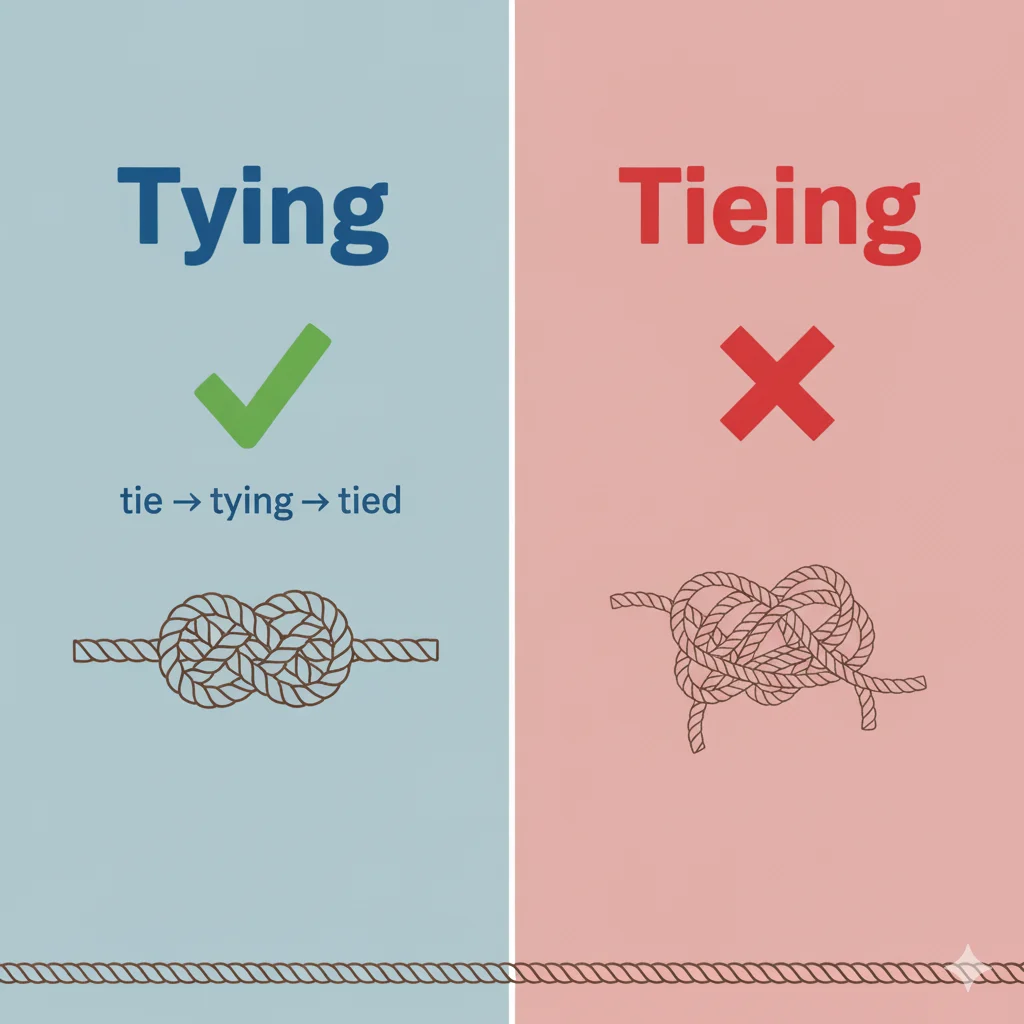
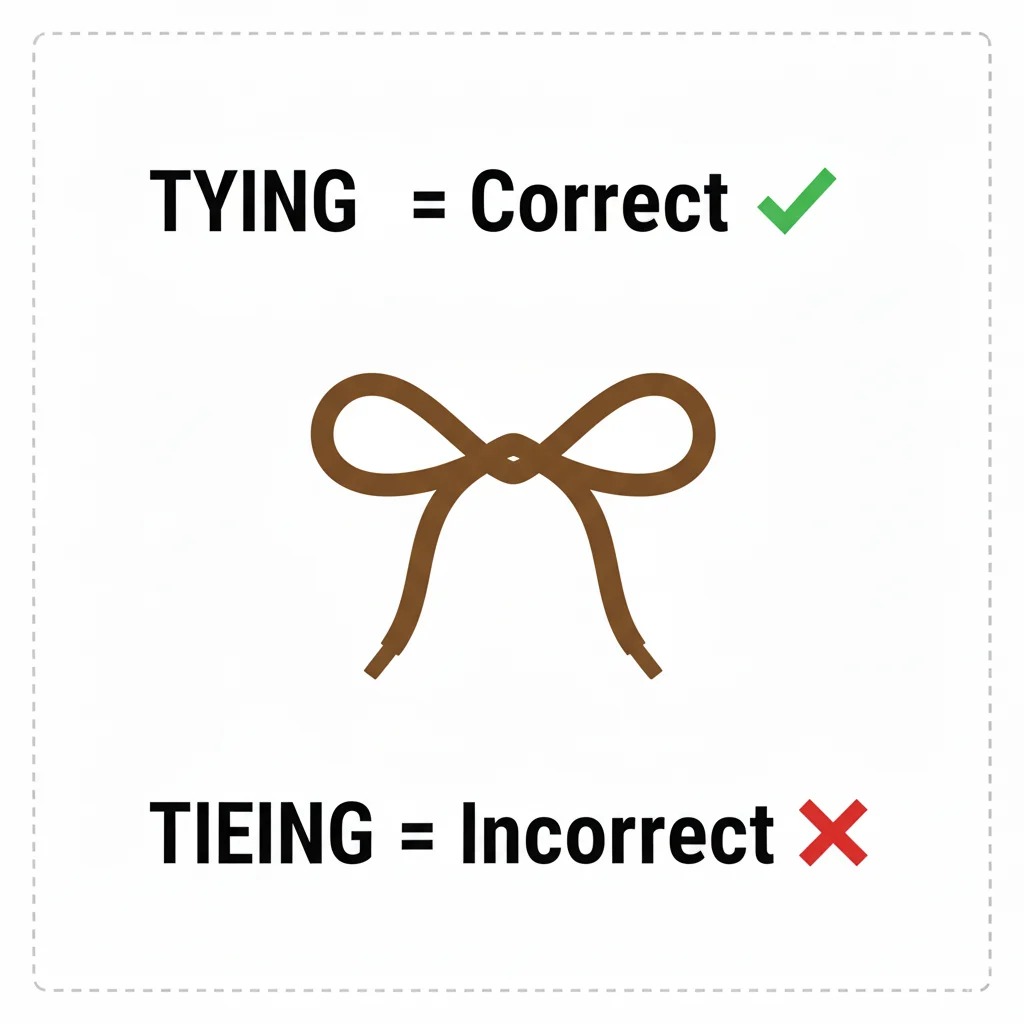
Tying is the correct present participle of the verb “to tie,” meaning to fasten, bind, or connect something using a knot or similar method.
“Tieing” is not a standard or accepted spelling in modern English.
Origin and Popularity
The word “tying” comes from Old English roots related to fastening or binding. The spelling follows a standard English rule:
- When a verb ends in -ie, the “e” is changed to y before adding -ing.
This rule has been consistent across centuries of English usage, which is why only “tying” became the accepted form.
“Tieing” appears occasionally online due to phonetic spelling or autocorrect errors, but it has never been recognized in formal English dictionaries.
Mini Timeline:
- 1300s–1500s: Early forms of “tye” and “tie” appear in English texts.
- 1800s: Grammar rules standardize the “-ie → y + ing” conversion.
- 2000s: “Tieing” becomes a common internet misspelling but remains incorrect.
Tying vs. Tieing in Different Contexts
A) In Everyday Writing
- Tying = ✔️ Correct
Used in any formal or informal context. - Tieing = ✖️ Incorrect
Should not be used anywhere.
B) In Academic or Professional Settings
Only “tying” is acceptable, especially in reports, instructions, or documentation involving steps or procedures.
C) In Digital Communication (Texting, Social Media, Captions)
People may type “tieing” because it sounds right, but grammatically it’s still incorrect.
To appear polished online, use “tying.”
| Context | Correct Form | Incorrect Form | Notes |
|---|---|---|---|
| Everyday writing | Tying | Tieing | “Tieing” is never standard |
| Academic usage | Tying | Tieing | Grammar rule applies |
| Social media | Tying | Tieing | “Tieing” seen but wrong |
| Instructions/manuals | Tying | Tieing | Always use “tying” |
Examples of “Tying” in Sentences
Conversation Examples
Friend 1: What are you doing?
Friend 2: I’m tying my shoelaces.
Person A: Need help with the decorations?
Person B: Yes! I’m tying ribbons right now.
Sister: Why is it taking so long?
Brother: I’m tying the fishing line carefully.
Formal Example
“The technician is tying all loose cables to ensure safety and better cable management.”
Shined / Shone: The Hidden Grammar Rule You’re Getting Wrong
Similar or Related Terms
To help with spelling and grammar, here are related words that follow the same rule:
| Base Verb | Correct “-ing” Form | Notes |
|---|---|---|
| Die | Dying | Not “dieing” |
| Lie | Lying | Not “lieing” |
| Tie | Tying | Not “tieing” |
These verbs drop the “e” from the -ie ending and replace it with y before adding -ing.
How to Use “Tying” Correctly
Do’s
✔️ Use “tying” when describing an action involving fastening or securing.
✔️ Use it in formal writing, emails, instructions, captions, and essays.
✔️ Remember the rule: verbs ending in -ie change to y + ing.
Don’ts
❌ Don’t write “tieing.”
❌ Don’t rely on autocorrect for irregular spelling rules.
❌ Don’t mix forms: “tieing up loose ends” → should be “tying up loose ends.”
Common Mistakes or Misinterpretations
Mistake 1: Assuming “tieing” is correct because “tie” ends in a vowel
English spelling rules override sound-based spelling.
Mistake 2: Applying “add -ing to any verb” blindly
Verbs ending in -ie are exceptions.
Mistake 3: Confusing tying with other words
Words like “trying” or “flying” follow different rules, but the spelling pattern can mislead beginners.
Mistake 4: Thinking both spellings are acceptable
Only one is accepted in grammar guides and dictionaries: tying.
FAQ Section
1. Is “tieing” a real word?
No, “tieing” is not considered a real or correct word in modern English. The correct spelling is “tying.”
2. Why is it spelled “tying” and not “tieing”?
Because English grammar rules say that verbs ending in -ie change the ending to y + ing, resulting in tying, lying, dying.
3. What does “tying” mean?
“Tying” means fastening or securing something with a knot or binding. It’s the present participle of the verb “tie.”
4. Is it ever acceptable to use “tieing”?
No. Even informal writing does not accept “tieing” as correct. At best, it may appear as a common misspelling online.
5. How do you use “tying” in a sentence?
Example: “She is tying the bag tightly so nothing falls out.”
6. What’s the past tense of tie?
The past tense is tied, not tieded or tie’d.
Conclusion
The debate between tying vs. tieing is easy to settle: only “tying” is correct. It follows a simple and consistent English spelling rule that applies to all verbs ending in -ie. Understanding this rule not only improves your grammar but also boosts your writing confidence across emails, social media, academic work, and everyday communication.
Now that you know the true spelling and usage of tying, you’ll never be confused again! Keep exploring our site for more grammar tips, confusing word guides, and simple explanations that make English easier.

Isla Merrin is a language and writing expert at Definevs.com, creating simple, engaging guides to help readers master words, grammar, and modern English usage.