Have you ever heard someone ask, “Is that truth or fiction?” and wondered what it really means? 🤔
These two little words — truth and fiction — sound simple, yet people often confuse them when reading stories, writing essays, or discussing facts online.
In this easy guide, you’ll learn:
- The meaning of “truth” and “fiction”
- The difference between them
- How to use each word correctly in sentences
- Common mistakes and how to avoid them
- Simple tips to remember the difference forever
Whether you’re a student, writer, or just curious, this article will make the meanings of truth and fiction crystal clear — even for beginners.
🧩 What Does Each Word Mean?
Truth:
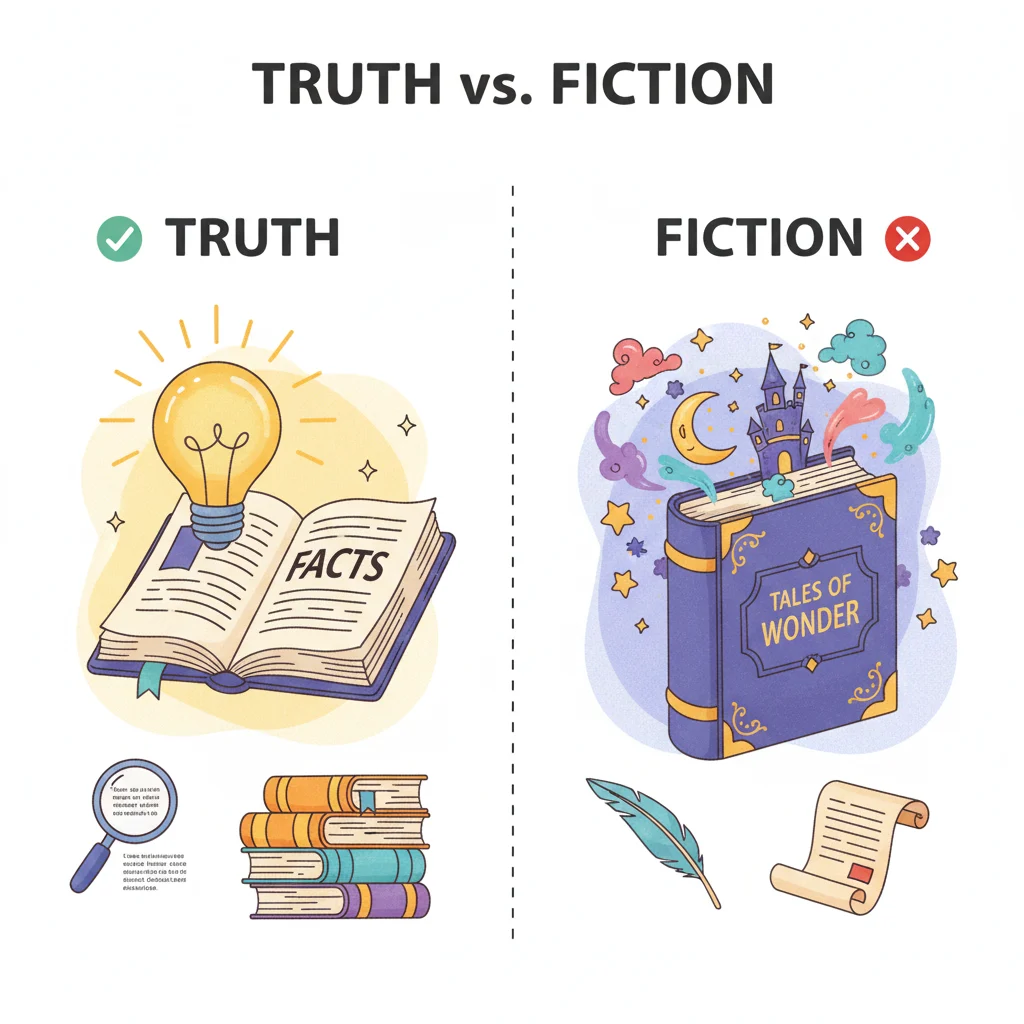
Truth means something that is real, factual, and actually happened.
It comes from the word true, meaning “not false.”
Part of speech: Noun
Examples:
- The truth is that the Earth moves around the Sun.
- She always speaks the truth, even when it’s hard.
- You can’t hide the truth forever.
Think of truth as the side of reality — things that really exist or happened.
Fiction:
Fiction means something that is imagined, made-up, or not real.
It often refers to stories, novels, or movies created from the writer’s imagination.
Part of speech: Noun
Examples:
- Harry Potter is a work of fiction.
- Don’t believe every rumor — most of it is fiction.
- She enjoys reading science fiction books.
Think of fiction as the world of imagination — things that are not true but entertaining or creative.
⚖️ The Key Difference Between Truth and Fiction
| Feature | Truth | Fiction |
|---|---|---|
| Meaning | Something real or factual | Something imaginary or invented |
| Part of Speech | Noun | Noun |
| Used For | Facts, reality, honesty | Stories, novels, creative ideas |
| Example Sentence | “He told the truth about what happened.” | “This movie is pure fiction.” |
| Reality Check | Based on real life | Based on imagination |
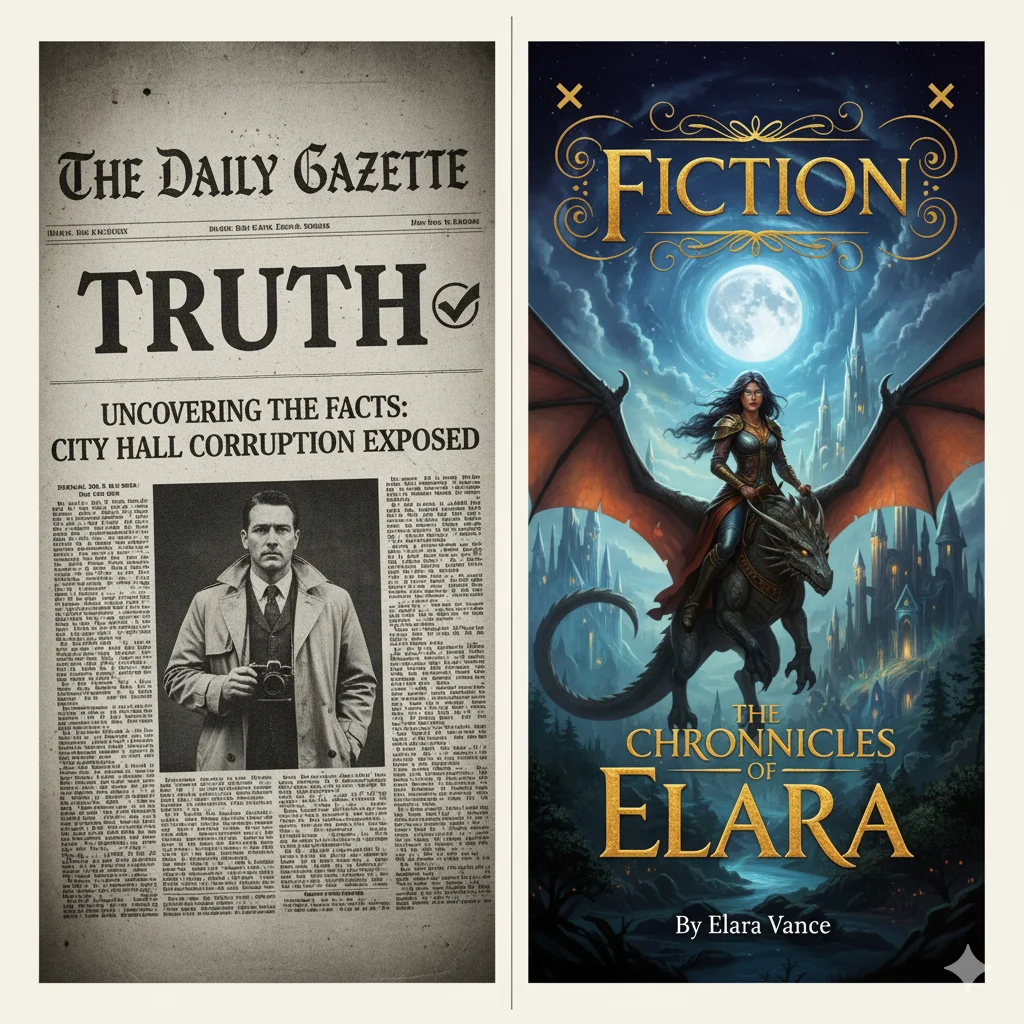
Quick Tip to Remember:
👉 If it really happened, it’s truth. If it came from someone’s imagination, it’s fiction.
🚫 Common Mistakes and How to Avoid Them
❌ Mistake 1: Mixing truth and fiction in writing
Incorrect: “This story is truth.”
Correct: “This story is fiction.”
Why: A story created from imagination isn’t “truth.” It’s “fiction.”
❌ Mistake 2: Saying “fictional truth” incorrectly
Incorrect: “That book tells a fictional truth.”
Correct: “That book shows a truth through fiction.”
Why: Fiction can represent truth through characters and lessons, but it’s not factually true.
❌ Mistake 3: Believing rumors as truth
Incorrect: “I read it online, so it must be the truth.”
Correct: “I should check if that’s true or just fiction.”
Why: Not everything you read or hear is true — especially online!
🕵️ When to Use “Truth”
Use truth when talking about things that are real, proven, or honest.
Examples:
- Tell me the truth — did you break the vase?
- The truth can sometimes hurt, but it’s always better.
- Scientists search for the truth about how the universe began.
- There’s a difference between truth and opinion.
- Always stand by the truth, even when others doubt you.
Memory Hack:
💡 If you can prove it, it’s truth.
✍️ When to Use “Fiction”
Use fiction when referring to stories or ideas that are made up.
Examples:
- My favorite fiction author is J.K. Rowling.
- The movie is based on fiction, not real events.
- He loves writing short fiction stories.
- Some lies are told so often they sound like fiction.
- Historical fiction mixes real history with made-up characters.
Memory Hack:
📚 If it comes from imagination, it’s fiction.
🧠 Quick Recap: Truth vs Fiction
- Truth = Real, factual, proven
- Fiction = Imaginary, made-up, creative
- Truth belongs to reality, fiction belongs to imagination
- You tell the truth but write fiction
- If it really happened → truth
If it’s invented → fiction
In short:
👉 “Truth” is what is.
👉 “Fiction” is what could be.
🌍 Advanced Tips: History, Origin, and Usage
- Truth comes from the Old English word triewth, meaning “faithful or consistent.”
- Fiction comes from the Latin fictio, meaning “a creation” or “something shaped.”
In formal writing (like essays or journalism), use “truth” to refer to facts and verified information.
In creative writing, “fiction” is used for storytelling, novels, and imaginary works.
📱 In online writing or social media, people often blur truth and fiction — memes, rumors, and AI-generated posts can mix both. Always double-check facts before sharing!
🧩 Mini Quiz: Truth or Fiction?
Test your understanding! Fill in the blanks with truth or fiction.
- Harry Potter is a famous work of ___________.
- Always tell the ___________, even if it’s hard.
- That rumor turned out to be complete ___________.
- The documentary showed the ___________ about pollution.
- My favorite subject in school is reading modern ___________.
- Sometimes, stories use ___________ to teach real-life lessons.
- The detective finally found the ___________ behind the mystery.
(Answers: 1-Fiction, 2-Truth, 3-Fiction, 4-Truth, 5-Fiction, 6-Fiction, 7-Truth)
❓ FAQ Section
1. What is the main difference between truth and fiction?
Truth is based on facts and reality, while fiction is created from imagination and not necessarily real.
2. Can fiction contain truth?
Yes! Fictional stories can include moral or emotional truths that reflect real human experiences, even if the events are made up.
3. Is truth always proven?
Truth is something that can be verified or supported by evidence — but sometimes, what we believe as truth changes with new information.
4. What are examples of fiction?
Novels, movies, short stories, plays, and fantasy tales like Harry Potter or The Avengers are fiction.
5. How can I remember the difference between truth and fiction?
Simple: Truth = Real. Fiction = Fake (but fun).
🎯 Conclusion
Now you know the clear difference between truth and fiction.
Truth deals with reality — what’s proven or happened. Fiction belongs to imagination — what’s made up or created for storytelling.
Next time someone asks, “Is that truth or fiction?”, you’ll know exactly what to say! Keep practicing, reading, and writing — and soon, you’ll never mix these two words again.

Kael Donovan is a language enthusiast and writer at Definevs.com, simplifying complex words and grammar rules into fun, easy-to-understand guides for readers.