Have you ever seen both “totaled” and “totalled” in writing and wondered which one is right? You’re not alone!
These words look almost the same but have slightly different spellings — and that small extra “L” can be confusing.
In this guide, we’ll explain:
- The meaning of “totaled,” “totaling,” and “totalling”
- The difference between American and British English spellings
- When to use each form correctly
- Common mistakes, easy examples, and memory hacks
By the end, you’ll know exactly when to use “totaled” and when “totalled” fits best — and you’ll never mix them up again!
💡 What Does Each Word Mean?
Let’s start by understanding what these words mean and how they’re used.
✅ Totaled (verb – past tense)
Meaning: “Totaled” means to add up or calculate the full amount. It can also mean something is completely destroyed, especially in American English when talking about cars.
Examples:
- She totaled her expenses for the trip.
- The storm totaled several cars on the street.
- We totaled the scores after the game.
✅ Totaling / Totalling (verb – present participle)
Meaning: Both “totaling” and “totalling” mean adding up or amounting to something. The spelling depends on where you are from.
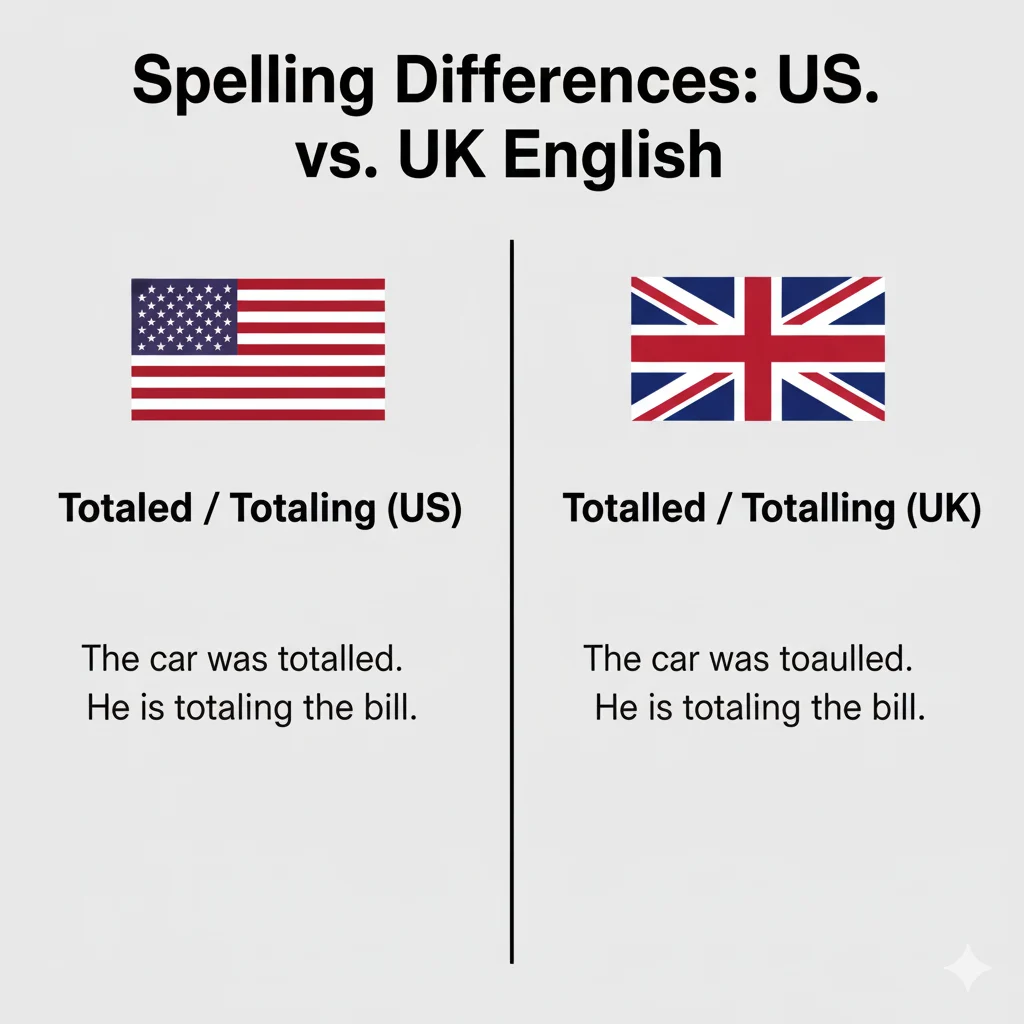
- “Totaling” → American English (U.S.)
- “Totalling” → British English (U.K., Canada, Australia)
Examples:
- The bill is totaling $25 right now. (U.S.)
- The repairs are totalling £300. (U.K.)
- The teacher is totaling all the marks.
Part of Speech: Verb (the “-ing” form of “total”).
🔍 The Key Difference Between Totaled, Totaling, and Totalling
The difference lies in spelling and region, not meaning.
American English usually uses one “L”, while British English doubles it (two Ls) when adding endings like -ed or -ing.
| Word | Type | Used In | Meaning | Example Sentence |
|---|---|---|---|---|
| Totaled | Past tense verb | American English | Added up / completely destroyed | The car was totaled in the crash. |
| Totalled | Past tense verb | British English | Added up / completely destroyed | The car was totalled after the accident. |
| Totaling | -ing form | American English | Adding up / amounting to | She’s totaling the bills. |
| Totalling | -ing form | British English | Adding up / amounting to | He’s totalling the costs. |
💡 Quick Tip:
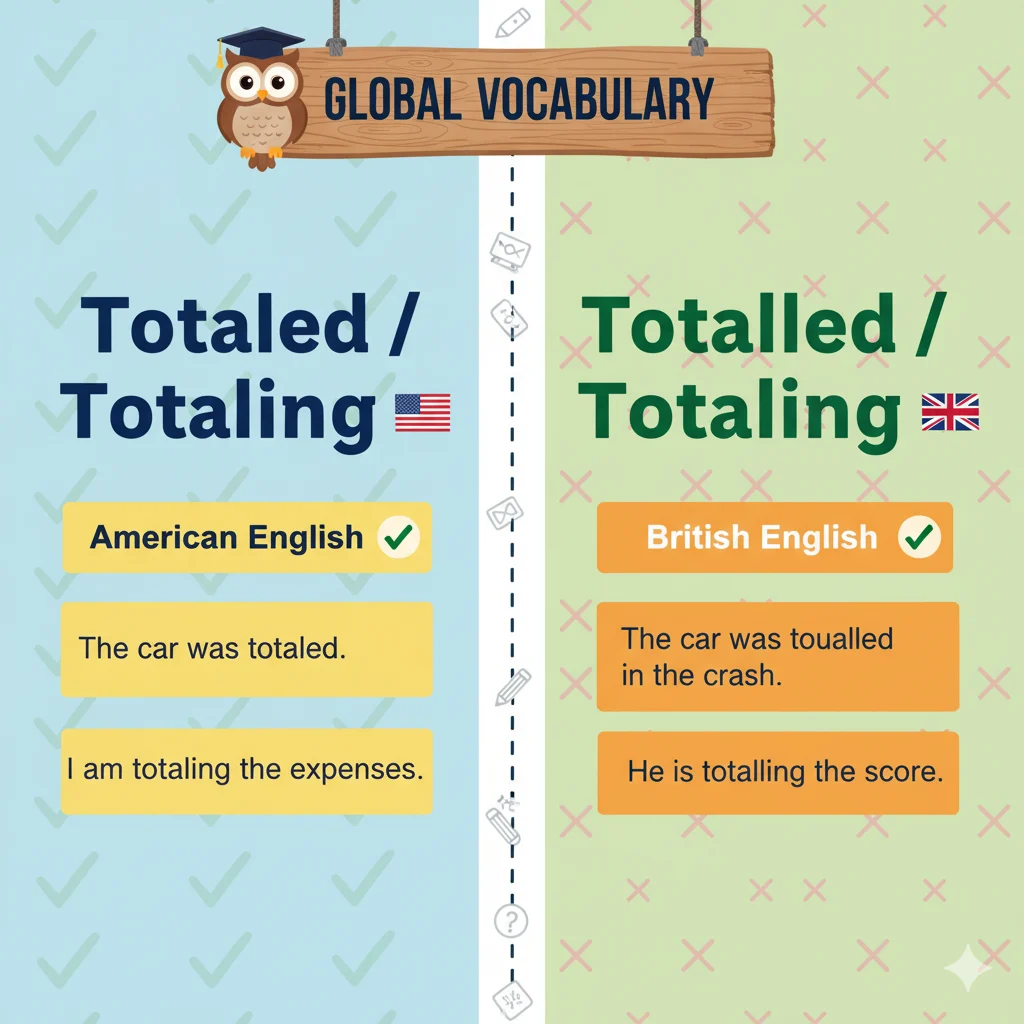
If you’re writing for an American audience, use totaled and totaling (one L).
If you’re writing for a British audience, use totalled and totalling (two Ls).
❌ Common Mistakes and How to Avoid Them
- Mixing spellings in one text
- Incorrect: The car was totalled, and the damage is totaling $5000.
- Correct:
- American: The car was totaled, and the damage is totaling $5000.
- British: The car was totalled, and the damage is totalling £5000.
- Adding too many Ls
- Incorrect: The numbers are totallingg quickly.
- Correct: The numbers are totalling quickly.
- Using the wrong form
- Incorrect: She totaling the list yesterday.
- Correct: She totaled the list yesterday.
👉 Tip: Stay consistent — choose one style (American or British) and stick with it throughout your writing.
🇺🇸 When to Use “Totaled” and “Totaling” (American English)
Use these spellings if you write for an American audience or follow U.S. grammar rules.
Examples:
- My car was totaled in the storm.
- The receipts are totaling $200 so far.
- We totaled the marks and found the winner.
- The costs are totaling more than expected.
- She totaled all the numbers in the spreadsheet.
Memory Hack:
👉 “America” has one “A.”
👉 “Totaled” has one “L.”
Use that to remember — one A, one L.
🇬🇧 When to Use “Totalled” and “Totalling” (British English)
Use these spellings in British English or when writing for readers in the U.K., Canada, Australia, or New Zealand.
Examples:
- The car was totalled after the crash.
- The bills are totalling nearly £800.
- She totalled the team’s points for the term.
- The damage is totalling a great deal.
- The losses totalled thousands of pounds.
Memory Hack:
🇬🇧 “Britain” has two syllables, and British spellings often double consonants — totalled, totalling.
🔁 Quick Recap: Totaled vs Totalled
Here’s an easy summary to remember:
- Totaled / Totaling → 🇺🇸 American English
- Totalled / Totalling → 🇬🇧 British English
- Meaning → Same in both: “to add up” or “to destroy completely.”
- Choose one version and stay consistent in your writing.
Example Recap:
- American: The vehicle was totaled after the storm.
- British: The vehicle was totalled after the storm.
🎓 Bachelor’s Degree or Bachelors Degree: What’s the Correct Way to Write It?
💬 Advanced Tips
- The word “total” comes from the Latin totalis, meaning “whole” or “entire.”
- Doubling of consonants (like the “L” in totalling) follows British spelling rules, especially when the last syllable is stressed.
- In formal writing, always follow your audience’s convention:
- U.S. schools, newspapers, or companies → totaled
- U.K. publishers, universities, or exams → totalled
- In texting or online writing, either is accepted — just be consistent!
🧠 Mini Quiz: Practice What You Learned
Fill in the blanks with the correct word.
- The car was completely __________ in the accident.
- She is __________ all the marks for the report.
- The repair costs have __________ £700.
- Our scores are __________ up quickly.
- The bill was __________ more than we expected.
(Answers: 1. totaled/totalled, 2. totaling/totalling, 3. totaled/totalled, 4. totaling/totalling, 5. totaled/totalled)
❓FAQs
1. What’s the difference between “totaled” and “totalled”?
Both mean the same thing. “Totaled” is used in American English, while “totalled” is used in British English.
2. Which is correct: “totaling” or “totalling”?
Both are correct. “Totaling” (one L) is American, and “totalling” (two Ls) is British.
3. Can I use “totaled” in the U.K.?
You can, but it will look American. British readers prefer “totalled.”
4. What does “totaled a car” mean?
It means the car was completely destroyed or damaged beyond repair in an accident.
5. How can I remember the difference easily?
Think: American → one L, British → double L.
🏁 Conclusion
Now you know the difference between totaled, totalled, totaling, and totalling!
They all share the same meaning — to add up or be completely destroyed — but differ by region and spelling style.
Remember:
- 🇺🇸 American English: totaled, totaling
- 🇬🇧 British English: totalled, totalling
Stay consistent with your spelling, and soon, you’ll be writing like a pro — for real! Keep learning and practicing new word pairs every day to boost your English confidence.

Kael Donovan is a language enthusiast and writer at Definevs.com, simplifying complex words and grammar rules into fun, easy-to-understand guides for readers.