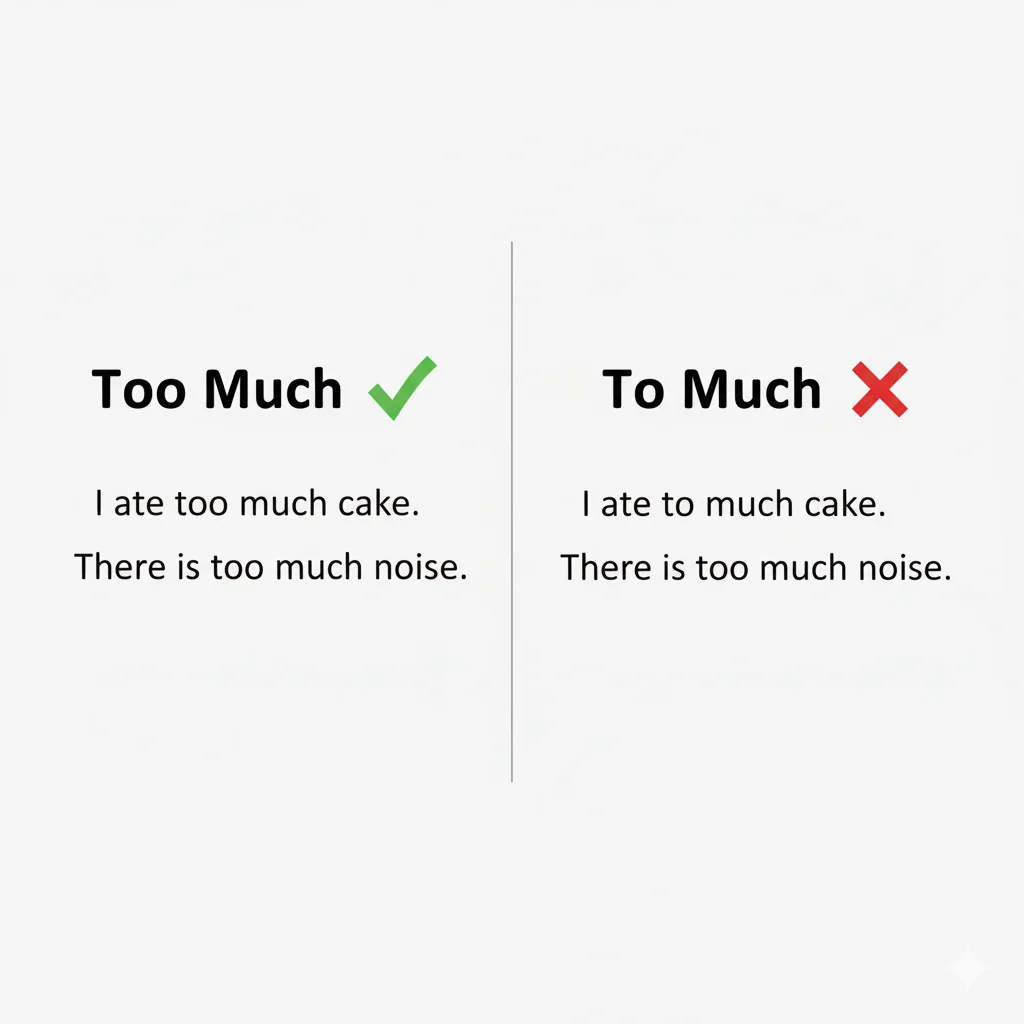
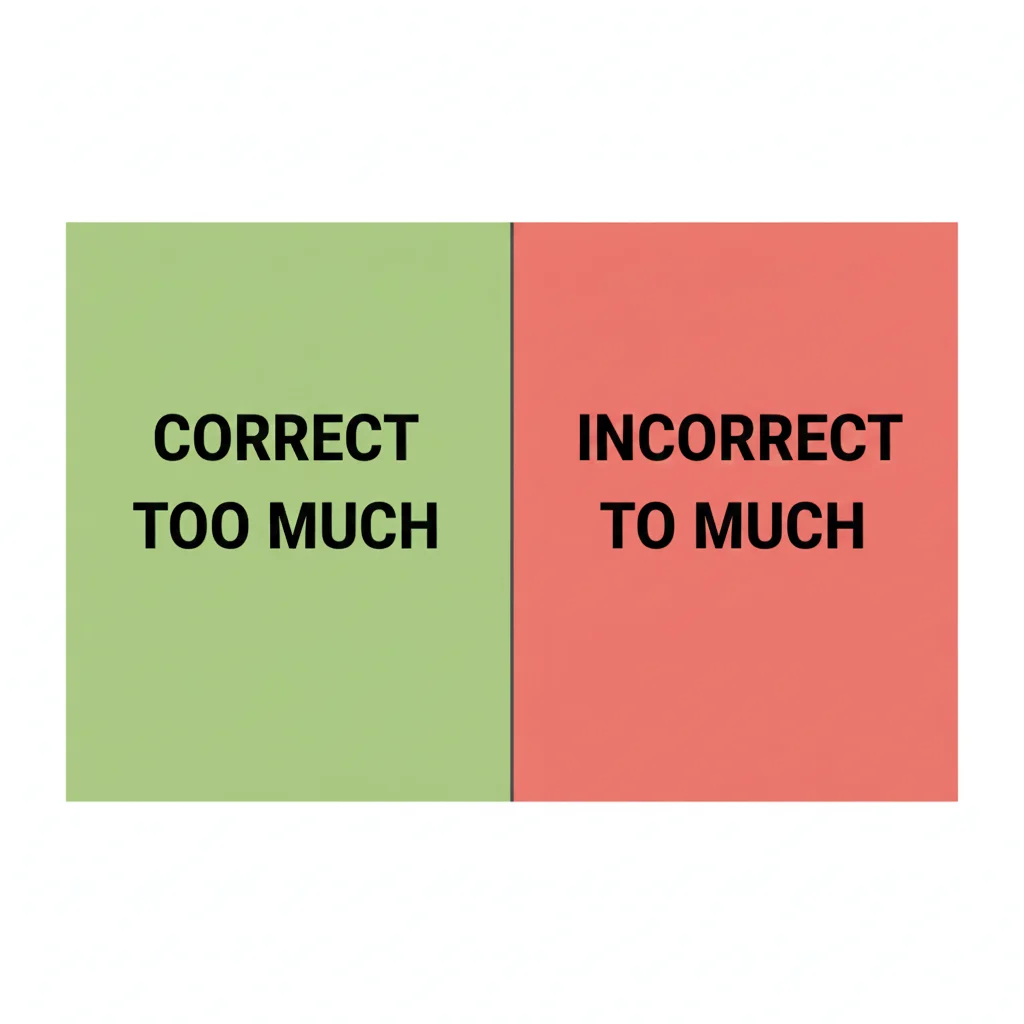
“Too much” is correct.
It means “more than needed” or “excessively”.
“To much” is always incorrect in English because “to” cannot be used before “much” without an extra word.
English has many confusing phrases, but one of the most common mistakes people make is writing “to much” instead of “too much.” You’ll see it in texts, Instagram captions, homework, and even in professional writing.
The good news? This mistake is extremely easy to fix once you understand the meaning and grammar behind each word. In this simple guide, you’ll learn:
- What “too” means
- Why “to much” is always incorrect
- When to use “too much”
- How to avoid the mistake
- Easy examples that even a 4th-grader can understand
By the end, you’ll know the difference instantly — and you’ll never confuse them again.
What Does Each Word Mean?
To understand “too much or to much,” you first need to know what “too” and “to” mean. These two tiny words look similar, but their meanings are very different.

1. “Too” — Meaning & Use
“Too” means “more than needed,” “excessively,” or “also.”
In the phrase “too much,” it means “more than enough.”
Part of Speech: Adverb
Examples:
- She put too much sugar in the tea.
- The bag is too heavy for me.
- You talk too much during class.
A simple way to remember:
👉 “Too” often shows extra, excess, or something that is more than normal.
2. “To” — Meaning & Use
“To” is a preposition. It shows direction or purpose.
Examples: go to school, walk to home, write to someone.
But here’s the important part:
➡️ “To” cannot be used directly before “much.”
It always needs another word after it, like:
- to do much
- to give much
- to spend much
But never:
❌ to much
Examples:
- I am going to the store.
- She wants to learn English.
- He tried to do much work today. (Correct)
- He worked to much today. (Incorrect)
⭐ The Key Difference Between Too Much and To Much
Here is the simple difference:
🔹 “Too much” = Correct
Meaning: More than needed; too many; excessive.
🔹 “To much” = Always incorrect
There is no situation where “to much” is grammatically correct.
Comparison Table: Too Much vs To Much
| Phrase | Correct? | Meaning | Example |
|---|---|---|---|
| Too much | ✔️ Yes | More than needed; excessive | She ate too much chocolate. |
| To much | ❌ No | Incorrect phrase | ❌ He talks to much. |
Quick Tip to Remember
👉 If the sentence means “more than enough,” use “too much.”
👉 If you want to write “to much,” don’t. It’s always wrong.
Common Mistakes and How to Avoid Them
Because “to” and “too” sound the same, people often mix them up. But here’s how to fix common errors easily.
❌ Mistake 1: Using “to much” instead of “too much”
- Wrong: The soup has to much salt.
- Right: The soup has too much salt.
Why it happens:
People hear “too” but type “to.”
Fix:
Ask yourself:
➡️ Does the sentence mean “extra” or “excess”?
If yes → use “too.”
❌ Mistake 2: Using “too much” in the wrong sentence
- Wrong: I want too much go outside.
- Right: I want to go outside.
Why it happens:
Confusion between “to” (a preposition) and “too” (meaning extra).
Fix:
If the sentence shows direction or purpose → use “to.”
❌ Mistake 3: Thinking “to much” looks simpler
Correct English sometimes uses double letters.
Example: too, see, cool.
So remember:
👉 If you mean “a lot,” “excess,” or “more than enough,”
you must use too much.
When to Use “Too Much” (With Simple Examples)
Use “too much” when you want to talk about something excessive, extra, or more than necessary.
Use “Too Much” for…
✔️ 1. Excess Quantity
- He has too much homework.
- There is too much noise outside.
✔️ 2. Strong Feelings
- I love you too much.
- She worries too much.
✔️ 3. Bad or Overwhelming Situations
- The sun is too much for me today.
- This work is too much for one person.
✔️ 4. Negative Habits
- He plays games too much.
- You complain too much.
✔️ 5. Food and Drinks
- She added too much milk.
- Don’t drink too much soda.
Memory Hack:
👉 If you can replace “too much” with “a lot,” the sentence makes sense.
Example:
She talks a lot = She talks too much.
When to Use “To” (Why “To Much” Is Wrong)
“To” is used for direction, action, purpose, or movement — not for excess.
Use “To” When You Mean:
✔️ 1. Direction
- She is going to school.
✔️ 2. Purpose
- I want to study.
✔️ 3. Action
- He tried to help.
✔️ 4. Comparison
- From A to Z.
✔️ 5. Giving or receiving
- Give this to your sister.
❌ Never use “to” directly before “much.”
There must always be another word between them:
✔️ to do much
✔️ to give much
✔️ to spend much
❌ to much (always wrong)
Memory Trick:
👉 “Too” means “extra.”
👉 “To” does not.
If you’re talking about “extra,” choose too.
Quick Recap: Too Much vs To Much
- “Too much” = correct
- “To much” = incorrect
- “Too” means extra or excessive
- “To” shows direction or purpose
- If the sentence means “more than enough,” use too much
- NEVER write “to much”
Advanced Tips (For Better Writing & Exams)
📌 1. Origin
“Too” comes from an Old English word meaning “in excess.”
“To” comes from a word meaning “toward.”
📌 2. Formal Writing
Use “too much” carefully in essays—only when describing:
- Problems
- Excess
- Overuse
- Overreaction
Example:
“There is too much pollution in major cities.”
📌 3. Academic Writing
Avoid using “too much” casually.
Instead of:
“The article uses too much data,”
write:
“The article provides more data than necessary.”
📌 4. Texting Mistakes
People type “to much” quickly on phones.
Autocorrect sometimes doesn’t fix it.
Always double-check before posting online.
Mini Quiz: Too Much or To? (Fill in the Blanks)
Fill with too much or to:
- He ate _______ pizza last night.
- I want _______ finish my homework early.
- She talks _______ much during class.
- This bag is _______ heavy for me.
- They added _______ much salt in the soup.
- I need _______ go outside for fresh air.
- You worry _______ much about everything.
✅ Quiz Answers
- too much
- to
- too much
- too
- too much
- to
- too much
Conclusion
Understanding the difference between “too much” and “to much” is easy once you know the meaning of “too” and “to.” The key to remembering is simple:
👉 If you mean “extra,” use “too.”
👉 If you mean direction or purpose, use “to.”
Because “to much” is always incorrect, the rule becomes even easier. With practice and simple examples, you’ll quickly get it right in everyday writing, texts, and schoolwork. Keep learning, keep practicing, and your English will improve a little more every single day.

Mira Loxley is a passionate language and writing expert at Definevs.com, turning tricky words and grammar into clear, engaging guides for every reader.