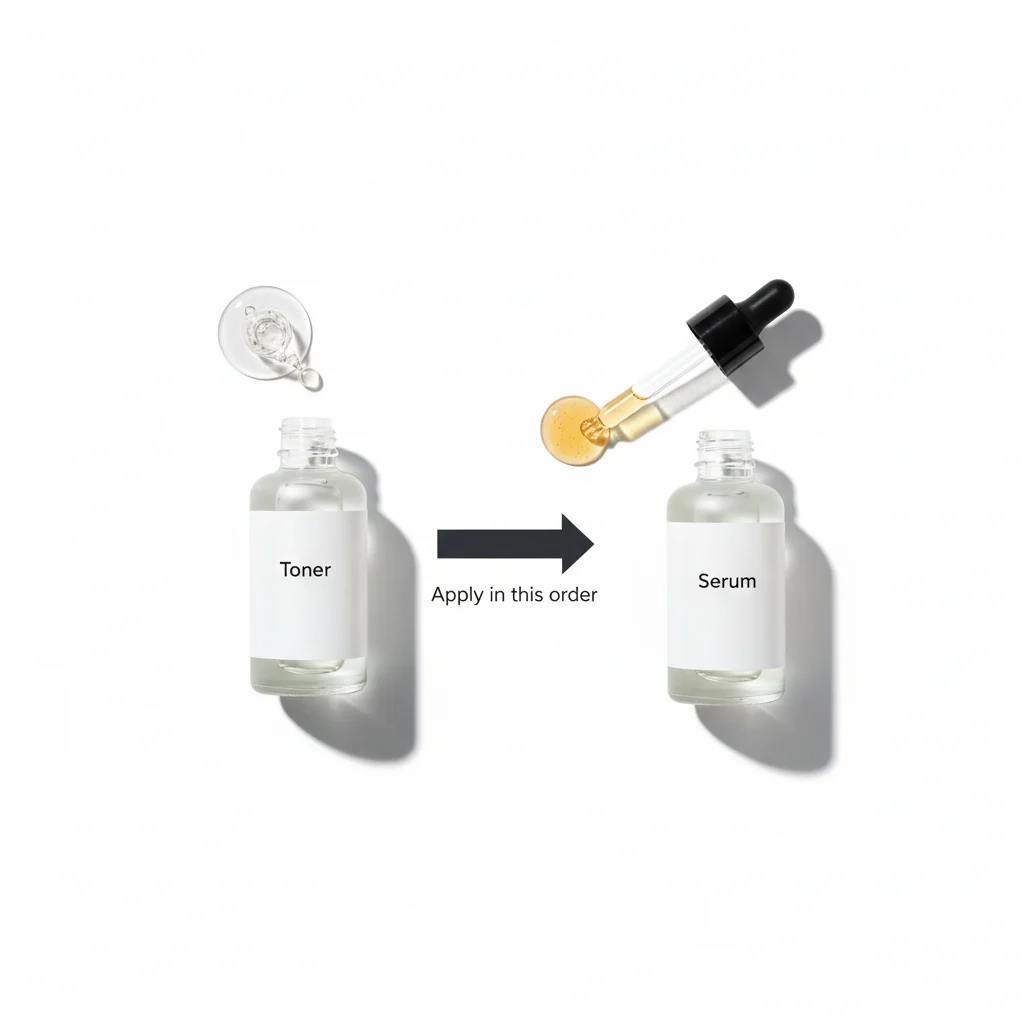
Toner goes first, serum goes second.
Use toner right after cleansing to prep your skin, and apply serum afterward to deliver active ingredients deeply.
Have you ever stood in front of your mirror holding two bottles and wondering, “Do I use toner or serum first?” You are not alone. Many beginners — and even regular skin-care lovers — get confused about the correct order. Toners and serums sound similar, but they do very different jobs. Using them in the wrong order can even make them less effective.
This simple, beginner-friendly guide explains the meaning, difference, and correct usage of toner and serum, using clear language that even a 4th-grade student can understand. By the end, you’ll know exactly which one to use first, how to avoid common mistakes, and how to build a perfect skin routine step by step.
⭐ What Does Each Product Do? (Toner vs Serum Explained Simply)
What Is Toner?
A toner is a light, watery liquid used right after cleansing.
Think of toner as your skin’s first drink of water after washing your face.
Part of speech analogy:
If your skincare routine were a story, toner works like the introduction — it prepares everything.
Toner does 3 things:
- Removes leftover dirt or cleanser
- Balances your skin’s pH
- Prepares your skin to absorb serum better
Easy examples of toner use:
- “After washing her face, Sara used toner to freshen her skin.”
- “I applied toner to clean off the last traces of makeup.”
- “A toner made my skin feel soft and ready for serum.”
What Is Serum?
A serum is a thicker, more powerful liquid filled with active ingredients.
Think of serum as your skin’s vitamin boost.
Serum does 3 things:
- Targets a specific problem (acne, spots, dryness)
- Goes deep into the skin
- Gives fast and strong results
Easy examples of serum use:
- “Ali used a vitamin C serum to brighten his skin.”
- “This serum helps reduce pimples.”
- “She applied serum to hydrate her dry cheeks.”
🔑 The Key Difference Between Toner and Serum
Here’s the simplest way to remember:
👉 Toner = Prep
👉 Serum = Treat
Toner prepares your skin. Serum treats your skin.
Comparison Table: Toner vs Serum
| Feature | Toner | Serum |
|---|---|---|
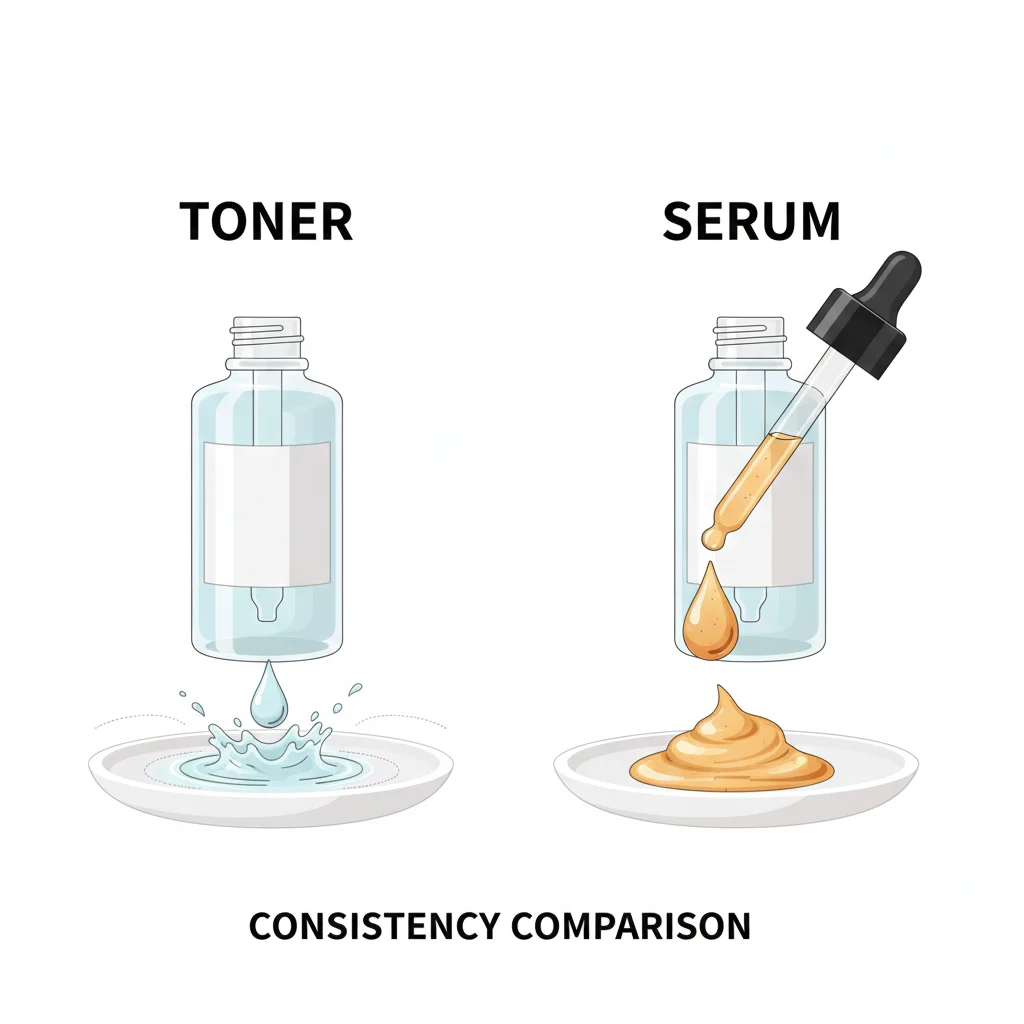
| Consistency | Watery & light | Thick & concentrated |
| Purpose | Prepares skin | Targets problems |
| When to use | After cleansing | After toner |
| Absorption | Surface-level | Deep into skin |
| Examples | Hydrating toner, calming toner | Vitamin C, hyaluronic acid, niacinamide |
⭐ Quick Memory Trick:
If it’s runny like water → toner.
If it feels like a light gel → serum.
❌ Common Mistakes and How to Fix Them
Mistake 1: Using serum before toner
❌ Wrong: Serum → Toner
✔️ Correct: Toner → Serum
Why?
Toner opens the “door” to your skin. Serum goes in. If you switch them, serum can’t absorb well.
Mistake 2: Using too much toner
Too much toner can make your face feel sticky.
✔️ Use only a few drops.
Mistake 3: Applying serum on dry, unprepared skin
A serum works best when skin is slightly damp from toner.
✔️ Always apply serum right after toner.
Ice or Heat for Knee Pain: The Tiny Detail You’re Missing 🩹❄️🔥
💧 When to Use Toner (With Simple Examples)
Use toner when:
- You just washed your face
- Your skin feels tight
- You want a fresh, clean base
- You need better absorption of products
How to apply toner:
- Wash your face
- Take a few drops of toner
- Gently pat it on your skin
Easy example sentences:
- “I used toner to clean the leftover oil from my nose.”
- “She patted toner on her cheeks to prepare for serum.”
- “Toner made my skin feel soft before applying serum.”
- “After gym, he refreshed his skin with toner.”
- “A hydrating toner helped reduce dryness.”
🌸 When to Use Serum (With Simple Examples)
Use serum:
- After toner
- When treating acne, spots, wrinkles, or dryness
- Morning or night
- Before moisturizer
How to apply serum:
- Put 2–3 drops in your hand
- Spread gently
- Tap, don’t rub
- Let it absorb
Easy example sentences:
- “I used vitamin C serum in the morning.”
- “Her hyaluronic serum kept her skin hydrated.”
- “He applied acne serum on his forehead.”
- “This serum helps fade dark spots.”
- “Serum made my skin glow.”
⭐ Memory Hack:
Serum = Solution
Use it when you want a specific solution to a skin problem.
🔄 Quick Recap: Toner vs Serum
- Toner goes first — it cleans, refreshes, and prepares.
- Serum goes second — it treats and improves skin.
- Toner is light and watery.
- Serum is thicker and stronger.
- Use both for the best results.
🌱 Advanced Tips (Easy to Understand)
1. Origins
- Toners were originally used to remove soap residue.
- Serums were created to deliver strong ingredients deeply.
2. In school essays or blogs
Use “toner or serum first” to explain a correct process or sequence.
Example:
“In a skincare routine, toner comes before serum to help absorption.”
3. In texting or online writing
Mixing up the order can confuse beginners.
Using the correct steps helps explain routines clearly.
🧠 Mini Quiz (Check Your Understanding!)
Fill in the blanks:
- You apply ______ first because it prepares your skin.
- A ______ treats specific skin problems like acne or dryness.
- Toner is usually ______ in texture.
- Serum should be applied ______ toner.
- A vitamin C ______ helps brighten the skin.
- Cleanser → ______ → Serum
- Serum goes ______ into the skin.
(Answers: toner, serum, watery, after, serum, toner, deep)
📌 FAQs
1. Do you apply toner or serum first?
Always apply toner first, then use serum afterward.
2. Why does toner go before serum?
Toner prepares your skin and makes it easier for serum to absorb.
3. Can I skip toner?
Yes, but skipping toner may reduce how well your serum works.
4. Can toner replace serum?
No. Toner preps the skin; serum targets specific problems.
5. Can I use toner and serum every day?
Yes, most toners and serums are safe for daily use unless they contain strong exfoliants.
Benzoyl Peroxide or Salicylic Acid: Tiny Detail You Missed 👀
🏁 Conclusion
Choosing whether to use toner or serum first is easy once you understand how each one works. Toner prepares your skin, and serum treats it. When used in the right order, they make your skincare routine smoother, more effective, and beginner-friendly. Practice the correct steps every day, and soon it will feel natural — just like brushing your teeth.
Healthy skin starts with simple habits, and you’re already on the right path.

Kael Donovan is a language enthusiast and writer at Definevs.com, simplifying complex words and grammar rules into fun, easy-to-understand guides for readers.