Sit means to rest or be seated by yourself. Set means to place or put something somewhere.
👉 You sit on a chair.
👉 You set a book on the table.
If no object is involved, use sit.
If an object is involved, use set.
This single rule solves most sit vs set grammar confusion.
Sit vs set is one of the most confusing verb pairs in English. Many learners and even native speakers pause and think, “Should I say sit or set here?” People search for this keyword because both words sound simple, but their usage rules feel tricky in real life. You hear phrases like “set down” and “sit down” every day, which makes the confusion worse. The problem grows when tense changes appear, such as sit, sat, set, or when people mix it up with seat. This article clears that confusion step by step. You’ll get a quick rule, real-life examples, grammar help, and professional usage advice. By the end, you’ll confidently know when something sits and when you set it—without guessing.
The Origin of Sit vs Set

The confusion between sit vs set comes from history. Both words come from Old English and Germanic roots. Sit comes from “sittan,” meaning to rest or stay in a seated position. It has always described a state, not an action done to something else. Set comes from “settan,” meaning to cause something to sit or be placed. Over time, English kept both verbs, but their meanings stayed closely linked. That’s why people still mix them up today. There are no spelling differences caused by British or American changes here; instead, the confusion exists because set is transitive (needs an object) and sit is intransitive (does not need one).
British English vs American English Spelling
There is no spelling difference between British and American English for sit vs set. The confusion is about grammar, not spelling.
| Aspect | British English | American English |
|---|---|---|
| Sit | sit, sits, sat | sit, sits, sat |
| Set | set, sets, set | set, sets, set |
| Rule | Same grammar rules | Same grammar rules |
| Common Errors | Sit/set mixing | Sit/set mixing |
Both varieties follow the same sit vs set rules and examples.
Weather vs Whether 🌦️ A Simple Fix for a Costly Error
Which Spelling Should You Use?
Since there is no spelling difference, your choice depends on sentence structure, not audience. For US readers, UK readers, or a global audience, the rule stays the same. If the subject performs the action alone, use sit. If the subject places something else, use set. In professional writing, emails, academic work, and journalism, using the correct verb improves clarity and credibility. This matters for Google’s EEAT standards, where accuracy and trust are key.
Common Mistakes with Sit vs Set
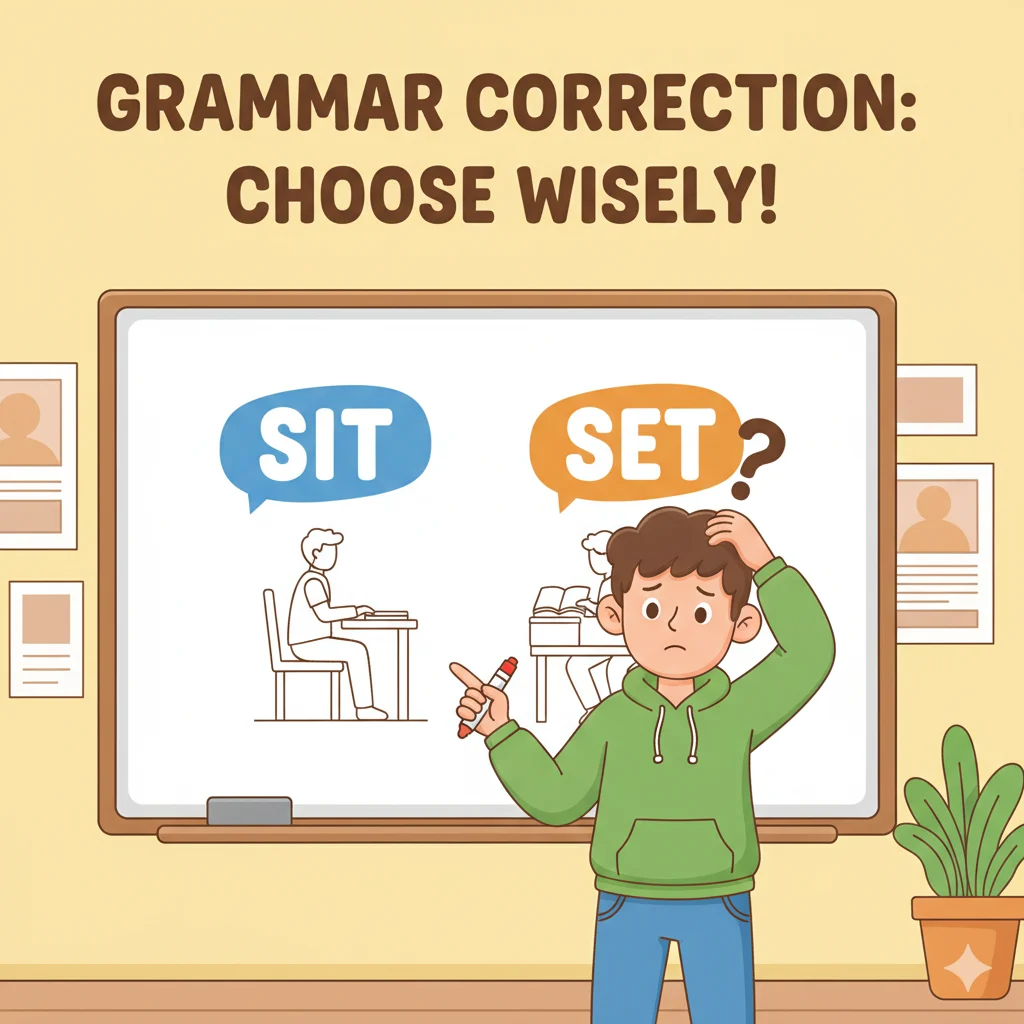
One common mistake is saying “set down” when no object follows. Another error happens in past tense. People often confuse sit, sat, set. Remember:
- Sit → sat → sitting
- Set → set → setting
Another mistake is mixing sit vs seat. Seat means to cause someone to sit, like a host seating guests. Using set instead of sit in commands is also common, such as “Set here” instead of “Sit here.” These errors appear often in worksheets, exercises, and spoken English.
Sit vs Set in Everyday Examples
In emails: “Please sit and wait for the meeting to begin.”
In news: “The statue sits at the center of the park.”
On social media: “Set your phone down and enjoy the moment.”
In formal writing: “The committee sat in silence as the decision was read.”
When you ask, “Does an object sit or set?” the answer is simple: an object sits, but a person sets an object. This rule explains why some people say set instead of sit—they are thinking about the object, not the position.
Comparison Table: Sit vs Set
| Feature | Sit | Set |
|---|---|---|
| Needs object | No | Yes |
| Meaning | To rest or be seated | To place something |
| Past tense | Sat | Set |
| Example | I sit here | I set the cup down |
Sit vs Set – Google Trends & Usage Data
Search data shows sit vs set grammar is popular in English-learning countries like the US, UK, India, and Pakistan. Learners often search sit vs set examples, quizzes, worksheets, and exercises to test understanding. Native speakers search when writing professionally or editing content. The phrase “What is the difference between sit and set?” appears frequently in People Also Ask results. This shows strong user intent for quick answers plus deeper explanation.
Who vs Whom 📝 The Fast Fix That Saves You From Embarrassment
FAQs
1. What is the difference between sit and set?
Sit means to rest yourself. Set means to place something else.
2. Why do some people say set instead of sit?
They confuse the object-focused action with the resting position.
3. Does an object sit or set?
An object sits; a person sets the object.
4. What is the difference between set and sat?
Sat is the past of sit. Set is present and past.
5. Is sit vs set grammar important in writing?
Yes, correct usage improves clarity and professionalism.
6. Is sit vs seat the same issue?
No. Seat means to cause someone to sit.
7. How can I practice sit vs set?
Use exercises, quizzes, and sentence writing daily.
Conclusion
Sit vs set becomes easy once you stop memorizing and start understanding the rule. Sit is about a position you take yourself, while set is about placing something else. This simple difference explains tense confusion, grammar errors, and why people mix them up in speech and writing. Remember that spelling never changes between British and American English, so focus on sentence structure instead. Whether you are writing an email, studying grammar, or teaching with worksheets and exercises, mastering sit vs set builds confidence. English rewards clarity, and choosing the correct verb shows strong language control. With consistent practice, examples, and awareness of objects in sentences, you’ll never hesitate again. Sit with confidence, set things correctly, and let clear grammar support your communication.

Arwen Blythe is a passionate language and culture enthusiast, crafting clear, engaging guides on words, phrases, and modern English for Definevs.com readers.