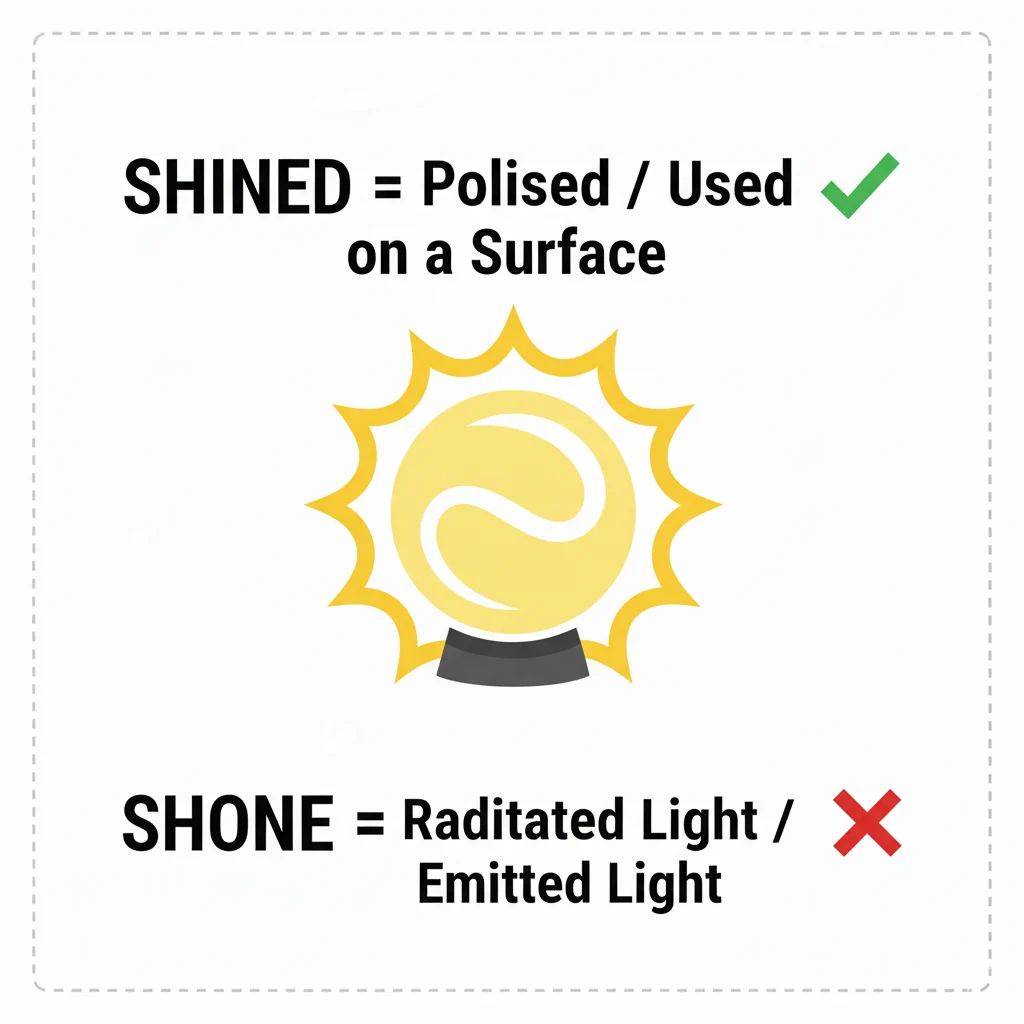
Have you ever paused mid-sentence wondering whether to say “He shined the light” or “The light shone”? You’re not alone. “Shined vs. shone” is one of the most commonly confused verb pairs in English, mostly because both are technically correct—but only in specific situations. Mixing them up can make sentences sound awkward, unclear, or ungrammatical.
This guide breaks down the meaning, origin, grammar rules, and correct usage of shined and shone with simple explanations and real-world examples. You’ll learn:
- The definition of each form
- How their meanings differ
- Where each is appropriate
- Examples, usage rules, and common mistakes
- Related grammar terms and FAQs
What Does “Shined” / “Shone” Mean?
“Shined” and “shone” are both past forms of the verb shine, but they are used differently:
- Shined is used when someone directs or applies light to something.
- Shone is used when something emits light by itself.
Both are standard English, though “shone” is more common in British English.
Origin and Popularity
The verb shine comes from Old English scīnan, meaning “to emit light.” Historically, English used both forms—shined and shone—but over time, regional preferences developed:
- American English: leans toward shined for most uses, especially transitive actions.
- British English: frequently uses shone, especially when describing natural or existing light.
By the early 1900s, grammar books began formally distinguishing the two based on transitive vs. intransitive usage, which remains the rule most style guides follow today.
“Shined” vs. “Shone” Meaning in Different Contexts
1. In Everyday Writing or Speech
- Shined = someone applies shine or directs light
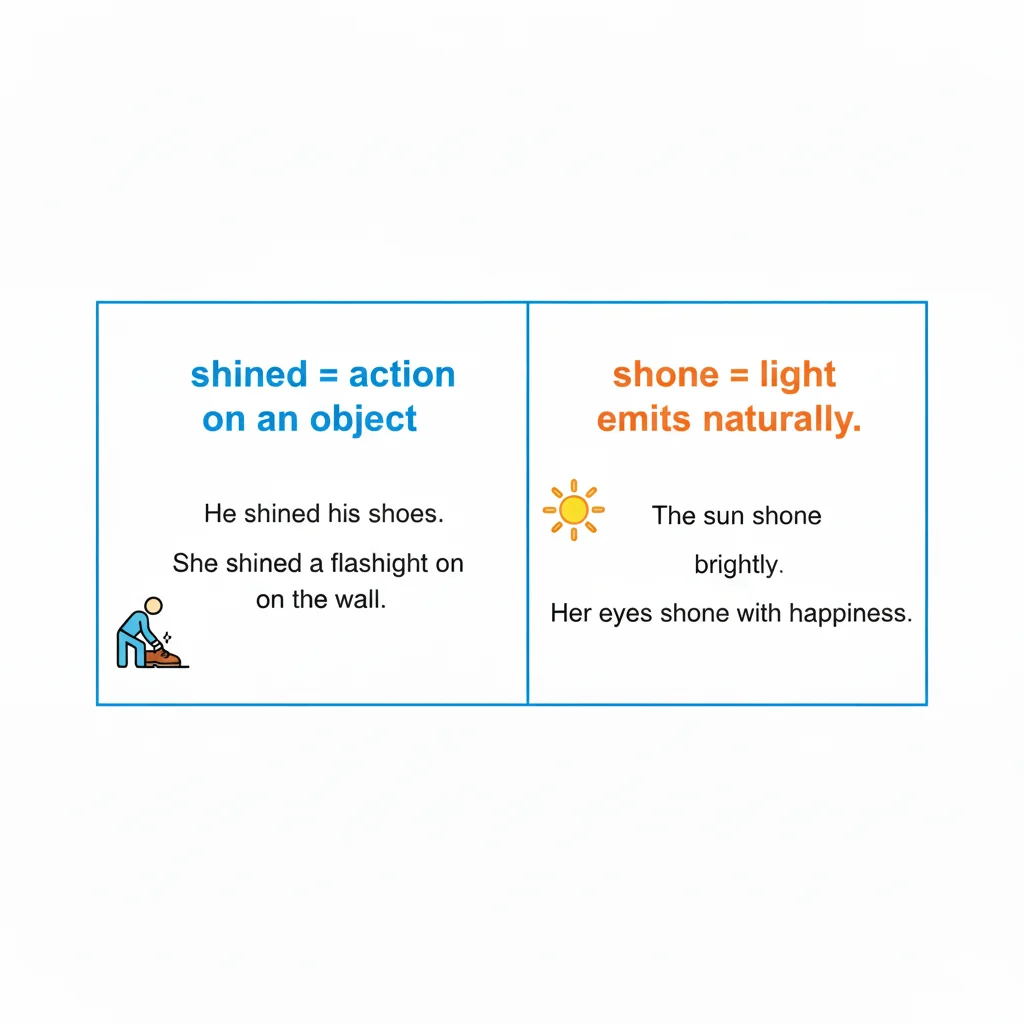
Example: She shined her shoes. - Shone = something radiates or gives off light
Example: The sun shone brightly.
2. In Academic or Professional Writing
- Shone is preferred when describing natural light phenomena.
- Shined is acceptable when describing action on an object.
3. In Creative or Poetic Writing
- Writers may choose shone for rhythm, imagery, and tone—even in contexts where shined could also work.
Comparison Table
| Usage Type | Correct Form | Example Sentence |
|---|---|---|
| Action done to something | Shined | He shined the flashlight on the map. |
| Light coming from something | Shone | The stars shone in the sky. |
| Polishing | Shined | She shined the silverware. |
| Natural brightness | Shone | The moon shone over the lake. |
Personal Affects or Personal Effects: Are You Using It Wrong?
Examples of “Shined” and “Shone” in Sentences
Everyday Conversation
Person A: Can you pass me the flashlight?
Person B: Sure—I already shined it at the door, but no one was there.
Describing Light
- The lantern shone through the darkness.
- Her ring shone under the spotlight.
Polishing or Cleaning
- He shined his boots before the inspection.
- The car was freshly shined for the event.
Formal Example
“During the ceremony, the spotlight shone directly on the award recipient.”
Similar or Related Terms
These grammar-related terms help deepen understanding:
| Term | Meaning |
|---|---|
| Past Tense | Verb form used for actions that already happened |
| Transitive Verb | A verb that requires a direct object (e.g., “shined the shoes”) |
| Intransitive Verb | A verb that does not take an object (e.g., “the sun shone”) |
| Shine (verb) | To emit light or make something reflect light |
How to Use “Shined” and “Shone” Correctly
Use “Shined” when:
✅ You’re describing an action directed at an object
- She shined the trophy.
- The officer shined the light into the car.
Use “Shone” when:
✅ Something is producing or reflecting light naturally
- The candle shone softly.
- His watch shone in the sunlight.
Don’t Use “Shined” when light is simply appearing
❌ The sun shined today.
✔️ The sun shone today.
Common Mistakes or Misinterpretations
1. Using “shined” for natural light
Incorrect: The stars shined brightly.
Correct: The stars shone brightly.
2. Using “shone” for polishing
Incorrect: He shone his boots.
Correct: He shined his boots.
3. Confusing direct action with natural brightness
Remember:
- shined = action
- shone = appearance
Truely / Truly: The Hidden Spelling Secret Everyone Gets Wrong
FAQ Section
1. What does “shined” mean in English?
“Shined” is the past tense of shine used for actions done to an object, such as directing a light or polishing something. Example: “She shined her shoes.”
2. What does “shone” mean?
“Shone” describes something that emits or reflects light naturally—like the sun, stars, or a glowing object. Example: “The moon shone all night.”
3. Which is correct: “the light shined” or “the light shone”?
“The light shone” is correct when describing the appearance of light. Use “shined” only if someone is directing the light toward something.
4. Is “shined” American or British?
“Shined” is more common in American English, while “shone” appears frequently in British English, especially for natural light.
5. Can both be correct?
Yes—just in different contexts. “Shined” is transitive (action on an object), and “shone” is intransitive (light emitting on its own).
6. How do you know which one to use?
Ask: Is someone doing the shining?
If yes → shined.
If not → shone.
Conclusion
“Shined vs. shone” may seem confusing, but once you understand the difference between action and natural light, choosing the right form becomes easy. Use shined when someone is directing light or polishing something, and use shone when something is glowing on its own. With these simple rules, you’ll never stumble over this grammar choice again.
Now that you know the correct usage, keep exploring our site for more clear, friendly explanations of confusing English terms!

Kael Donovan is a language enthusiast and writer at Definevs.com, simplifying complex words and grammar rules into fun, easy-to-understand guides for readers.