Have you ever stopped mid-sentence wondering, “Should I say I seen or I saw?” 🤔
You’re not alone — many English learners (and even native speakers!) get confused between seen and saw. They sound similar, both relate to “seeing,” but they are not used the same way.
In this easy guide, you’ll learn:
- What “seen” and “saw” mean
- The difference between seen and saw
- How to use each word correctly
- Common mistakes and how to fix them
- Simple examples and memory tricks
By the end, you’ll always know which one to use — for real! 👏
🧐 What Does Each Word Mean?
Let’s start with the basics — both words come from the verb “see.”
But they are used in different tenses.
👁️ “Saw” Meaning
“Saw” is the past tense of “see.”
It’s used when something already happened — a single event in the past.
🧩 Part of Speech: Verb (past tense of see)
✅ Examples:
- I saw a rainbow yesterday.
- She saw her teacher at the mall.
- We saw that movie last week.
💡 Think of “saw” as simple past — it tells you what happened once in the past.
👀 “Seen” Meaning
“Seen” is the past participle of “see.”
It’s used with helping (auxiliary) verbs like have, has, or had.
You cannot use “seen” alone in a sentence — it always needs a helper.
🧩 Part of Speech: Verb (past participle of see)
✅ Examples:
- I have seen that movie before.
- She has seen the Eiffel Tower.
- They had seen the results before anyone else.
💡 Remember: “Seen” always brings a helper! (have, has, had)
Sung / Sang: The Hidden Grammar Detail Everyone Gets Wrong 😲
🔑 The Key Difference Between Seen and Saw
Here’s a simple comparison to make it crystal clear 👇
| Feature | Saw | Seen |
|---|---|---|
| Verb Form | Past Tense | Past Participle |
| Needs a Helping Verb? | ❌ No | ✅ Yes (have, has, had) |
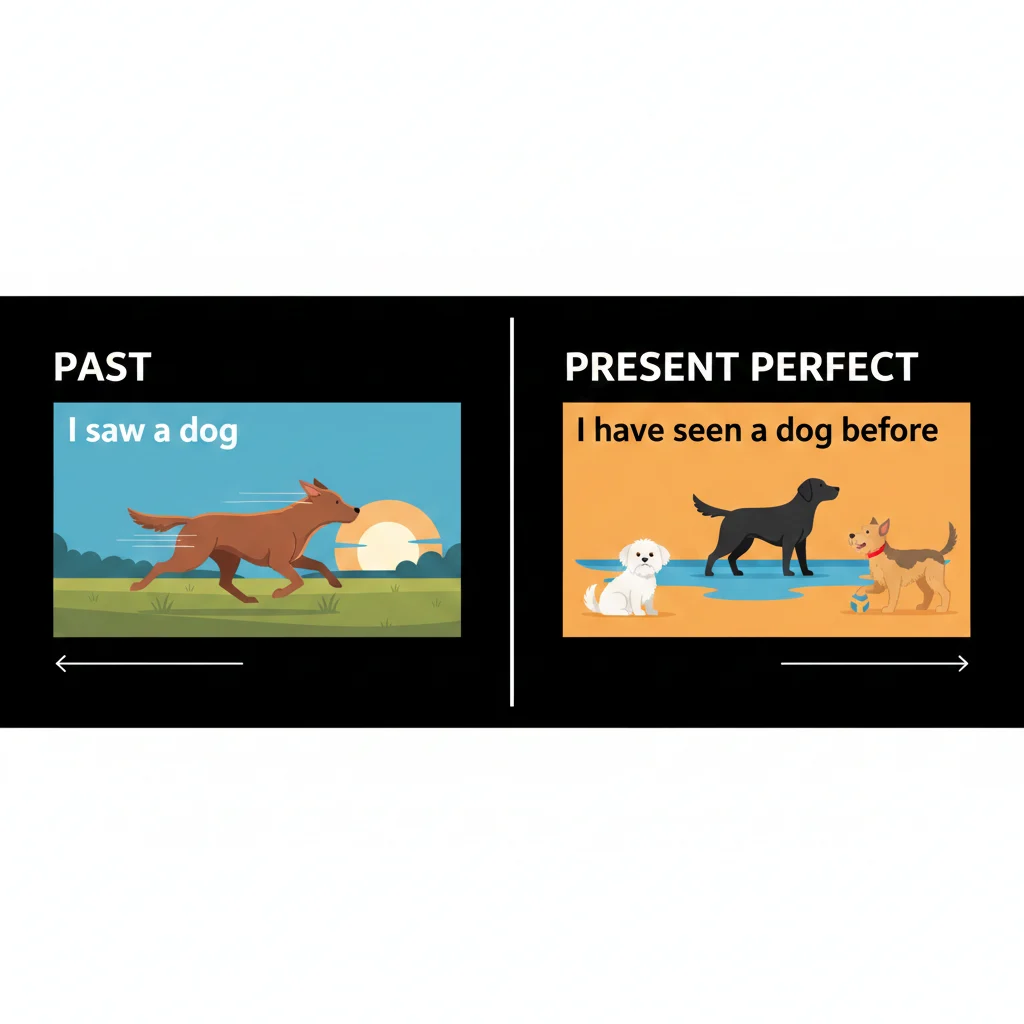
| Example | “I saw a cat.” | “I have seen a cat.” |
| Time | Past (specific) | Past (with a connection to present or another event) |
| Common Mistake | ❌ “I seen him yesterday.” | ✅ “I saw him yesterday.” |
💡 Quick Tip to Remember:
If you use have, has, or had, use seen.
If you don’t, use saw.
🚫 Common Mistakes and How to Avoid Them
❌ Mistake 1: “I seen you yesterday.”
✅ Correction: “I saw you yesterday.”
👉 “Seen” needs a helper verb, but here we don’t have one.
❌ Mistake 2: “I have saw that show.”
✅ Correction: “I have seen that show.”
👉 “Have” must pair with “seen,” not “saw.”
❌ Mistake 3: “We seen it before.”
✅ Correction: “We have seen it before.”
👉 Always add “have,” “has,” or “had” before “seen.”
💡 Fix Tip: If you can add “have/has/had,” choose “seen.” If not, use “saw.”
📅 When to Use “Saw”
Use “saw” when talking about something that happened once in the past.
It does not need a helping verb.
✅ Examples:
- I saw my best friend at school.
- We saw fireworks last night.
- She saw a shooting star.
- They saw the teacher in the hallway.
- He saw me and waved.
🎯 Memory Trick:
Think of “saw” as a camera click — it captures one past moment.
🕰️ When to Use “Seen”
Use “seen” with a helping verb — have, has, or had.
It shows that the action happened at an unknown or continuing time before now.
✅ Examples:
- I have seen that movie already.
- She has seen him at work before.
- We had seen it coming all along.
- They have seen this place many times.
- He has seen better days.
🎯 Memory Hack:
Imagine “seen” needs a friend — have, has, or had — to feel complete!
🧠 Quick Recap: Seen vs Saw
Here’s everything you need to remember in one glance 👇
- “Saw” = past tense (no helper needed)
- ✅ I saw a lion yesterday.
- “Seen” = past participle (needs have/has/had)
- ✅ I have seen a lion before.
- ❌ Never say “I seen” or “I have saw.”
🪄 Easy Rule:
Use “saw” for past actions.
Use “seen” only with have, has, or had.
📚 Advanced Tips: Origin and Formal Use
Both “saw” and “seen” come from the Old English word “seon,” meaning “to see.”
- In formal writing or exams, always use these correctly — examiners often mark down “I seen” as incorrect grammar.
- In speech or casual texting, some people say “I seen,” but it’s still grammatically wrong.
✅ Correct: “I saw your post.”
❌ Wrong: “I seen your post.”
💬 In professional or academic writing (like essays or reports), using “seen” and “saw” correctly makes your English sound polished and accurate.
📝 Mini Quiz: Test Yourself!
Choose the correct word — seen or saw.
- I ___ that movie last night.
- She has ___ this picture before.
- We ___ him at the park yesterday.
- They have ___ that house many times.
- I ___ your message on WhatsApp.
- He had never ___ snow before.
Answers:
- saw 2. seen 3. saw 4. seen 5. saw 6. seen
❓ FAQs
1. What is the difference between seen and saw?
“Saw” is the past tense of “see.” “Seen” is the past participle used with have, has, or had.
2. Can I use ‘I seen’ in a sentence?
No. It’s incorrect. Always say “I saw” or “I have seen.”
3. Is ‘seen’ a past tense word?
No. “Seen” is the past participle, not the past tense.
4. Why do people say ‘I seen’?
It’s a common speech habit, especially in casual talk, but it’s grammatically wrong.
5. How do I remember the difference easily?
Remember:
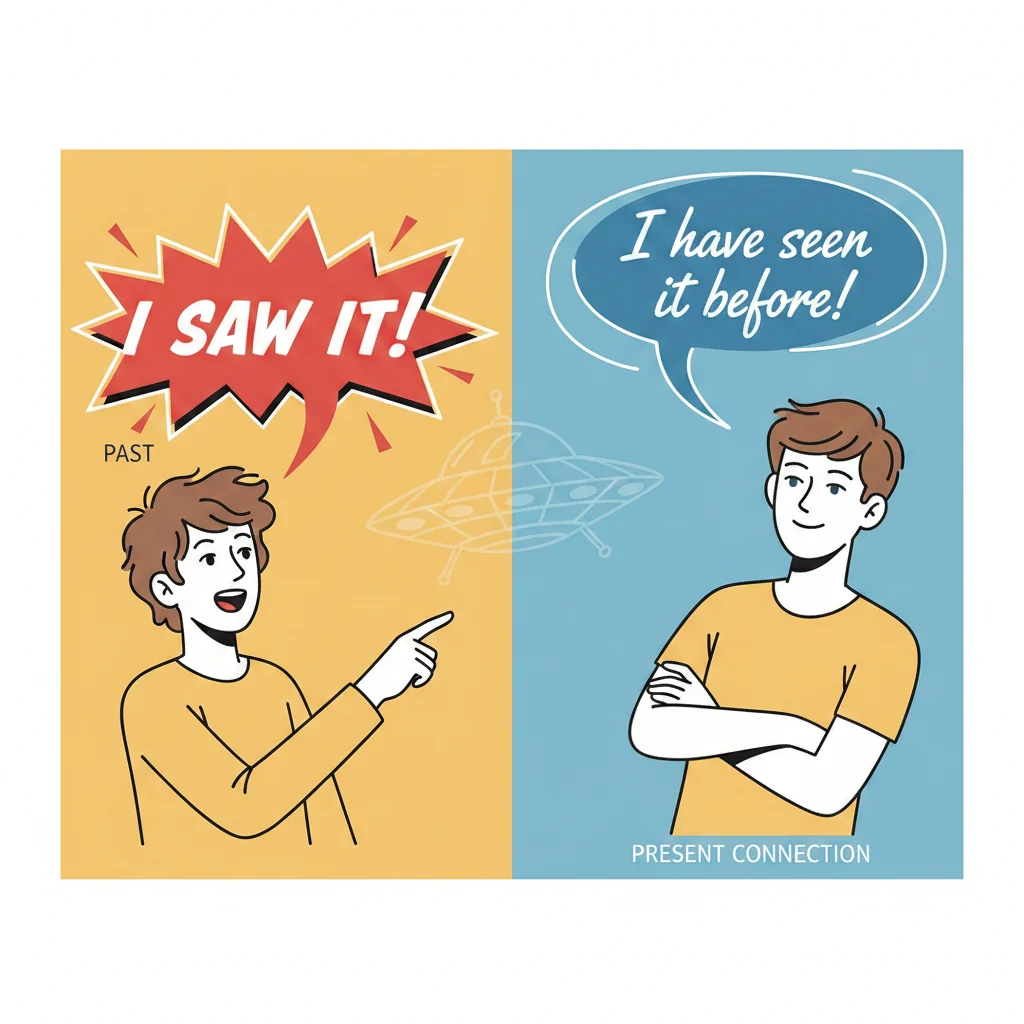
- “Saw” = Simple past (I saw it).
- “Seen” = Needs “have/has/had” (I have seen it).
🏁 Conclusion
Now you know the real difference between “seen” and “saw.”
✅ Use “saw” for one-time past actions.
✅ Use “seen” only with have, has, or had.
Keep practicing with short sentences every day. The more you use them correctly, the more natural it’ll feel.
You’ve got this — your English just got a little stronger! 💪

Mira Loxley is a passionate language and writing expert at Definevs.com, turning tricky words and grammar into clear, engaging guides for every reader.