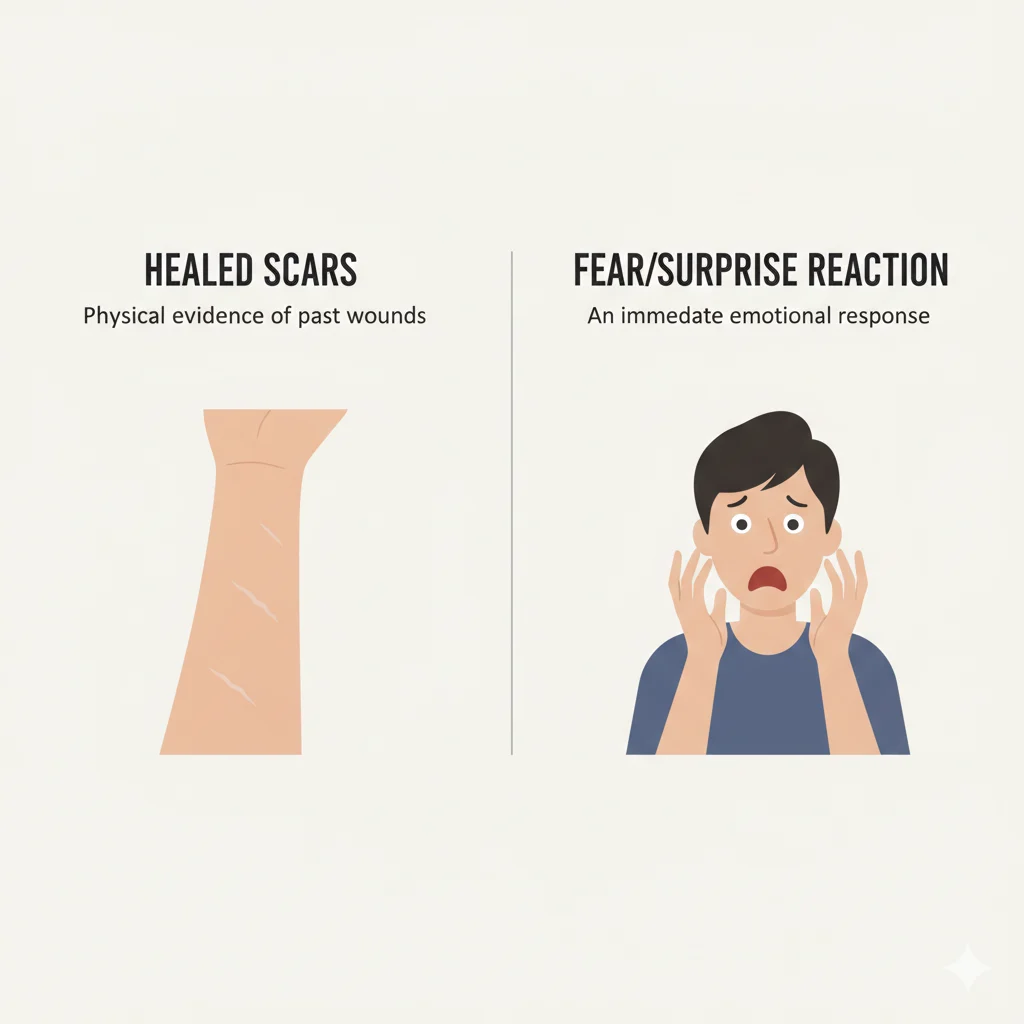
Scarring means leaving a mark or lasting damage, usually on skin or emotions.
Scaring means causing fear or shock.
Examples:
• The burn caused permanent scarring.
• The loud noise was scaring the child.
These words sound similar but mean very different things. Mixing them up can confuse readers and change meaning fast.
Many people search for scarring vs scaring because the words look and sound almost the same. One extra letter completely changes the meaning. This confusion shows up in emails, social media posts, medical writing, and even news headlines. People also ask questions like what is the difference between scarred and scared or is scaring a word, because spellcheck does not always help.
The problem gets bigger for non-native speakers and fast typers. Writing “this accident was scaring” instead of “this accident caused scarring” sends the wrong message. One talks about fear. The other talks about damage that lasts.
This guide clears that confusion once and for all. You will learn the meaning, origin, spelling rules, real-life examples, and professional usage advice. By the end, you will never confuse scarring and scaring again.
The Origin of Scarring vs Scaring
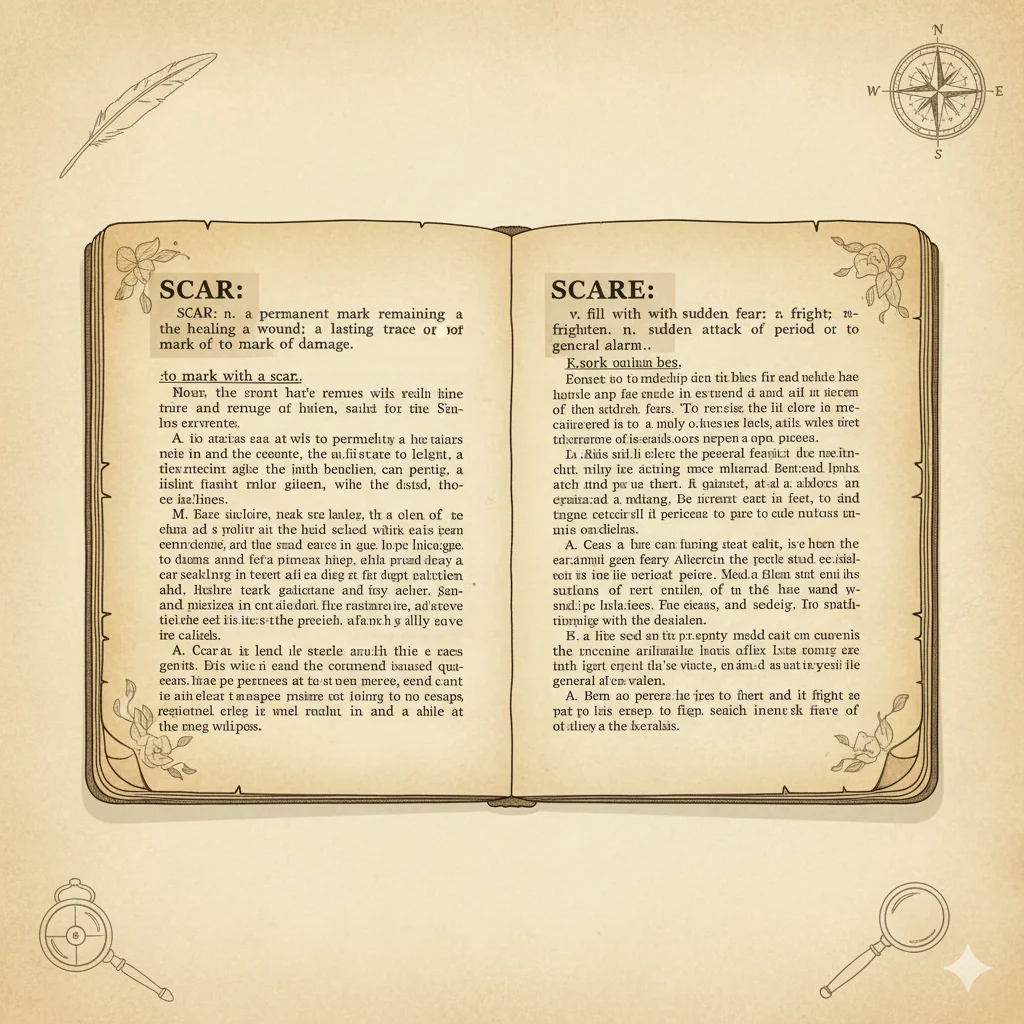
The confusion between scarring vs scaring comes from shared roots but different paths.
Scarring comes from the word scar, which entered English from Old French escarre. It referred to marks left on skin after wounds. Over time, it also gained an emotional meaning, such as trauma that leaves a mental mark.
Scaring comes from scare, which traces back to Old Norse skirra, meaning to frighten or startle. It always relates to fear or alarm.
The spelling difference exists because one word focuses on marks and damage, while the other focuses on fear and reaction. The extra “r” in scarring signals something lasting.
British English vs American English Spelling
There is no spelling difference between British and American English for scarring and scaring. Both regions use the same forms and meanings.
| Word | British English | American English | Meaning |
|---|---|---|---|
| Scarring | Scarring | Scarring | Lasting marks or damage |
| Scaring | Scaring | Scaring | Causing fear |
Unlike words such as colour or organize, this pair stays consistent worldwide. Any confusion is about meaning, not regional spelling rules.
Onto vs Unto 👀 The Subtle Difference Most Miss
Which Spelling Should You Use?
Use scarring when talking about permanent marks, physical injuries, or emotional trauma. This is common in medical, psychological, and academic writing.
Use scaring when describing fear, shock, or intimidation. This fits storytelling, news reports, and daily conversation.
Audience tips:
• US readers: Expect precise usage, especially in health content.
• UK and Commonwealth readers: Same expectations apply.
• Global audience: Choose carefully, because ESL readers rely on accuracy.
Correct spelling improves trust, clarity, and Google EEAT signals.
Common Mistakes with Scarring vs Scaring
The most common error is using scaring when scarring is meant.
❌ The surgery was scaring his skin.
✅ The surgery caused scarring.
Another mistake appears in emotional writing.
❌ The war left people scaring for life.
✅ The war left people scarred for life.
People also confuse scary and scaring. Scary describes something frightening. Scaring describes the action.
Scarring vs Scaring in Everyday Examples

You will see this pair everywhere.
Emails:
• “The incident was scaring for staff.” ❌
• “The incident was scarring for staff.” ✅
News:
• “The attack left scarring on the community.”
• “The explosion was scaring nearby residents.”
Social media:
• “That movie was scaring me last night.”
• “The injury left permanent scarring.”
Formal writing:
• Medical reports often define scarring meaning clearly.
• Dictionaries clearly separate scarring vs scaring meaning.
This is why people search scarring vs scaring dictionaries and even discuss it on scarring vs scaring Reddit threads.
Scarring vs Scaring – Google Trends & Usage Data
Search data shows steady global interest in scarring vs scaring. Queries spike during health news, viral videos, and grammar discussions. Countries with high ESL populations search this pair more often.
Scarring appears more in medical and academic contexts.
Scaring appears more in entertainment, parenting, and news.
People also search related terms like scaring me meaning, SCARING me, and how do you spell scarring. This shows real confusion, not simple typos.
People vs Persons ✍️ The Truth Behind Formal English
Scarring vs Scaring Comparison Table
| Aspect | Scarring | Scaring |
|---|---|---|
| Core meaning | Lasting mark or damage | Causing fear |
| Emotional use | Trauma, impact | Shock, alarm |
| Physical use | Skin, wounds | Sudden fright |
| Verb form | Scar / Scarring | Scare / Scaring |
| Example | Burn scarring | Noise scaring |
FAQs
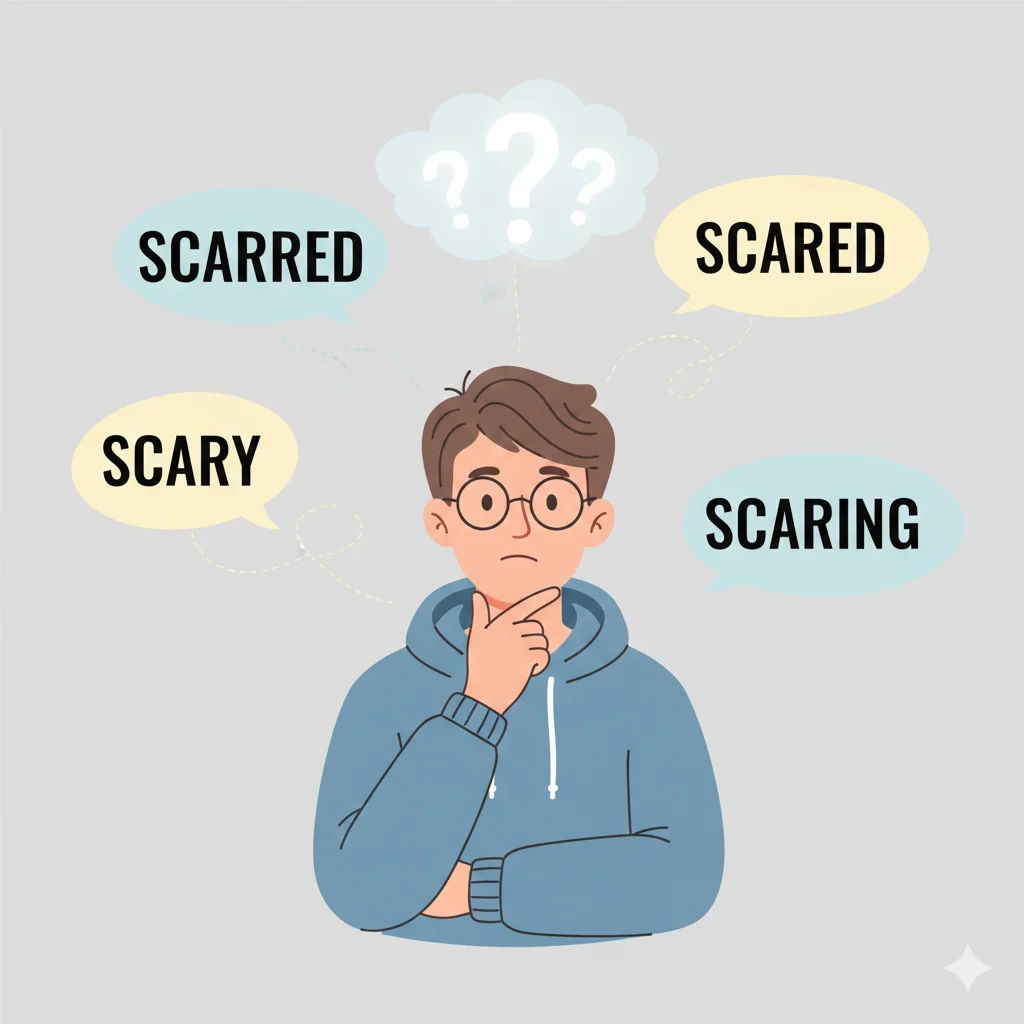
What’s the difference between scarring and scaring?
Scarring is about lasting damage. Scaring is about causing fear.
What is the difference between scarred and scared?
Scarred means marked or traumatized. Scared means afraid.
What does “scaring” mean?
Scaring means frightening someone.
What is the difference between scaring and scary?
Scaring is an action. Scary is a description.
Is scaring a word?
Yes. It is the present participle of scare.
How do you spell scarring?
S-C-A-R-R-I-N-G, with double R.
Why do people confuse these words?
They sound similar, but meanings differ completely.
Conclusion
The difference between scarring vs scaring is small in spelling but huge in meaning. One letter changes fear into damage. Scarring refers to marks that stay, whether on skin or in the mind. Scaring refers to fear that happens in a moment. Understanding this difference improves writing clarity, reader trust, and professional credibility.
Writers, students, doctors, and content creators all benefit from using the right word. Search engines also reward accuracy, which supports EEAT principles like expertise and trust. When you pause to choose the correct spelling, you protect your message from confusion.
If you remember one rule, remember this: scars stay, scares pass.That simple idea will help you choose the right word every time.

Mira Loxley is a passionate language and writing expert at Definevs.com, turning tricky words and grammar into clear, engaging guides for every reader.