Have you ever been confused about whether to send a resume or a CV when applying for a job? 🤔 You’re not alone! These two words are often mixed up because they both refer to documents about your education and work experience.
However, a resume and a CV are not the same thing. Each has a different length, purpose, and format depending on the situation or country.
In this simple guide, you’ll learn:
- The meaning of a resume and a CV
- The key differences between them
- When to use each one
- Common mistakes to avoid
- Easy examples and memory tricks
By the end, you’ll never confuse them again — even if you’re just starting your career.
🧩 What Does Each Word Mean?
📄 What Is a Resume?
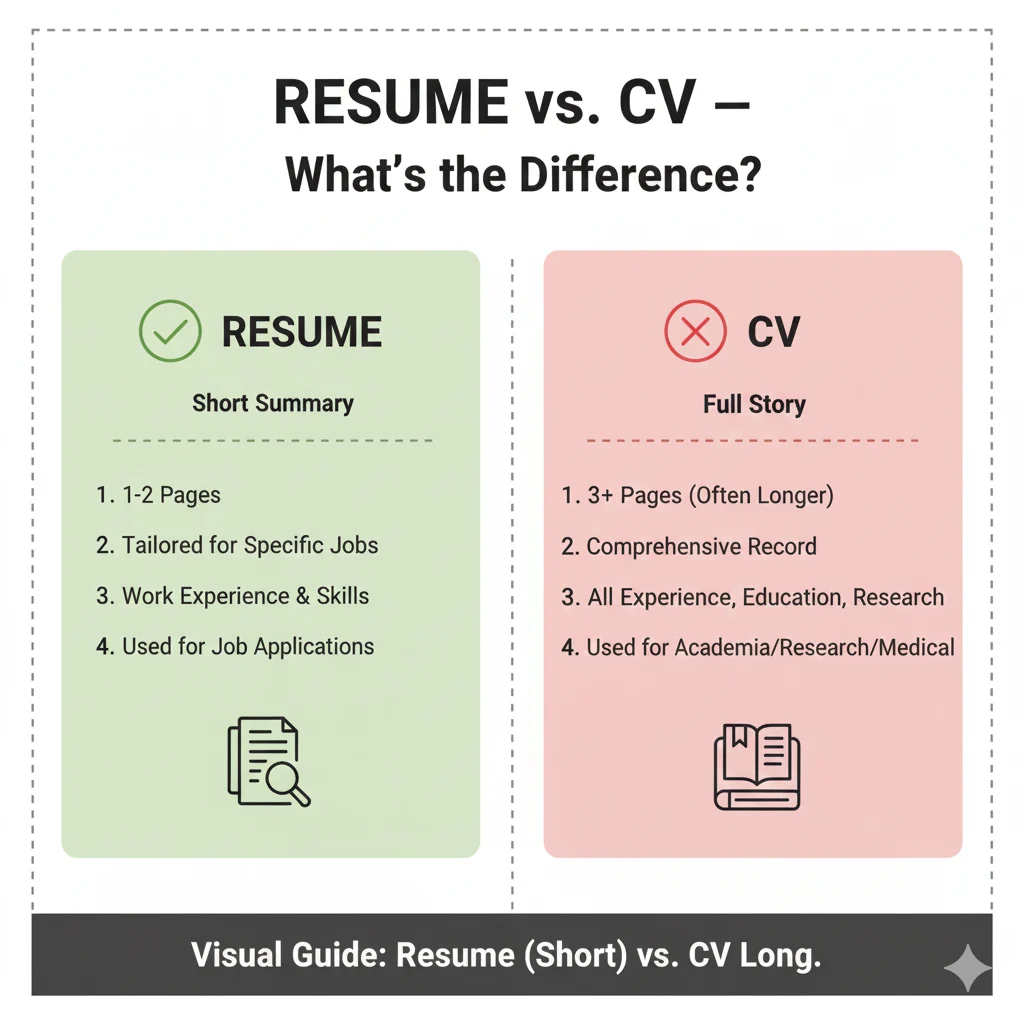
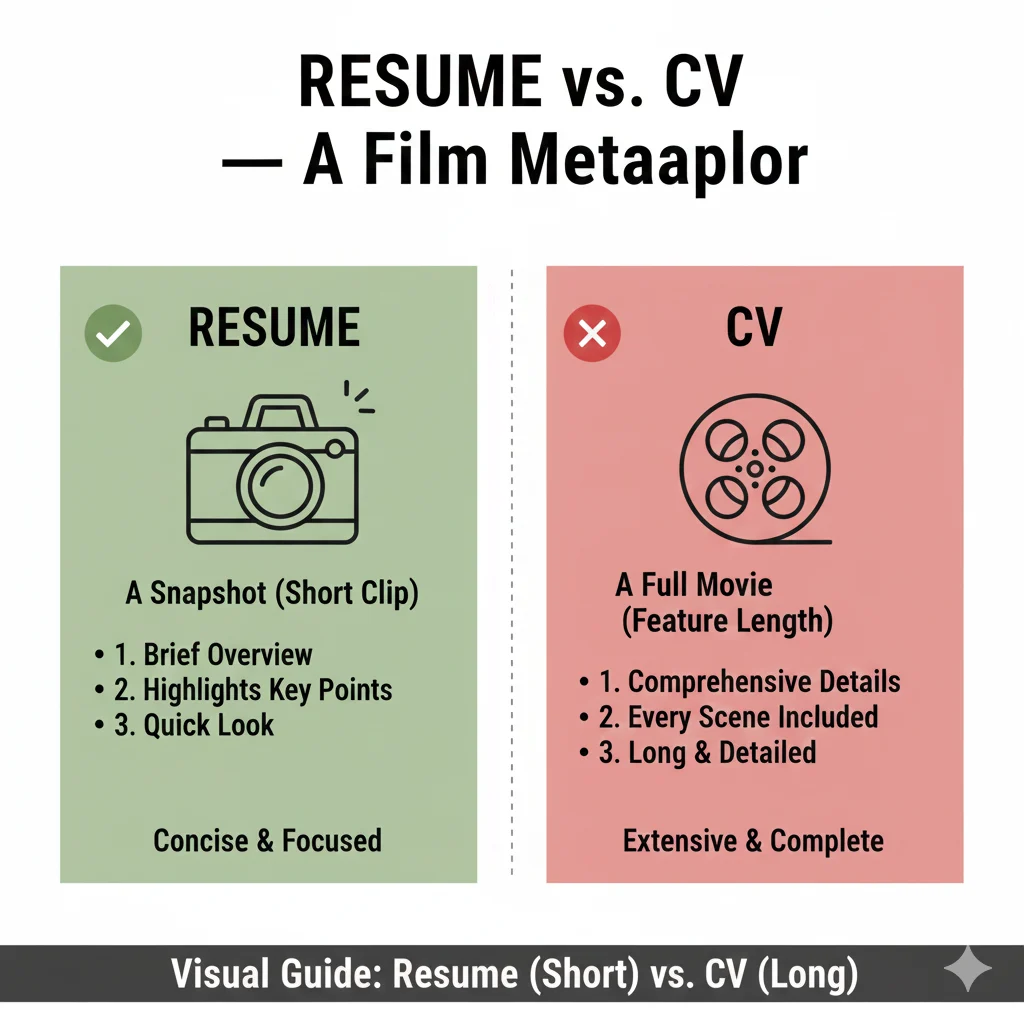
A resume is a short summary of your skills, education, and work experience — usually one or two pages long.
It focuses on what makes you the best fit for a specific job.
Part of speech: Noun
Meaning: A brief summary of your professional background.
Examples:
- I sent my resume to apply for the marketing position.
- Please update your resume before the interview.
- Her resume highlights her skills in design and communication.
📘 What Is a CV?
CV stands for Curriculum Vitae, a Latin phrase meaning “course of life.”
A CV is a detailed record of your entire academic and professional history. It can be multiple pages long.
Part of speech: Noun
Meaning: A detailed document listing your education, research, achievements, and work experience.
Examples:
- He submitted his CV for a university teaching position.
- Your CV should include all your publications and degrees.
- Academic professionals often use a CV instead of a resume.
🔍 The Key Difference Between Resume and CV
Here’s a quick comparison to make it super clear 👇
| Feature | Resume | CV (Curriculum Vitae) |
|---|---|---|
| Length | 1–2 pages | 2+ pages (can be long) |
| Purpose | Job applications (especially in business, private sector) | Academic, research, or teaching positions |
| Focus | Skills, experience, and achievements | Education, research, publications, awards |
| Tone | Concise and tailored | Detailed and chronological |
| Updates | Changed for each job | Updated over time as you gain experience |
| Common In | USA, Canada | UK, Europe, Asia, academic world |
Quick Tip 💡:
If the job is in business or industry, use a resume.
If it’s in academia or research, use a CV.
🚫 Common Mistakes and How to Avoid Them
- ❌ Using a CV when a resume is requested.
✅ Always check the job post — most U.S. employers prefer a resume. - ❌ Making your resume too long.
✅ Keep it short (1–2 pages). Focus only on recent and relevant experience. - ❌ Leaving out details from your CV.
✅ A CV should include everything — research, awards, publications, conferences, etc. - ❌ Mixing formats.
✅ Don’t combine both. A resume should be short; a CV should be detailed.
🧾 When to Use “Resume”
Use a resume when applying for:
- Private companies or business roles
- Corporate internships
- Non-academic positions
- Short-term projects or part-time jobs
Examples:
- I need to update my resume before applying for the new marketing role.
- The company asked for a resume and a cover letter.
- Your resume should highlight your strongest achievements.
- Keep your resume concise and job-specific.
🧠 Memory Hack:
Think of resume as “re-sum” — a summary of your career.
🎓 When to Use “CV”
Use a CV when applying for:
- University positions or scholarships
- Research grants
- Teaching jobs
- Academic conferences or fellowships
Examples:
- My professor helped me prepare my CV for a PhD application.
- Researchers often attach their CVs when publishing papers.
- A CV lists your degrees, projects, and achievements in detail.
- Keep your CV updated every year as your career grows.
🧠 Memory Hack:
Think of CV as “Complete Version” — your full career story.
🪄 Quick Recap: Resume vs CV
Let’s summarize everything in simple points:
- Resume = Short summary (1–2 pages)
- CV = Detailed history (2+ pages)
- Resume = For jobs in business or private sector
- CV = For academic or research roles
- Resume = Customized for each job
- CV = Expanded and updated over time
✅ Easy Rule:
If you’re applying for a job — use a resume.
If you’re applying for academic or research work — use a CV.
📚 Advanced Tips and Fun Facts
- The word “resume” comes from French, meaning “summary.”
- CV comes from Latin, meaning “course of life.”
- In the U.S., people use “resume.”
- In Europe or Asia, “CV” is more common — even for job applications.
- Recruiters often spend less than 10 seconds scanning a resume — keep it clean and focused!
🧠 For Students or Exam Writers
If you’re writing essays or job applications, remember:
Use “a resume” when you’re describing a short summary of your experience, and “a CV” when you’re describing a detailed academic record.
📝 Mini Quiz: Test Your Understanding!
Fill in the blanks with resume or CV 👇
- My _______ includes all my research papers and degrees.
- Before the interview, I printed a copy of my _______.
- She updated her _______ after getting a promotion.
- Professors usually share their _______ with universities.
- A short job summary is called a _______.
(Answers: 1. CV, 2. resume, 3. resume, 4. CV, 5. resume)
❓FAQs: Resume vs CV
1. What is the difference between a resume and a CV?
A resume is a short, job-focused summary of your experience, while a CV is a long, detailed record of your academic and professional background.
2. Which one should I use when applying for jobs?
In most companies (especially in the U.S. and Canada), use a resume. Use a CV for research, academic, or international roles.
3. How long should my resume be?
Your resume should be 1–2 pages, highlighting only your most relevant experience and achievements.
4. Can I use both a resume and a CV?
Yes! Some professionals keep both — a short resume for quick applications and a detailed CV for academic or formal ones.
5. What happens if I send the wrong one?
It may confuse the employer or make your application look unprofessional. Always read the job description carefully before sending.
🧾 Conclusion
Now you know the real difference between a resume and a CV.
A resume gives a quick summary of your skills and experience — perfect for most jobs.
A CV tells your full career story — great for academic or research work.
Keep both ready and use them wisely depending on your goals.
Remember: clear communication starts with understanding the words you use.
✨ Practice writing both, and soon you’ll impress every recruiter — for real!

Arwen Blythe is a passionate language and culture enthusiast, crafting clear, engaging guides on words, phrases, and modern English for Definevs.com readers.