Quiet vs Quite:
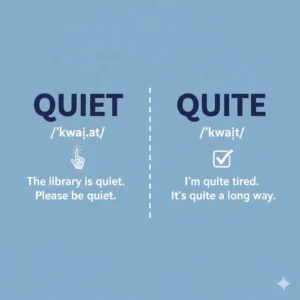
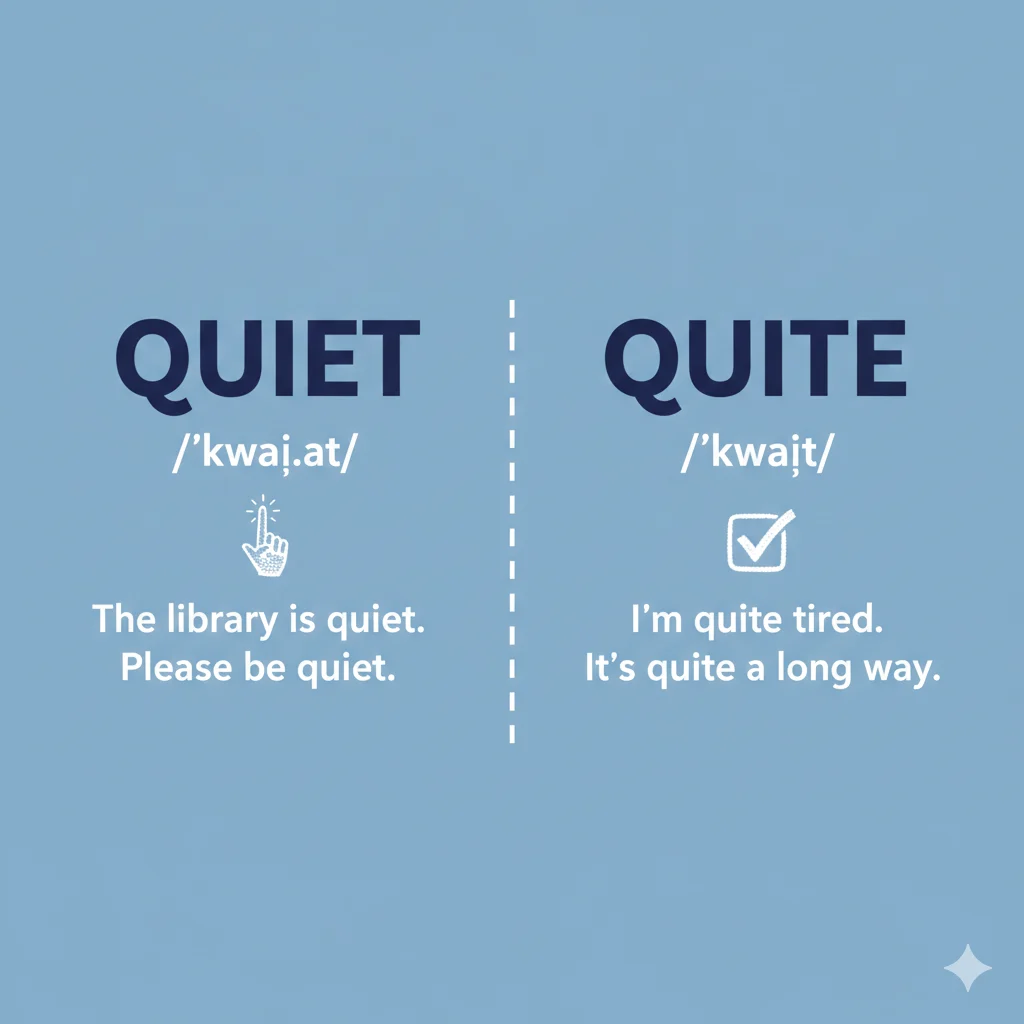
- Quiet means silent or not loud.
Example: Please be quiet in the library. - Quite means very or fairly.
Example: The movie was quite good.
If you ask, “Is it quiet good or quite good?” the correct phrase is quite good.
If you ask, “Is it quiet busy or quite busy?” the correct phrase is quite busy.
Have you ever typed a sentence and stopped to wonder: Is it quiet nice or quite nice? You are not alone. Many people search for quiet vs quite meaning, spelling, pronunciation, and grammar rules. These two words look almost the same. They sound similar. But their meanings are very different.
This small spelling change can create a big mistake. Writing “I am quiet happy” instead of “I am quite happy” changes the meaning. That is why learners often search for what is quiet vs quite? or how do you spell quiet vs quite correctly?
In this guide, you will get a quick answer, clear rules, examples, comparison tables, pronunciation help, common mistakes, and expert writing advice .
The Origin of Quiet vs Quite
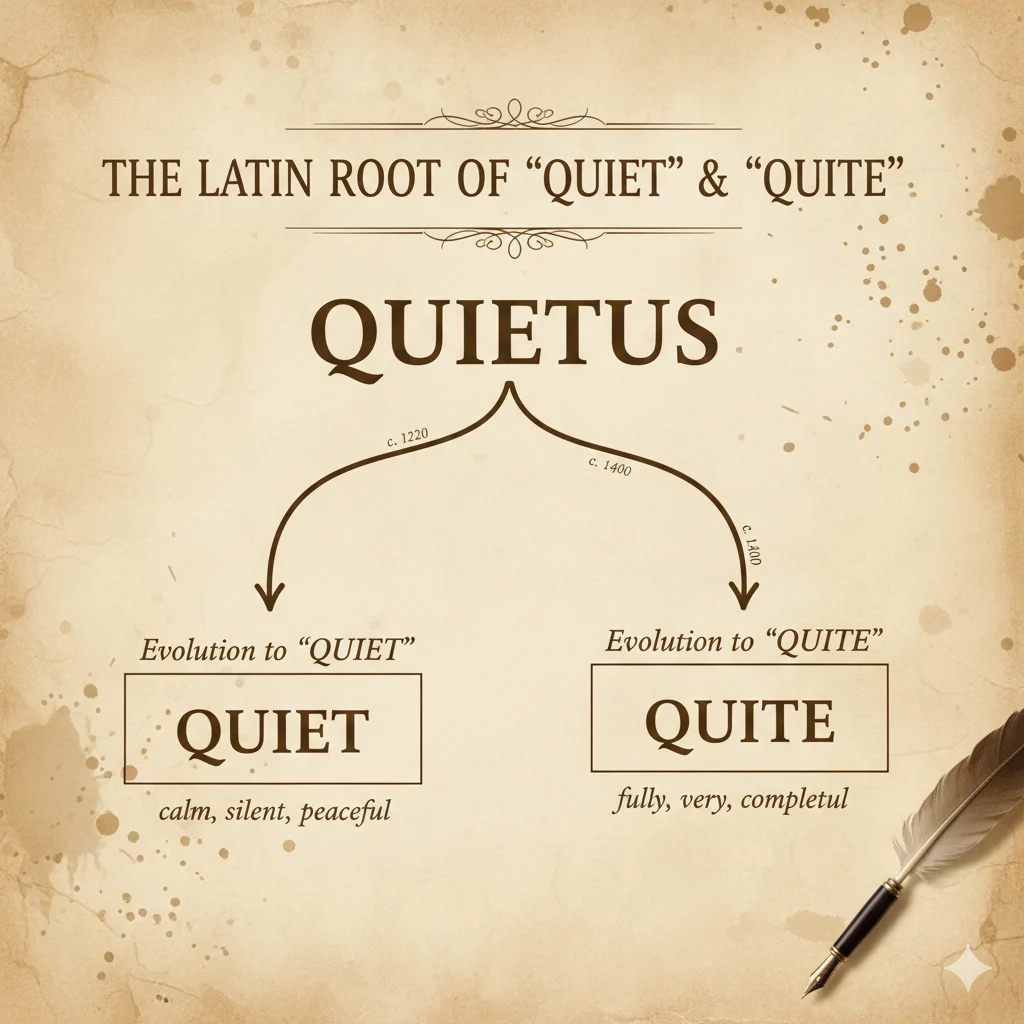
Understanding the history helps you remember the difference.
Quiet comes from the Latin word quietus, which means calm or at rest. Over time, it became a word that describes silence or little noise.
Quite comes from the Latin word quietus too, but in Middle English it developed a different meaning. It started to mean fully, completely, or truly.
So both words share roots. That is why they look alike. But their meanings changed over time.
Today:
- Quiet = no noise.
- Quite = very or fairly.
This explains the quiet vs quite difference meaning clearly.
British English vs American English Spelling
Good news: there is no spelling difference between British and American English. Both use:
- Quiet
- Quite
But there is a small meaning difference in British English.
In American English:
- Quite = very
The test was quite easy. (very easy)
In British English:
- Quite can mean fairly or somewhat.
The test was quite easy. (fairly easy, not extremely easy)
Comparison Table
| Word | American Meaning | British Meaning | Example |
|---|---|---|---|
| Quiet | Not loud | Not loud | The room is quiet. |
| Quite | Very | Fairly / Very | It is quite cold. |
So the quiet vs quite difference usage depends slightly on region.
Desert vs Dessert 🍰 The Tiny Detail Most Miss
Which Spelling Should You Use?
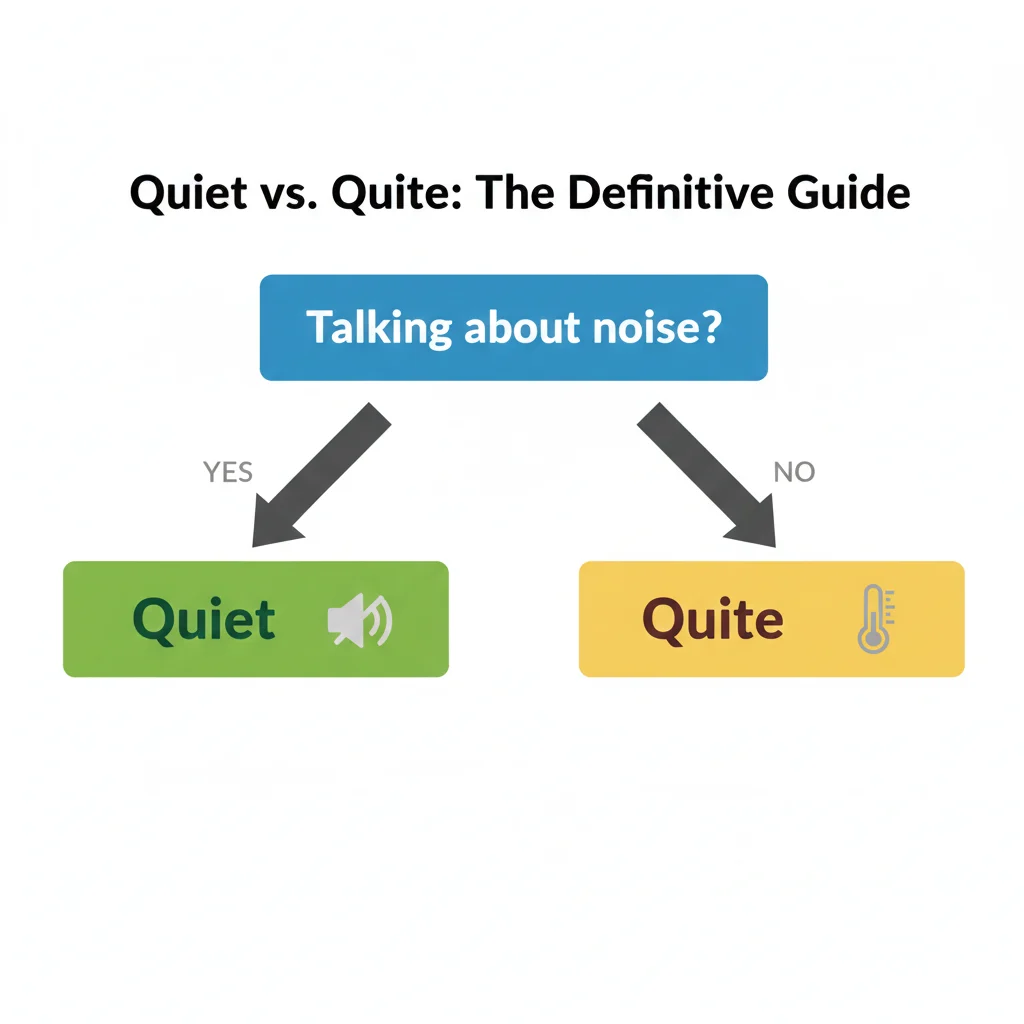
Always choose based on meaning.
Use quiet when talking about silence.
Use quite when describing degree or intensity.
For global writing:
- In the US: quite often means very.
- In the UK/Commonwealth: quite may mean fairly.
- For international readers: use simple context to avoid confusion.
If you write online content, blogs, or emails, clarity is key. Google’s EEAT principles reward clear meaning and correct grammar. Using the right word improves trust and professionalism.
Common Mistakes with Quiet vs Quite
Here are frequent errors people search for:
❌ Is it quiet good or quite good?
✔ Correct: quite good
❌ Is it quiet busy or quite busy?
✔ Correct: quite busy
❌ Is it quite nice or quiet nice?
✔ Correct: quite nice
❌ I am quiet happy.
✔ Correct: I am quite happy.
❌ Please be quite.
✔ Correct: Please be quiet.
Another confusion happens with quiet vs quite vs quit.
- Quiet = silent
- Quite = very
- Quit = stop
These three are not the same. Many students practice with “quit, quite, quiet exercises” to avoid mistakes.
Quiet vs Quite in Everyday Examples

Let us see quiet vs quite sentences in real life.
In Emails
- Please stay quiet during the meeting.
- I am quite interested in your proposal.
In News Writing
- The town remained quiet after the storm.
- The results were quite surprising.
On Social Media
- It is quite funny!
- My house is very quiet tonight.
In Formal Writing
- The environment was quiet and peaceful.
- The data is quite clear.
These quiet vs quite examples show how grammar changes meaning. This answers common searches like quiet vs quite definition and quiet vs quite grammar.
Quiet vs Quite – Pronunciation Guide
Many people ask about quiet vs quite pronunciation.
- Quiet → /ˈkwaɪ.ət/ (two syllables: kwy-it)
- Quite → /kwaɪt/ (one syllable: kwyt)
Memory trick:
Quiet has an extra “e” and sounds longer. It has two syllables.
Quite is short and strong.
This also helps with how to spell quiet vs quite correctly.
Know vs No 🚨 One Wrong Letter Changes Everything
Quiet vs Quite – Synonyms
Understanding synonyms makes meaning clear.
Quiet synonyms:
- Silent
- Calm
- Peaceful
- Still
Quite synonyms:
- Very
- Fairly
- Rather
- Completely (in some contexts)
These quiet vs quite synonyms help in vocabulary building.
Quiet vs Quite – Google Trends & Usage Data
Search data shows that “quiet vs quite” is a high-volume confusion keyword. Many learners search:
- quiet vs quite meaning
- quiet vs quite difference
- meaning of quiet vs quite
- quiet vs quite sentences
- how do you spell quiet vs quite
It is also common in ESL learning platforms. Seasonal spikes happen during school exam periods.
Some strange queries like “loop quiet vs quite 2” or “loop quiet vs quite equinox” appear due to typing errors or copied content.
The search intent is clear:
- Quick answer
- Grammar explanation
- Examples
- Pronunciation help
That is exactly what this guide provides, aligning with Google’s helpful content system and NLP-based search understanding.
Quiet vs Quite – Comparison Table
| Feature | Quiet | Quite |
|---|---|---|
| Meaning | Silent | Very / Fairly |
| Part of Speech | Adjective | Adverb |
| Example | Be quiet. | It is quite good. |
| Pronunciation | Two syllables | One syllable |
| Common Error | Quite room | Quiet good |
This table clearly shows the quiet vs quite difference.
Quiet and Quite in a Sentence
Here are side-by-side examples:
- The classroom is quiet.
- The classroom is quite small.
- It was a quiet night.
- It was quite a night!
This solves quiet and quite homophones confusion. They sound similar but are not true homophones because pronunciation differs slightly.
FAQs About Quiet vs Quite
1. What is quiet vs quite?
Quiet means silent. Quite means very or fairly.
2. How do you spell quiet vs quite?
Quiet = Q-U-I-E-T.
Quite = Q-U-I-T-E.
3. Is it quiet good or quite good?
Correct phrase: quite good.
4. Is it quiet busy or quite busy?
Correct phrase: quite busy.
5. Quiet vs quite pronunciation difference?
Quiet has two syllables. Quite has one.
6. Quiet vs quite vs quit difference?
Quiet = silent.
Quite = very.
Quit = stop.
7. Can quiet and quite be used together?
Yes. Example: It was quiet, and I was quite relaxed.
Quiet vs Quite Quotes
Writers sometimes use both words creatively:
- “It was a quiet town, but quite beautiful.”
- “She was quite sure the night would stay quiet.”
These examples show the power of correct usage.
Conclusion
The difference between quiet vs quite is simple once you understand it. Quiet relates to silence. Quite relates to degree. One extra letter changes the meaning of your sentence.
Many people search for quiet vs quite difference meaning because these words look similar. They ask questions like “Is it quiet good or quite good?” or “How to spell quiet vs quite?” The answer is always about meaning. If you talk about noise, use quiet. If you describe intensity, use quite.
Remember pronunciation: quiet has two syllables. Quite has one.
Remember grammar: quiet is an adjective. Quite is an adverb.
Using the correct word improves clarity, professionalism, and trust. It supports SEO writing, Google EEAT guidelines, and strong communication skills.
Now you will never confuse quiet and quite again.

Isla Merrin is a language and writing expert at Definevs.com, creating simple, engaging guides to help readers master words, grammar, and modern English usage.