Have you ever written “past away” instead of “passed away” and wondered if it was right? You’re not alone!
These two phrases look and sound very similar, but only one of them is correct in English. Many people confuse them, especially when writing emotional messages or sympathy notes.
In this simple guide, you’ll learn:
- The meaning of both phrases
- The difference between passed away and past away
- How and when to use them correctly
- Real-life examples, common mistakes, and quick memory tips
By the end, you’ll never mix them up again — promise! 💬
💡 What Does Each Phrase Mean?
Let’s start by understanding what each phrase means in plain English.
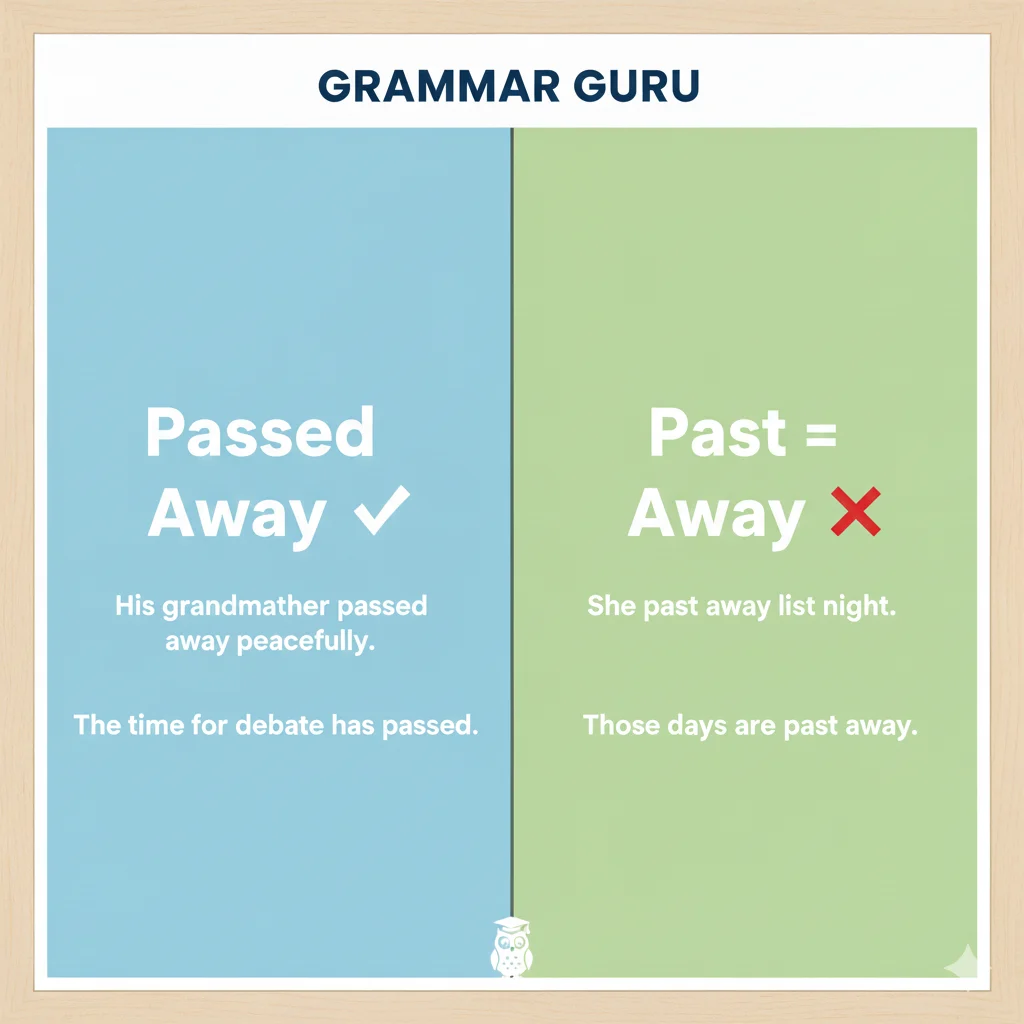
✅ Passed Away — Meaning
“Passed away” means someone has died.
It’s a polite or gentle way (a euphemism) to talk about death.
Part of speech:
- Passed = verb (past tense of “pass”)
- Away = adverb
Together, they form a phrasal verb meaning “to die.”
Examples:
- My grandfather passed away last year.
- Her dog passed away peacefully in her sleep.
- The teacher said the famous author passed away at 90.
Quick tip: Think of “passed away” as a softer way of saying “died.”
❌ Past Away — Meaning
“Past away” is incorrect in this context.
The word “past” is not a verb — it’s usually a noun, adjective, or preposition (meaning “before” or “gone by”).
So “past away” doesn’t make sense grammatically when you’re talking about someone’s death.
Examples (Incorrect):
- ❌ My uncle past away last week.
- ❌ She past away suddenly.
✅ Corrected:
- ✔️ My uncle passed away last week.
- ✔️ She passed away suddenly.
Remember: You pass away, not past away — because past isn’t something you do; pass is the action.
⚖️ The Key Difference Between “Passed Away” and “Past Away”
Here’s a quick comparison to make it crystal clear 👇
| Feature | Passed Away (✅ Correct) | Past Away (❌ Incorrect) |
|---|---|---|
| Part of Speech | Verb phrase (phrasal verb) | Incorrect phrase |
| Meaning | To die (polite expression) | ❌ No proper meaning |
| Usage | Formal or emotional writing | ❌ Should never be used |
| Example | “Her grandmother passed away last night.” | “Her grandmother past away last night.” |
💡 Quick Tip to Remember:
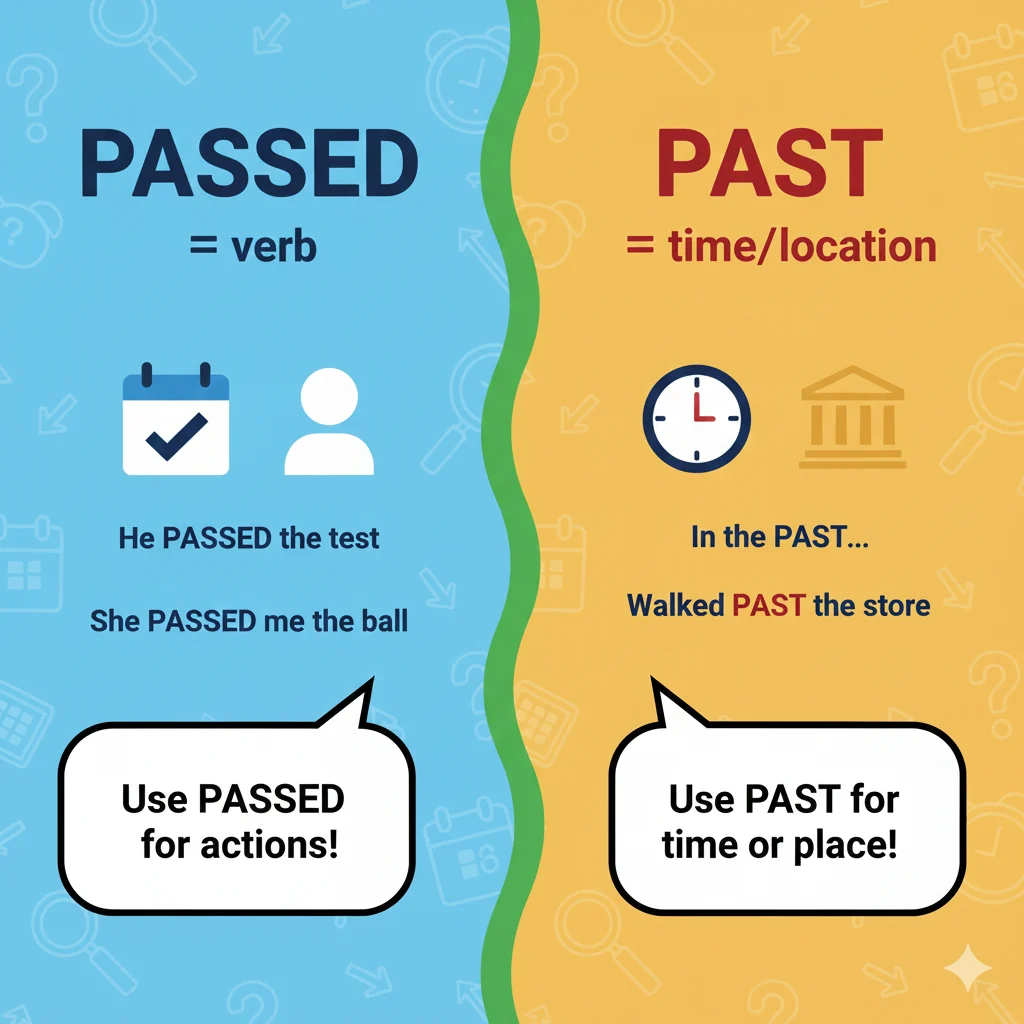
If the sentence talks about an action (like dying, going, leaving), use passed — because it’s a verb.
If it talks about time or something before, use past (e.g., “in the past”).
🚫 Common Mistakes and How to Avoid Them
Here are some common writing errors people make — and how to fix them easily.
| ❌ Incorrect | ✅ Correct | Why? |
|---|---|---|
| My friend past away last night. | My friend passed away last night. | “Passed” is the verb form; “past” is not. |
| He has past away. | He has passed away. | “Has passed” = correct present perfect tense. |
| She past a few months ago. | She passed a few months ago. | Use “passed” for actions. |
Tip: If you can replace the phrase with “died”, then you should always write “passed away.”
🕊️ When to Use “Passed Away”
You should use “passed away” when referring to someone’s death in a gentle, respectful, or emotional way.
✅ Correct Usage Examples:
- My aunt passed away in her sleep.
- Their pet cat passed away after a long illness.
- He passed away peacefully surrounded by family.
- The news reported that a great musician passed away today.
- Her father passed away many years ago.
✏️ Real-Life Example:
When writing a sympathy message, you might say:
“I’m so sorry to hear that your friend passed away. Sending love and prayers.”
Memory Hack:
Think of someone “passing” from one life to another — that’s why we say “passed away,” not “past away.”
🚷 When Not to Use “Passed Away”
Don’t use “passed away” for things, time, or events. It’s only used for people or living beings.
❌ Wrong: “The weekend passed away quickly.”
✅ Right: “The weekend passed quickly.”
(Here, you just say “passed,” not “passed away.”)
⏰ When to Use “Past” (Without “Away”)
Even though “past away” is wrong, the word “past” is still useful in other sentences!
Here’s how to use it correctly:
✅ Correct Uses of “Past”:
- I can’t change the past. (noun – time before now)
- It’s already past midnight. (preposition – beyond a point)
- She walked past me without saying hello. (preposition – beyond a person)
- Don’t think too much about the past; focus on today. (noun)
- The store is just past the bridge. (preposition)
Memory Trick:
If you can replace it with “before” or “beyond,” it’s past.
If you can replace it with “died,” it’s passed away.
🧠 Quick Recap: Passed Away vs Past Away
- ✅ Passed away = correct phrase (means “died”)
- ❌ Past away = incorrect (no real meaning)
- Passed is a verb → “He passed away yesterday.”
- Past is a noun/preposition/adjective → “That happened in the past.”
Easy Rule:
“Passed away” = action of dying
“Past” = time or position
📘 Advanced Tips for Grammar Lovers
- The word “passed” is the past tense of the verb pass.
- It’s used in many ways: passed the test, passed the ball, passed away.
- “Past” comes from the same root word but functions differently — it’s about time or location, not action.
- In formal writing, “passed away” is often used in obituaries, news articles, or letters of condolence.
- In texting, some people shorten it to “RIP” or say “he’s gone,” but “passed away” remains the most respectful and gentle term.
📝 Mini Quiz: Test Your Understanding
Fill in the blanks with passed or past 👇
- My grandmother _______ away last night.
- It’s already _______ 10 o’clock.
- The parade _______ by our school.
- Don’t live in the _______; focus on the present.
- He _______ his driving test yesterday.
✅ Answers: 1. passed, 2. past, 3. passed, 4. past, 5. passed
❓ FAQs
1. What’s the correct phrase — passed away or past away?
✅ The correct phrase is passed away, meaning someone has died. “Past away” is incorrect.
2. Why do people say “passed away” instead of “died”?
“Passed away” sounds softer and more respectful. It’s a polite way to talk about death.
3. Can I say “my dog past away”?
No. Always use “passed away.” “Past away” is a common spelling mistake.
4. What’s another word for passed away?
Other gentle alternatives include “departed,” “gone,” or “no longer with us.”
5. What’s the difference between “passed” and “past”?
“Passed” is a verb (He passed the test).
“Past” is usually a noun or preposition (In the past, he was shy).
🕯️ Conclusion
So, now you know — the correct phrase is “passed away,” not “past away.”
Use it when you want to speak or write about someone’s death in a kind, gentle way.
Remember: if it’s about an action, use passed; if it’s about time, use past.
Keep practicing, keep learning, and soon you’ll be writing English like a pro — for real! 🌸

Arwen Blythe is a passionate language and culture enthusiast, crafting clear, engaging guides on words, phrases, and modern English for Definevs.com readers.