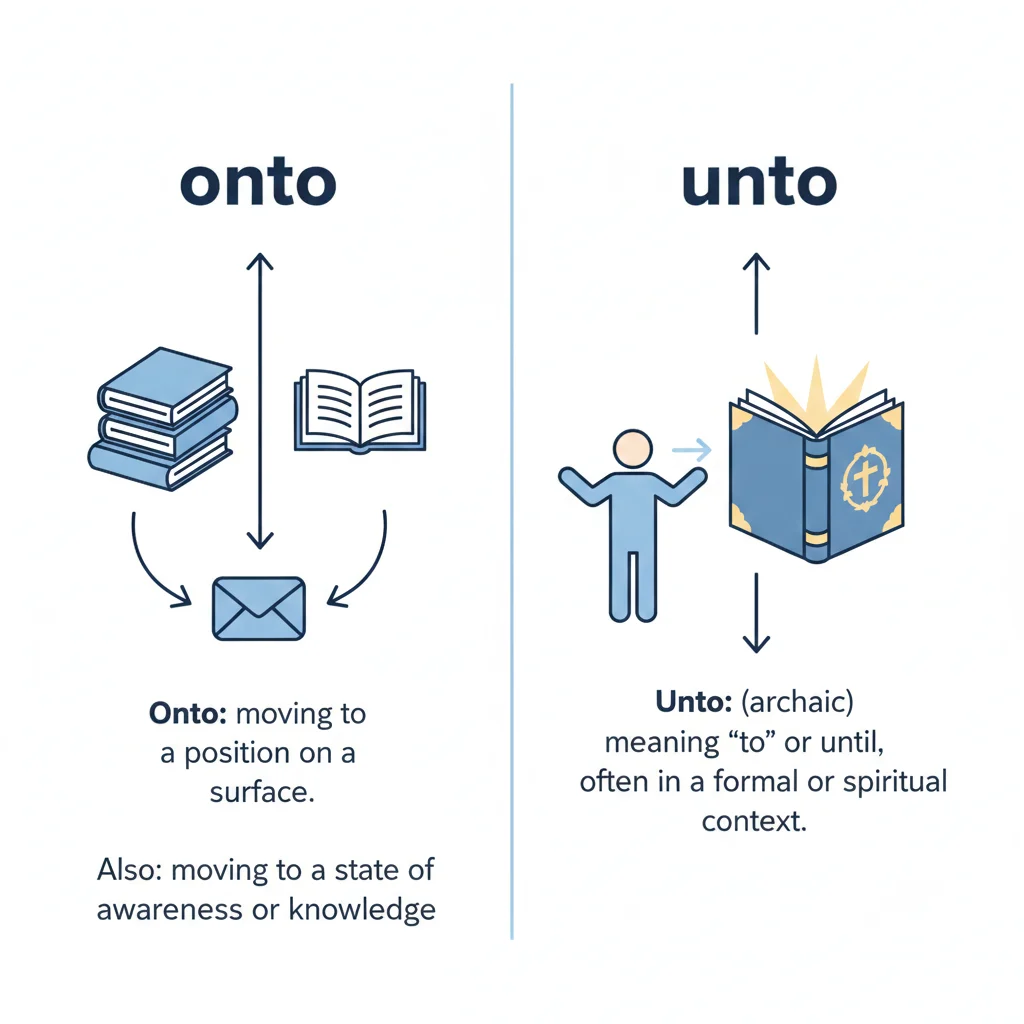
Onto means movement to a surface. Unto means toward or until, and often sounds formal or biblical.
Examples:
- She stepped onto the stage.
- He passed the duty unto his son.
If there is physical movement, use onto. If it means to or toward in a formal sense, use unto.
People search for onto vs unto because these two small words cause big confusion. They look similar, sound similar, and sometimes appear in the same sentence. Writers often stop and ask: When should I use onto? How to use unto? Is it onto the next or unto the next? This confusion shows up in emails, news articles, school essays, and even social media posts.
The problem is simple. Onto and unto both deal with direction or connection, but they are not interchangeable. One is common in modern English. The other feels old, formal, or biblical. Many people also mix on to vs onto, or wonder how these words compare with into. Because search engines, teachers, and editors care about accuracy, writers want a clear rule they can trust.
This article solves that problem fast. You will get a quick answer, clear examples, history, spelling rules, common mistakes, and real-life usage. By the end, you will know exactly which word to use and why, without guessing.
Onto vs Unto – Meaning Explained
Onto vs unto meaning depends on movement and tone.
Onto = movement from one place to a surface.
Example:
- The cat jumped onto the table.
Unto = toward, until, or to someone. It is formal and often literary.
Example:
- Wisdom was passed unto the next generation.
Think of onto as physical. Think of unto as abstract or formal.
This rule answers common questions like hold unto or onto?
- Hold onto the rope.
- Hold fast unto hope.
The Origin of Onto vs Unto
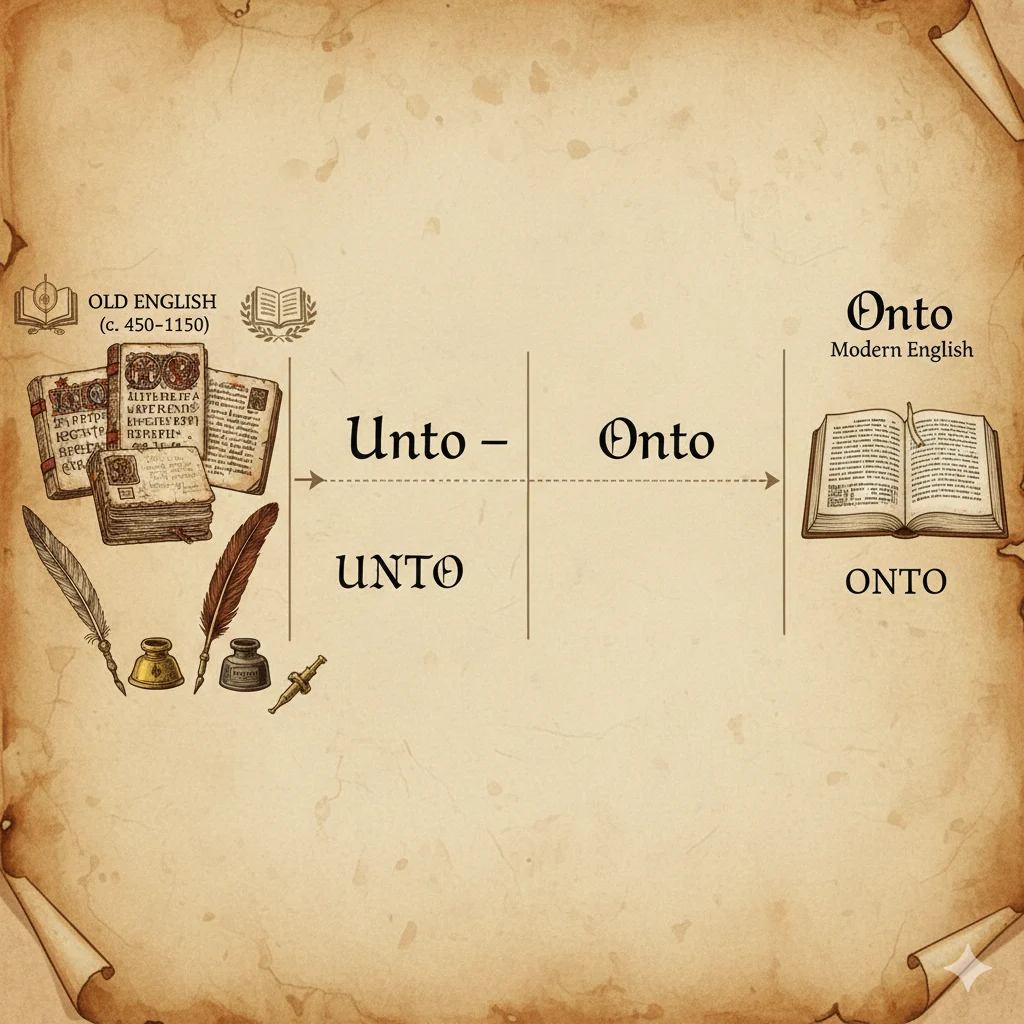
Unto comes from Old English unto, meaning up to or as far as. It was common in early English and appears often in religious texts like the Bible. Over time, everyday English stopped using it as much.
Onto is newer. It developed as English became more precise. Writers needed a clear way to show physical movement on something. So on to slowly merged into onto.
The spelling difference exists because the meanings separated. Unto stayed formal. Onto became practical and modern. That is why unto meaning feels old, while onto feels normal today.
British English vs American English Spelling
Both British and American English use onto and unto, but frequency differs.
American English favors onto strongly.
British English still understands unto, but uses it rarely.
| Usage Case | American English | British English |
|---|---|---|
| Physical movement | Onto | Onto |
| Legal or formal text | Rare unto | Rare unto |
| Everyday writing | Onto | Onto |
| Religious text | Unto | Unto |
Spelling is the same. Usage style is the main difference.
Lose vs Loss 👀 Why One Word Sounds Right—but Isn’t
Which Spelling Should You Use?
Your audience decides.
- US audience: Use onto almost always. Avoid unto unless quoting.
- UK/Commonwealth: Use onto for daily writing. Unto only in formal or literary cases.
- Global audience: Choose onto for clarity.
If you are unsure, onto is the safer choice in modern English.
Common Mistakes with Onto vs Unto
These errors appear often online:
❌ She moved unto the stage.
✔ She moved onto the stage.
❌ We are moving unto the next topic.
✔ We are moving on to the next topic.
❌ He passed the message onto her (formal text)
✔ He passed the message unto her.
Confusion also happens with onto vs unto vs into.
- Onto = on a surface
- Into = inside something
- Unto = toward or until
Onto vs Unto in Everyday Examples
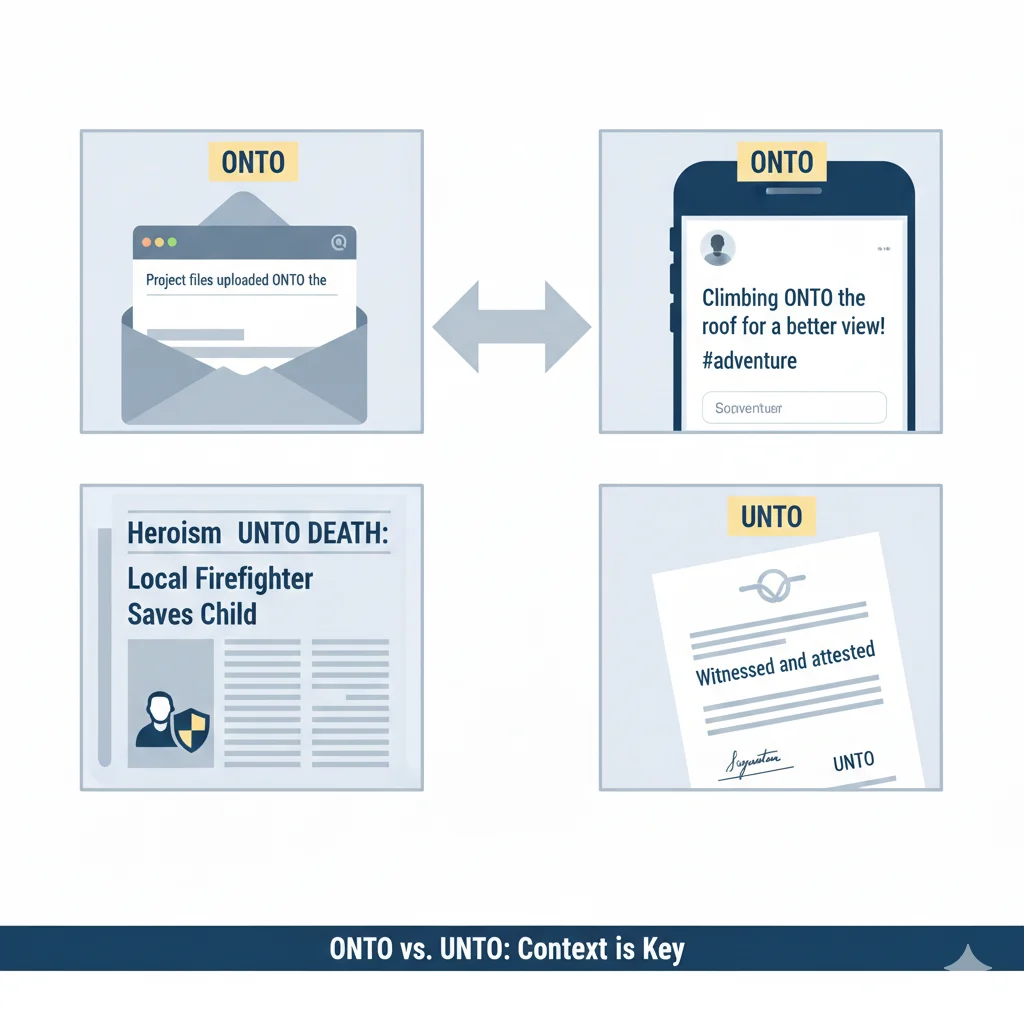
Emails:
- Please log onto the system today.
News:
- Power was transferred unto the new government.
Social Media:
- Moving on to the next challenge!
Formal Writing:
- Rights were granted unto the citizens.
These unto vs onto examples show tone and context clearly.
Onto vs Unto – Google Trends & Usage Data
Search data shows onto is far more popular worldwide. The US, Canada, and Australia search onto heavily. Unto appears mostly in religious, legal, or academic contexts.
Queries like is it onto the next or unto the next spike often. The correct form is on to the next, not unto the next.
one’s vs ones 👀 This Tiny Grammar Choice Matters More
Onto vs Unto vs Into – Comparison Table
| Word | Meaning | Example |
|---|---|---|
| Onto | Movement to a surface | Step onto the bus |
| Unto | Toward / until | Passed unto him |
| Into | Movement inside | Walk into the room |
FAQs
When should I use onto?
Use it for physical movement to a surface.
How to use unto?
Use it in formal or literary writing to mean to or toward.
Is it onto the next or unto the next?
Neither. Correct form is on to the next.
Is it onto others or unto others?
Formal writing uses unto others.
Hold unto or onto?
Hold onto something physical. Hold unto ideas or beliefs.
Unto or into?
Use into for movement inside. Unto for direction or transfer.
On to vs onto?
Onto is one word for movement. On to is two words when on belongs to the verb.
Conclusion
Understanding onto vs unto makes your writing clearer and more professional. These words are small, but they carry different meanings and tones. Onto is modern, common, and physical. It shows movement to a surface and works best for everyday writing, emails, news, and online content. Unto is formal, traditional, and abstract. It fits legal language, religious texts, and literary styles.
Most confusion comes from habit and old examples. Questions like unto or onto the next or onto vs unto vs into appear because English evolved over time. The good news is that the rule is simple. If there is real movement, choose onto. If it sounds formal or symbolic, unto may fit.
For clarity, and global readers, onto is usually the best choice. Save unto for special cases. When in doubt, think modern English. That choice will keep your writing clear, correct, and confident.

Mira Loxley is a passionate language and writing expert at Definevs.com, turning tricky words and grammar into clear, engaging guides for every reader.