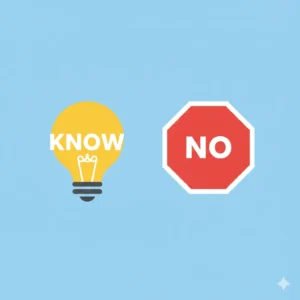
Have you ever heard someone say, “It’s now or never!” and wondered what it truly means? 🤔
The words “now” and “never” seem simple, but when used together or separately, they carry powerful and opposite meanings. Many English learners find them confusing because both express time — yet one means this exact moment, while the other means not at any time at all!
In this easy guide, we’ll explain:
- The meanings of now and never
- The difference between the two
- When to use each correctly
- Common mistakes and quick memory tricks
- Real-life examples and a short quiz to test your understanding
🧩 What Does Each Word Mean?
Meaning of “Now”
“Now” means at this moment, right away, or currently.
It shows the present time — something happening immediately or already happening.
Part of speech: Adverb (it tells when something happens).
Examples:
- Let’s eat now, I’m hungry.
- She is watching TV now.
- You must finish your homework now, not later.
💡 Tip: “Now” is about the present moment — think of “this very second.”
Meaning of “Never”
“Never” means not ever, at no time, or not even once.
It shows something that didn’t happen, doesn’t happen, or will not happen.
Part of speech: Adverb (it tells how often something happens — in this case, zero times).
Examples:
- I have never been to Paris.
- She never lies.
- You should never give up on your dreams.
💡 Tip: “Never” means not at any time — imagine a clock that stopped forever.
Joined / Joined or Die: The Hidden Meaning Everyone Misses 🔍
🔍 The Key Difference Between “Now” and “Never”
| Feature | Now | Never |
|---|---|---|
| Meaning | At this moment; immediately | Not at any time; not ever |
| Time Reference | Present | None (zero times) |
| Type | Positive (it shows something is happening) | Negative (it shows something didn’t or won’t happen) |
| Example Sentence | Let’s start now. | He has never tried sushi. |
| Quick Tip | Use when something is happening | Use when something doesn’t happen |
💡 Memory Trick:
👉 “Now” = action happening
👉 “Never” = action missing
🚫 Common Mistakes and How to Avoid Them
Here are some mistakes learners often make when mixing up “now” and “never.”
❌ Incorrect: I will do it never.
✅ Correct: I will never do it.
(“Never” usually comes before the main verb.)
❌ Incorrect: She never is happy now.
✅ Correct: She is never happy now.
(Word order matters — “never” comes after the helping verb.)
❌ Incorrect: I am studying never.
✅ Correct: I never study before exams.
(“Never” means not at any time — so “am studying never” sounds unnatural.)
💡 Quick Fix:
If you want to show something is happening, use “now.”
If you want to show something does not happen, use “never.”
🕓 When to Use “Now”
Use “now” when talking about:
- The present moment
- Immediate actions
- Changes happening right away
- Commands or urgent situations
Examples:
- Start your project now if you want to finish early.
- It’s raining now, so take an umbrella.
- Let’s talk now, not tomorrow.
- She is feeling better now.
- Now is the time to act!
💡 Memory Hack: Picture a clock showing the current time — that’s “now!”
🚷 When to Use “Never”
Use “never” when talking about:
- Things that didn’t happen in the past
- Things that don’t happen in the present
- Things that won’t happen in the future
Examples:
- I have never seen snow before.
- He will never forget that day.
- We should never waste food.
- She never goes out on weekends.
- Never say “never”! (famous phrase meaning “don’t lose hope”).
💡 Memory Hack: Imagine locking a door forever — that’s “never.”
🧠 Quick Recap: “Now” vs “Never”
- Now = present moment, happening immediately.
- Never = not ever, not at any time.
- “Now” is positive (something is happening).
- “Never” is negative (something is not happening).
- Both are adverbs, but they describe different time ideas.
Remember:
👉 Use now = at this moment
👉 Use never = at no moment
📚 Advanced Tips: Deeper Grammar & Usage
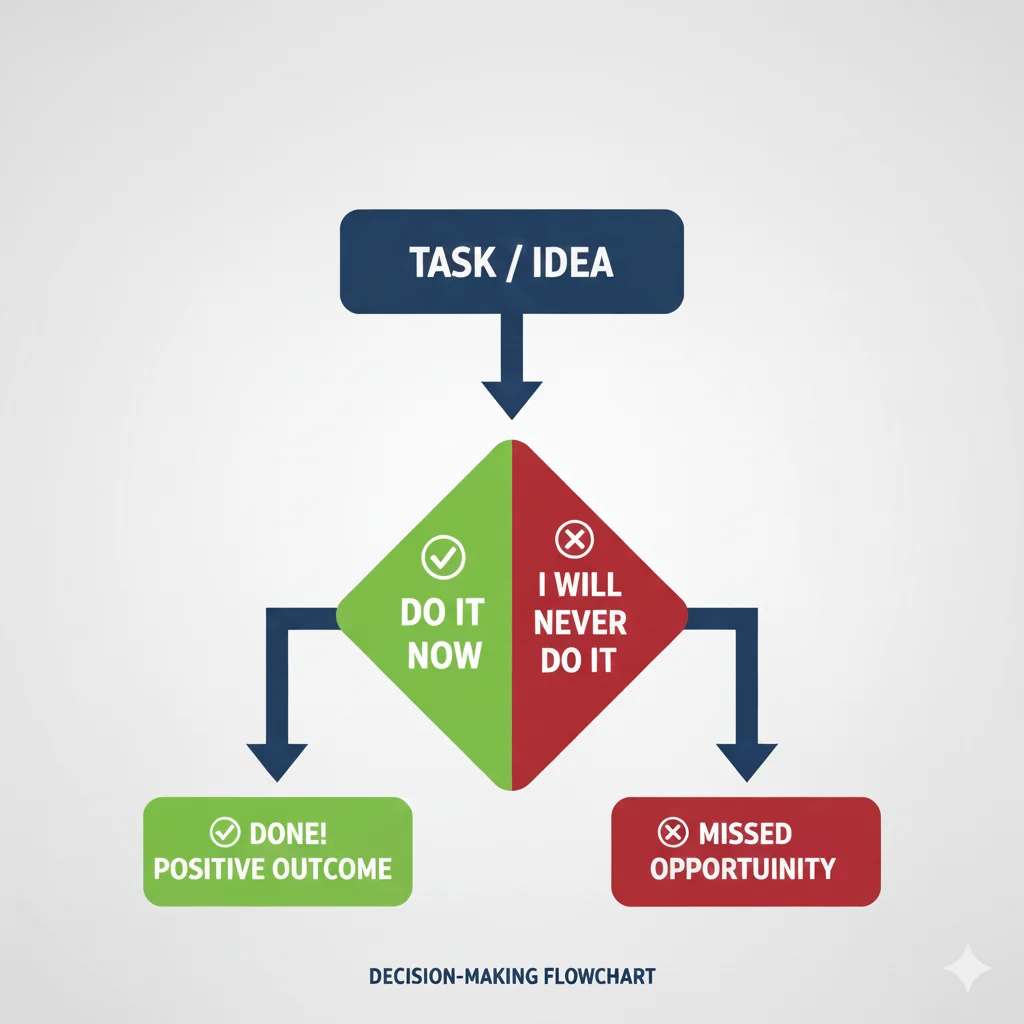
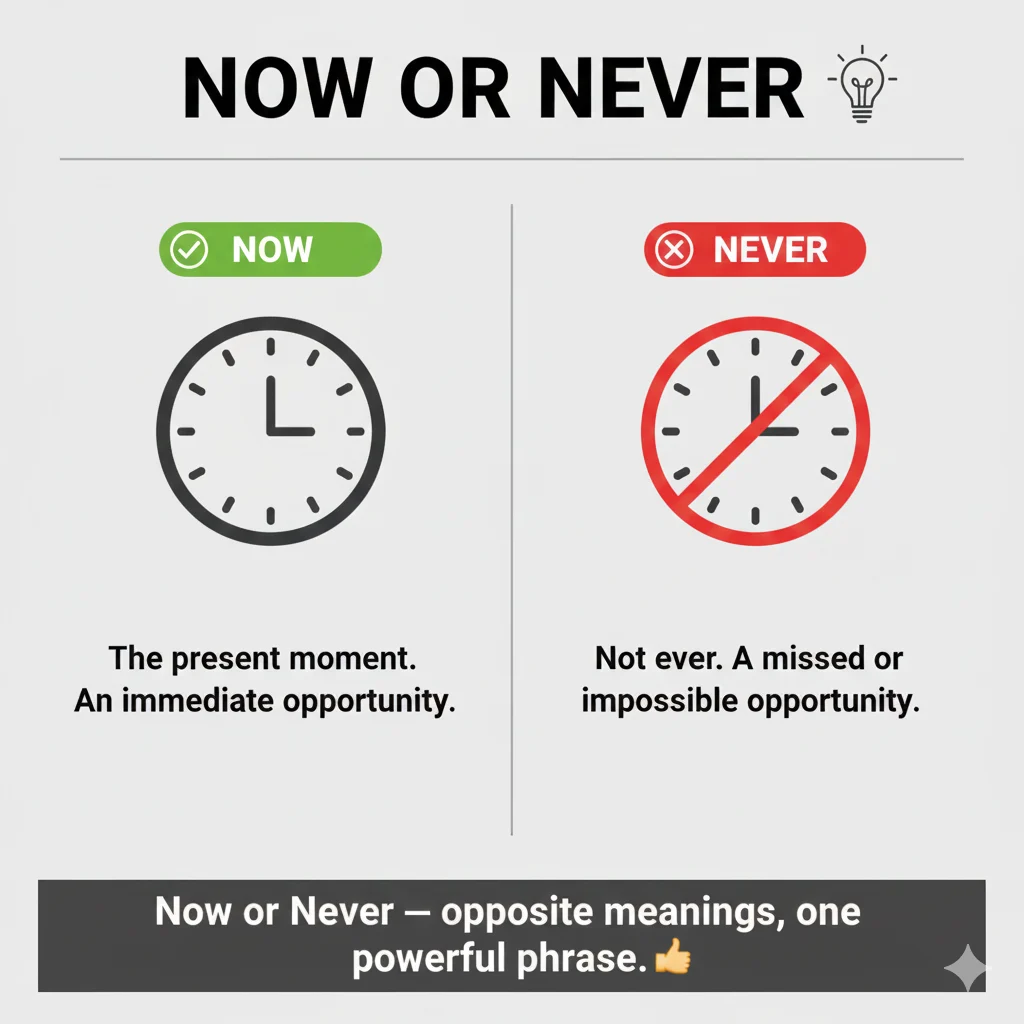
- The phrase “Now or Never” means you must act immediately or lose your chance forever.
Example: “You must apply for the job — it’s now or never!” - In formal writing, use now to start sentences for emphasis:
Example: “Now is the time to make a change.” - In motivational quotes or songs, “Now or Never” shows urgency or determination.
Example: “It’s now or never — take the leap!” - Avoid overusing “now” and “never” in essays — instead, use synonyms:
- For now: currently, at present, today.
- For never: not once, under no circumstances.
🧩 Mini Quiz: Test Your Understanding
Fill in the blanks with now or never.
- I am studying English right _______.
- You should call your mom _______.
- She has _______ eaten sushi before.
- It’s _______ too late to try.
- Let’s leave _______ before it rains.
- I’ll _______ forget this trip!
Answers: 1. now, 2. now, 3. never, 4. never, 5. now, 6. never. ✅
❓ FAQs About “Now” and “Never”
1. What’s the difference between “now” and “never”?
“Now” means the current moment, while “never” means not at any time. They are opposites in time expression.
2. Is “now or never” a common phrase?
Yes! It means you must act immediately or lose the opportunity forever.
3. Can “never” start a sentence?
Yes, but it often requires inversion in formal writing. Example: “Never have I seen such beauty.”
4. What type of words are “now” and “never”?
Both are adverbs — they modify verbs by showing when or how often something happens.
5. What are synonyms for “now” and “never”?
- For now: currently, today, at present.
- For never: not once, no time, not ever.
🏁 Conclusion
To sum it up:
- “Now” means this moment.
- “Never” means no moment at all.
They are complete opposites — one shows action, the other shows absence.
Next time you hear someone say “It’s now or never,” remember: they mean act immediately or lose your chance forever!
Keep practicing with daily examples — your English will keep getting stronger, one word at a time. 🌟

Isla Merrin is a language and writing expert at Definevs.com, creating simple, engaging guides to help readers master words, grammar, and modern English usage.