Have you ever paused while writing and wondered — should it be “molding” or “moulding”? 🤔
Don’t worry — you’re not alone! These two words look almost identical and mean the same thing, yet they’re spelled differently depending on where you are in the world.
In this easy guide, you’ll learn:
- The meaning of molding and moulding
- The difference between them
- When to use each one correctly
- Real-life examples, grammar tips, and easy memory hacks
By the end, you’ll never confuse these two words again — even if you’re just starting to learn English.
📘 What Does Each Word Mean?
🧩 Molding – American English Spelling
Part of Speech: Noun and Verb
Meaning:
“Molding” means a shaped strip of material (like wood, plaster, or metal) used to decorate or finish the edges of walls, ceilings, or furniture. It can also mean shaping something into a particular form.
Examples:
- The carpenter added molding around the ceiling.
- The artist is molding the clay into a vase.
- The frame has a beautiful wooden molding design.
🧱 Moulding – British English Spelling
Part of Speech: Noun and Verb
Meaning:
“Moulding” has the exact same meaning as “molding.” The only difference is the spelling — it’s the British (and Commonwealth) form of the word.
Examples:
- The house features elegant moulding near the ceiling.
- The sculptor is moulding the statue carefully.
- They bought decorative moulding for the living room.
So, whether you write “molding” or “moulding” depends on the English variety you follow — American or British.
🔍 The Key Difference Between Molding and Moulding
Here’s the simple truth:
👉 There is no difference in meaning — only in spelling and regional usage.
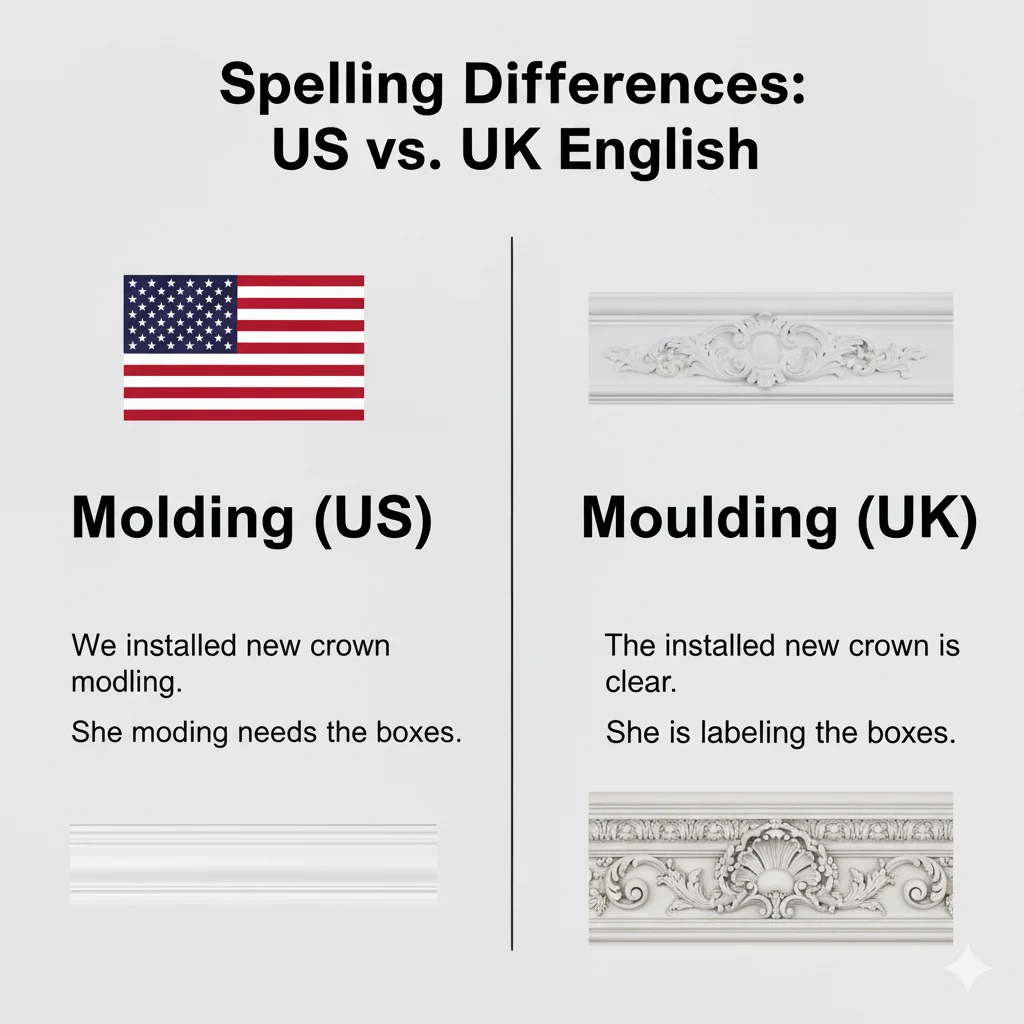
| Feature | Molding | Moulding |
|---|---|---|
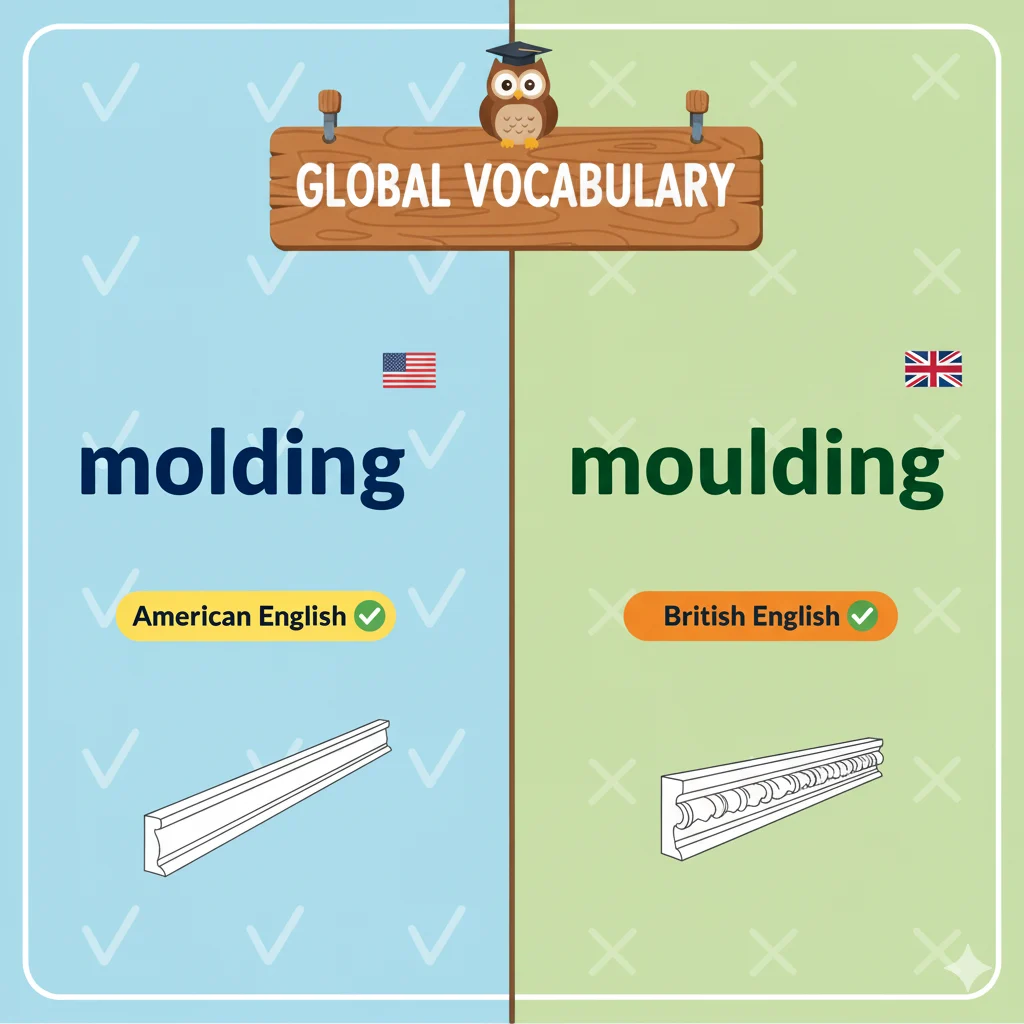
| Language Style | American English | British English |
| Meaning | Shaped trim or decoration used in building or art | Same meaning |
| Pronunciation | /ˈmoʊldɪŋ/ | /ˈməʊldɪŋ/ |
| Used In | USA, Canada (informally) | UK, Australia, India, South Africa |
| Example | “We installed crown molding.” | “We installed crown moulding.” |
💡 Quick Tip to Remember:
If you use color, honor, or organize, you’re using American English → “molding.”
If you use colour, honour, or organise, you’re using British English → “moulding.”
⚠️ Common Mistakes and How to Avoid Them
Even though “molding” and “moulding” mean the same thing, people often make small mistakes like these:
❌ Incorrect:
- “We added moulding to our US office.”
✅ Correct: - “We added molding to our US office.”
❌ Incorrect:
- “The American company sells ceiling moulding.”
✅ Correct: - “The American company sells ceiling molding.”
Why it happens:
Writers mix spelling rules from British and American English. To fix this, decide which version of English you’re using and stay consistent throughout your writing.
🏠 When to Use “Molding”
Use molding if:
- You’re writing in American English
- You’re addressing an American audience or business
- You’re following US spelling conventions
Examples:
- The decorator used white molding to brighten the room.
- She’s molding her ideas into a perfect project.
- The company sells plastic molding materials.
- They used crown molding in every bedroom.
- The clay was molding nicely in her hands.
🧠 Memory Hack:
“Molding” drops the ‘u’ — just like other American spellings (color, labor, humor).
🏛️ When to Use “Moulding”
Use moulding if:
- You’re following British, Australian, or Indian English
- You’re writing for academic or local publications in those regions
- Your spelling already includes words like colour and favourite
Examples:
- The old house had fine wooden mouldings around the windows.
- The artisan was moulding a new pottery design.
- They purchased ornate moulding from a London shop.
- The artist is moulding clay for her exhibition.
- Moulding adds elegance to classical buildings.
🧠 Memory Hack:
If you spell colour with a “u,” then use moulding with a “u” too!
🧩 Quick Recap: Molding vs Moulding
- Meaning: Both mean shaping or decorative trim.
- Difference: Only the spelling — “molding” (US) vs. “moulding” (UK).
- Usage: Be consistent with your English style (American or British).
- Tip: “U” stands for UK! That’s how you remember “moulding” is British.
🌍 Advanced Tips: Origin, Style, and Use
🕰️ Origin
Both words come from the Old French word “modle” and the Latin “modulus,” meaning “a small measure or model.” Over time, spelling split between British and American usage after the 18th century.
✍️ In Formal Writing
In formal essays or architecture reports, either spelling is acceptable — just keep it consistent throughout.
Example: Don’t mix “moulding” and “color” in the same text. Pick one style and stick to it.
💬 In Modern Communication
Online, people often mix the two spellings — especially on global platforms like Pinterest or design forums. While both are understood, using the correct regional form makes your writing look polished and professional.
🧠 Mini Quiz: Test Your Understanding
Fill in the blanks with molding or moulding.
- The carpenter added decorative _______ to the ceiling.
- In the UK, people usually spell it as _______.
- She is _______ clay into a beautiful sculpture.
- Americans prefer to spell it as _______.
- Consistent spelling makes your writing look more _______.
(Answers: 1. molding/moulding 2. moulding 3. molding/moulding 4. molding 5. professional)
❓ FAQs
1. What is the main difference between molding and moulding?
The difference is only in spelling. Molding is American English, while moulding is British English. Both mean shaping material or decorative trim.
2. Is molding or moulding correct in the US?
In the US, “molding” is the correct spelling.
3. Which spelling should I use in the UK?
Use “moulding” in the UK, Australia, and other countries using British English.
4. Can I use both spellings in the same article?
No. Stick to one spelling style (American or British) throughout to look professional and consistent.
5. Does molding always refer to decoration?
Not always. It can also mean shaping materials like clay, plastic, or metal.
🏁 Conclusion
Now you know the clear difference between molding and moulding — and how to use each one confidently!
They mean the same thing, but the spelling depends on where you are or which English style you follow.
Remember:
- Molding = American English
- Moulding = British English
Keep practicing these simple grammar distinctions, and you’ll sound more fluent and polished — for real! 🌟

Mira Loxley is a passionate language and writing expert at Definevs.com, turning tricky words and grammar into clear, engaging guides for every reader.