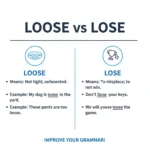
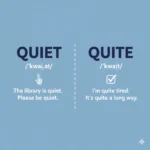
Sit vs Set 🪄 The Surprisingly Easy Way to Remember Both

Sit means to rest or be seated by yourself. Set means to place or put something somewhere. 👉 You sit ...
Read more
Who vs Whom 📝 The Fast Fix That Saves You From Embarrassment
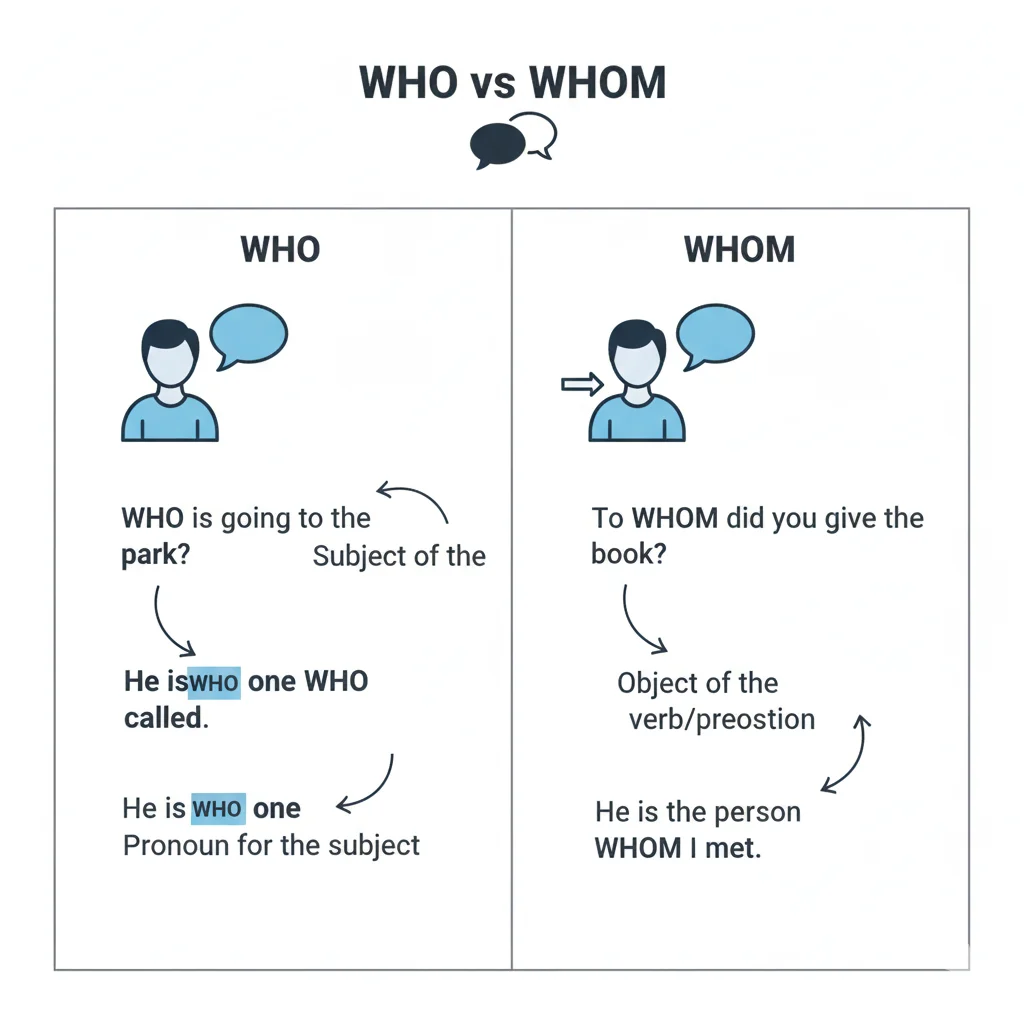
Who is used for the subject of a sentence.Whom is used for the object of a verb or preposition. Examples: ...
Read more
Weather vs Whether 🌦️ A Simple Fix for a Costly Error
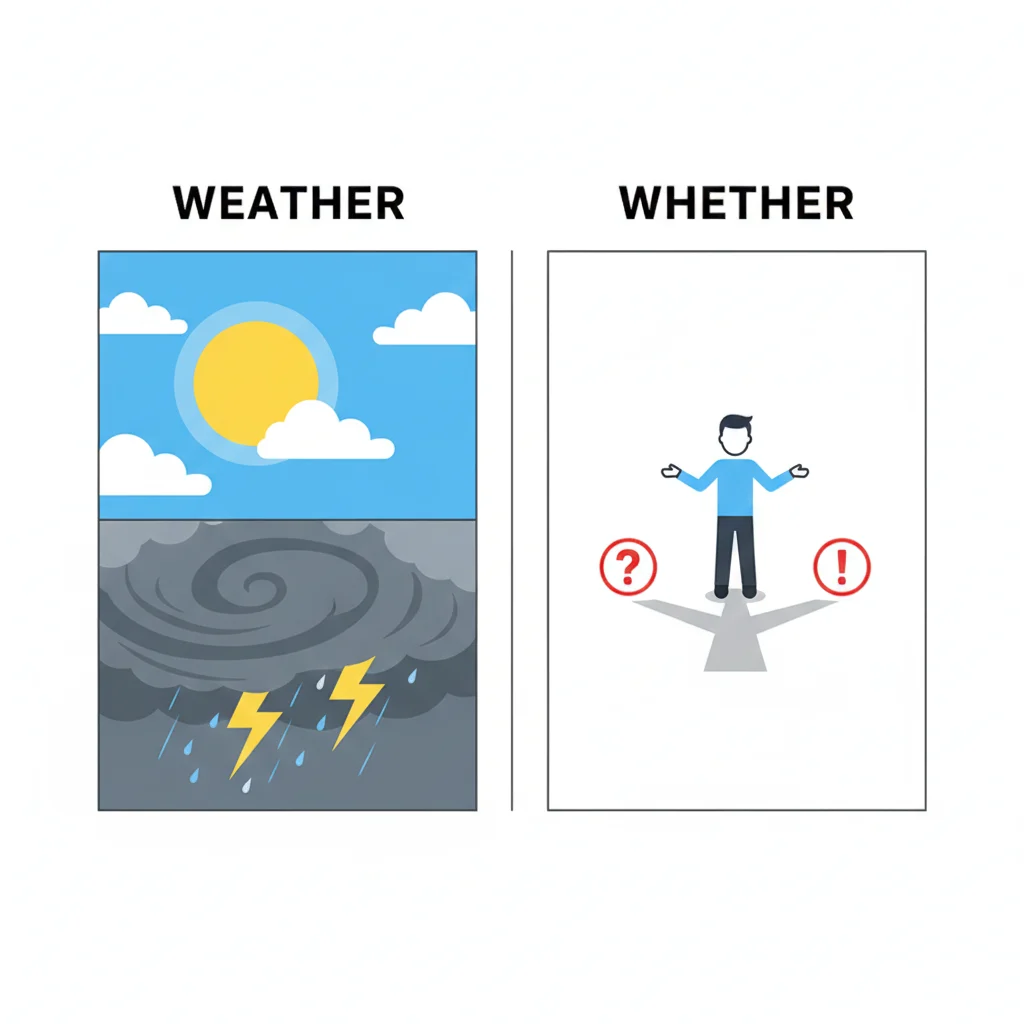
Weather talks about climate, rain, sun, or storms.Whether is used to show a choice, doubt, or decision. Examples: Have you ...
Read more
Vail vs Veil 🧠 The Truth Schools Rarely Teach
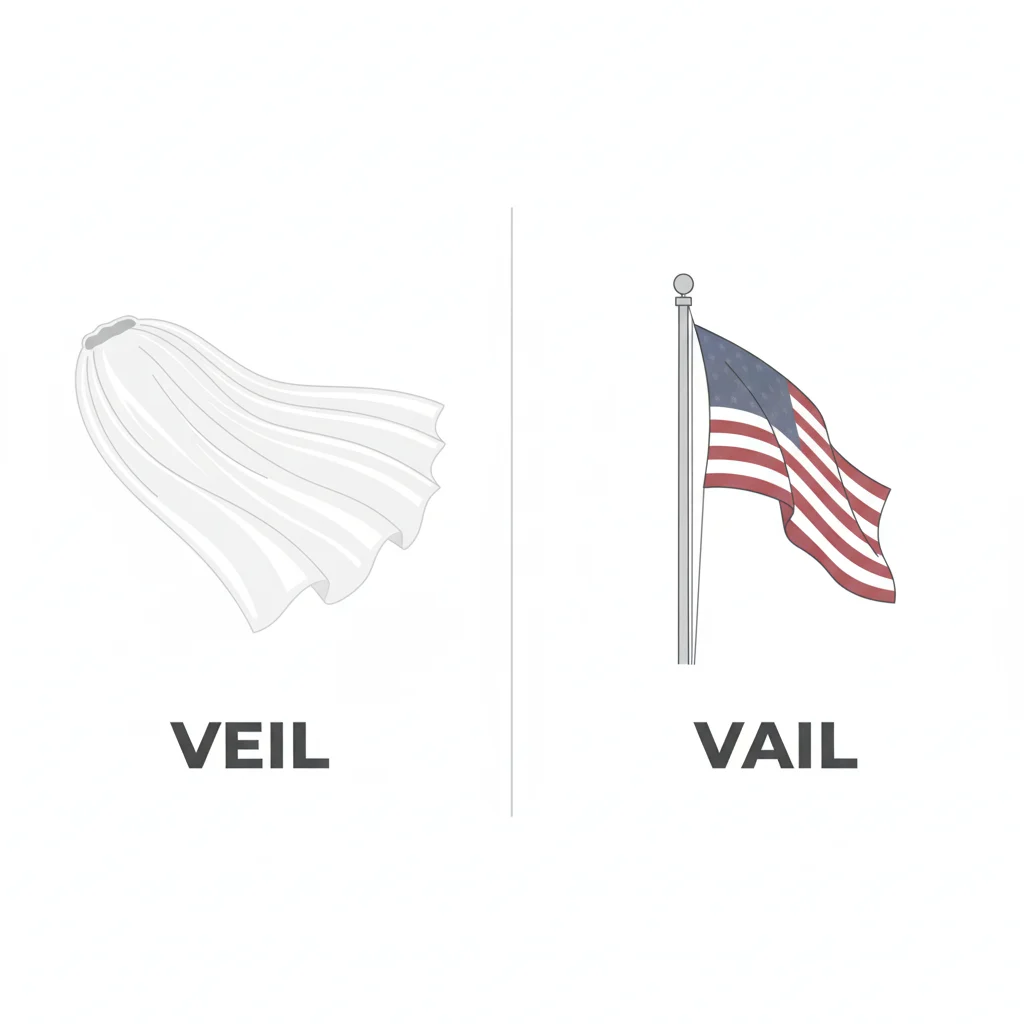
Veil is a noun or verb meaning to cover, hide, or conceal, often used for clothing, secrecy, or symbolism.Vail is ...
Read more
Stank vs Stunk 🔥 Which One Is Actually Correct?
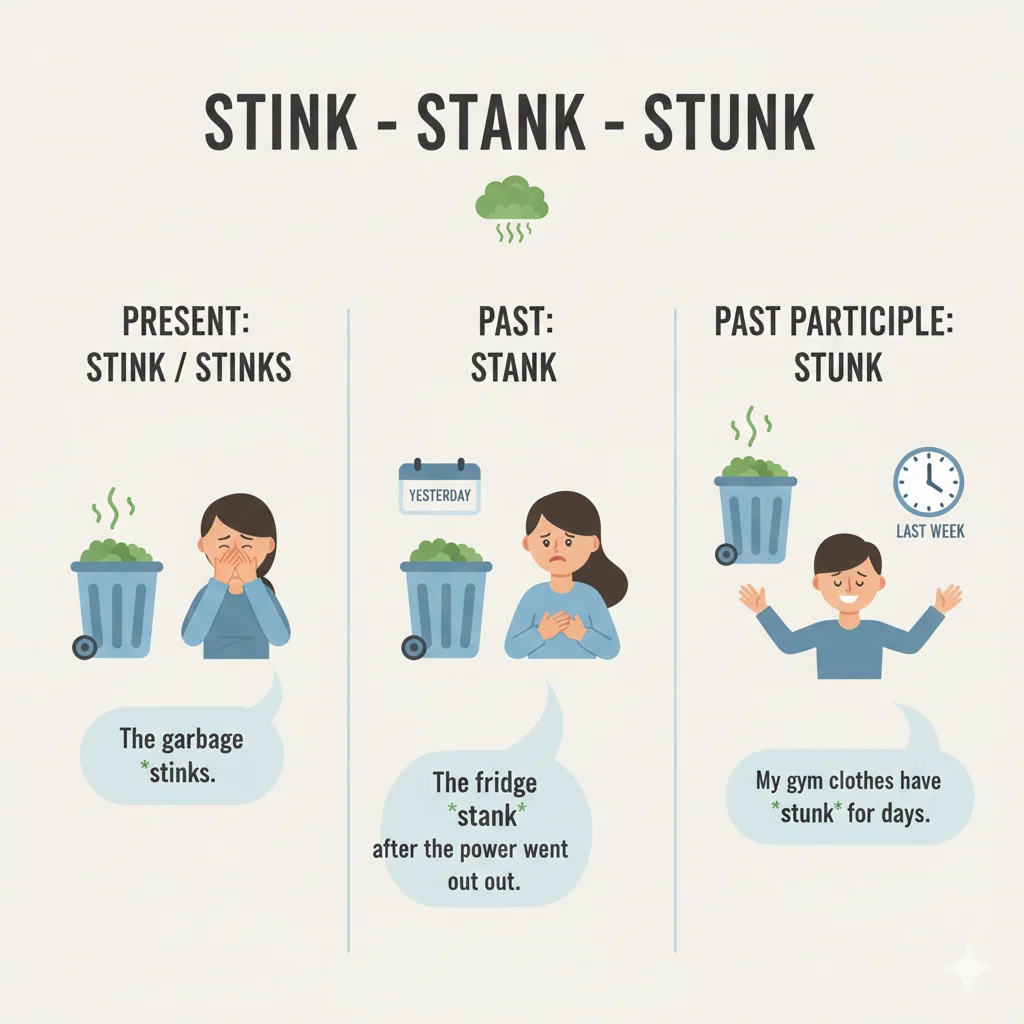
Stank and stunk are both correct forms of the verb stink, but they are used differently. If you’re wondering “Is ...
Read more
Scarring vs Scaring 📌 Simple Rule Everyone Should Know
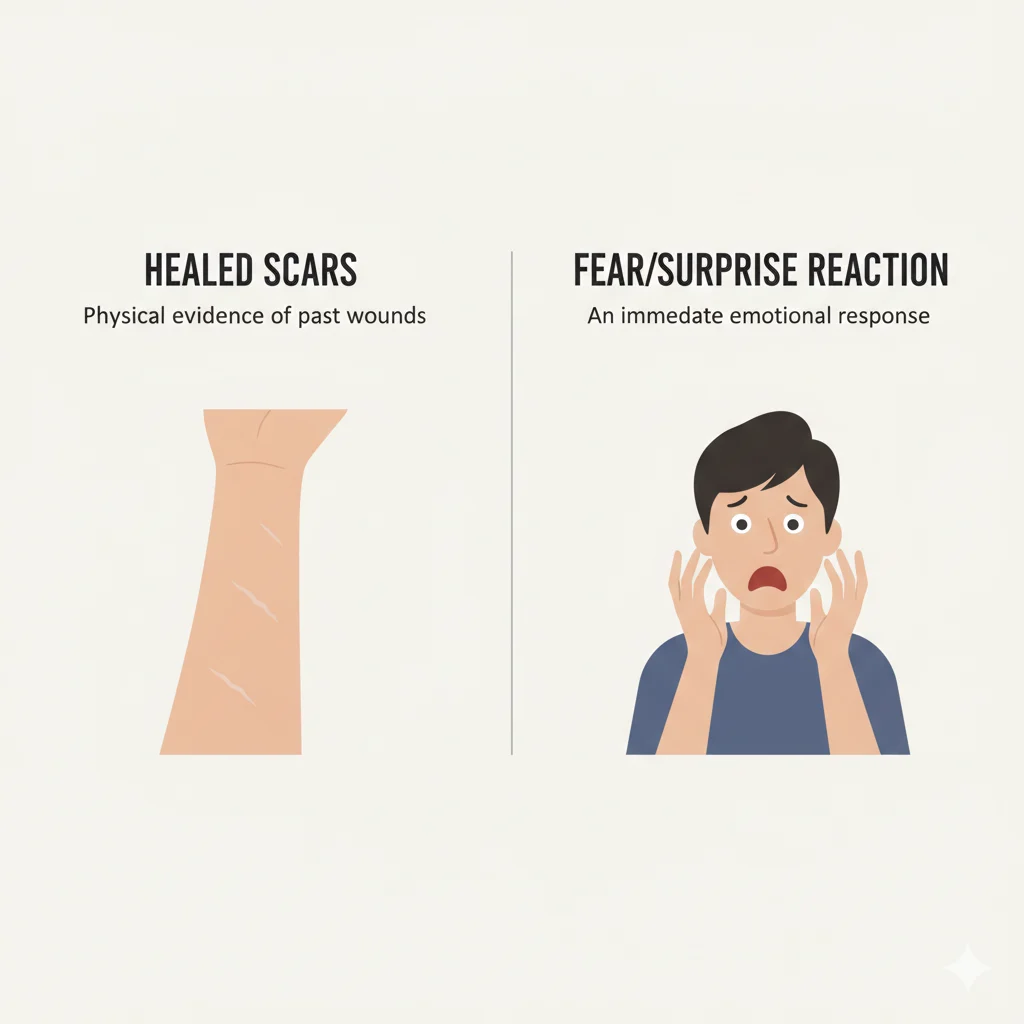
Scarring means leaving a mark or lasting damage, usually on skin or emotions.Scaring means causing fear or shock. Examples:• The ...
Read more
Regimen vs Regiment 📚 Why Spellcheck Won’t Save You
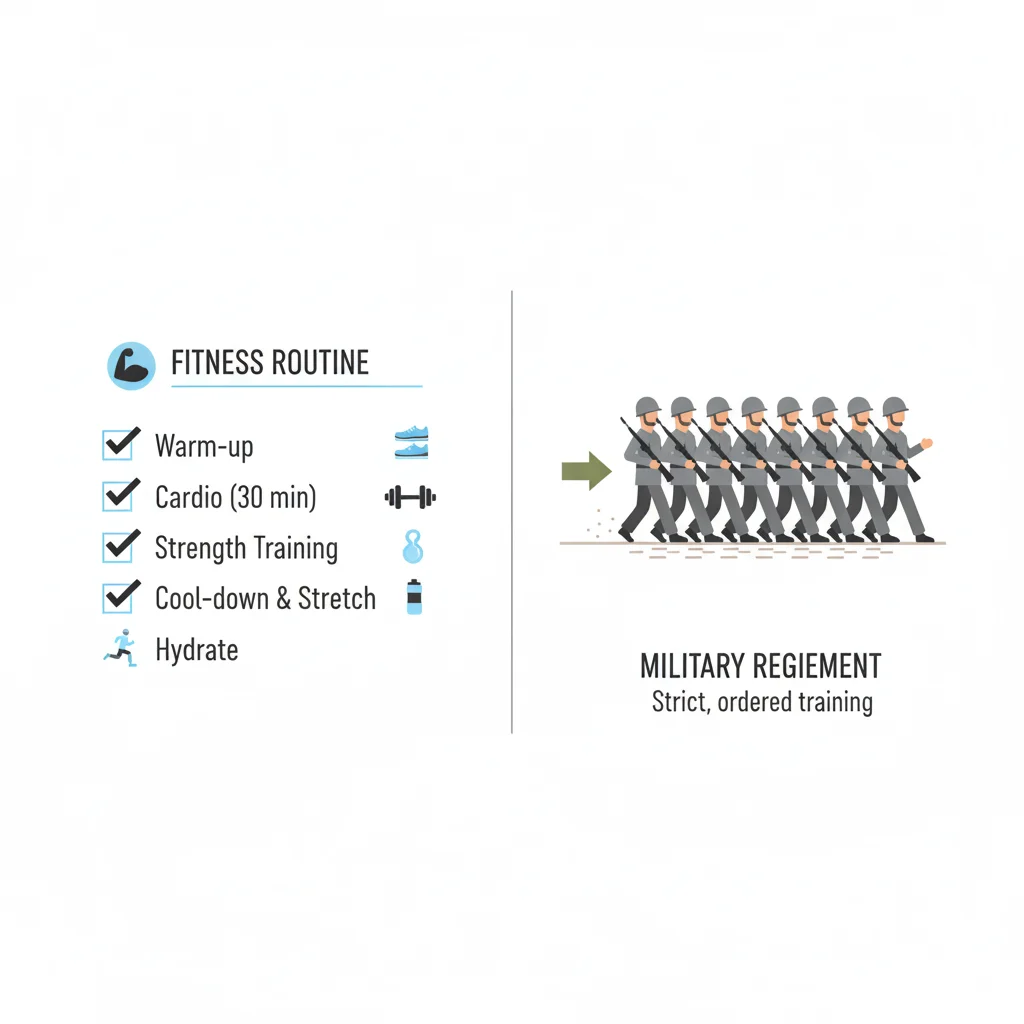
Regimen vs regiment is a common English confusion. Regimen means a planned routine, especially for health, exercise, or treatment. Regiment ...
Read more
Plum vs Plumb 🍑🔧 – The Tiny Detail Everyone Gets Wrong
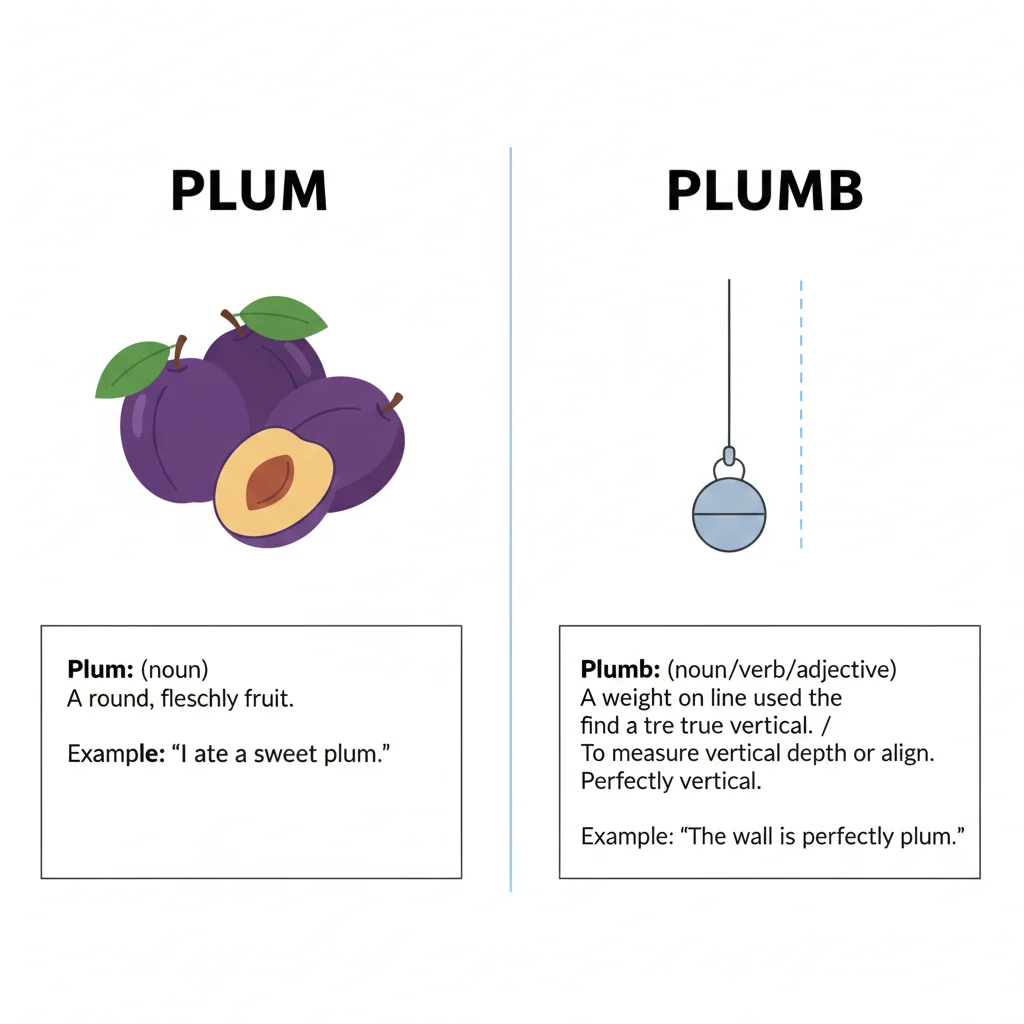
Plum and plumb are not the same words.Plum is mainly a noun or adjective. It refers to a fruit or ...
Read more
People vs Persons ✍️ The Truth Behind Formal English
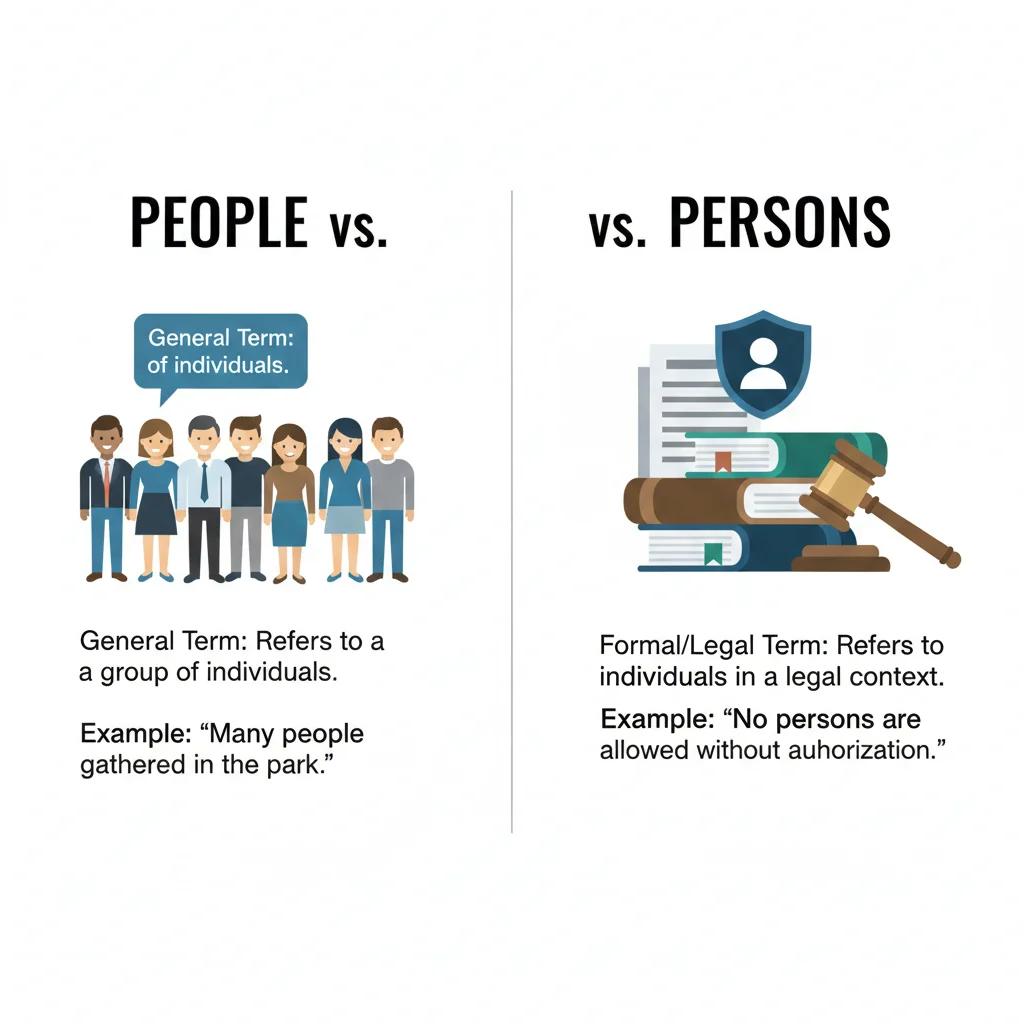
People is the most common plural of person and is used in everyday English.Persons is a formal, legal, or official ...
Read more
Onto vs Unto 👀 The Subtle Difference Most Miss
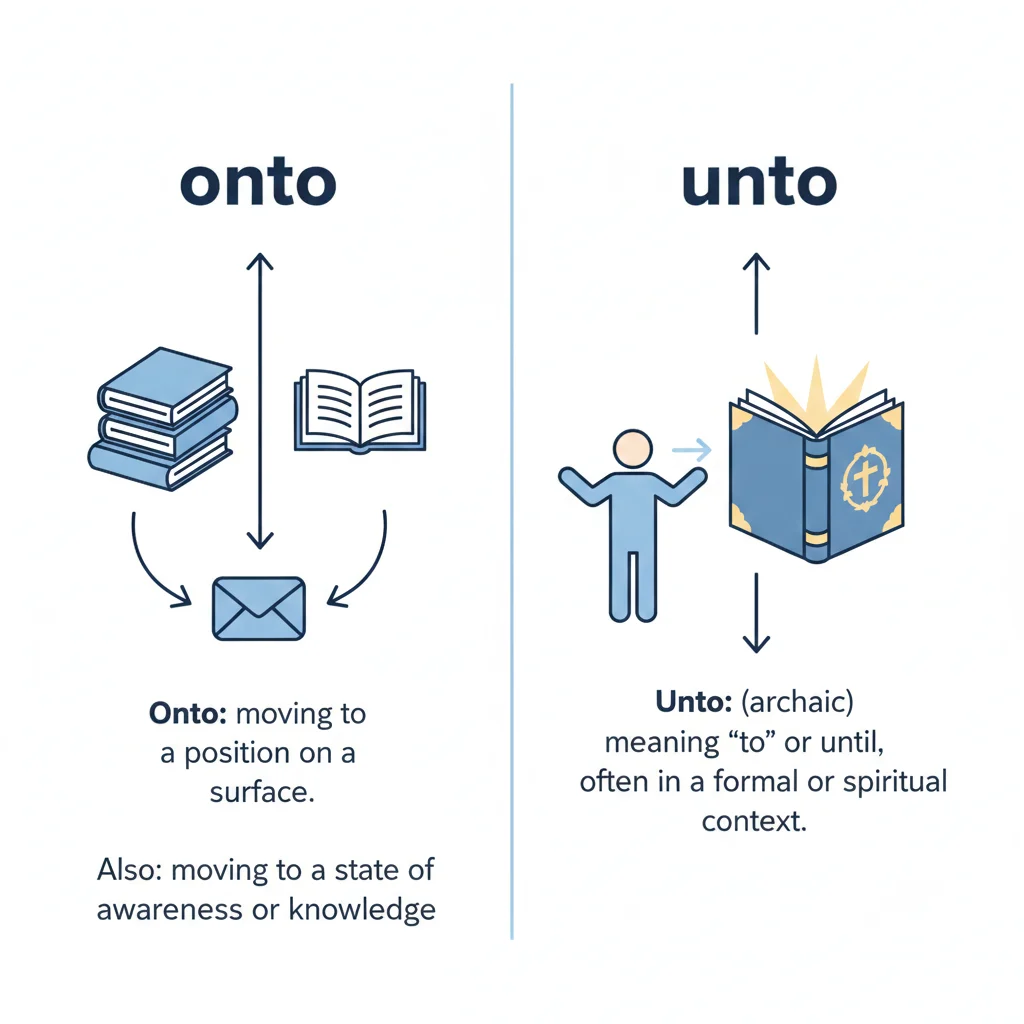
Onto means movement to a surface. Unto means toward or until, and often sounds formal or biblical.Examples: If there is ...
Read more