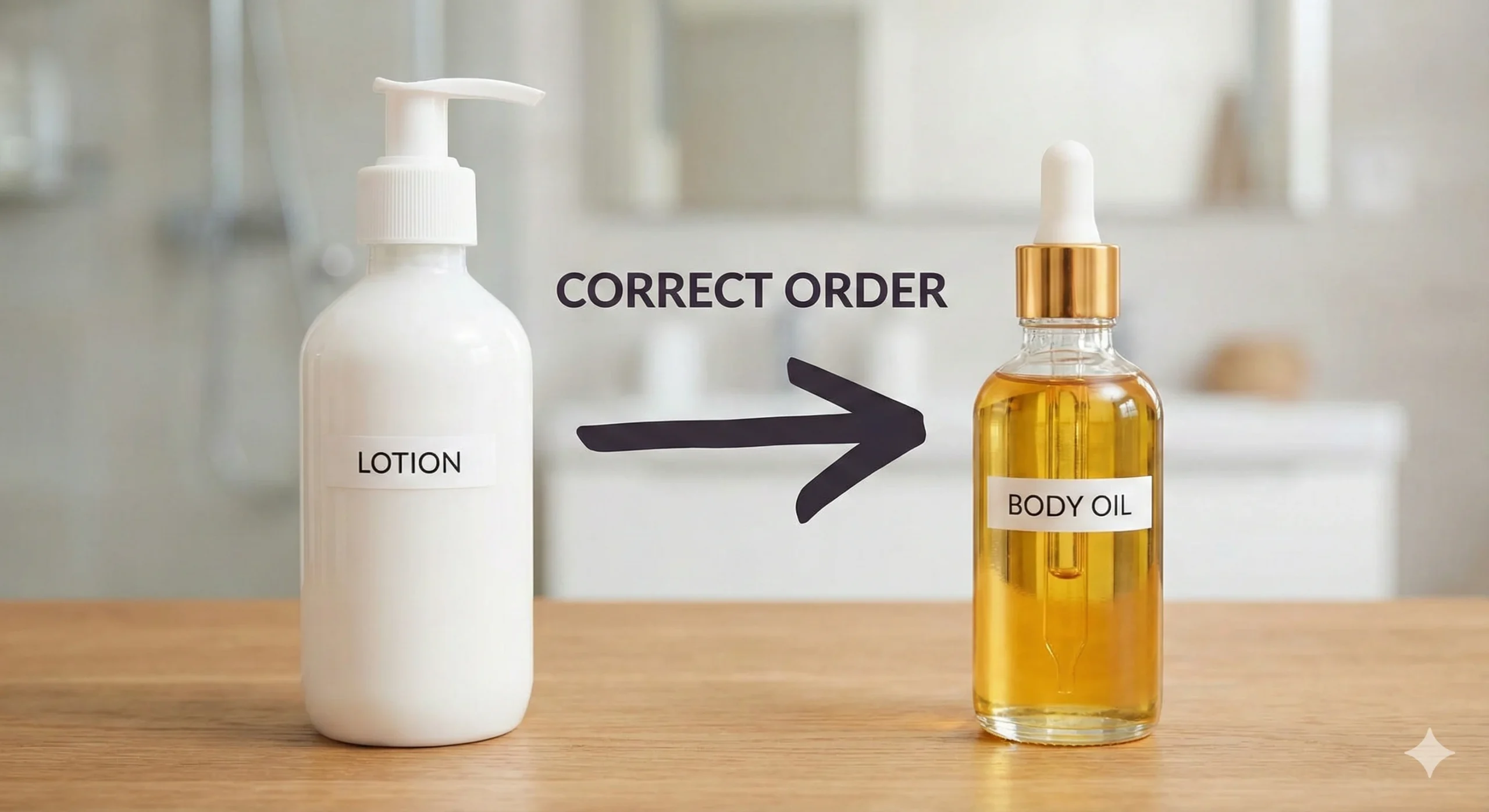
Use lotion first, then body oil.
Lotion adds water (hydration) to your skin, while body oil locks that hydration in. Applying lotion before body oil creates smoother, softer, longer-lasting moisture.
Choosing between lotion or body oil first can feel confusing, especially if you’re new to skincare. Both products make your skin soft, smooth, and glowing—but they don’t work the same way. Many people guess the order and end up with sticky, heavy, or dry skin.
This article explains the difference between lotion and body oil, the correct order, the meaning of each product, plus easy examples that even a 4th-grade student can understand. By the end, you’ll know exactly which one to use first and why. Let’s make skincare simple!
🧴 What Does “Lotion” Mean?
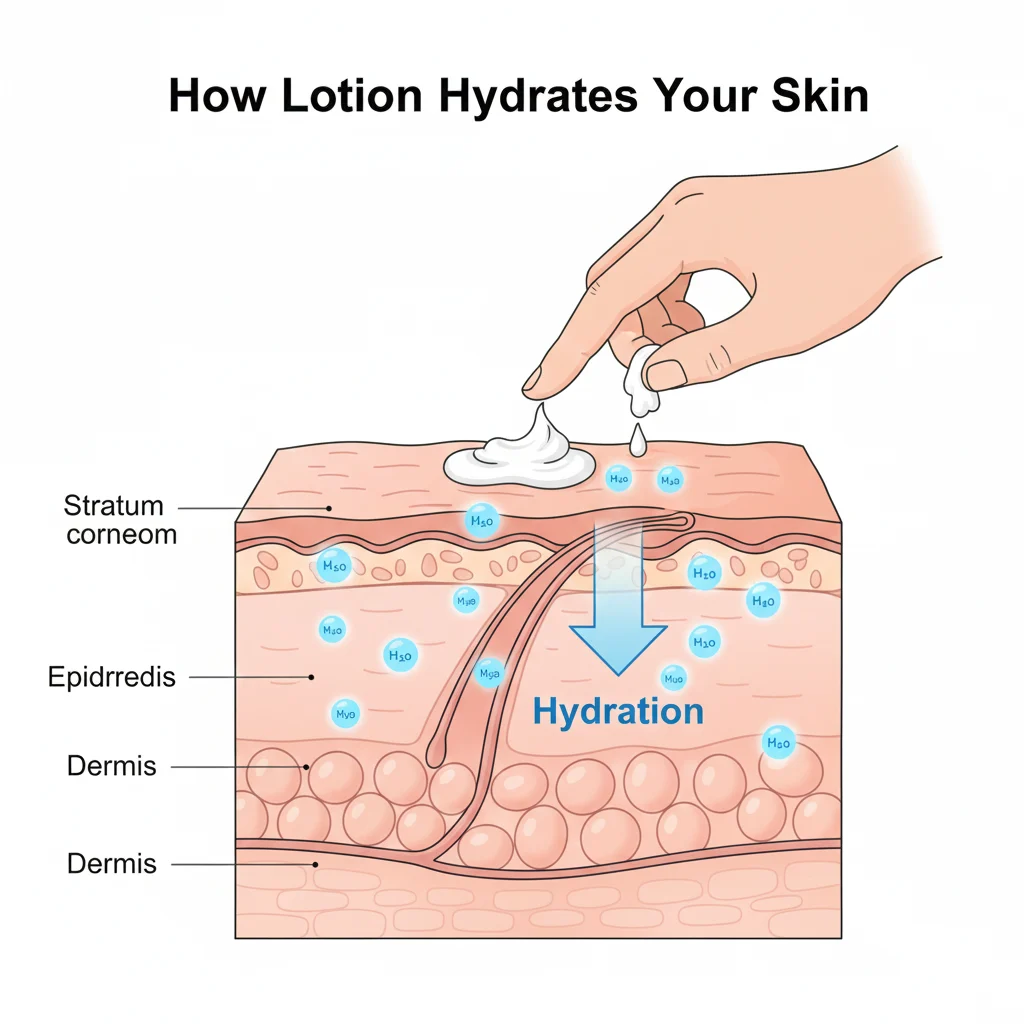
A lotion is a hydrator.
This means lotion adds water to your skin. Think of it as a drink for your skin.
Simple Definition
A lotion is a light, creamy product made of water + moisturizing ingredients. It helps dry skin feel soft and smooth.
Part of Speech
It is a noun (a thing).
Easy Examples
- “I use lotion when my hands feel dry.”
- “My mom bought a lavender lotion.”
- “Lotion makes my skin feel cool and moist.”
Mini Story
Imagine your skin is like a thirsty plant. Lotion is the water that helps the plant stay fresh.
🪔 What Does “Body Oil” Mean?
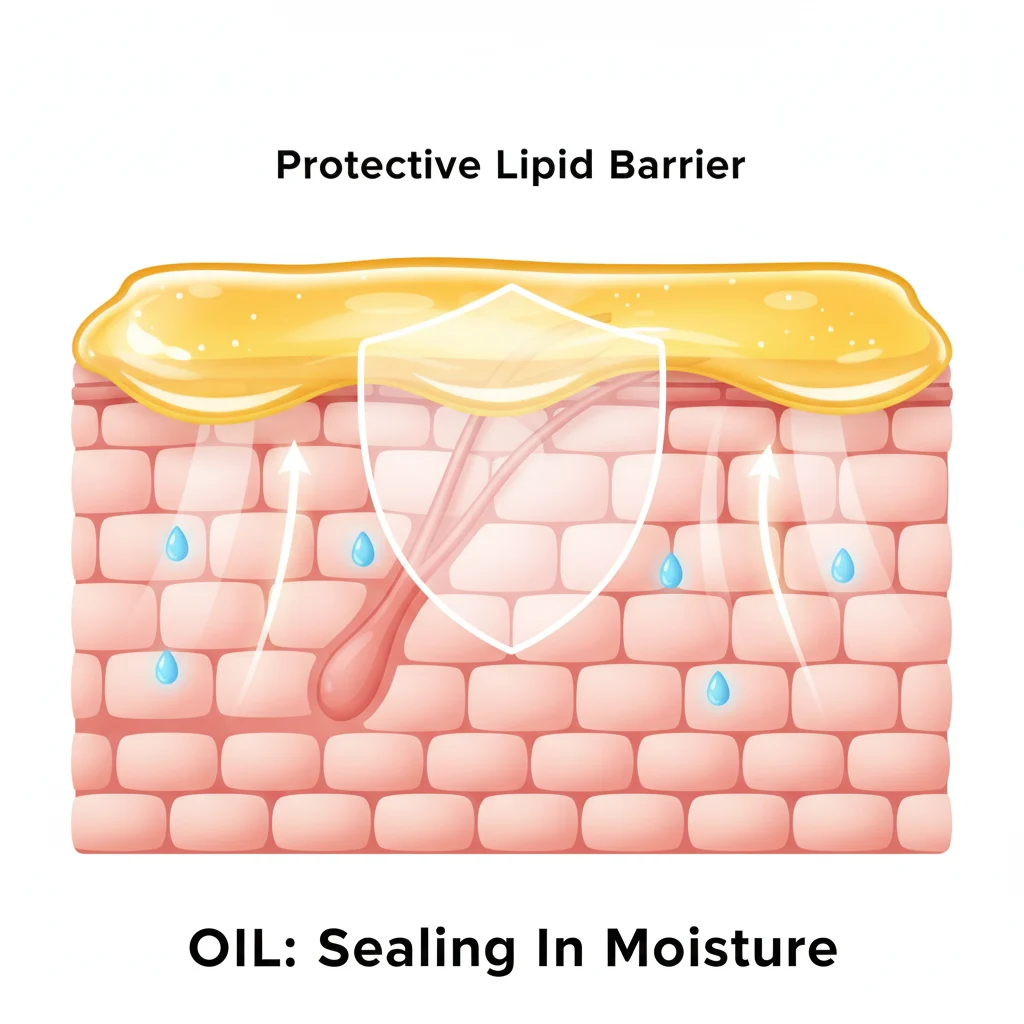
A body oil is a sealer.
It does not add water. Instead, it locks in the water you already applied.
Simple Definition
Body oil is made of natural or mineral oils. It keeps moisture from escaping your skin.
Part of Speech
It is also a noun (a thing).
Easy Examples
- “Body oil gives my skin a shiny glow.”
- “She uses body oil after showers.”
- “This coconut body oil smells amazing.”
Mini Story
If lotion is water for a plant, body oil is the mulch that keeps the water from drying out.
🔍 The Key Difference Between Lotion and Body Oil
Here is the simple difference:
- Lotion = adds moisture
- Body oil = seals moisture
This means the correct order is lotion first, body oil second.
🧾 Comparison Table: Lotion vs Body Oil
| Feature | Lotion | Body Oil |
|---|---|---|
| What it does | Adds water (hydration) | Locks moisture (seals hydration) |
| Texture | Light, creamy | Thick, slippery |
| Best for | Dry, normal, sensitive skin | Extra dry skin, glow, sealing moisture |
| When to apply | First | After lotion |
| Example sentence | “I put lotion on after my shower.” | “I use body oil to seal in moisture.” |
💡 Quick Tip to Remember
Water goes first. Oil goes last.
Just like cooking: water boils first, oil floats on top. Same idea for skin!
❌ Common Mistakes and How to Avoid Them
Mistake 1: Using body oil first
Why it’s wrong: Oil creates a layer that blocks lotion from entering the skin.
Fix: Always apply lotion first.
Mistake 2: Using too much oil
Why it happens: Oil spreads easily.
Fix: Start with 2–3 drops for each area.
Mistake 3: Skipping lotion because oil “looks shiny”
Why it’s wrong: Oil only seals; it does not hydrate.
Fix: Use lotion daily; use oil for glow or extra dryness.
🧴 When to Use Lotion
Use lotion when your skin feels dry, rough, flaky, or tight. Lotion is perfect for everyday hydration.
Use Lotion When:
- You just finished showering
- Your skin feels dry or dull
- You want a non-greasy feel
- You want quick hydration
- You are going outside in warm weather
Simple Example Sentences
- “I use lotion every morning.”
- “My elbows were dry, so I added lotion.”
- “This lotion makes my skin soft in seconds.”
- “Kids can also use lotion to keep skin moist.”
- “Always apply lotion before sunscreen.”
⭐ Memory Hack
Think: Lotion = Liquid. Liquid = First.
Liquids always go before oils in skincare.
🪔 When to Use Body Oil
Use body oil when you want extra glow or need to seal moisture after lotion.
Use Body Oil When:
- You want shiny, glowing skin
- Your skin feels extra dry
- You applied lotion already
- You want a strong moisture barrier
- It’s winter or cold weather
Simple Example Sentences
- “I add body oil after lotion to seal moisture.”
- “Her skin looks shiny because she used body oil.”
- “This oil smells like vanilla.”
- “Body oil makes my legs glow in summer.”
- “Use oil last—always last.”
⭐ Memory Trick
Oil = O for “over everything.”
Oil goes over lotion.
📌 Quick Recap: Lotion vs Body Oil
- Lotion hydrates; body oil seals.
- Lotion = water. Oil = lock.
- Use lotion first.
- Use body oil second.
- Water products always go before oil products.
📘 Advanced Tips
1. Origin of the Products
- Lotions started as medicinal creams to soothe dry or irritated skin.
- Body oils were used by ancient Egyptians and Greeks for shine, scent, and moisture protection.
2. Use in Formal Skincare Routines
Dermatologists recommend the “thin to thick” rule:
Thin products → Thick products.
Lotion is thinner; oil is thicker. So lotion first.
3. Online Writing & Misuse
Some people say “use oil first for glow,” but this is incorrect if you want long-lasting moisture. Glow is temporary without hydration underneath.
📝 Mini Quiz: Test Yourself
Fill in the blanks:
- Always use ______ first to add moisture.
- Body oil is used to ______ in moisture.
- Lotion is like giving your skin ______.
- Oil should be applied ______ lotion.
- Use lotion daily, but use body oil for extra ______.
(Answers: lotion, seal, water, after, glow)
❓ 5 FAQs
1. Should I use lotion or body oil first?
Always use lotion first, then body oil. Lotion hydrates; oil seals.
2. Can I skip lotion and only use body oil?
You can, but your skin may stay dry because oil does not hydrate.
3. Can I mix lotion and body oil together?
Yes, mixing is fine, but layering gives better results.
4. Is lotion better for daytime?
Yes. It’s lighter and absorbs faster.
5. Is body oil good for winter?
Absolutely. It seals moisture and protects skin from cold air.
🎯 Conclusion
Understanding whether to use lotion or body oil first is simple once you know their roles. Lotion gives your skin the water it needs. Body oil locks that moisture in. When you use them in the right order, your skin becomes softer, smoother, and healthier every day.
Use lotion first. Use oil last. Your skin will thank you.

Mira Loxley is a passionate language and writing expert at Definevs.com, turning tricky words and grammar into clear, engaging guides for every reader.