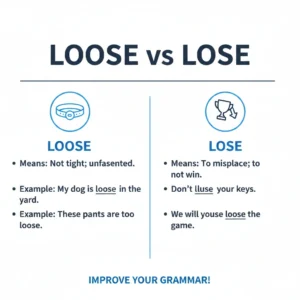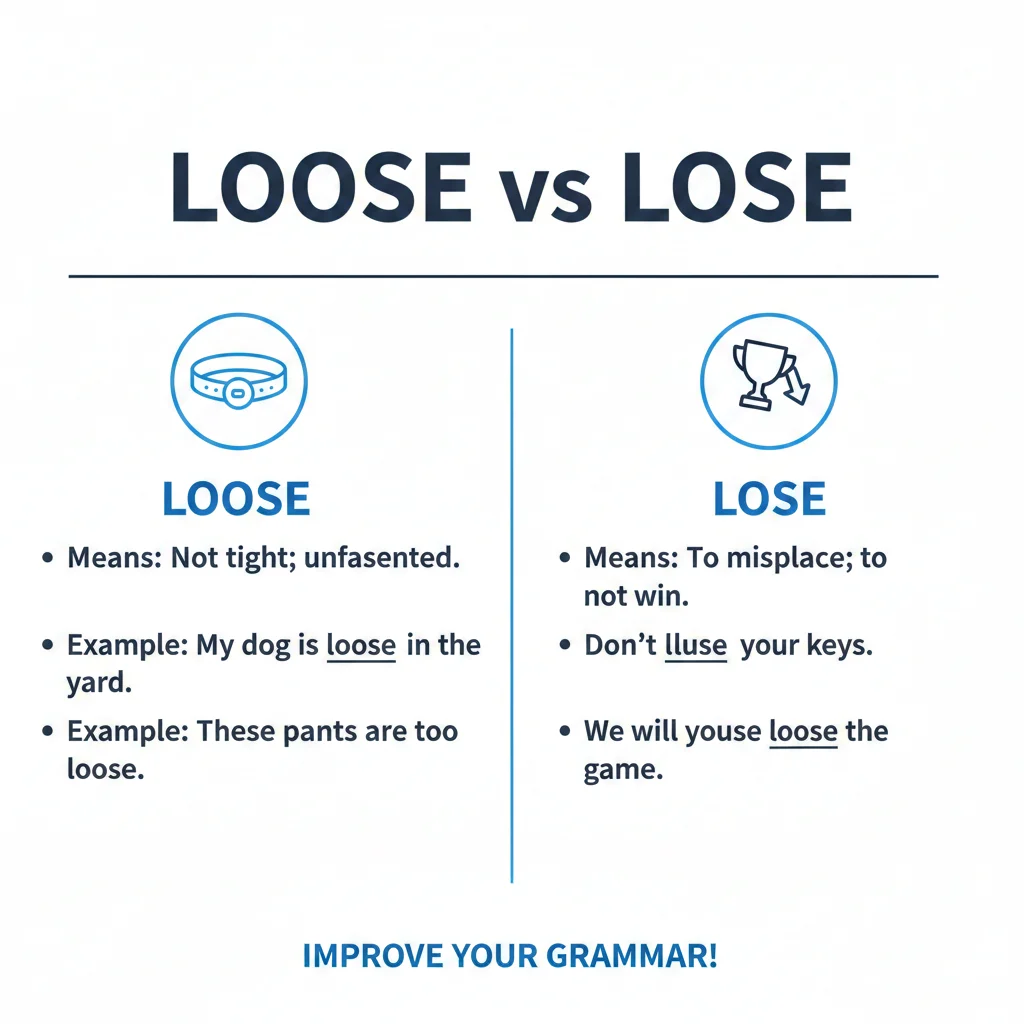
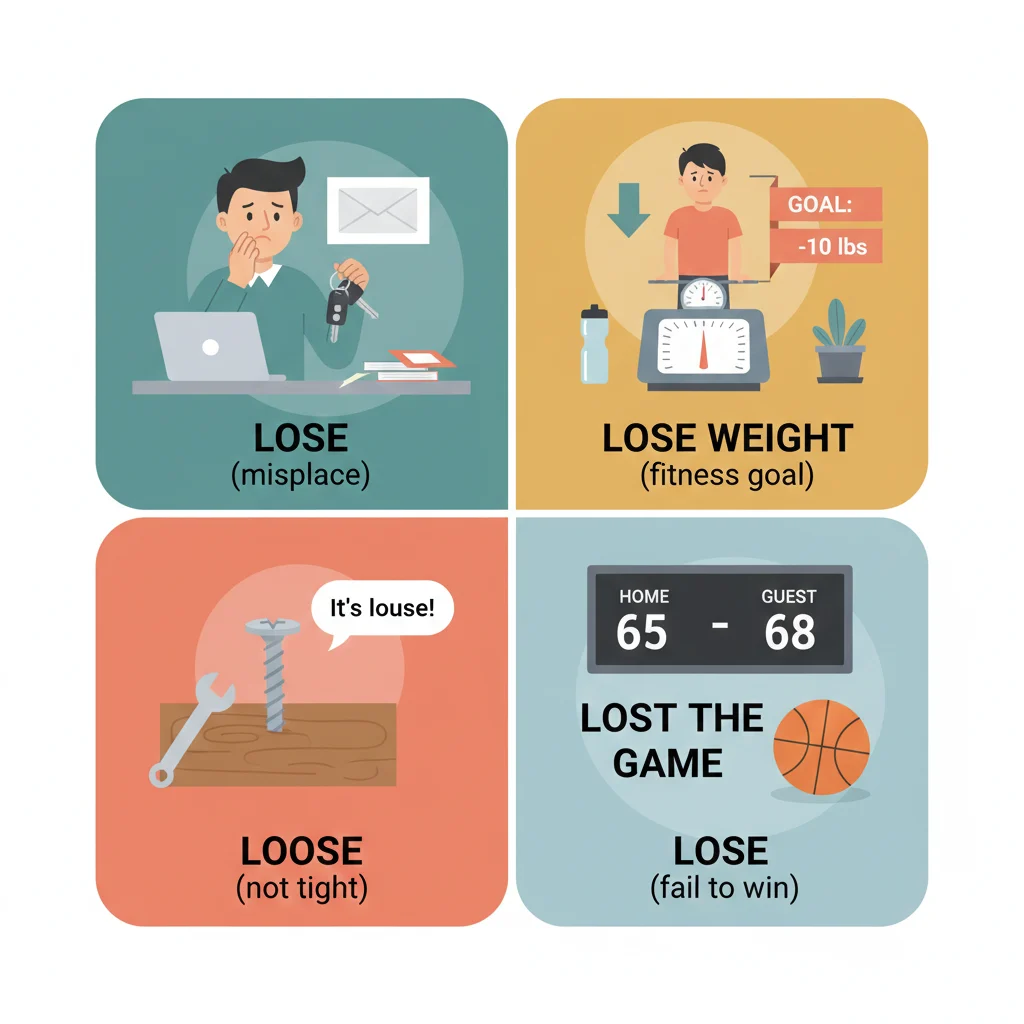
Loose means not tight or free.
Lose means to misplace, fail to win, or no longer have something.
Examples:
- My shirt is loose.
- I don’t want to lose my keys.
- She wants to lose weight, not loose weight.
- We might lose the game if we don’t focus.
If you are asking, “Which is correct, lose or loose?” — it depends on your meaning. Use lose for loss. Use loose for something not tight.
Have you ever typed “loose vs lose” and paused, unsure which spelling is right? You are not alone. This is one of the most searched grammar mistakes online. Many people confuse the two because they look similar and sound close. But their meanings are very different.
People search for loose vs lose definition, loose vs lose meaning, and loose vs lose pronunciation because one small spelling error can change a sentence completely. Writing “I will loose money” instead of “I will lose money” can hurt your credibility. It can even affect SEO writing, emails, school work, and business messages.
This guide gives you a quick answer, deep explanation, real examples, tables, FAQs, and memory tips. By the end, you will never mix up loose vs lose again.
The Origin of Loose vs Lose
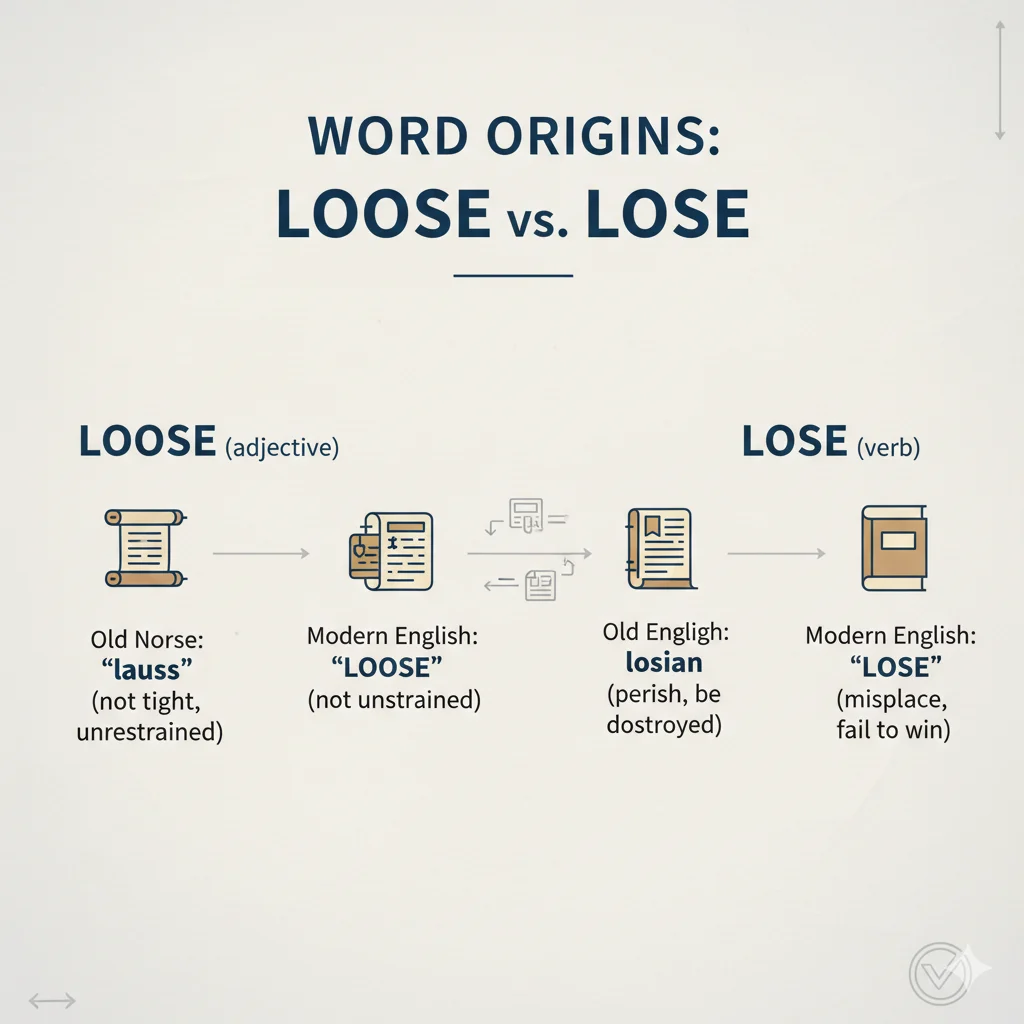
Understanding history helps you remember spelling.
Loose comes from Old Norse lauss, meaning free or untied. That is why we say:
- loose clothes
- loose rope
- loose tooth
Lose comes from Old English losian, meaning to perish or fail. That is why we say:
- lose money
- lose a game
- lose interest
- lose someone
The double “o” in loose shows a long “oo” sound. The single “o” in lose has a “z” sound.
This explains the loose vs lose difference clearly.
British English vs American English Spelling
Good news: there is no spelling difference between British and American English for loose vs lose. Both follow the same grammar rules.
| Word | Meaning | US English | UK English | Example |
|---|---|---|---|---|
| Loose | Not tight | Loose | Loose | The bolt is loose. |
| Lose | To fail or misplace | Lose | Lose | Don’t lose your phone. |
Unlike words like “color” vs “colour,” loose vs lose grammar stays the same worldwide.
Know vs No 🚨 One Wrong Letter Changes Everything
Which Spelling Should You Use?
Use loose when talking about:
- Clothing that is not tight
- Objects that are free
- Letting something go (set loose)
Use lose when talking about:
- Losing weight
- Losing money
- Losing a game
- Losing interest
- Losing someone
- Losing keys
If your audience is global, US, UK, or Commonwealth countries, the spelling rule does not change. Google’s EEAT guidelines reward clear, correct writing. Using the wrong word may reduce trust and quality signals.
So if you ask, “Is it lose or loose weight?” — the correct form is lose weight.
If you ask, “Is it lose or loose money?” — it is lose money.
Common Mistakes with Loose vs Lose
Here are frequent errors people make:
❌ I want to loose weight.
✅ I want to lose weight.
❌ Don’t loose the match.
✅ Don’t lose the match.
❌ These pants are lose.
✅ These pants are loose.
❌ I might loose interest.
✅ I might lose interest.
Many people also confuse loose vs lose vs loss vs lost.
Here is a quick breakdown:
| Word | Type | Meaning |
|---|---|---|
| Loose | Adjective | Not tight |
| Lose | Verb | To no longer have |
| Loss | Noun | The act of losing |
| Lost | Past tense of lose | Something gone |
Example:
- I lose my phone.
- I lost my phone.
- That is a big loss.
- My grip is loose.
Loose vs Lose in Everyday Examples
Let’s see loose vs lose examples in real life.
In Emails
- Please do not lose this document.
- The handle feels loose.
In News
- The team may lose the final game.
- A loose wire caused the issue.
On Social Media
- Trying to lose weight this year!
- My tooth feels loose.
In Formal Writing
- The company could lose money due to inflation.
- Check for loose connections before starting.
Clear grammar builds trust. This matters in SEO, content writing, and branding.
Loose vs Lose – Google Trends & Usage Data
Search data shows “loose vs lose” is a high-volume grammar keyword. Many users also search:
- loose vs lose pronunciation
- loose vs lose meaning
- loose vs lose sentence
- how to remember loose vs lose
- loose vs lose quiz
- loose vs lose game
Common confusion happens in fitness topics like “loose or lose weight” and gaming topics like “did we loose vs lose the game.”
Globally, the error appears often in informal social media posts. That is why Google’s NLP systems focus on context. Proper word choice improves content authority under EEAT standards.
Quiet vs Quite 🧠 The Grammar Rule No One Tells You
Loose vs Lose Definition and Meaning Table
Here is a full comparison table:
| Feature | Loose | Lose |
|---|---|---|
| Part of Speech | Adjective | Verb |
| Meaning | Not tight | To misplace or fail |
| Pronunciation | /lo͞os/ | /looz/ |
| Example | Loose shirt | Lose money |
| Fitness Use | ❌ Loose weight | ✅ Lose weight |
| Game Context | ❌ Loose game | ✅ Lose game |
How to Remember Loose vs Lose
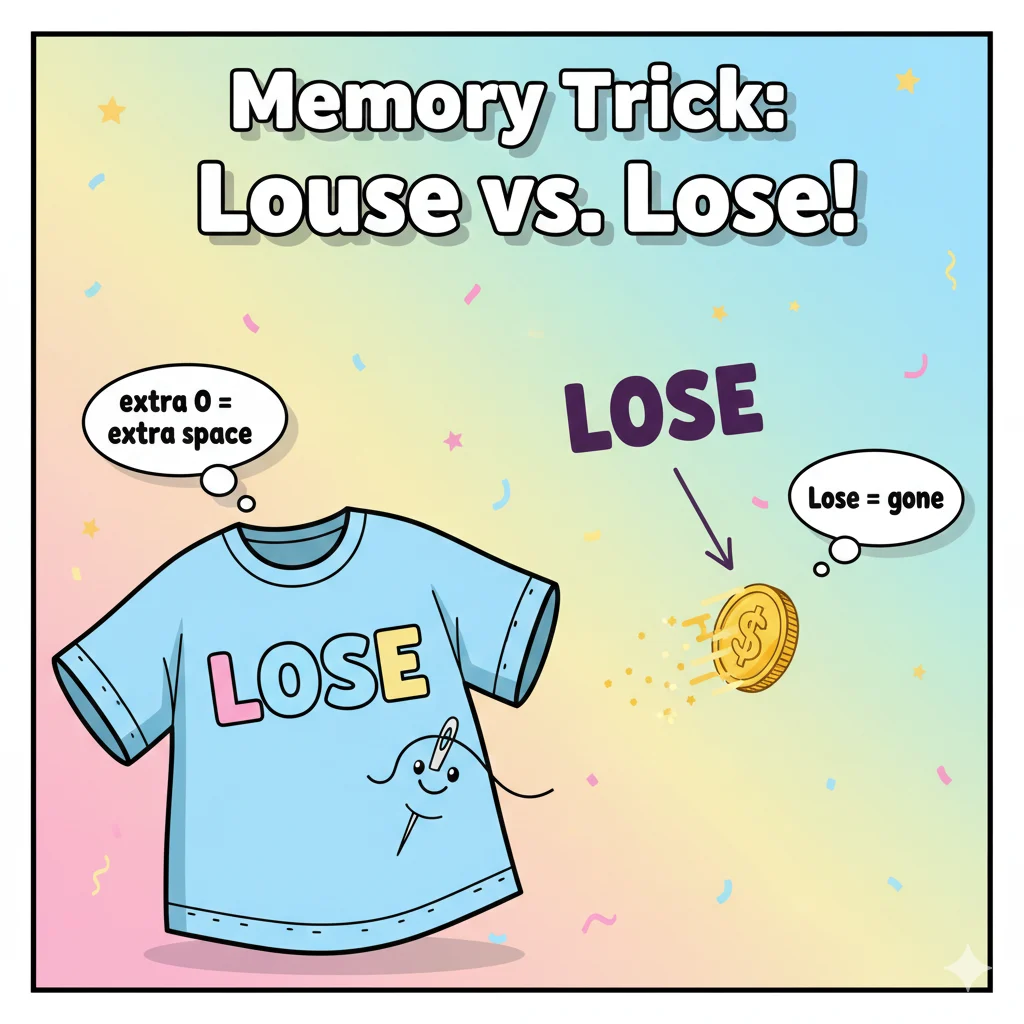
Simple trick:
Loose has extra “o” — like a big loose shirt with extra space.
Lose has one “o” — because when you lose something, it is gone.
Another tip:
Loose = long “s” sound
Lose = “z” sound
This helps with loose vs lose pronunciation.
Loose vs Lose vs Loss vs Lost
People also search for loss vs loose vs lose and lose vs lost.
Here is a simple guide:
- Lose = present
- Lost = past
- Loss = noun
- Loose = not tight
Example sentences:
- I don’t want to lose.
- We lost yesterday.
- That was a big loss.
- My shoes are loose.
Loose vs Lose in a Sentence
Here are clear examples:
- I will lose weight this year.
- My ring is too loose.
- Do not lose interest in your goals.
- The dog is loose in the yard.
- We might lose the game tonight.
- She does not want to lose someone she loves.
FAQs
1. Which is correct, lose or loose?
Use lose for misplacing or failing. Use loose for not tight.
2. Is it lose or loose weight?
Correct phrase: lose weight.
3. Is it lose or loose money?
Correct phrase: lose money.
4. How to use lose and loose?
Lose is a verb. Loose is usually an adjective.
5. What is the difference between loose vs lose?
Loose describes something free. Lose means to no longer have something.
6. What about loose vs lose vs loss?
Loss is the noun form of lose.
7. Why do people confuse loose vs lose?
They look similar and sound close, especially in fast speech.
Loose vs Lose Quiz
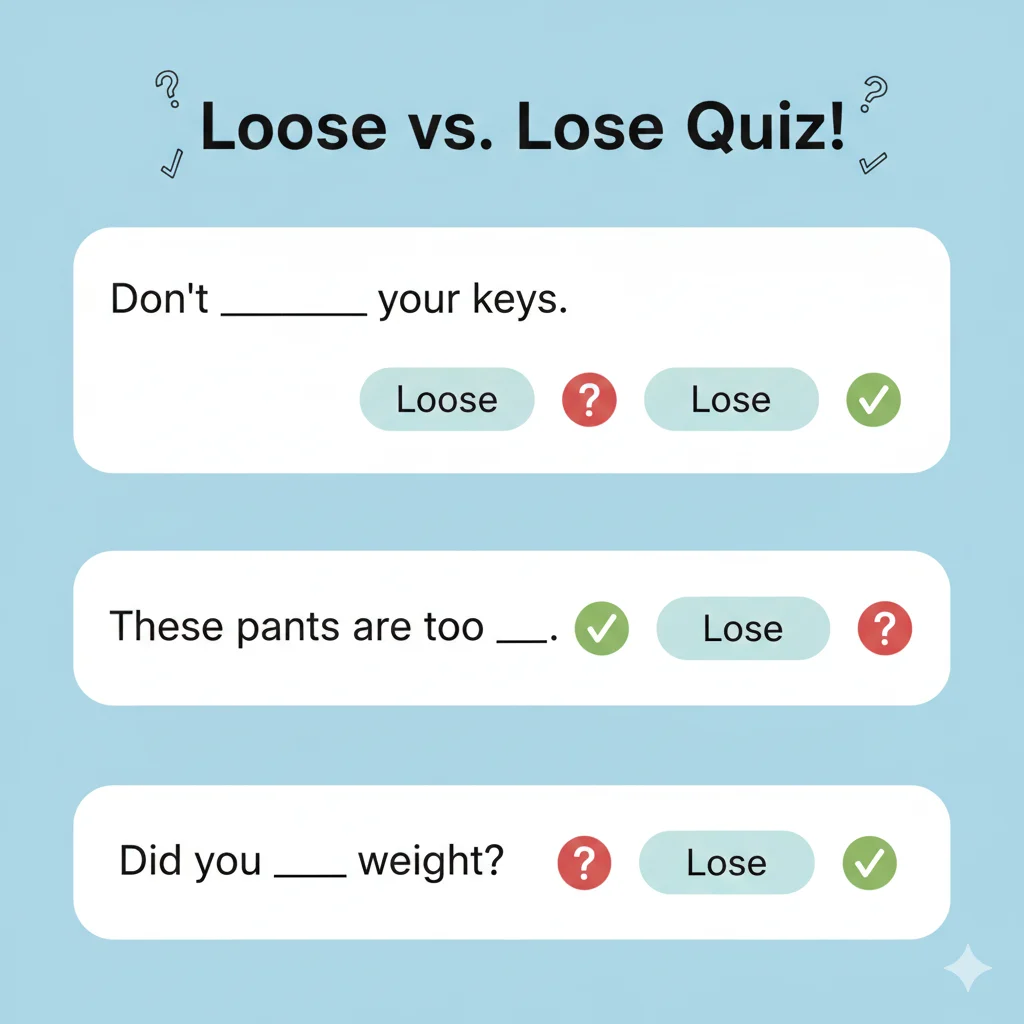
Choose the correct word:
- I don’t want to ___ my phone.
- These shoes are too ___.
- We might ___ the match.
- The wire is ___.
Answers: lose, loose, lose, loose.
Conclusion
The difference between loose vs lose is simple but powerful. One extra letter changes meaning completely. Loose describes something not tight. Lose means to misplace, fail, or no longer have something. Understanding loose vs lose definition, meaning, grammar, pronunciation, and real-world examples helps you avoid common mistakes.
Whether you write blogs, emails, social posts, or academic work, correct spelling improves trust and clarity. It also supports SEO performance under Google’s EEAT principles. Small grammar errors can reduce credibility, especially in professional writing.
Remember the memory trick: loose has extra space, just like something not tight. Lose has one “o” because when you lose something, it is gone.
Now you can confidently write lose weight, lose money, lose a game, and describe loose clothes correctly — every time.

Kael Donovan is a language enthusiast and writer at Definevs.com, simplifying complex words and grammar rules into fun, easy-to-understand guides for readers.