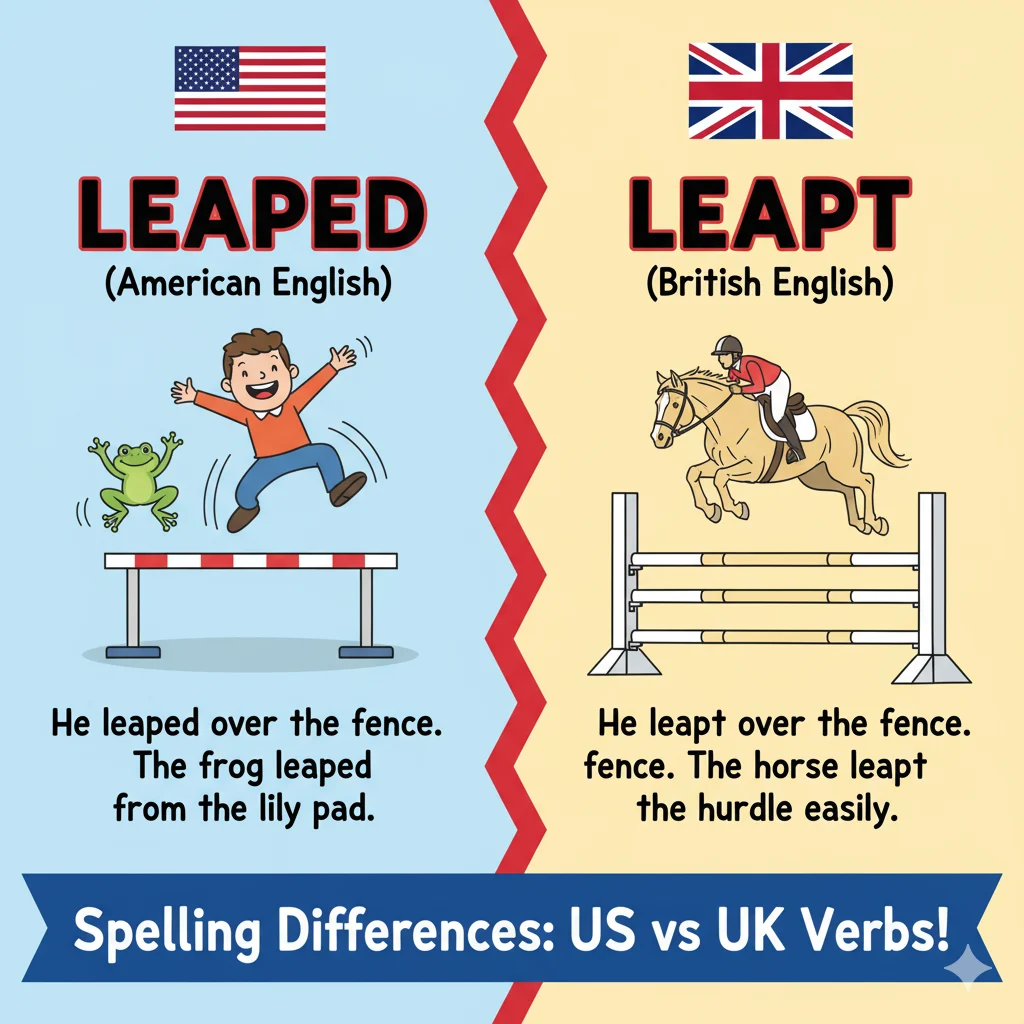
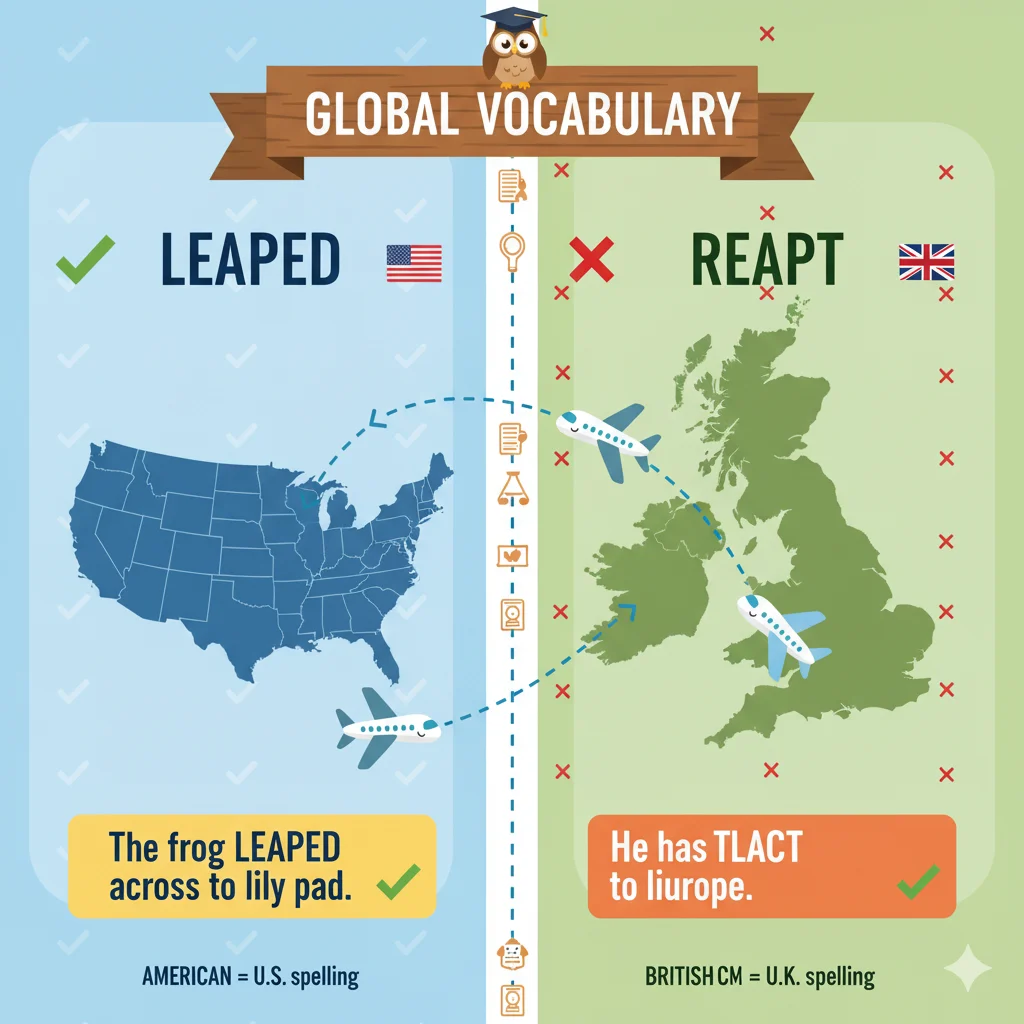
Both “leaped” and “leapt” are correct past forms of the verb “leap.” The difference is not about right or wrong, but about usage. “Leaped” is more common in modern American English, while “leapt” is often used in British English and sounds slightly more traditional or formal.
Many learners get confused when they see two correct spellings for the same word. This creates hesitation while writing exams, stories, or professional content. People worry about choosing the “wrong” option, even though both forms are grammatically acceptable.
In this article, you’ll learn when to use leaped and when leapt sounds more natural, along with simple examples and usage tips. By the end, you’ll confidently choose the right word based on tone, audience, and English style—without second-guessing yourself.
🧠 What Does Each Word Mean?
Let’s start by understanding what each word means. Both leaped and leapt come from the verb “leap,” which means to jump or spring a long way, to a great height, or with force.
🏃♂️ “Leaped” — Definition and Examples
Part of speech: Verb (past tense of leap)
Meaning: Used when someone or something jumped from one place to another.
It’s more common in American English.
Examples:
- The frog leaped into the pond.
- She leaped with excitement when she won the prize.
- The dog leaped over the fence easily.
🦘 “Leapt” — Definition and Examples
Part of speech: Verb (past tense of leap)
Meaning: The same as leaped — to jump — but this version is more common in British English.
Examples:
- The deer leapt across the road.
- He leapt out of bed when the alarm rang.
- The flames leapt high into the air.
👉 Both words mean exactly the same thing — they just belong to different regional styles of English!
⚖️ The Key Difference Between Leaped and Leapt
| Feature | Leaped | Leapt |
|---|---|---|
| Meaning | Past tense of leap | Past tense of leap |
| Usage | Common in American English | Common in British English |
| Pronunciation | “Leep’d” | “Lept” |
| Formality | Neutral, modern | Slightly poetic or formal |
| Example | “The horse leaped over the wall.” | “The horse leapt over the wall.” |
Quick Tip 🧩:
If you use color instead of colour, use leaped.
If you use colour instead of color, use leapt.
(Simple way to match your spelling style to your English type!)
🚫 Common Mistakes and How to Avoid Them
❌ Incorrect:
- The cat leap over the wall.
- She leapted when she saw the spider.
✅ Correct:
- The cat leapt (or leaped) over the wall.
- She leapt when she saw the spider.
Why these mistakes happen:
Learners often think “leapted” sounds right because many verbs form the past tense with “-ed.” But leap is irregular — it becomes leaped or leapt, not leapted.
How to fix it:
Just remember:
👉 Leap → leaped / leapt (not leapted!)
🕵️ When to Use “Leaped”
Use leaped if you’re writing or speaking in American English. It’s the preferred spelling in the U.S. and is often seen in books, newspapers, and schools there.
Examples:
- The athlete leaped over the hurdle.
- She leaped into the pool with joy.
- The dolphin leaped through the water.
- The child leaped into his father’s arms.
- The stock price leaped after the announcement.
Memory Hack 💡:
The word leaped has an “ed” — just like “jumped.”
So, if you’d say jumped, you can remember leaped easily.
🏰 When to Use “Leapt”
Use leapt if you prefer British English or want your writing to sound slightly more poetic or traditional.
You’ll often find leapt in literature, historical writing, or British publications.
Examples:
- The knight leapt onto his horse.
- The fire leapt from one building to another.
- The cat leapt onto the windowsill.
- The dancer leapt across the stage gracefully.
- He leapt with joy when he got the news.
Memory Hack 💡:
Think of leapt rhyming with kept — both have the short “e” sound, which helps recall the British version.
🔁 Quick Recap: Leaped vs Leapt
Here’s a short summary to help you remember easily:
- Both mean the same thing — “to jump.”
- Leaped = American English (modern and common).
- Leapt = British English (classic and poetic).
- Both are correct — just pick one and be consistent.
- Never write leapted — it doesn’t exist.
📝 Tip: If you’re writing for an international audience, leaped is slightly safer because it’s more universally understood.
🧩 Advanced Tips: A Little Grammar & History
The word “leap” comes from Old English hlēapan, meaning to jump or spring forward.
Historically, both leaped and leapt have been correct for hundreds of years — English speakers just evolved different preferences over time.
In older literature (like Shakespeare or classic novels), leapt was more common. In modern American writing, leaped has taken over.
In formal essays or exams, both are acceptable, but be consistent. If your essay uses traveled instead of travelled, stick with leaped for uniformity.
🧠 Mini Quiz: Test Your Understanding!
Fill in the blanks with the correct form — leaped or leapt.
- The frog ______ into the pond.
- She ______ for joy when she heard the news.
- The flames ______ high into the night sky.
- The athlete ______ over the final hurdle.
- The cat ______ from the roof to the tree.
(Answers: leaped, leapt, leapt, leaped, leapt — but both are correct!)
❓ FAQs
1. What is the difference between leaped and leapt?
Both mean “jumped,” but leaped is used in American English and leapt in British English.
2. Which is more correct: leaped or leapt?
Both are correct. It depends on whether you use American or British spelling.
3. Can I use leaped in UK English?
Yes! It’s acceptable, though leapt sounds more natural to British readers.
4. Why do both forms exist?
English evolved differently across regions — some past tense verbs kept the old “-t” form (like leapt, dreamt), while others moved to “-ed.”
5. What’s the easiest way to remember the difference?
If you use color → use leaped.
If you use colour → use leapt.
🏁 Conclusion
Now you know the secret behind leaped vs leapt — they both mean the same, but belong to different English styles.
Whether you’re writing a story, essay, or text, just stay consistent with your version of English.
So, the next time you write, “The frog leaped (or leapt) into the pond,” you can smile knowing you got it right — either way! 🐸
Keep practicing, stay curious, and your English will leap forward in no time!

Kael Donovan is a language enthusiast and writer at Definevs.com, simplifying complex words and grammar rules into fun, easy-to-understand guides for readers.