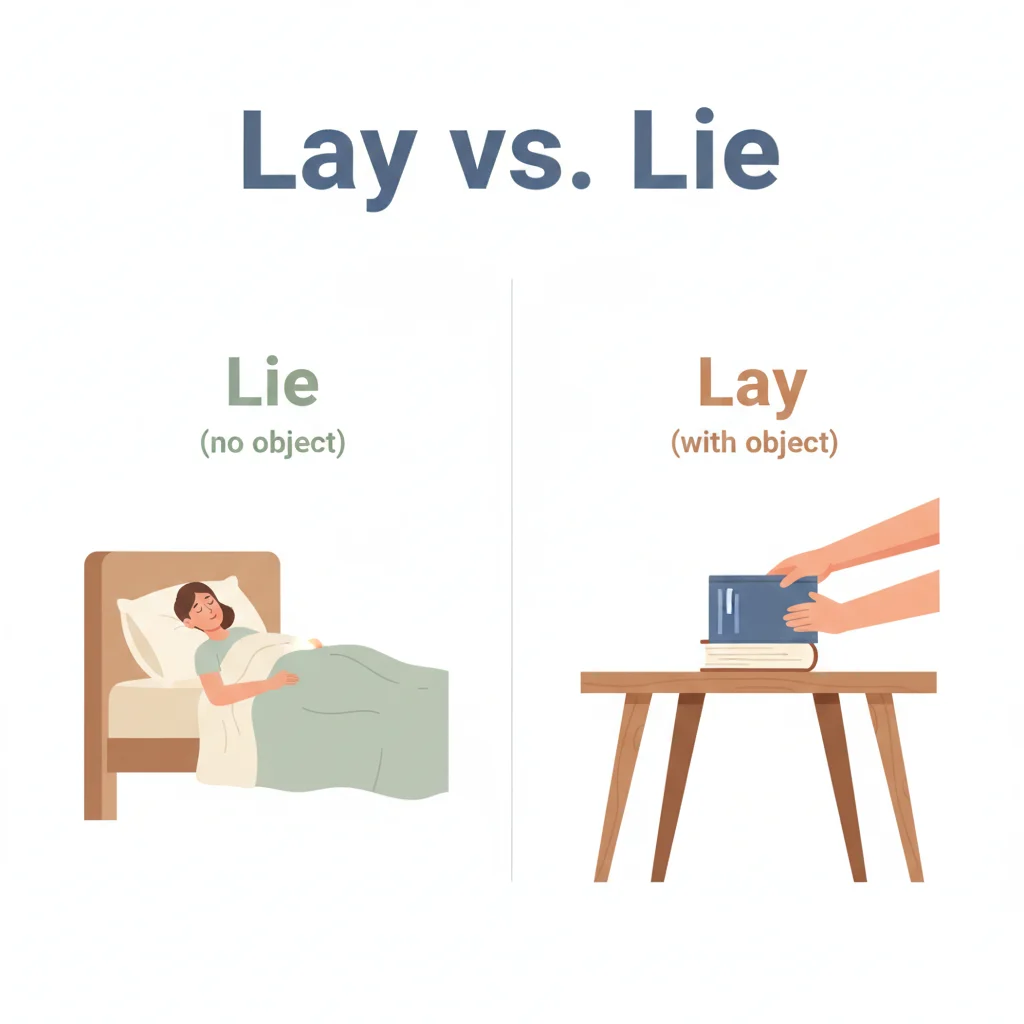
Lay requires an object. Lie does not.
Simple Rule
- Lay = put something down
- Lie = rest or recline
Examples
- Do you lie in bed or lay in bed? → Lie in bed ✔
- Do you lay the keys on the table? → Lay ✔
- When to use lay or lie? → Ask if there’s an object.
Present & Past Forms
- Lie – lay – lain
- Lay – laid – laid
Few grammar topics confuse people as much as lay vs lie. Native speakers, writers, students, and even professionals search for this every day. Questions like “Do you lay in bed or lie in bed?” or “Do I lay or lie on the floor?” appear constantly in Google’s People also ask results.
The confusion happens because lay and lie look similar, sound similar, and share overlapping verb forms. To make it worse, their past tenses overlap, which leads to mistakes like “I was laying down” when “lying down” is correct.
People search for lay vs lie because they want:
- A quick answer they can trust
- Clear rules with real-life examples
- Confidence in writing emails, social posts, and formal documents
This article solves that confusion once and for all. You’ll learn the difference, see easy examples, understand past tense forms like laid vs lay, and know exactly which word to use—every time.
The Origin of Lay vs Lie
Both words come from Old English, which explains why they feel so old—and confusing.
Word History
- Lie comes from licgan, meaning to recline or rest
- Lay comes from lecgan, meaning to place or set
Over time, English kept both verbs but let their meanings overlap slightly. The real problem started when:
- Lie (present) became lay (past)
- Lay (present) became laid (past)
This overlap causes mistakes like:
- ❌ I was laying down (unless you were laying something)
- ✔ I was lying down
British English vs American English Spelling
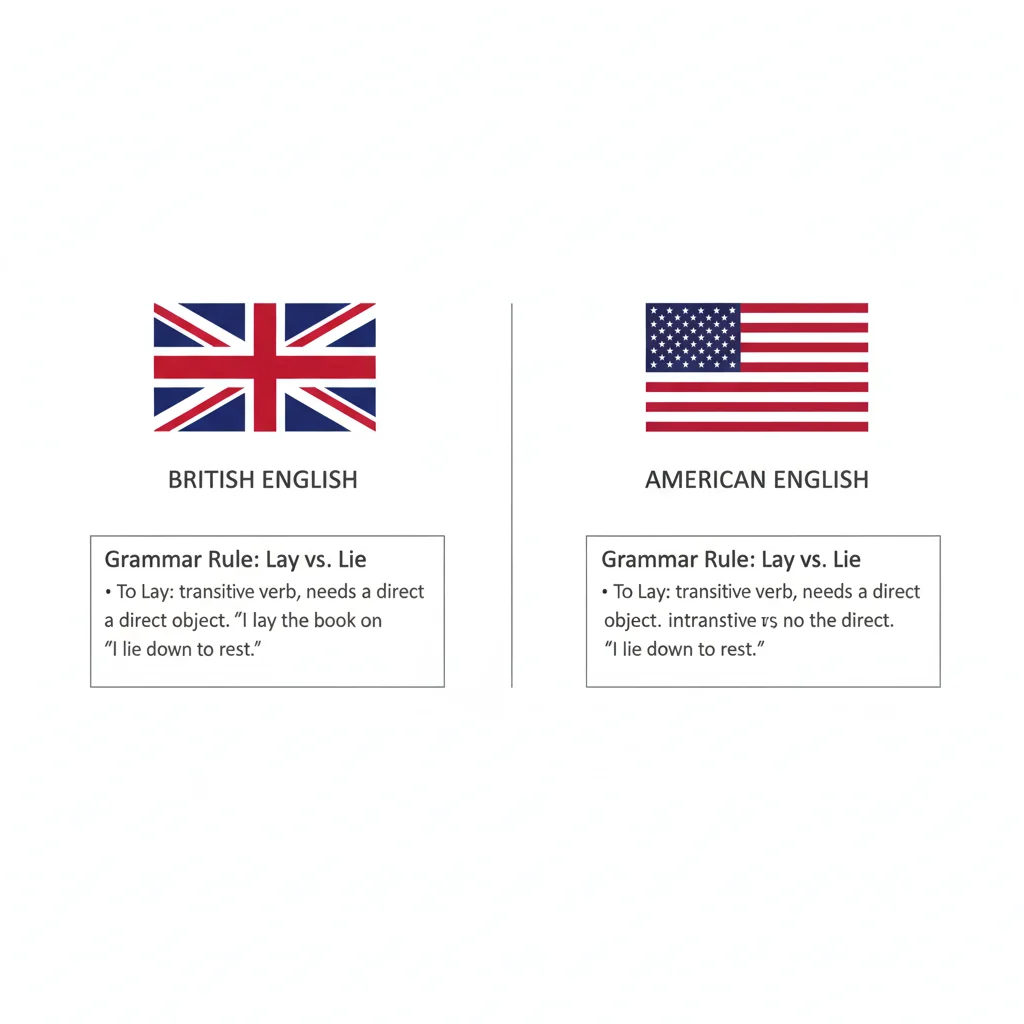
Good news: There is no spelling difference between British and American English for lay and lie.
The confusion is grammatical, not regional.
Usage Comparison
| Sentence | American English | British English |
|---|---|---|
| I lie in bed | ✔ Correct | ✔ Correct |
| I lay the book down | ✔ Correct | ✔ Correct |
| I was lying on the couch | ✔ Correct | ✔ Correct |
| I laid the papers out | ✔ Correct | ✔ Correct |
Both dialects follow the same rules.
Which Spelling Should You Use?
Choose Based on Audience
- US audience: Follow standard grammar rules
- UK/Commonwealth: Same rules apply
- Global or ESL audience: Keep sentences simple and clear
Pro Tip
If unsure, rewrite the sentence:
- Instead of “I was laying down”
- Say “I was resting”
Clear writing always wins.
Hardy vs Hearty 🌱 The Tiny Detail Everyone Gets Wrong
Common Mistakes with Lay vs Lie
1. Do you lay in bed or lie in bed?
✔ Lie in bed
2. Do you lay or lie on the couch?
✔ Lie on the couch
3. Do I lay or lie on the floor?
✔ Lie on the floor
4. Confusing Past Tense
- ❌ Yesterday I laid down
- ✔ Yesterday I lay down
5. Mixing Verb Forms
- ❌ Lie vs lie confusion
- ✔ Lie (present), lay (past), lain (perfect)
Lay vs Lie in Everyday Examples
Emails
- ✔ Please lay the documents on my desk.
- ✔ I will lie down after work.
News
- ✔ The suspect lay on the ground.
- ✔ Officials laid the plan out clearly.
Social Media
- ✔ Just want to lie in bed all day.
- ❌ Just want to lay in bed all day.
Formal Writing
- ✔ The report was laid before the committee.
- ✔ The body had lain undiscovered.
Lay vs Lie – Google Trends & Usage Data
Search data shows “lay vs lie” spikes:
- During school terms
- Among ESL learners
- In professional writing contexts
Popular Searches by Country
- USA: Lay vs lie past tense, laid vs lay
- UK: Lie lay lain
- India & Philippines: Lay vs lie examples
People want quick answers and clear rules—not grammar theory.
i.e. vs e.g.: This Simple Fix Instantly Improves Writing ✨
Lay vs Lie Comparison Table
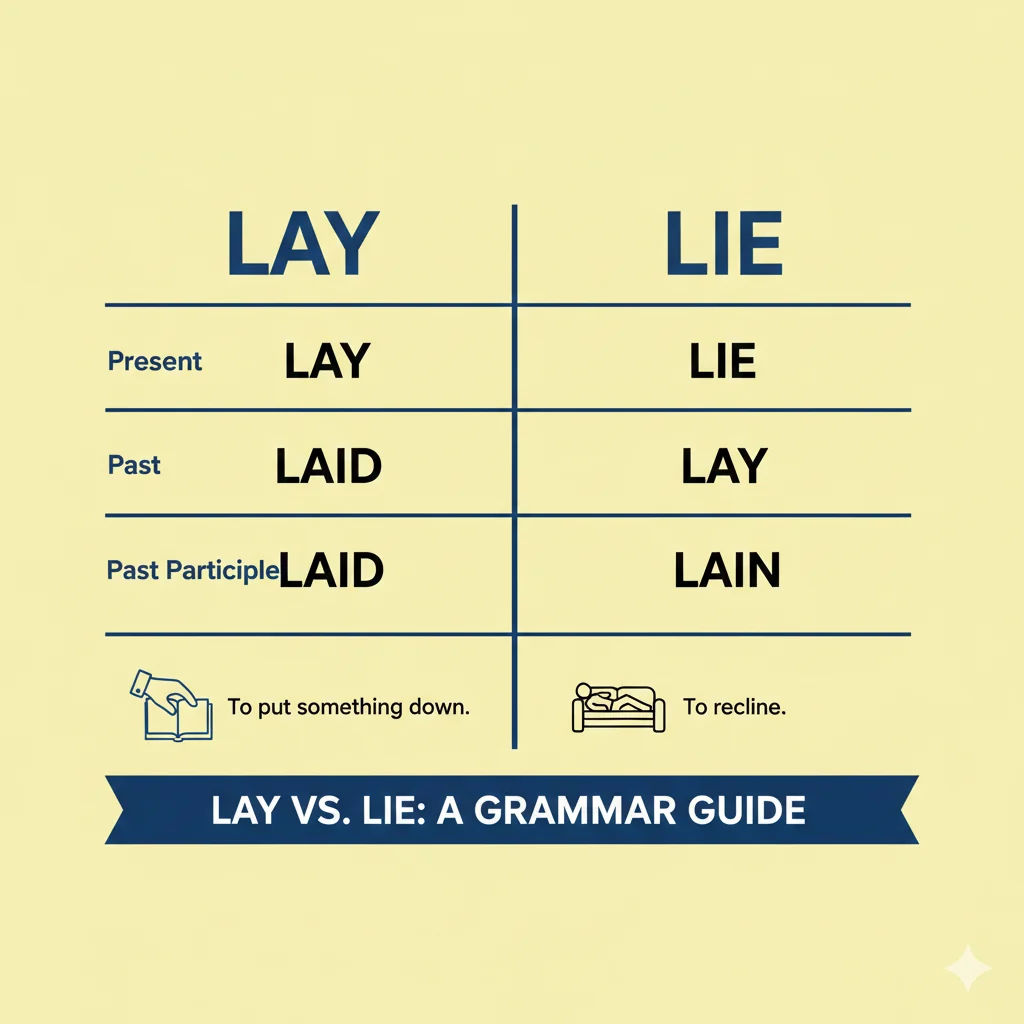
| Verb | Present | Past | Past Participle | Needs Object |
|---|---|---|---|---|
| Lie | lie | lay | lain | ❌ No |
| Lay | lay | laid | laid | ✔ Yes |
FAQs: Lay vs Lie
1. Do you lay in bed or lie in bed?
Lie in bed. There is no object.
2. When to use lay or lie?
Use lay with an object. Use lie without one.
3. Do you lay or lie on the couch?
You lie on the couch.
4. What is the past tense of lie?
Lay is the past tense of lie.
5. What is laid vs lay?
Lay is present. Laid is past.
6. Is “I was laying down” wrong?
Yes—unless you were laying something down.
7. How do I remember lie lay lain?
Think: I lie today, I lay yesterday, I have lain before.
Conclusion
Understanding lay vs lie is one of the most valuable grammar skills you can learn. It improves your writing, boosts confidence, and prevents common mistakes that even native speakers make daily.
Remember the core rule: lay needs an object; lie does not. If you can say put, choose lay. If the action happens to yourself, choose lie. This single test solves most problems instantly.
Past tense confusion fades when you memorize the forms:
Lie – lay – lain and Lay – laid – laid. With practice, sentences like “Do I lay or lie on the floor?” will feel easy.
Whether you’re writing emails, posting online, or working on formal documents, correct usage shows clarity and professionalism. Keep this guide handy, and you’ll never second-guess lay vs lie again.

Arwen Blythe is a passionate language and culture enthusiast, crafting clear, engaging guides on words, phrases, and modern English for Definevs.com readers.