Have you ever written “labelling” and your spell-check turned it into “labeling”? You’re not alone!
These two spellings look almost identical and mean the same thing — but one tiny letter makes people around the world wonder which one is right.
In this easy guide, we’ll explain:
- What labeling and labelling mean
- The difference between the two
- How to use them correctly in writing
- Examples, quick tips, and a short quiz to test your understanding
By the end, you’ll know exactly when to use each word — no confusion, no grammar stress!
🧠 What Does Each Word Mean?
Both labeling and labelling come from the root word “label,” which means to attach a tag, name, or piece of information to something.
The only difference lies in spelling style — not meaning.
Let’s break it down:
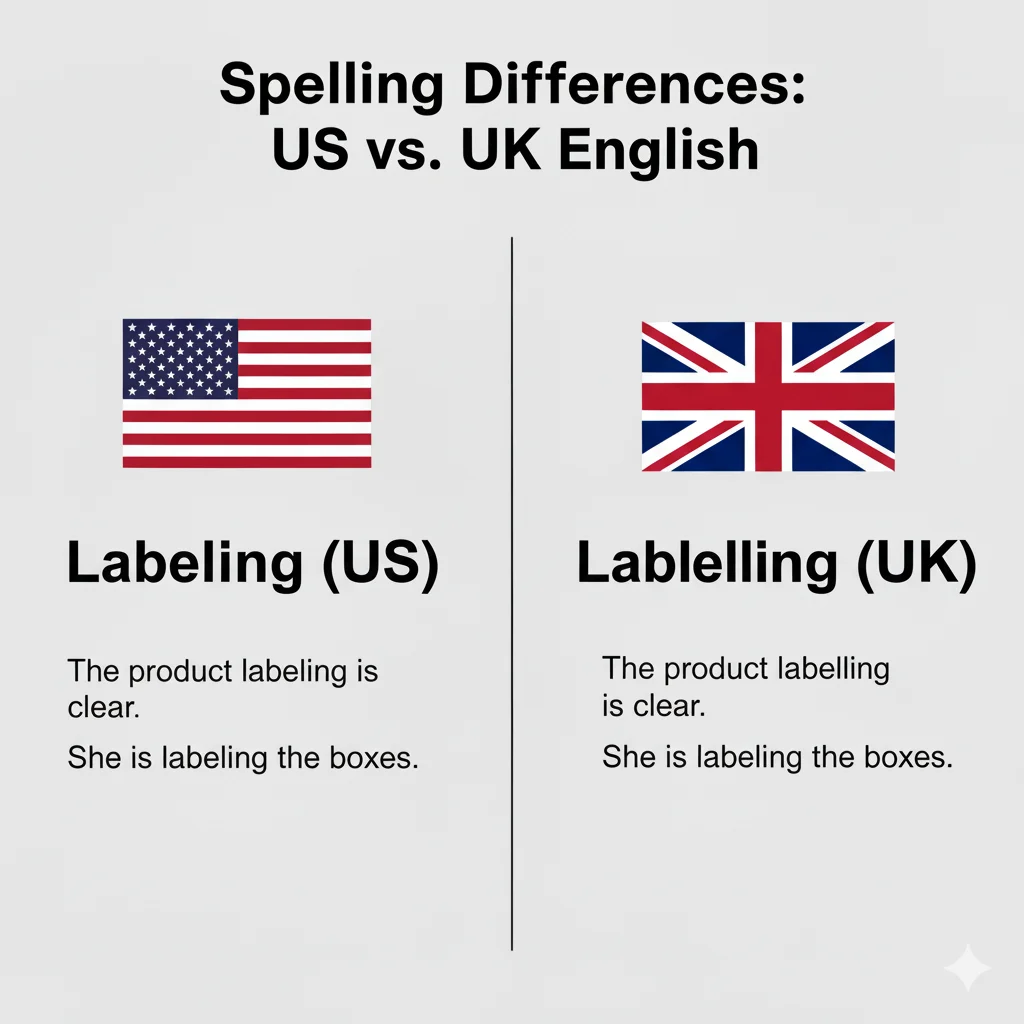
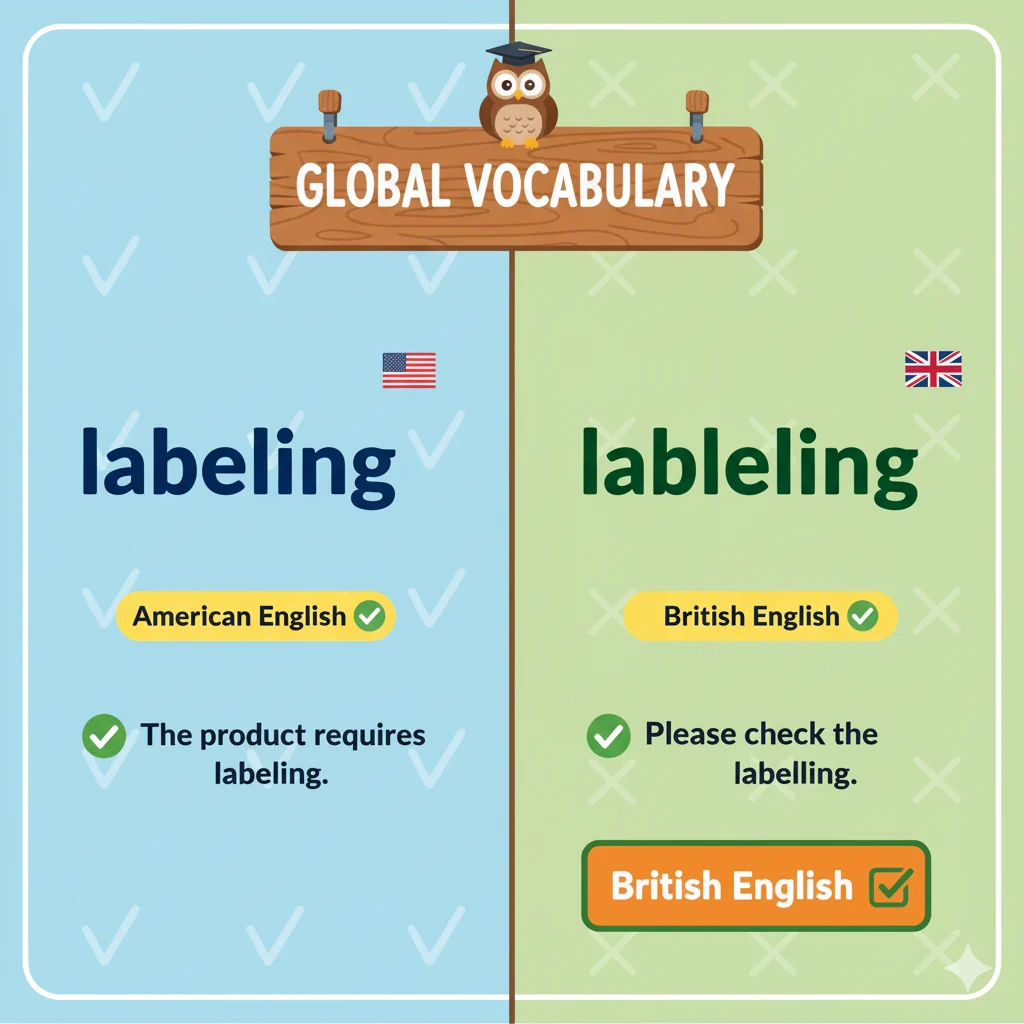
Labeling (American English)
- Part of speech: Verb (present participle of “label”)
- Meaning: The act of putting a label or name on something
- Used in: American English (U.S.)
Examples:
- She is labeling all the jars in the kitchen.
- The teacher is labeling folders for each student.
- The company is labeling new products before launch.
Labelling (British English)
- Part of speech: Verb (present participle of “label”)
- Meaning: Same as “labeling,” but used in British, Australian, and Canadian English.
- Used in: U.K., Canada, Australia, New Zealand
Examples:
- They are labelling the boxes for shipment.
- The librarian was busy labelling new books.
- We spent the morning labelling all our school supplies.
⚖️ The Key Difference Between Labeling and Labelling
The difference between labeling and labelling is simple:
It’s about where you are — not what you mean.
| Feature | Labeling | Labelling |
|---|---|---|
| Language Style | American English | British English |
| Meaning | Putting a tag or identifying mark | Same meaning |
| Example Sentence | She’s labeling the containers. | She’s labelling the containers. |
| Spelling Rule | Drops one “L” | Keeps the double “L” |
| Used In | U.S. | U.K., Canada, Australia |
Quick Tip to Remember:
🇺🇸 If you use “color” instead of “colour,” stick with “labeling.”
🇬🇧 If you use “colour” and “favourite,” use “labelling.”
❌ Common Mistakes and How to Avoid Them
Many English learners get confused when writing emails or essays because both versions look correct. Here’s how to stay accurate:
Mistake 1:
❌ I am labelling the folders (in an American essay).
✅ I am labeling the folders.
Mistake 2:
❌ The store is labeling all items (in a British report).
✅ The store is labelling all items.
Why It Happens:
The confusion comes from regional spelling differences. English evolved differently in the U.S. and the U.K., creating two accepted standards.
How to Fix It:
👉 Decide which English style you’re writing in (U.S. or U.K.) and stay consistent throughout your text.
🏫 When to Use “Labeling”
Use labeling if:
- You write in American English
- You’re in the U.S. or following American spelling rules
- You write for international business, tech, or U.S. audiences
Examples:
- The team is labeling files for the meeting.
- She’s labeling her homemade candles.
- We spent hours labeling every document correctly.
- He got tired after labeling 200 envelopes.
- The teacher is labeling the new classroom bins.
💡 Memory Hack:
Think “American spelling = shorter words.”
Just like traveling, modeling, and labeling — all have one “L.”
Ingrained or Engrained? The Truth You’ve Been Getting Wrong!
🎓 When to Use “Labelling”
Use labelling if:
- You write in British, Canadian, or Australian English
- You follow U.K. spelling rules
- You’re writing for academic or official British publications
Examples:
- The museum is labelling all ancient artifacts.
- Students were busy labelling their art projects.
- The company is labelling its eco-friendly products.
- We are labelling new ingredients for the recipe.
- The scientist is labelling test samples carefully.
💡 Memory Trick:
British spelling likes extra letters — think of “travelling,” “modelling,” and “labelling.”
🧾 Quick Recap: Labeling vs Labelling
✅ Both words mean the same thing.
✅ Labeling = American English
✅ Labelling = British English
✅ Always stay consistent with your spelling style.
✅ Remember: One “L” for America, Two “L’s” for the U.K.
🧠 Advanced Tips: History and Formal Usage
- The base word “label” comes from Old French “labelle,” meaning a small tag or ribbon.
- The double “L” in labelling follows traditional British doubling rules — similar to travelling and cancelled.
- In formal writing (like essays or reports), it’s perfectly fine to use either spelling — just don’t mix them.
- In digital writing, software like Microsoft Word or Google Docs may automatically correct “labelling” to “labeling” if your language setting is American English.
📝 Mini Quiz: Test Your Understanding
Fill in the blanks with the correct word — labeling or labelling.
- The teacher is ________ the students’ folders.
- We are ________ all the jars for the science fair.
- She spent the afternoon ________ her plants.
- The factory is ________ new bottles for shipment.
- He’s tired after ________ all the packages.
(Answers: 1. labeling/labelling, 2. labeling/labelling, 3. labeling/labelling, 4. labeling/labelling, 5. labeling/labelling — depends on regional spelling.)
❓ FAQs
1. What is the difference between labeling and labelling?
They mean the same thing. “Labeling” is American English, while “labelling” is British English.
2. Is labeling correct in the U.K.?
Both are understood, but “labelling” with double “L” is the standard in British English.
3. Why does labeling have one “L” in American English?
Because American English simplifies double letters when adding endings like “-ing.”
4. Is labelling a mistake in U.S. English?
Not wrong, but uncommon. Most U.S. editors and schools prefer “labeling.”
5. Which is more common worldwide?
“Labeling” is more common online (due to American influence), but “labelling” dominates in the U.K. and Commonwealth countries.
🏁 Conclusion
Now you know the clear difference between labeling and labelling!
They both mean the act of putting a label on something, but labeling follows American spelling, and labelling follows British spelling.
So next time you write, just check your language setting — and you’ll always get it right for real! Keep practicing, stay consistent, and your English will keep getting stronger every day. 🌟

Kael Donovan is a language enthusiast and writer at Definevs.com, simplifying complex words and grammar rules into fun, easy-to-understand guides for readers.