Many English learners get puzzled when they see the words “joined” and “joined or die.”
While joined is a common English verb, “Join, or Die” (often written “Joined or Die” by mistake) is a historic phrase — not a grammar form.
In this guide, you’ll easily learn:
- The meaning of each term
- The difference between joined and joined or die
- How to use joined correctly in sentences
- Why “Join, or Die” became one of the most famous political slogans in history
By the end, you’ll never confuse them again! 🌟
🧐 What Does Each Word or Phrase Mean?
1. Joined – Meaning and Usage
Part of Speech: Verb (past tense of join)
Meaning: To connect, unite, or become part of something.
Simple Definition: If you joined something, it means you became a member or attached yourself to it.
Examples:
- I joined the football team at school.
- She joined the meeting late.
- We joined two pieces of wood together.
👉 Quick tip: Think of “joined” as something you did with others or objects — to connect or become part of a group.
2. Joined or Die (Actually “Join, or Die”) – Meaning and Origin
Part of Speech: Historical phrase / slogan
Meaning: A warning and motivational message meaning “Unite together or face destruction.”
Origin:
The phrase “Join, or Die” was created by Benjamin Franklin in 1754 as a political cartoon showing a snake cut into pieces. Each piece represented one of the American colonies.
Franklin’s message: if the colonies didn’t unite, they would be defeated by their enemies.
Examples in context:
- “The phrase Join, or Die symbolized unity among the colonies.”
- “Many people mistakenly say Joined or Die, but the correct version is Join, or Die.”
- “It became one of the first symbols of American independence.”
👉 Quick tip: “Join, or Die” is a historical slogan, not a grammar form — it’s never used as a verb in a sentence like joined.
⚖️ The Key Difference Between Joined and Joined or Die
| Feature | Joined | Joined or Die (Join, or Die) |
|---|---|---|
| Part of Speech | Verb (past tense) | Phrase / Slogan |
| Meaning | Became a member, connected | Unite or perish (historical warning) |
| Usage | Used in everyday English | Used in history or symbolic contexts |
| Example | “I joined the gym.” | “The colonies adopted ‘Join, or Die’ as a motto.” |
| Correct Form | Joined | Join, or Die |
💡 Quick Memory Trick:
➡️ “Joined” = action you did.
➡️ “Join, or Die” = message or motto.
❌ Common Mistakes and How to Avoid Them
| ❌ Incorrect | ✅ Correct | 💡 Why |
|---|---|---|
| “Benjamin Franklin created ‘Joined or Die.’” | “Benjamin Franklin created ‘Join, or Die.’” | The original phrase uses Join (command form), not Joined. |
| “I joined or die the club.” | “I joined the club.” | “Joined or die” doesn’t fit grammar rules — it’s not a verb phrase. |
| “He said joined or die to his friends.” | “He said, ‘Join, or Die!’ to his friends.” | Add commas and capitalize properly for a quote. |
🧠 Tip: Remember that “joined” is a regular verb.
“Join, or Die” is a historic slogan — never change its wording.
🕹️ When to Use Joined
Use joined when talking about:
✅ Becoming part of a group
✅ Connecting things
✅ Joining a conversation, event, or online meeting
Examples:
- I joined my classmates for lunch.
- We joined two wires to make the lamp work.
- My brother joined the army last year.
- She joined us on the video call.
- They joined forces to complete the project.
🧩 Memory Hack:
Imagine clicking a “Join” button on an app — once you click, you’ve joined. Simple!
🕰️ When to Use Join, or Die (Joined or Die)
Use Join, or Die only when referring to:
✅ History lessons
✅ Political discussions
✅ Symbolism of unity or warning
Examples:
- The “Join, or Die” cartoon appeared in newspapers in 1754.
- The phrase encouraged American unity during colonial times.
- The “Join, or Die” snake became a symbol of resistance.
- You might see it on historical flags or T-shirts today.
- Never use “Joined or Die” — it changes the meaning.
🧩 Memory Trick:
Think of “Join, or Die” like a movie title — you quote it exactly as it is.
🔁 Quick Recap: Joined vs Joined or Die
- Joined = Verb (past tense of join) → everyday use
- Join, or Die = Famous historical phrase → symbolic or political use
- Never say “Joined or Die” — that’s incorrect
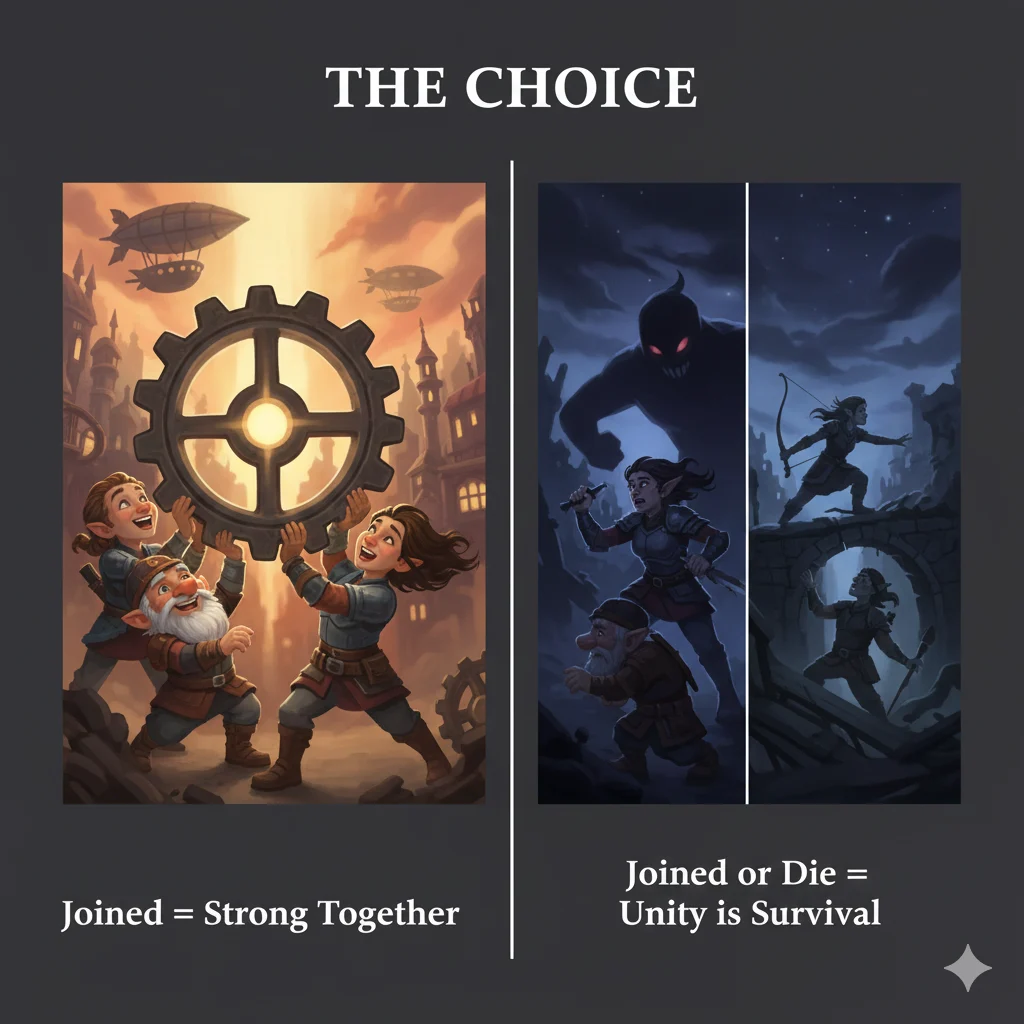
- Joined shows connection; Join, or Die shows unity for survival
- One is grammar; the other is history
📸 Visual Suggestion: Comparison chart titled “Joined vs Join, or Die” showing “verb vs slogan.”
📘 Advanced Tips: Origin & Modern Use
- The word “joined” comes from the Latin jungere, meaning to unite or connect.
- The phrase “Join, or Die” was first printed in The Pennsylvania Gazette in 1754.
- In modern times, it’s used as a symbol of teamwork, patriotism, or activism.
- In academic writing, quote it exactly: “Join, or Die,” said Franklin’s cartoon, urging unity.
- Avoid using “Joined or Die” in essays — it’s a common historical mistake.
🧩 Mini Quiz: Test Yourself!
Fill in the blanks with the correct word.
- I ________ the drama club last year.
- Benjamin Franklin’s famous phrase was “______, or Die.”
- The colonies needed to ________ together to survive.
- Don’t say “________ or Die” — that’s incorrect.
- We ________ hands and agreed to help each other.
✅ Answers: 1) joined 2) Join 3) join 4) Joined 5) joined
📜 FAQs About Joined / Joined or Die
1. What does “joined” mean in English?
“Joined” means you became part of something or connected two things together.
2. What does “Join, or Die” mean?
It’s a slogan meaning “Unite or perish,” used by Benjamin Franklin to urge unity among American colonies.
3. Is “Joined or Die” correct?
No. The correct phrase is “Join, or Die.”
4. Can I say “joined or die” in modern English?
No, it’s not grammatically correct — use “Join, or Die” when quoting history.
5. What’s the main difference between joined and joined or die?
“Joined” is a verb; “Join, or Die” is a historical phrase.
🏁 Conclusion
Now you know the clear difference between joined and joined or die.
Remember:
👉 Joined is something you do.
👉 Join, or Die is something you learn from history.
Practice using “joined” in sentences and recognize “Join, or Die” as a powerful reminder of unity.
Keep learning — every new word brings you closer to mastering English! 🌟

Arwen Blythe is a passionate language and culture enthusiast, crafting clear, engaging guides on words, phrases, and modern English for Definevs.com readers.