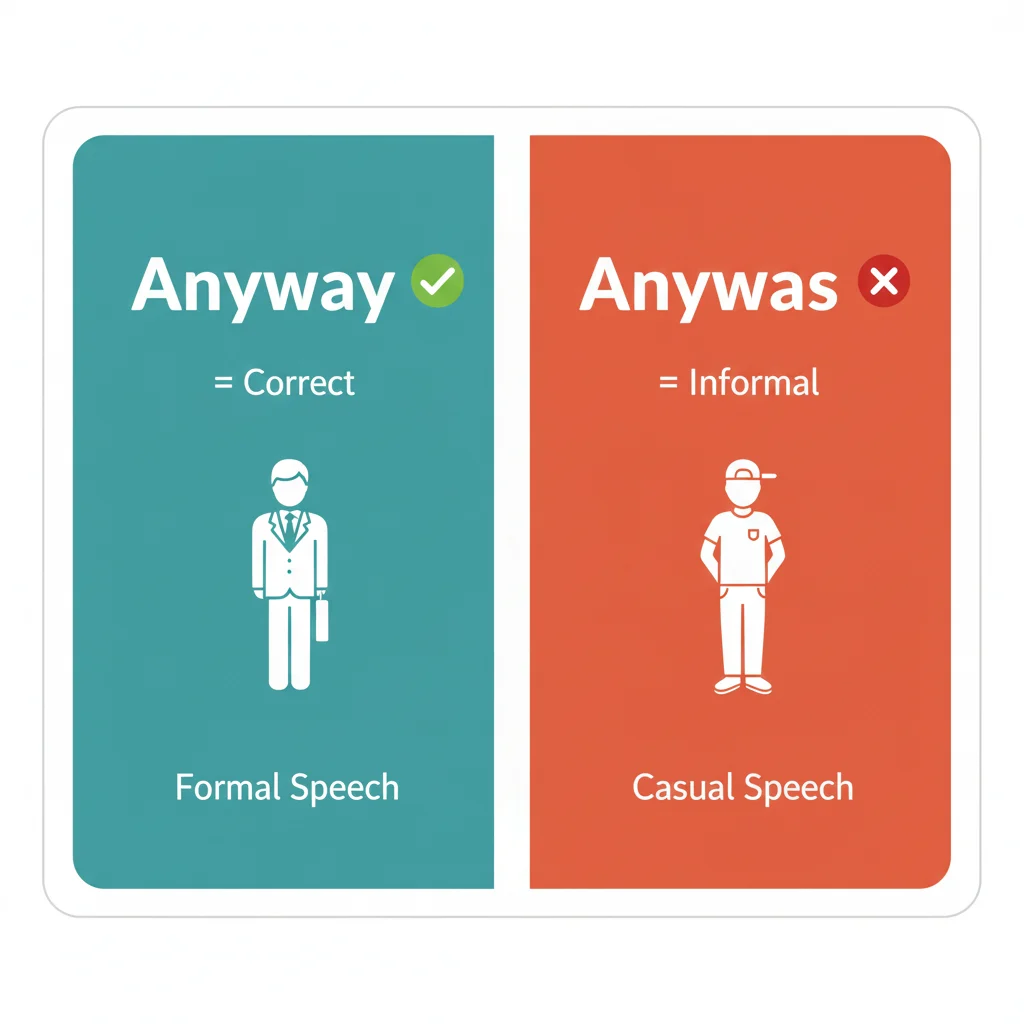
Ever wondered whether you should say “anyway” or “anyways”? 🤔
If you’ve been unsure, you’re not alone! Many English learners (and even native speakers) mix these two up because they sound almost the same and are often used in casual speech.
In this simple guide, you’ll learn:
- The meaning of “anyway” and “anyways”
- The key difference between the two
- When each word is correct to use
- Common mistakes (and how to fix them)
- Fun examples and tips to remember easily
By the end, you’ll never have to wonder again — you’ll know exactly when to use “anyway” and when to avoid “anyways.”
💡 What Does Each Word Mean?
✳️ “Anyway” — The Correct Standard Word
Part of speech: Adverb
Meaning: “Anyway” means in any case, nevertheless, or regardless of what happened. It’s used in both formal and informal English.
✅ Examples:
- I was tired, but I finished my homework anyway.
- We were late, but they let us in anyway.
- Anyway, let’s get back to the main topic.
📘 Tip: “Anyway” connects or redirects ideas — like saying “no matter what.”
✳️ “Anyways” — The Informal or Nonstandard Version
Part of speech: Adverb (informal)
Meaning: “Anyways” means the same as “anyway,” but it’s less formal and mostly used in spoken English, texting, or casual conversations.
✅ Examples:
- Anyways, I have to go now.
- It’s raining, but we’re going out anyways.
- Anyways, what were you saying earlier?
📘 Tip: “Anyways” sounds friendly and casual — perfect for texting friends, but not for essays or formal writing.
Flammable Materials / Alcohol: The Hidden Danger You Missed 🔥
⚖️ The Key Difference Between “Anyway” and “Anyways”
| Feature | Anyway | Anyways |
|---|---|---|
| Formality | Formal + Informal | Informal only |
| Grammar Status | Standard English | Nonstandard slang |
| Meaning | “In any case,” “nevertheless” | Same meaning but casual |
| Common Usage | Writing, speeches, emails | Texting, casual talk |
| Example Sentence | “It was raining, but I went anyway.” | “Anyways, I still went out.” |
✅ Quick Tip to Remember:
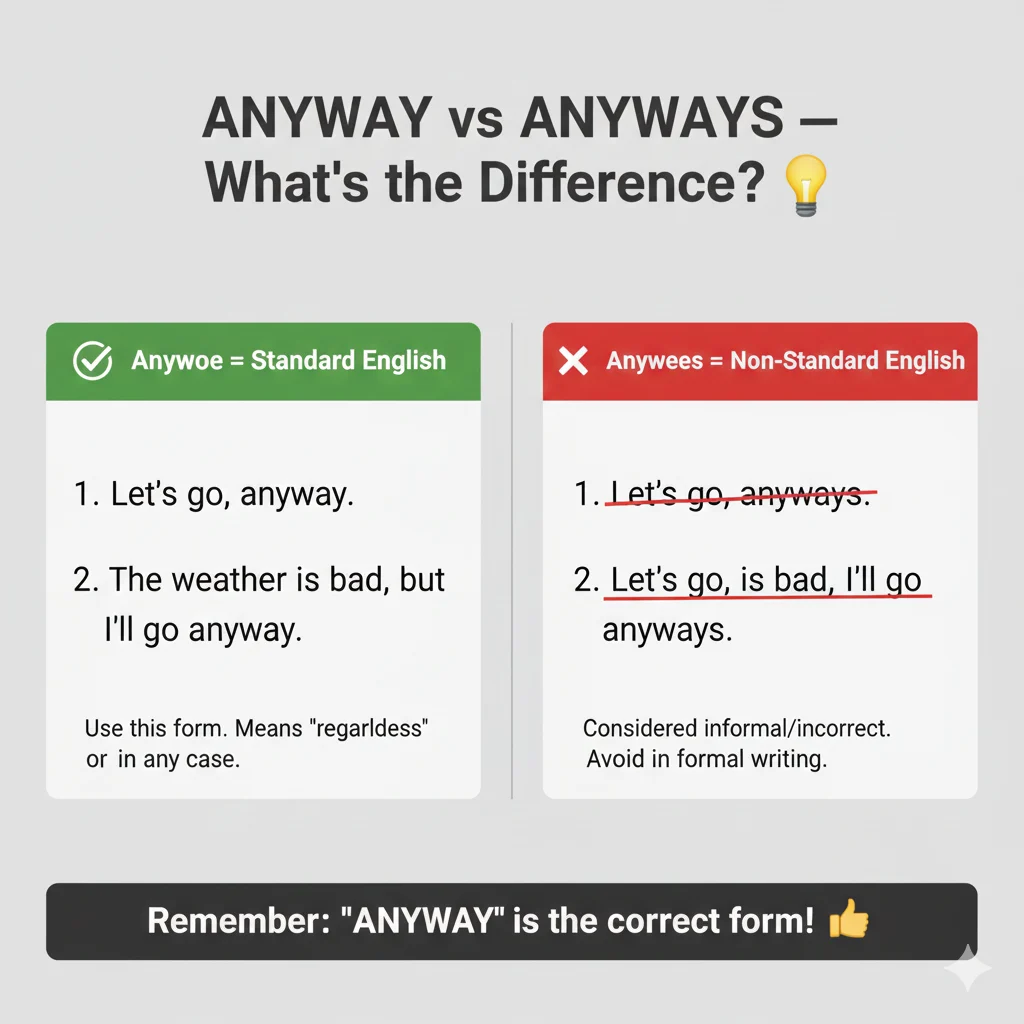
If you’re writing something formal, always use “anyway.”
If you’re just chatting casually, “anyways” is okay — but not grammatically preferred.
🚫 Common Mistakes and How to Avoid Them
Let’s look at how people often mix them up:
❌ Incorrect:
I’ll do it anyways, even if I’m tired.
✅ Correct:
I’ll do it anyway, even if I’m tired.
Why it’s wrong:
“Anyways” isn’t considered proper in standard English writing. It’s fine when chatting, but in school or work, “anyway” is the right choice.
❌ Incorrect:
Anyways, the teacher said we could go.
✅ Correct:
Anyway, the teacher said we could go.
Tip: Think of “anyway” as the grown-up version and “anyways” as the teen slang version.
🕓 When to Use “Anyway”
Use “anyway” when you’re:
- Writing essays, emails, or reports
- Trying to sound polished or professional
- Moving back to a topic in conversation
- Showing contrast or determination
✅ Examples:
- She didn’t like the food, but she ate it anyway.
- Anyway, let’s talk about your next plan.
- He knew the risks, but he joined anyway.
- I was scared, but I tried anyway.
- We lost the match, but we had fun anyway.
🎯 Memory Trick: If you can replace it with “nevertheless,” it’s anyway, not anyways.
💬 When to Use “Anyways”
Use “anyways” only in casual speech or informal writing, such as:
- Texting friends
- Commenting online
- Casual conversations
✅ Examples:
- Anyways, what movie are we watching tonight?
- You’re right — anyways, let’s order pizza.
- Anyways, I gotta go. See you later!
- That was funny, anyways.
- Anyways, I’m done talking about it.
🧠 Memory Hack: “Anyways” has an extra “s” — think of it as “slang.” The “S” stands for social, speech, slang.
📚 Quick Recap: “Anyway” vs “Anyways”
- ✅ “Anyway” = correct and standard in all writing.
- ⚡ “Anyways” = casual, informal, mostly used in speech.
- 💬 Both mean the same thing: “in any case” or “nevertheless.”
- 🚫 Avoid “anyways” in essays, letters, or job applications.
- 🧠 Remember: “Anyway” = formal + informal, “Anyways” = informal only.
🏛️ Advanced Tips and Fun Facts
- Origin: “Anyway” has been in English since the 14th century. “Anyways” appeared later as a dialect form in North America.
- Grammar Note: Words ending in “-ways” (like sideways or crossways) once existed more commonly, so “anyways” came naturally — even though it’s now nonstandard.
- In Writing Exams: Always choose “anyway.” It’s correct and accepted in formal English.
- In Texting or Social Media: “Anyways” can add a relaxed, conversational tone.
✏️ Example:
“Anyways, back to what I was saying…” sounds friendly and casual in a YouTube vlog.
But “Anyway, let’s begin the meeting.” sounds more professional.
🧩 Mini Quiz: Anyway or Anyways?
Choose the correct word:
- I didn’t like the idea, but I joined ______.
- ______, let’s get started!
- She forgot my name, but I smiled ______.
- ______, what are we having for lunch?
- We missed the bus, but we walked ______.
✅ Answers: 1) anyway, 2) anyway, 3) anyway, 4) anyways, 5) anyway
❓ FAQ Section
1. What’s the difference between “anyway” and “anyways”?
“Anyway” is the correct, formal adverb. “Anyways” is informal slang with the same meaning, mostly used in speech or texting.
2. Is “anyways” wrong?
It’s not grammatically correct in formal English but is widely accepted in casual speech.
3. Can I use “anyways” in an essay?
No. Always use “anyway” in essays, reports, and professional writing.
4. Do “anyway” and “anyways” mean the same thing?
Yes — both mean “in any case” or “nevertheless,” but only “anyway” is standard.
5. Why do people say “anyways”?
Because it sounds natural in speech and matches other “-ways” words, but it’s still considered informal.
🧾 Conclusion
Now you know the truth: “Anyway” is the standard, correct word — while “anyways” is its informal twin used mostly in casual talk.
Use “anyway” when writing or speaking formally, and “anyways” when chatting with friends.
Mastering small differences like this makes your English sound confident, clear, and correct!
Keep practicing, and soon, grammar confusion will be a thing of the past. 🌟

Isla Merrin is a language and writing expert at Definevs.com, creating simple, engaging guides to help readers master words, grammar, and modern English usage.