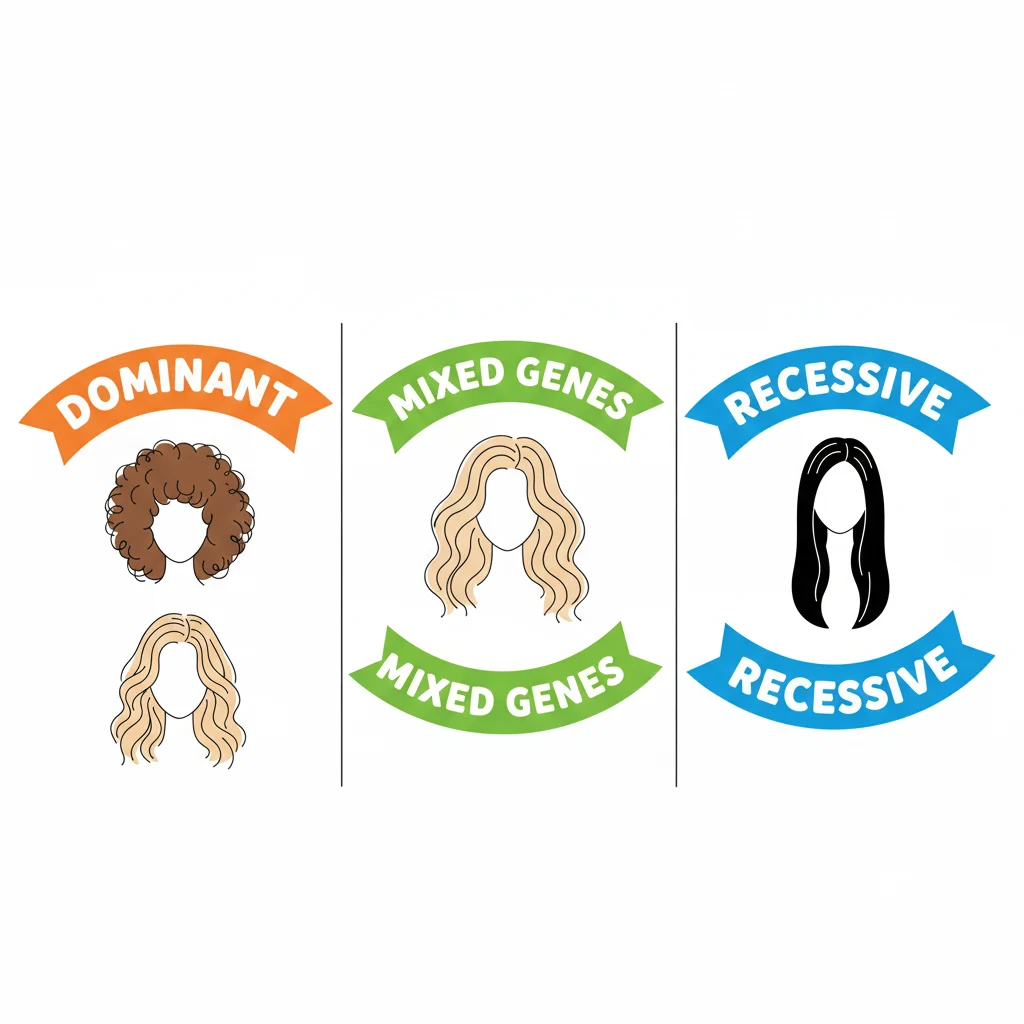
Curly hair is usually a dominant trait, while straight hair is usually recessive.
But genetics is not always simple. Many people have wavy hair, which comes from a mix of both genes. Hair type is controlled by more than one gene, so results can vary.
Many people ask, “Is curly hair dominant or recessive?”
This question is common because hair texture runs in families. If both parents have straight hair, can their child have curls? If one parent has curly hair, what will the child’s hair look like?
People often get confused because real-life hair types are not just curly or straight. There is also wavy hair, thick hair, thin hair, and mixed textures.
In this easy guide, you will learn:
- The meaning of dominant and recessive
- The difference between curly hair and straight hair
- Simple examples anyone can understand
- Common mistakes about hair genetics
- A quick table, memory tips, quiz, and answers
This article is written in plain English, so even a 4th-grade student can understand it easi
What Does Each Term Mean?
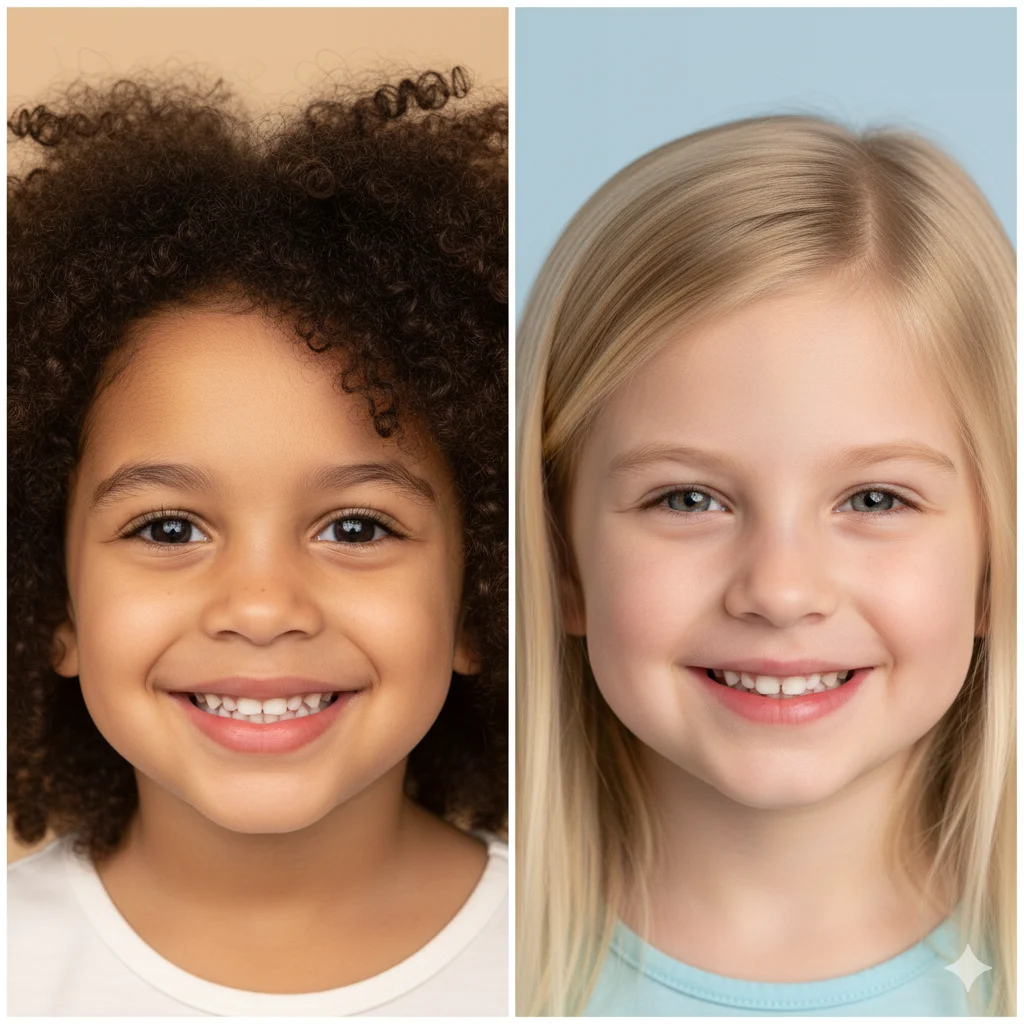
What Does “Curly Hair” Mean?
Curly hair bends and twists into loops or coils. It does not lie flat.
In genetics:
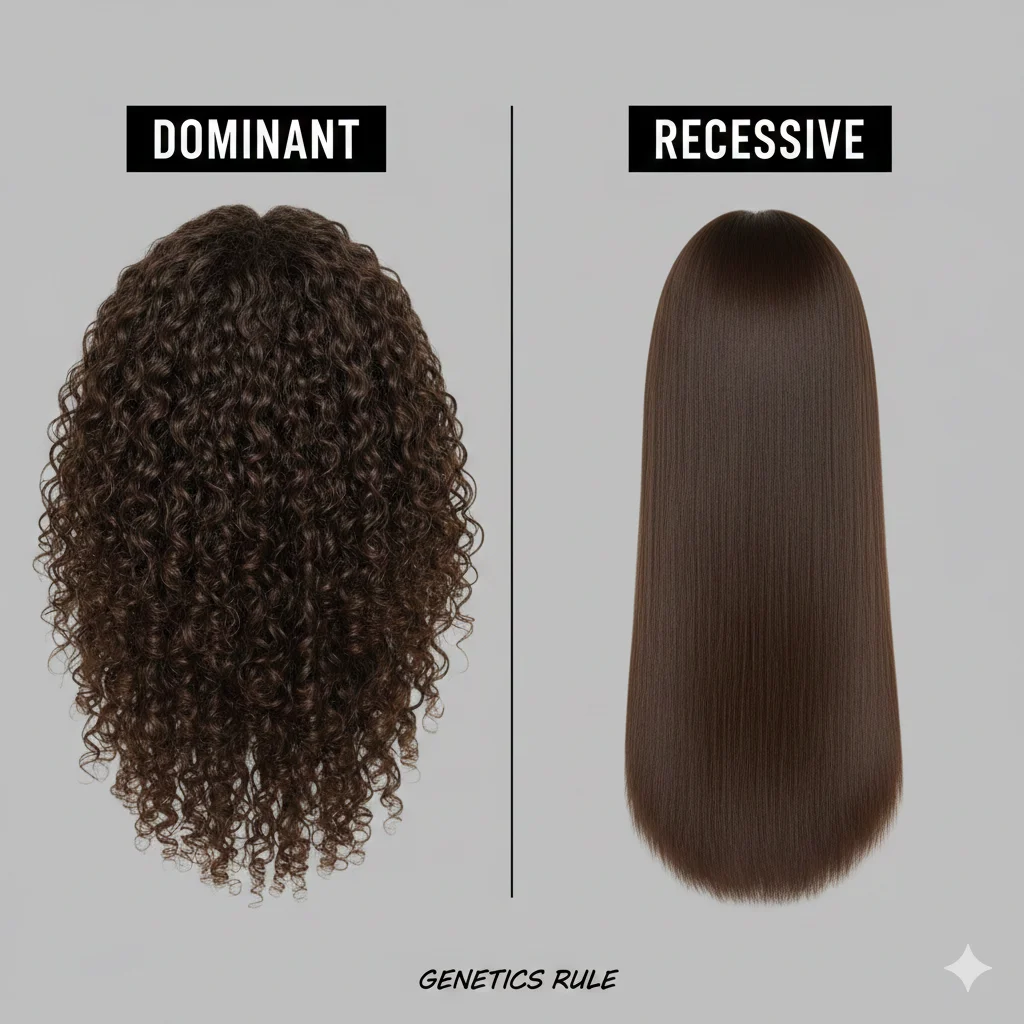
Curly hair is usually a dominant trait.
Simple examples:
- A child with one curly-hair parent often has curls or waves.
- Curly hair can appear even if only one parent has it.
- Many babies are born with curls that change as they grow.
Mini story:
Sara’s mom has curly hair. Her dad has straight hair. Sara has wavy hair. This happens because curly hair is dominant, but genes mix.
What Does “Straight Hair” Mean?
Straight hair grows flat and smooth without bends.
In genetics:
Straight hair is usually a recessive trait.
Simple examples:
- Two straight-haired parents often have straight-haired children.
- Straight hair appears when no curly-hair gene is active.
- Straight hair can skip generations.
Mini story:
Ali has straight hair like both parents. His grandparents had curls, but the gene stayed hidden.
The Key Difference Between Curly Hair and Straight Hair
Comparison Table: Curly Hair vs Straight Hair
| Feature | Curly Hair | Straight Hair |
|---|---|---|
| Genetic type | Usually dominant | Usually recessive |
| Hair shape | Loops and coils | Flat and smooth |
| Needs one gene? | Yes | Needs two |
| Can mix? | Yes (wavy hair) | Yes |
| Common myth | “Always inherited” | “Always simple” |
Quick Tip to Remember:
👉 Dominant traits show up easily. Recessive traits hide.
Common Mistakes and How to Avoid Them
❌ Mistake 1: “Curly hair is always dominant.”
✅ Correction:
Curly hair is usually dominant, but hair type depends on many genes, not just one.
❌ Mistake 2: “Two straight-haired parents can never have a curly-haired child.”
✅ Correction:
They can! Hidden genes from grandparents may appear.
❌ Mistake 3: “Wavy hair is not genetic.”
✅ Correction:
Wavy hair is genetic and often comes from one curly gene and one straight gene.
When to Say “Curly Hair Is Dominant”
Use this idea when:
- Explaining basic genetics
- Teaching school-level science
- Talking about family traits
Easy examples:
- Curly hair is a dominant trait in basic genetics.
- One curly-hair gene can affect hair texture.
- Curly hair often appears in families.
- Dominant traits show more easily.
- Curly hair can mix with straight hair.
When to Say “Straight Hair Is Recessive”
Use this idea when:
- Explaining hidden traits
- Talking about gene pairs
- Teaching inheritance basics
Easy examples:
- Straight hair is usually recessive.
- Recessive traits need two copies.
- Straight hair can skip generations.
- Straight hair appears when curly genes are absent.
- Genetics can surprise us.
Memory Hack:
🧠 “Recessive rests.” It stays hidden unless doubled.
Quick Recap: Curly Hair vs Straight Hair
- Curly hair = usually dominant
- Straight hair = usually recessive
- Wavy hair = mix of both
- Hair genetics is not always exact
- More than one gene controls hair type
Advanced Tips
Where Do These Words Come From?
The words dominant and recessive come from early genetics studies by Gregor Mendel.
Use in Exams and Writing
- Teachers expect “curly hair is dominant” as a basic answer
- Advanced biology accepts polygenic traits
Texting & Online Writing
Wrong genetics info spreads fast online. Simple explanations help avoid confusion.
Mini Quiz: Test Your Understanding
Fill in the blanks:
- Curly hair is usually a __________ trait.
- Straight hair is often __________.
- Wavy hair comes from a __________ of genes.
- A recessive trait needs __________ copies.
- Hair texture is controlled by __________ genes.
- Dominant traits __________ more easily.
✅ Quiz Answers
- dominant
- recessive
- mix
- two
- multiple
- appear
FAQs
1. Is curly hair always dominant?
No. It is usually dominant, but hair genetics is complex.
2. Can straight-haired parents have a curly-haired child?
Yes. Hidden genes can appear.
3. What is wavy hair?
Wavy hair is a mix of curly and straight genes.
4. Is hair type controlled by one gene?
No. Multiple genes affect hair texture.
5. Why does my hair change with age?
Hormones and growth can change how genes show.
Conclusion
So, is curly hair dominant or recessive?
The simple answer is: curly hair is usually dominant, and straight hair is usually recessive. But real life is more colorful. Hair type is shaped by many genes, not just one.
Understanding this helps you learn genetics, explain family traits, and avoid common myths. Keep observing, asking questions, and learning. Improving your knowledge—even a little each day—makes science fun and easy 🌱

Mira Loxley is a passionate language and writing expert at Definevs.com, turning tricky words and grammar into clear, engaging guides for every reader.