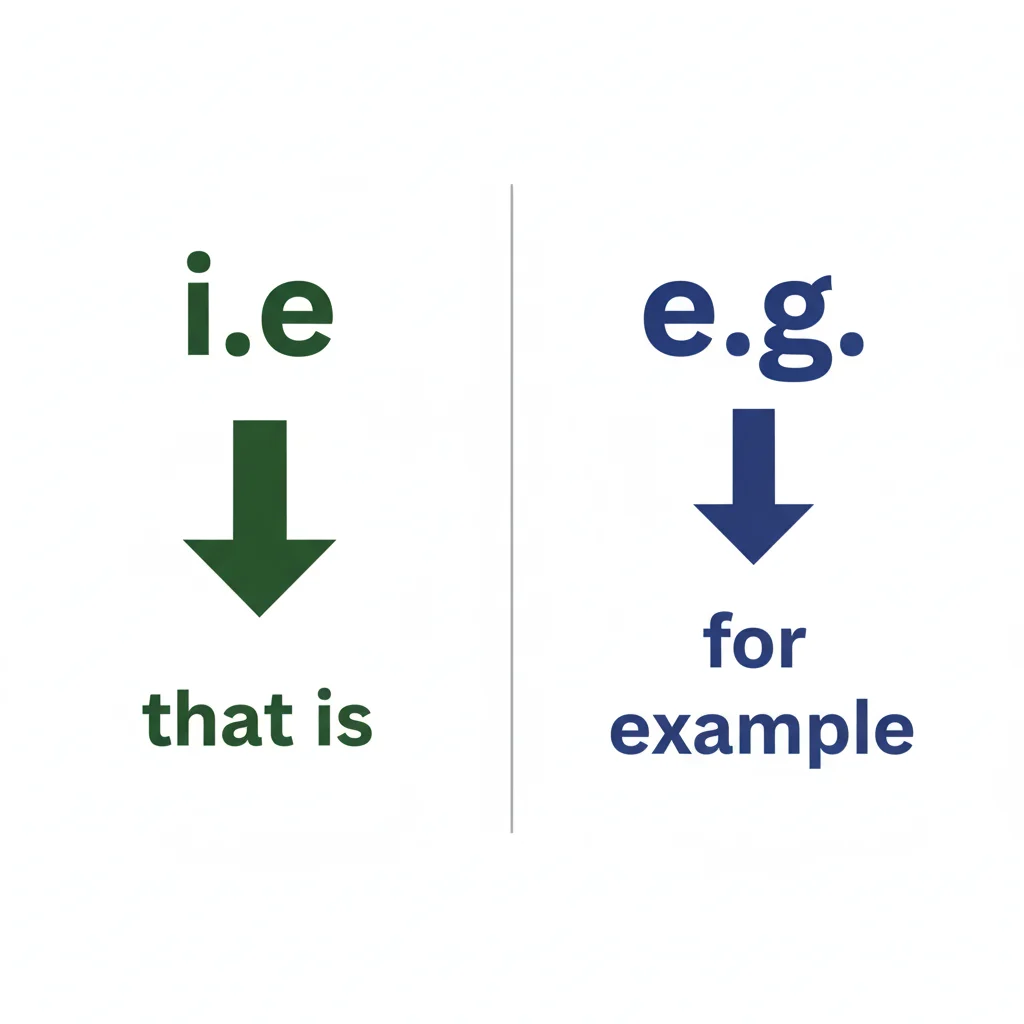
i.e. means “that is” or “in other words.”
It is used to clarify or restate something exactly.
e.g. means “for example.”
It is used to give examples, not the full list.
Examples:
- I work on weekdays, i.e., Monday to Friday.
- I enjoy citrus fruits, e.g., oranges and lemons.
👉 Simple rule:
- Use i.e. when you mean exactly this
- Use e.g. when you mean for example
If you have ever paused while writing an email, essay, or social media post wondering “Should I use i.e. or e.g.?”, you are not alone. This is one of the most searched grammar questions online. People often confuse i.e. vs e.g. because they look similar, both come from Latin, and are used in similar sentence positions. Yet their meanings are very different.
The confusion leads to common mistakes in professional writing, academic work, and even news articles. Using i.e. when you mean e.g. can change the meaning of a sentence. It may make you sound unclear or even incorrect. Some people also worry that using i.e. looks pretentious or overly formal.
This article solves that problem completely. You will get a quick answer, a clear explanation, real-world examples, and professional advice on which one to use and when. You will also learn the origin of i.e. and e.g., British vs American spelling rules, common mistakes, Google Trends usage, and FAQs people also ask.
By the end, you will use i.e. and e.g. with confidence.
The Origin of i.e. vs e.g.
Where do i.e. and e.g. come from?
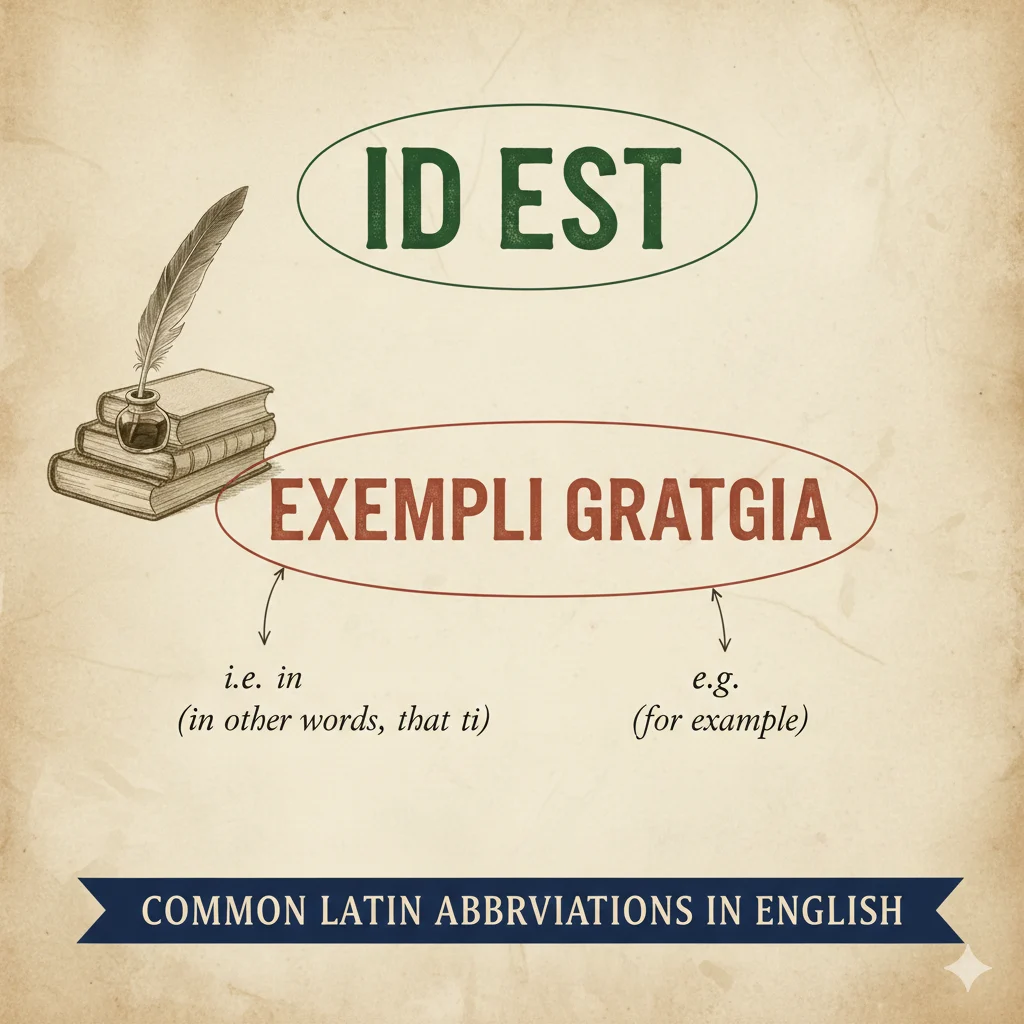
Both i.e. and e.g. come from Latin, which is why they are abbreviations.
- i.e. = id est
Meaning: “that is” or “in other words” - e.g. = exempli gratia
Meaning: “for example”
Why spelling differences exist
The abbreviations stayed in Latin even as English evolved. This is why:
- They use periods
- They are often followed by commas
- They appear formal
Over time, they became standard in English writing, especially in academic, legal, and professional contexts. Today, they are accepted in both British English and American English.
British English vs American English Spelling
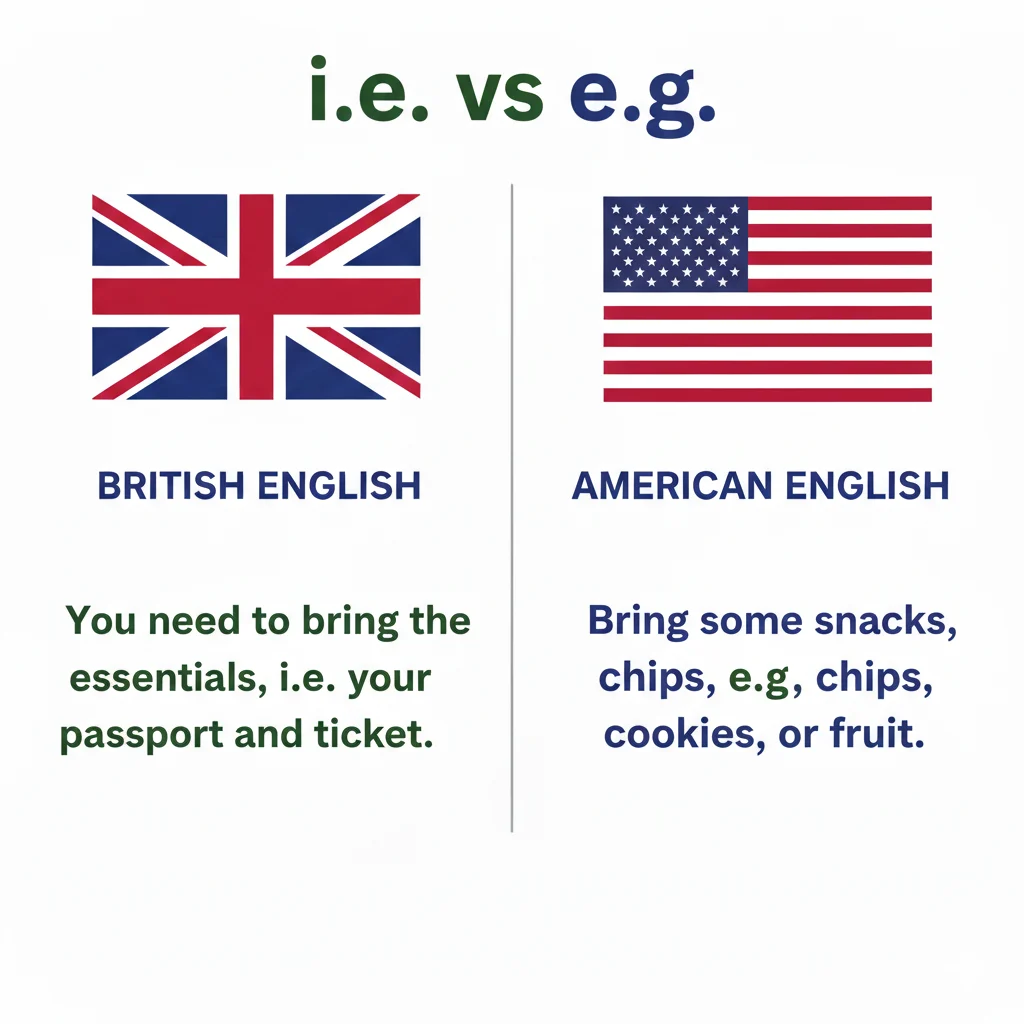
There is no spelling difference between British and American English for i.e. and e.g.. However, punctuation style may differ.
Comparison Table
| Feature | British English | American English |
|---|---|---|
| i.e. spelling | i.e. | i.e. |
| e.g. spelling | e.g. | e.g. |
| Comma after | Often optional | Usually required |
| Formal usage | Common | Common |
Examples:
- UK style:
She likes warm countries e.g. Spain and Italy. - US style:
She likes warm countries, e.g., Spain and Italy.
Disinterested vs Uninterested: The Truth Teachers Love 🍎
Which Spelling Should You Use?
Audience-based advice
- US audience:
Use commas before and after i.e. and e.g. - UK/Commonwealth audience:
Commas are flexible but still recommended. - Global audience:
Use full words instead:- “that is”
- “for example”
This avoids confusion, especially for non-native English readers.
Common Mistakes with i.e. vs e.g.
Mistake 1: Using i.e. instead of e.g.
❌ I love European cities, i.e., Paris and Rome.
✅ I love European cities, e.g., Paris and Rome.
Mistake 2: Using e.g. for clarification
❌ He works on weekdays, e.g., Monday to Friday.
✅ He works on weekdays, i.e., Monday to Friday.
Mistake 3: Forgetting punctuation
❌ Bring tools e.g hammer screwdriver
✅ Bring tools, e.g., hammer and screwdriver.
i.e. vs e.g. in Everyday Examples
Emails
- Please submit the report today, i.e., before 5 PM.
- We need more documents, e.g., ID proof and address proof.
News Writing
- The law affects urban areas, e.g., New York and Chicago.
- The deadline is fixed, i.e., no extensions allowed.
Social Media
- Love summer fruits 🍉 e.g., mangoes and watermelon.
- Office days are fixed, i.e., no remote work.
Formal Writing
- The experiment requires noble gases, e.g., helium.
- The solution is unstable, i.e., it breaks down quickly.
Hardy vs Hearty 🌱 The Tiny Detail Everyone Gets Wrong
i.e. vs e.g. – Google Trends & Usage Data
Popularity by region
- e.g. is searched more globally
- i.e. is searched more in academic contexts
Context-based usage
| Context | More common |
|---|---|
| Academic writing | i.e. |
| Blogs & content | e.g. |
| Emails | Both |
| Legal writing | i.e. |
People often search:
- How does IE differ from EG?
- Is “i.e.” commonly misused?
- What does e.g. mean in writing?
Comparison Table: i.e. vs e.g. vs ex
| Term | Meaning | Use Case | Example |
|---|---|---|---|
| i.e. | That is | Clarification | Weekdays, i.e., Mon–Fri |
| e.g. | For example | Examples | Fruits, e.g., apples |
| ex | Example (informal) | Casual speech | Ex: pizza |
FAQs: i.e. vs e.g.
1. How do you use IE and EG?
Use i.e. to explain exactly. Use e.g. to give examples.
2. Is “i.e.” commonly misused?
Yes. Many people use it when they mean e.g.
3. How does IE differ from EG?
i.e. = that is.
e.g. = for example.
4. Is using “i.e.” considered pretentious?
No. It is normal in formal writing. Avoid it in casual posts if unsure.
5. Does i.e. mean “in essence”?
No. That is a myth. It means id est (“that is”).
6. What is the full form and pronunciation of i.e.?
Full form: id est
Pronunciation: “eye-ee”
7. What does e.g. mean in a sentence?
It introduces examples, not the full list.
Conclusion
Understanding i.e. vs e.g. is a small grammar skill that makes a big difference in clarity. These two abbreviations are short, but they carry very different meanings. i.e. tells the reader you are explaining or restating something exactly. e.g. tells the reader you are giving one or more examples, not everything.
Many people misuse them because they look similar and come from Latin. But once you remember the simple rule—i.e. = that is, e.g. = for example—the confusion disappears. Whether you are writing emails, blog posts, academic papers, or social media captions, correct usage helps you sound clear and professional.
If your audience is global, using full phrases like “that is” or “for example” is often safer. For formal writing, i.e. and e.g. are perfectly acceptable and widely used.
Use this guide as a reference whenever you are unsure. With practice, choosing between i.e. and e.g. will become automatic.

Mira Loxley is a passionate language and writing expert at Definevs.com, turning tricky words and grammar into clear, engaging guides for every reader.