Heat or ice for sciatica?
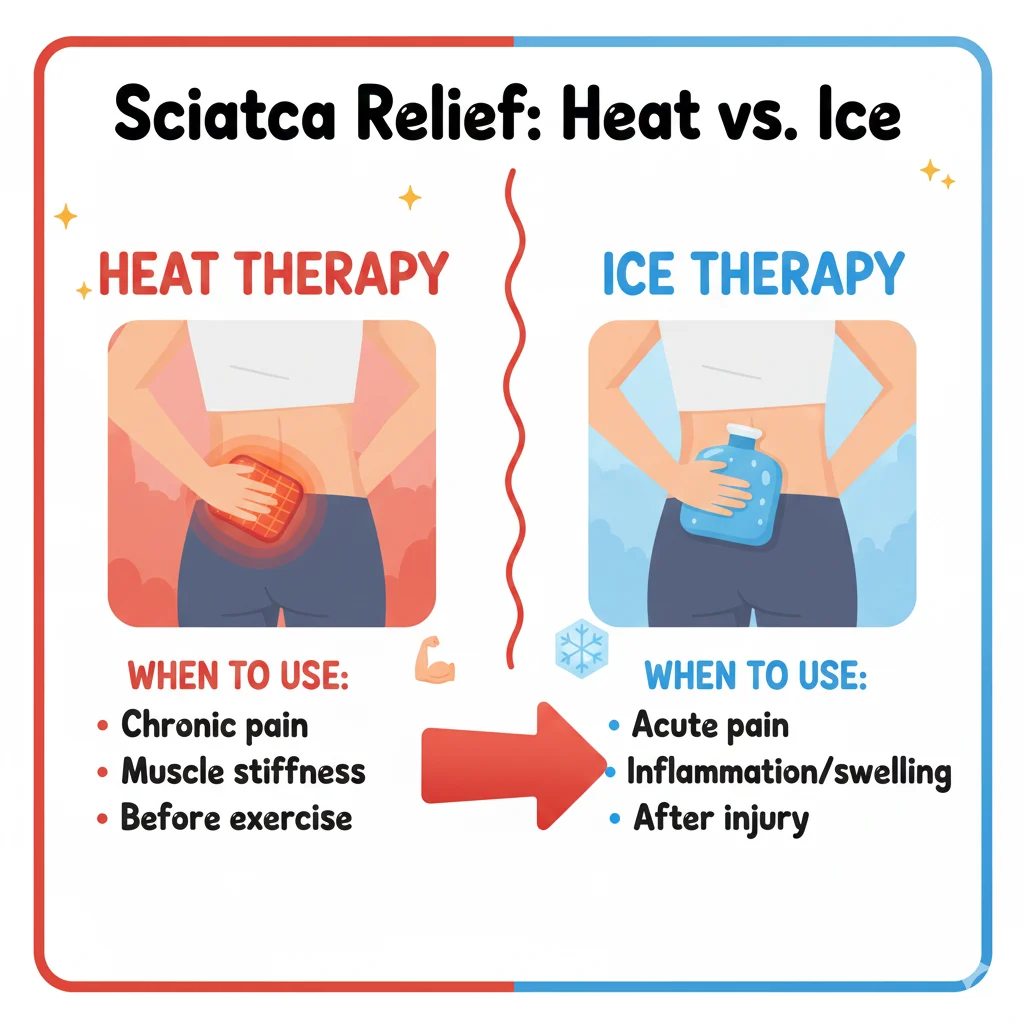
Use ice when the pain is new, sharp, or caused by swelling (usually the first 48 hours).
Use heat when the pain is stiff, tight, or feels like a deep ache in the muscles.
Ice = reduces swelling and numbs pain.
Heat = relaxes tight muscles and improves blood flow.
Many people who face sciatica ask the same confusing question: Should I use heat or ice for sciatica pain? Both can help, but they work in different ways. This is why people often mix them up.
In this easy guide, you will learn:
- What heat therapy really does
- What ice therapy really does
- The difference between heat and ice for sciatica
- When to use heat
- When to use ice
- Examples, visuals, and quick memory tricks
- Common mistakes people make
- A simple recap anyone can remember
Everything is written in super simple English, so even a class 4 student can understand it easily.
🌡️ What Does “Heat” Mean in Pain Relief?
Heat therapy means using warm packs, heating pads, or warm towels to relax tight muscles.
Heat Helps When:
- Muscles feel tight
- There is stiffness
- Pain feels like a deep, warm ache
- Back feels locked or stuck
Simple Explanation:
Heat is like a warm hug. It relaxes your body and improves blood flow.
3 Easy Examples:
- Your lower back feels stiff after sitting too long → Heat helps.
- Tight muscles pulling on your sciatic nerve → Heat helps.
- You feel a dull, heavy ache after a long day → Heat helps.

❄️ What Does “Ice” Mean in Pain Relief?
Ice therapy uses cold packs or ice wrapped in a cloth to cool down the painful area.
Ice Helps When:
- Pain is sharp
- There is swelling
- The injury or pain is new
- Skin feels hot or inflamed
Simple Explanation:
Ice works like a “pause button” for pain. It reduces swelling and numbs the area.
3 Easy Examples:
- You bent quickly and felt a sharp pain → Ice helps.
- Your lower back feels swollen after lifting something heavy → Ice helps.
- Sudden shooting pain down the leg → Ice helps.

⚖️ The Key Difference Between Heat and Ice for Sciatica
Here is the simple rule:
Ice = for sudden, sharp, swollen pain.
Heat = for tight, stiff, aching muscles.
🧊🔥 Comparison Table: Heat vs Ice for Sciatica
| Point | Ice for Sciatica | Heat for Sciatica |
|---|---|---|
| Best For | Sharp pain, swelling | Muscle tightness, stiffness |
| When to Use | First 48 hours | After pain calms down |
| What It Does | Reduces swelling and numbs pain | Relaxes muscles and increases blood flow |
| Feels Like | Cold, numbing | Warm, soothing |
| Example | Sudden shooting pain | Dull ache after sitting |
⭐ Quick Tip to Remember
Sharp pain → Ice.
Stiff pain → Heat.
(Think: “Ice = Instant pain. Heat = Hard, tight muscles.”)
❌ Common Mistakes People Make (and How to Avoid Them)
❌ Mistake 1: Using Heat on Fresh, Sharp Pain
Heat can increase swelling, making pain worse.
Correct: Use ice in the first 48 hours.
❌ Mistake 2: Using Ice for Long-Term Stiffness
Ice tightens tissues, so stiffness can get worse.
Correct: Use heat when muscles feel tight.
❌ Mistake 3: Applying Ice or Heat Directly on Skin
This can burn or freeze the skin.
Correct: Always wrap it in a cloth.
🔥 When to Use Heat for Sciatica
Use heat when:
- Muscles feel tight or stiff
- Pain is long-lasting or dull
- You feel better when moving or stretching
- There is no swelling
- You woke up with a “locked back”
Heat Example Sentences:
- “My back feels stiff from studying all night, so I used heat.”
- “Walking helped a bit, and heat made it better.”
- “My muscles felt tight after sitting too long. Heat helped me relax.”
- “The pain was not sharp, just a dull ache. Heat worked well.”
- “Whenever my muscles tighten, heat gives quick relief.”
Memory Hack
Imagine heat as a warm blanket relaxing stressed muscles.
❄️ When to Use Ice for Sciatica
Use ice when:
- Pain is sudden
- Pain shoots down your leg
- There is swelling or redness
- The pain began after lifting or twisting
- The area feels hot to touch
Ice Example Sentences:
- “I lifted a heavy box and felt sudden pain, so I used ice.”
- “My lower back feels swollen; ice reduces it.”
- “Sharp pain shot down my leg, so I applied ice for 15 minutes.”
- “After a long walk, the pain became sharp. Ice helped.”
- “The area felt warm and inflamed. Ice cooled it.”
Visual Trick
Think of ice as a “pain extinguisher.”
When pain “fires up,” ice cools it down.
🔁 Quick Recap: Heat vs Ice for Sciatica
- Ice = sudden pain + swelling.
- Heat = tight muscles + stiffness.
- Ice numbs and reduces swelling.
- Heat relaxes and improves blood flow.
- Never use heat on fresh injuries.
This simple rule helps you choose correctly every time.
📘 Advanced Tips
- Heat therapy has been used for centuries to relax muscles.
- Ice therapy is often recommended by doctors for fresh injuries.
- Using both can help: ice first → heat later.
- In essays or health writing, use clear terms like “cold therapy” and “thermotherapy.”
- Misuse in online advice can confuse people, so always check reliable sources.
📝 Mini Quiz: Test Yourself!
Fill in the blank with heat or ice.
- Sharp pain after bending → ______
- Tight muscles after sitting → ______
- Swelling near lower back → ______
- Dull ache without swelling → ______
- Sudden shooting pain down the leg → ______
- Stiffness after waking up → ______
- Area feels warm and inflamed → ______
(Answers: 1-Ice, 2-Heat, 3-Ice, 4-Heat, 5-Ice, 6-Heat, 7-Ice)
❓ 5 Helpful FAQs
1. Is heat or ice better for sciatica?
Ice is best for sharp, sudden pain or swelling. Heat is best for tight, stiff muscles.
2. Should I use ice or heat first?
Start with ice in the first 24–48 hours, then switch to heat when pain is less sharp.
3. Can heat make sciatica worse
Yes. Heat can worsen fresh injuries or swollen areas.
4. How long should I apply heat or ice?
Use for 15–20 minutes at a time, with a cloth between skin and pack.
5. Can I use both heat and ice on the same day
Yes. Many experts recommend ice first, heat later.
🏁 Conclusion
Choosing between heat or ice for sciatica is easy when you know the simple rule:
Ice for sharp, new pain. Heat for stiff, tight muscles.
Understanding this difference helps you treat pain safely and smarter.
Practice choosing the right method, listen to your body, and ask a doctor if pain gets worse or lasts too long. Small steps like this make your health journey easier every day.

Isla Merrin is a language and writing expert at Definevs.com, creating simple, engaging guides to help readers master words, grammar, and modern English usage.