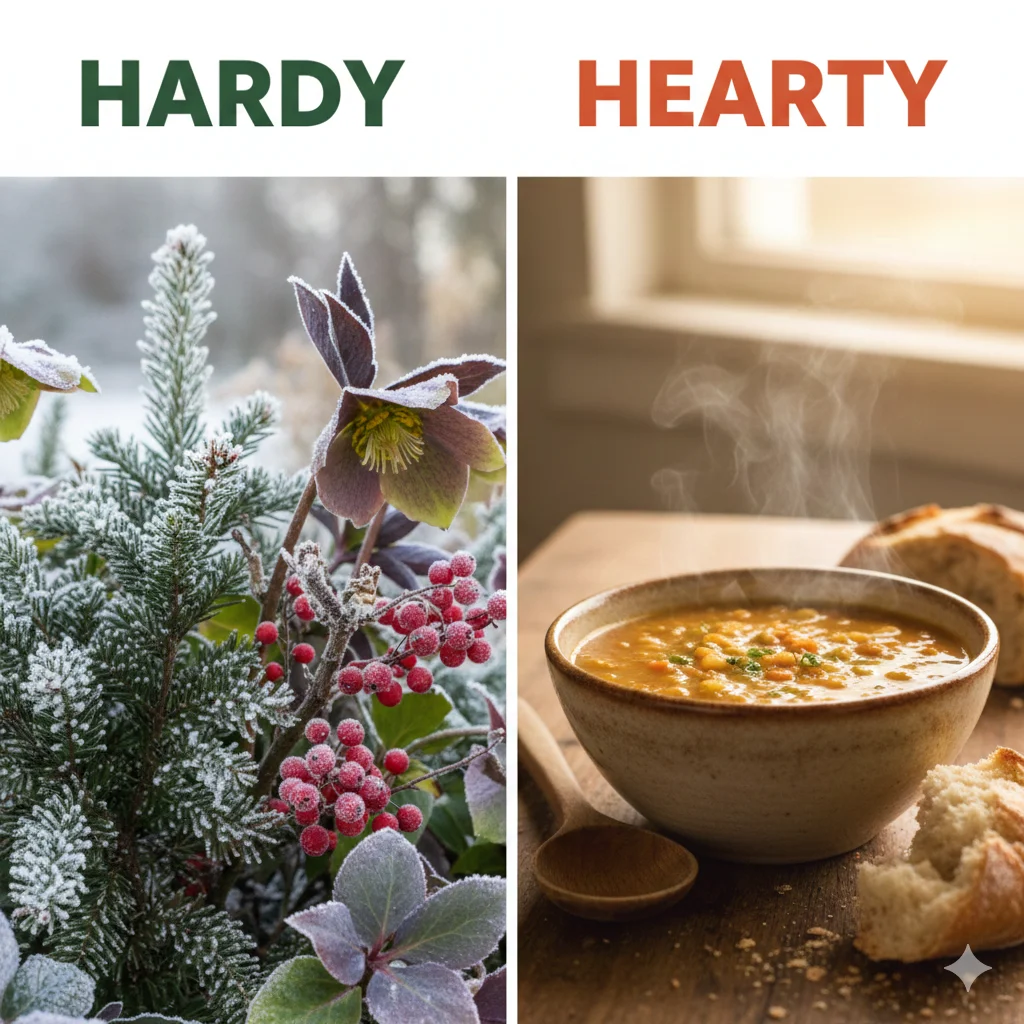
Hardy means strong, tough, or able to survive difficult conditions.
Hearty means warm, healthy, filling, or full of energy and feeling.
Examples:
- ✅ Hardy plants survive cold weather.
- ✅ Hearty meals are filling and comforting.
- ❌ Hardy soup (wrong) → ✅ Hearty soup (correct).
People often ask:
- Is it hardy or hearty meals? → Hearty meals
- Are plants hearty or hardy? → Hardy plants
English learners and native speakers alike often search for “hardy vs hearty” because the words sound almost the same, but their meanings are very different. This confusion shows up daily in writing, emails, menus, gardening blogs, and even news articles. People ask questions like “Is soup hardy or hearty?” or “Are plants hearty or hardy?”—and the wrong choice can change the meaning completely.
The problem comes from pronunciation. Both words rhyme, but one describes strength and toughness, while the other describes warmth, health, and fullness. This makes them a classic pair of confusing English words, often discussed on forums like Hardy vs hearty Reddit threads.
This article solves that confusion once and for all. You’ll get a quick answer, deep explanations, real-life examples, spelling guidance for British and American English, and professional usage advice. By the end, you’ll confidently know when to use hardy and when hearty—without second-guessing.
Hardy vs Hearty – Meaning Explained
Hardy Meaning
Hardy describes someone or something strong, tough, or able to survive stress.
Examples:
- Hardy plants survive frost
- Hardy travelers endure rough trips
- Hardy people resist illness
Hardy food meaning: food that lasts long or sustains energy, not emotional warmth.
Hearty Meaning
Hearty describes things that are warm, filling, healthy, or full of feeling.
Examples:
- Hearty soup keeps you full
- Hearty food is rich and satisfying
- A hearty laugh is loud and joyful
Hearty food meaning: nourishing, comforting meals.
The Origin of Hardy vs Hearty
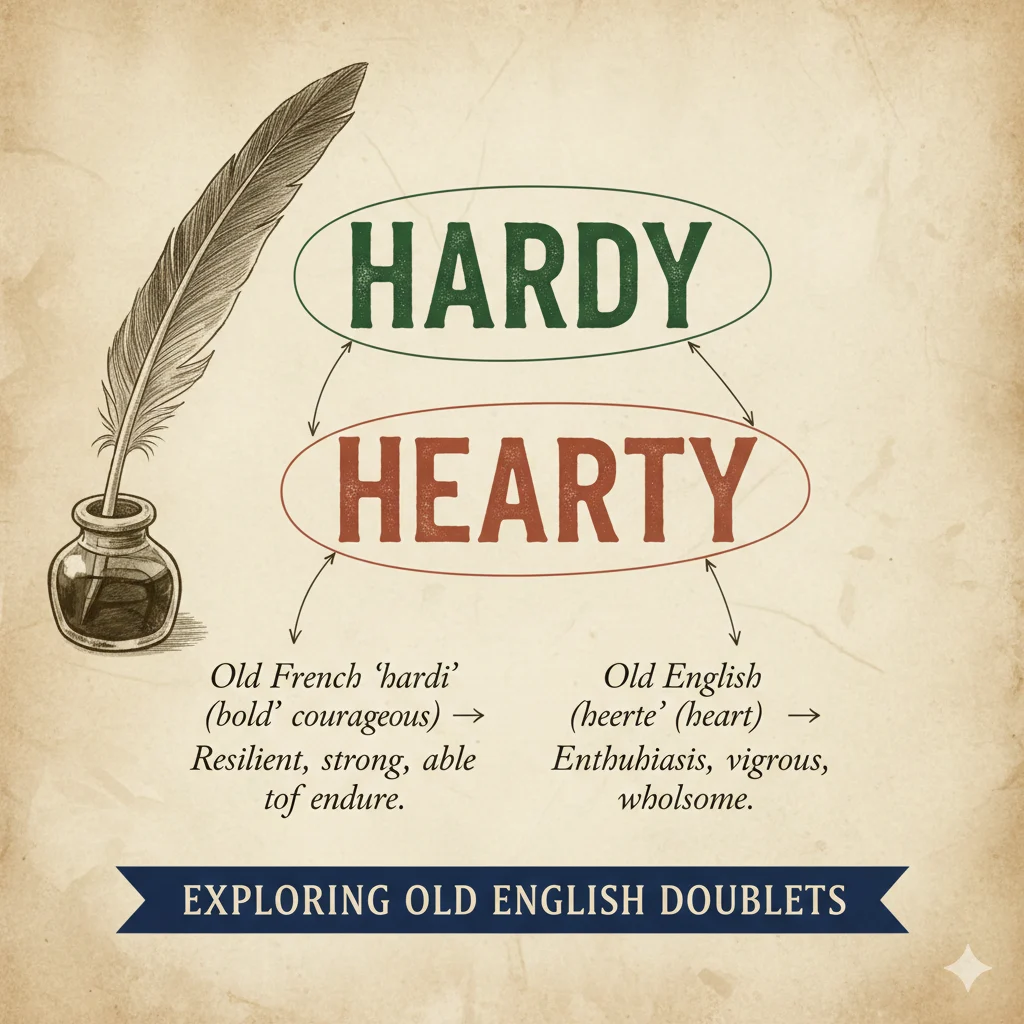
Hardy comes from Old French hardi, meaning bold or brave. Over time, it came to mean physically tough.
Hearty comes from heart. It originally meant strong in spirit, then expanded to include warmth, health, and food that feeds the body and soul.
The spelling difference exists because they evolved from different roots, even though modern pronunciation sounds alike.
Ensure vs Insure ✨ The Clear Rule Schools Rarely Teach
British English vs American English Spelling
There is no spelling difference between British and American English for these words. The confusion is meaning-based, not regional.
| Context | Correct Word | Example |
|---|---|---|
| Gardening | Hardy | Hardy roses |
| Food | Hearty | Hearty stew |
| Emotions | Hearty | Hearty welcome |
| Survival | Hardy | Hardy hikers |
Which Spelling Should You Use?
(Visual Prompt: Global map with writing icons)
- US audience: Follow meaning rules
- UK/Commonwealth: Same rules apply
- Global writing: Choose by context, not accent
Rule to remember:
- Survival = Hardy
- Food, warmth, emotion = Hearty
Common Mistakes with Hardy vs Hearty
❌ Hardy soup → ✅ Hearty soup
❌ Hearty plants → ✅ Hardy plants
❌ Hardy laugh → ✅ Hearty laugh
Popular questions answered:
- Is soup hardy or hearty? → Hearty
- Is it hardy or hearty meals? → Hearty meals
- Are plants hearty or hardy? → Hardy plants
- Is it hardy or hearty to laugh? → Hearty laugh
Hardy vs Hearty in Everyday Examples

Emails
- “Thank you for the hearty welcome.”
News
- “Farmers grow hardy crops for winter.”
Social Media
- “Nothing beats a hearty breakfast!”
Formal Writing
- “The region supports hardy vegetation.”
Hardy vs Hearty – Google Trends & Usage Data
Search data shows:
- Hearty appears most in food-related searches (hearty soup, hearty meals)
- Hardy appears in gardening, fitness, and survival topics
Country trends:
- US & UK: Food searches dominate hearty
- Canada & Northern Europe: Gardening searches favor hardy
Disinterested vs Uninterested: The Truth Teachers Love 🍎
Hardy vs Hearty Comparison Table
| Feature | Hardy | Hearty |
|---|---|---|
| Core meaning | Tough, strong | Filling, warm |
| Used for | Plants, people | Food, emotions |
| Example | Hardy plant | Hearty soup |
| Common error | Hardy meals ❌ | Hearty meals ✅ |
FAQs: Hardy vs Hearty
1. What is the difference between hardy and hearty?
Hardy means tough. Hearty means warm, filling, or emotional.
2. Is soup hardy or hearty?
Soup is hearty, not hardy.
3. Are plants hardy or hearty?
Plants are hardy.
4. What does hearty food mean?
Food that is filling, rich, and satisfying.
5. What does hardy mean?
Able to survive harsh conditions.
6. What is party hearty meaning?
It usually means lively or enthusiastic, linked to hearty, not hardy.
7. Why do people confuse hardy vs hearty?
They sound similar but have different meanings.
Conclusion
Understanding hardy vs hearty is about context, not spelling rules. If you’re describing survival, toughness, or resistance—use hardy. If you’re talking about food, emotions, warmth, or health—use hearty. This distinction matters in professional writing, content, menus, gardening advice, and everyday communication.
People search for this topic because mistakes are common and embarrassing, especially phrases like hardy soup or hearty plants. Now you know the difference clearly. Remember the simple rule: plants and people endure, food and feelings comfort. With that in mind, you’ll never confuse these words again.
Whether you’re writing for American, British, or global readers, the meaning stays the same. Use this guide as a quick reference whenever doubt strikes, and your writing will sound clear, natural, and professional.

Kael Donovan is a language enthusiast and writer at Definevs.com, simplifying complex words and grammar rules into fun, easy-to-understand guides for readers.