Grass is biotic, not abiotic. Biotic factors are living things, and since grass is alive, it falls under biotic. Abiotic factors are non-living elements like sunlight, water, and soil.
Have you ever wondered if grass is biotic or abiotic? It might seem tricky at first, but the answer is simple once you understand the difference. Many people confuse biotic and abiotic factors in nature because both are part of ecosystems, yet one is living, and the other is not.
In this guide, we’ll break it down clearly. You’ll learn:
- What biotic and abiotic mean
- The key difference between them
- Examples of each in real life
- Tips to remember which is which
By the end, even a beginner or a student in class 4 can easily identify whether something is biotic or abiotic — and explain it confidently.
What Does Each Word Mean?
Biotic
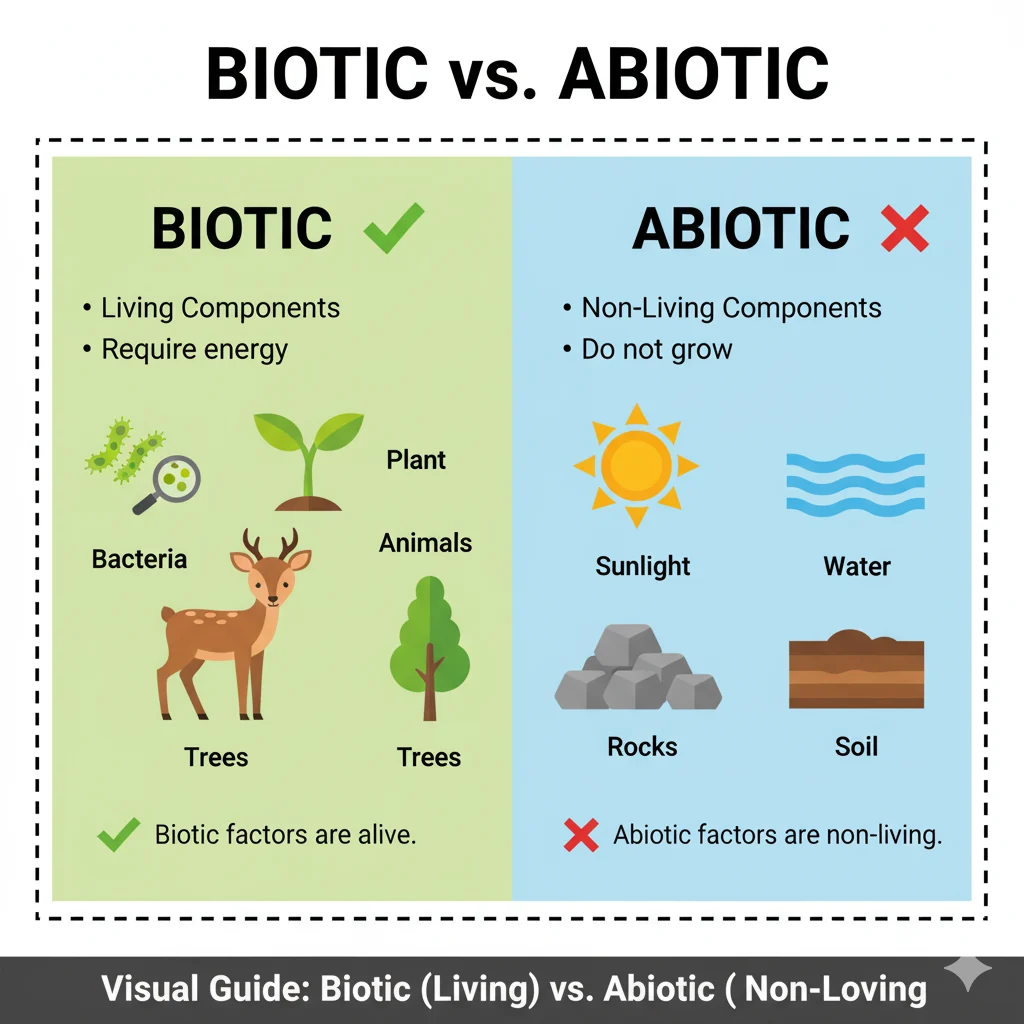
Definition: Biotic factors are living things in an ecosystem. This includes plants, animals, fungi, and microorganisms.
Part of Speech: Noun
Examples:
- Grass grows in the field and provides food for animals.
- Bees pollinate flowers and help plants reproduce.
- Bacteria break down dead leaves in soil.
Mini Story: Think of a garden. The flowers, worms, and birds you see are all biotic because they are alive.
Abiotic
Definition: Abiotic factors are non-living things in an ecosystem. They do not grow, reproduce, or need energy to survive.
Part of Speech: Noun
Examples:
- Sunlight gives energy to plants.
- Water in rivers helps animals drink and plants grow.
- Rocks and soil provide space for plants to root.
Mini Story: Imagine a desert. The sand, sunlight, and wind are all abiotic — they are part of nature but not alive.
The Key Difference Between Biotic and Abiotic
| Feature | Biotic | Abiotic |
|---|---|---|
| Meaning | Living things in an ecosystem | Non-living things in an ecosystem |
| Growth & Reproduction | Can grow, reproduce, and adapt | Cannot grow or reproduce |
| Examples | Grass, animals, fungi, humans | Water, sunlight, soil, temperature |
| Role | Provide energy, food, and interaction | Support life, provide environment conditions |
Quick Tip: If it breathes, moves, or grows, it’s biotic. If it doesn’t breathe or grow, it’s abiotic.

Common Mistakes and How to Avoid Them
Incorrect: Grass is abiotic because it is part of soil.
Correct: Grass is biotic because it is alive and grows.
Incorrect: Rocks are biotic because animals live on them.
Correct: Rocks are abiotic; they are non-living, even if animals use them.
Why Mistakes Happen: People often focus on where something is found, not whether it is alive. Always ask: “Is it living?”
When to Use Biotic
Situations: Biotic is used to describe anything alive in nature.
Examples:
- Trees are biotic because they grow and reproduce.
- Fish in a pond are biotic and depend on water to live.
- Grass provides food for herbivores, so it is biotic.
- Fungi decompose organic matter; they are biotic.
Memory Hack: Think “B for Biotic = Breathing”. Anything that breathes, grows, or reproduces is biotic.
When to Use Abiotic
Situations: Abiotic is used for non-living elements in an ecosystem.
Examples:
- Sunlight is abiotic because it doesn’t grow or reproduce.
- Soil and rocks are abiotic but provide a home for biotic things.
- Water in lakes is abiotic, essential for life.
- Temperature changes are abiotic factors affecting ecosystems.
Memory Hack: Think “A for Abiotic = Absence of life”. If it’s not alive, it’s abiotic.
Quick Recap: Biotic vs Abiotic
- Biotic: Living, grows, reproduces — grass, animals, fungi.
- Abiotic: Non-living, does not grow — sunlight, rocks, water.
- Quick Tip: If it breathes or moves → Biotic; if it doesn’t → Abiotic.
- Common Confusion: Grass is always biotic, even if it grows in soil or near rocks.
Advanced Tips
- Origin: “Biotic” comes from Greek bios meaning life; “abiotic” means without life.
- Formal Use: Both terms are used in biology, ecology essays, and environmental studies.
- Online Misuse: Calling grass abiotic in posts is incorrect; it can confuse students learning ecosystems.
Mini Quiz
Fill in the blanks:
- Grass is ______. (biotic/abiotic)
- Sunlight is ______. (biotic/abiotic)
- Animals in the forest are ______. (biotic/abiotic)
- Rocks are ______. (biotic/abiotic)
- Fungi breaking leaves are ______. (biotic/abiotic)
- Water in rivers is ______. (biotic/abiotic)
- Trees are ______. (biotic/abiotic)
Answers: 1. Biotic 2. Abiotic 3. Biotic 4. Abiotic 5. Biotic 6. Abiotic 7. Biotic
FAQs
1. Is grass biotic or abiotic?
Grass is biotic because it is a living organism that grows, reproduces, and needs nutrients.
2. Can sunlight be biotic?
No, sunlight is abiotic because it does not grow, reproduce, or consume energy.
3. Why is water considered abiotic?
Water is abiotic because it is a non-living factor that supports life but is not alive itself.
4. What is the easiest way to remember biotic vs abiotic?
Think: Biotic = Living, Abiotic = Non-living. Anything that grows or reproduces is biotic.
5. Are animals biotic or abiotic?
Animals are biotic because they are living organisms that need food, water, and air to survive.
Conclusion
Now you know the clear difference between biotic and abiotic. Grass, birds, and trees are biotic, while sunlight, water, and rocks are abiotic. Remember the quick tips, memory hacks, and examples to confidently classify any ecosystem component.
Practice using these words in your schoolwork, quizzes, or conversations — it makes learning science easy and fun. Keep exploring, and soon you’ll master all environmental terms effortlessly!

Mira Loxley is a passionate language and writing expert at Definevs.com, turning tricky words and grammar into clear, engaging guides for every reader.