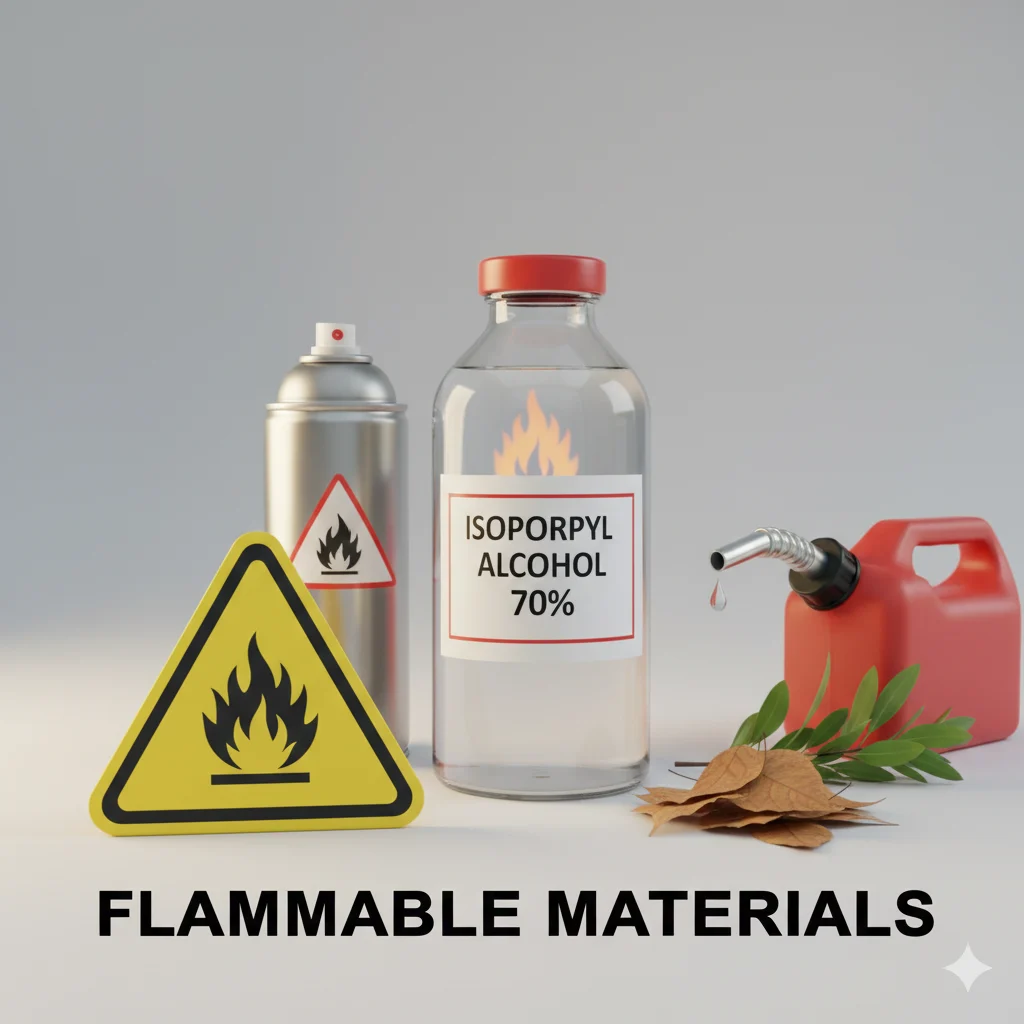
Have you ever wondered whether alcohol counts as a flammable material? 🤔
You might have seen warning labels like “Keep away from fire” on hand sanitizers or cleaning products that contain alcohol — but what does that really mean?
People often confuse “flammable materials” with “alcohol”, thinking they are the same thing. In reality, alcohol can be a flammable material, but not all flammable materials are alcohol.
In this guide, you’ll learn:
- What flammable materials and alcohol really mean
- The difference between them
- Real-life examples of each
- How to use both terms correctly
- Common mistakes to avoid
🧪 What Does Each Term Mean?
🔥 What Are Flammable Materials?
Flammable materials are substances that can easily catch fire when exposed to heat, flame, or sparks.
Part of speech: Adjective + Noun (describes a type of material).
Simple definition: Anything that burns easily.
Examples:
- Paper is flammable — it burns quickly when near a flame.
- Gasoline is highly flammable — even a small spark can ignite it.
- Cooking oil is flammable — that’s why you shouldn’t leave a pan unattended.
🧠 Memory Tip:
If it burns fast, it’s flammable.
🍶 What Is Alcohol?
Alcohol is a chemical compound made from carbon, hydrogen, and oxygen. It’s often found in drinks, cleaning products, perfumes, and fuels.
Part of speech: Noun
Simple definition: A liquid used in drinks, sanitizers, or fuel — and some types can catch fire.
Examples:
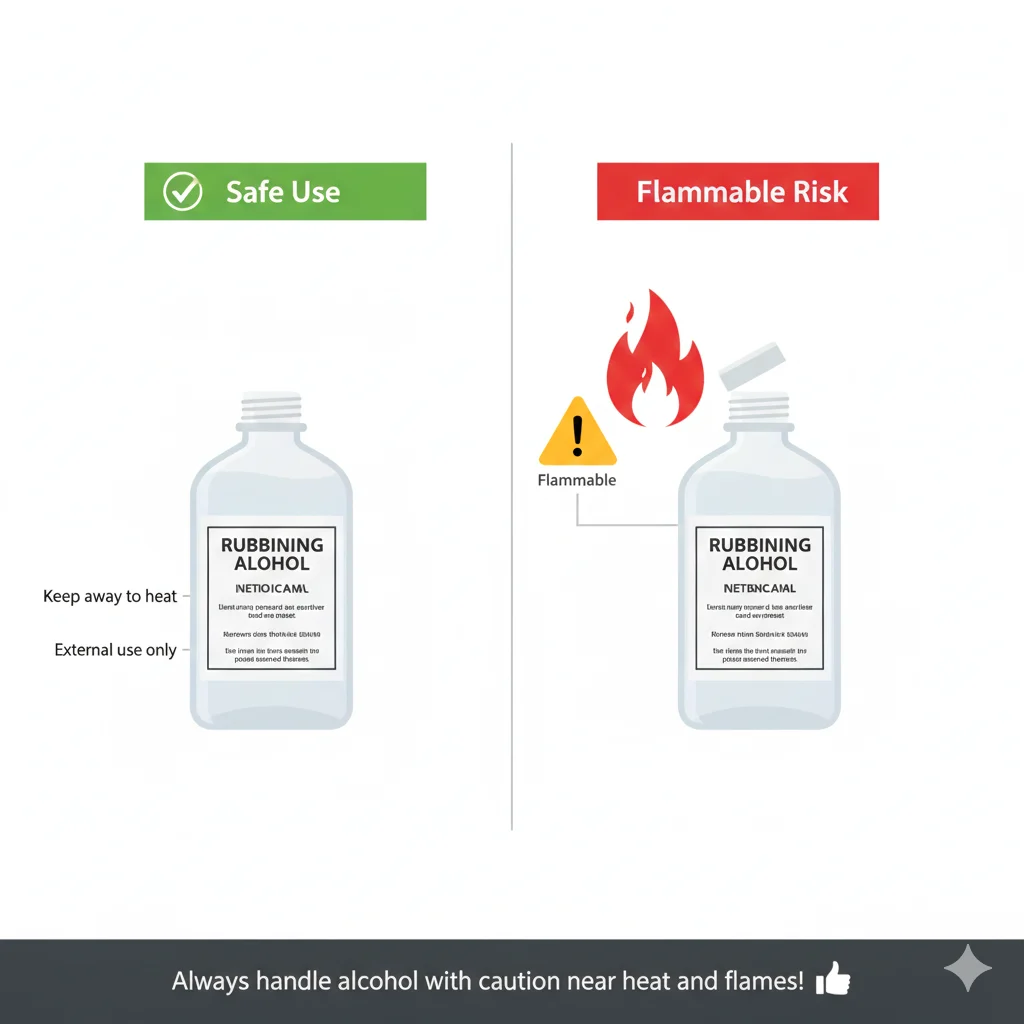
- Rubbing alcohol is used to clean wounds but is flammable.
- Drinking alcohol (ethanol) is found in beer and wine.
- Methanol and isopropyl alcohol are used in laboratories and can ignite easily.
🧠 Memory Tip:
Alcohol can be fun or functional, but some types can burn like fire.
⚖️ The Key Difference Between Flammable Materials and Alcohol
| Feature | Flammable Materials | Alcohol |
|---|---|---|
| Definition | Substances that burn easily when heated or ignited. | A type of chemical compound; some types are flammable. |
| Type | A broad category (includes paper, oil, gas, etc.). | A specific substance (ethanol, methanol, isopropyl). |
| Examples | Paper, gasoline, kerosene, cooking oil. | Rubbing alcohol, ethanol, methanol. |
| Usage | Used in fire safety and hazard warnings. | Used in drinks, cleaning, fuel, and medicine. |
| Safety Label | “Flammable material” means handle with care near flames. | “Contains alcohol – flammable” means alcohol inside can ignite. |
✅ Quick Tip:
All alcohols that can burn are flammable materials,
but not all flammable materials are alcohols.
🚫 Common Mistakes and How to Avoid Them
Mistake 1: Thinking all alcohol is safe
❌ “Alcohol can’t catch fire — it’s in drinks!”
✅ Only ethanol is drinkable; other alcohols like methanol and isopropyl alcohol are flammable and toxic.
Mistake 2: Believing flammable = explosive
❌ “If it’s flammable, it will explode!”
✅ Flammable means it burns easily — not that it explodes. Some flammable liquids burn steadily without blowing up.
Mistake 3: Ignoring labels
❌ Using alcohol cleaners near candles or stoves.
✅ Always check for “flammable” warnings and keep them away from open flames.
🔥 When to Use “Flammable Materials”
Use “flammable materials” when talking about objects or substances that can catch fire easily, especially in safety, science, or everyday warnings.
Examples:
- Always store flammable materials in a cool, dry place.
- Painters keep flammable materials like thinner and turpentine away from heat.
- Firefighters are trained to identify flammable materials during emergencies.
- The sign says, “No smoking — flammable materials inside.”
- Schools teach kids about handling flammable materials safely.
💡 Memory Hack:
If it can catch fire, call it a flammable material.
🍸 When to Use “Alcohol”
Use “alcohol” when referring to chemical liquids — especially those used in beverages, cleaning, or fuel.
Examples:
- Hand sanitizers contain alcohol, which kills germs but can catch fire.
- Alcohol is banned for underage drinking.
- Scientists use isopropyl alcohol to sterilize lab tools.
- Perfumes often include ethanol, a type of alcohol.
- Alcohol fuels are used in some types of vehicles.
💡 Memory Hack:
If it’s a liquid chemical, it might be alcohol.
🧾 Quick Recap: Flammable Materials vs Alcohol
- Flammable materials = Anything that can burn easily (paper, oil, gas).
- Alcohol = A type of liquid chemical; some types (like ethanol) are flammable.
- Relationship: Some alcohols are flammable materials, but not all flammable materials are alcohols.
- Use “flammable materials” for general safety talk.
- Use “alcohol” for specific substances like sanitizers, fuel, or drinks.
💡 Advanced Tips
- Origin: The word flammable comes from the Latin flammare, meaning “to set on fire.”
- In Science: Flammable materials have a “flash point” — the lowest temperature at which they can catch fire. Alcohols like ethanol have a low flash point, meaning they ignite quickly.
- In Everyday Life: Be cautious when using alcohol-based products near flames or stoves.
- In Writing or Exams: Use the full term “flammable materials” for safety descriptions and “alcohol” for chemical or beverage contexts.
🧩 Mini Quiz — Test Yourself!
Fill in the blanks with “flammable materials” or “alcohol.”
- ________ like gasoline and oil should be stored away from fire.
- Hand sanitizers contain ________, which can catch fire.
- Paper and plastic are examples of ________.
- Perfumes often have ethanol, a type of ________.
- Teachers warn students to keep ________ away from lab burners.
(Answers: 1. Flammable materials, 2. Alcohol, 3. Flammable materials, 4. Alcohol, 5. Flammable materials)
❓ FAQs
1. Is alcohol a flammable material?
Yes. Alcohols like ethanol, methanol, and isopropyl alcohol are flammable because they can easily ignite when near heat or flame.
2. What is the main difference between flammable materials and alcohol?
“Flammable materials” describe any substance that burns easily, while “alcohol” is a specific chemical — some types of which are flammable.
3. Is all alcohol flammable?
No. Only certain types like ethanol, methanol, and isopropyl alcohol are flammable. Other alcohols used in labs may have different properties.
4. Can I use alcohol near fire?
No. Avoid using alcohol-based products near flames or stoves, as they can catch fire quickly.
5. Why do sanitizers have flammable warnings?
Because they contain ethanol or isopropyl alcohol, both of which are highly flammable liquids.
🏁 Conclusion
Now you know the clear difference between flammable materials and alcohol.
All alcohols that can burn are flammable materials, but many other things — like paper, gas, and oil — are also flammable.
Next time you see a flame warning on a bottle, you’ll understand why!
Keep learning little details like these — they make English and science both fun and easy.

Mira Loxley is a passionate language and writing expert at Definevs.com, turning tricky words and grammar into clear, engaging guides for every reader.