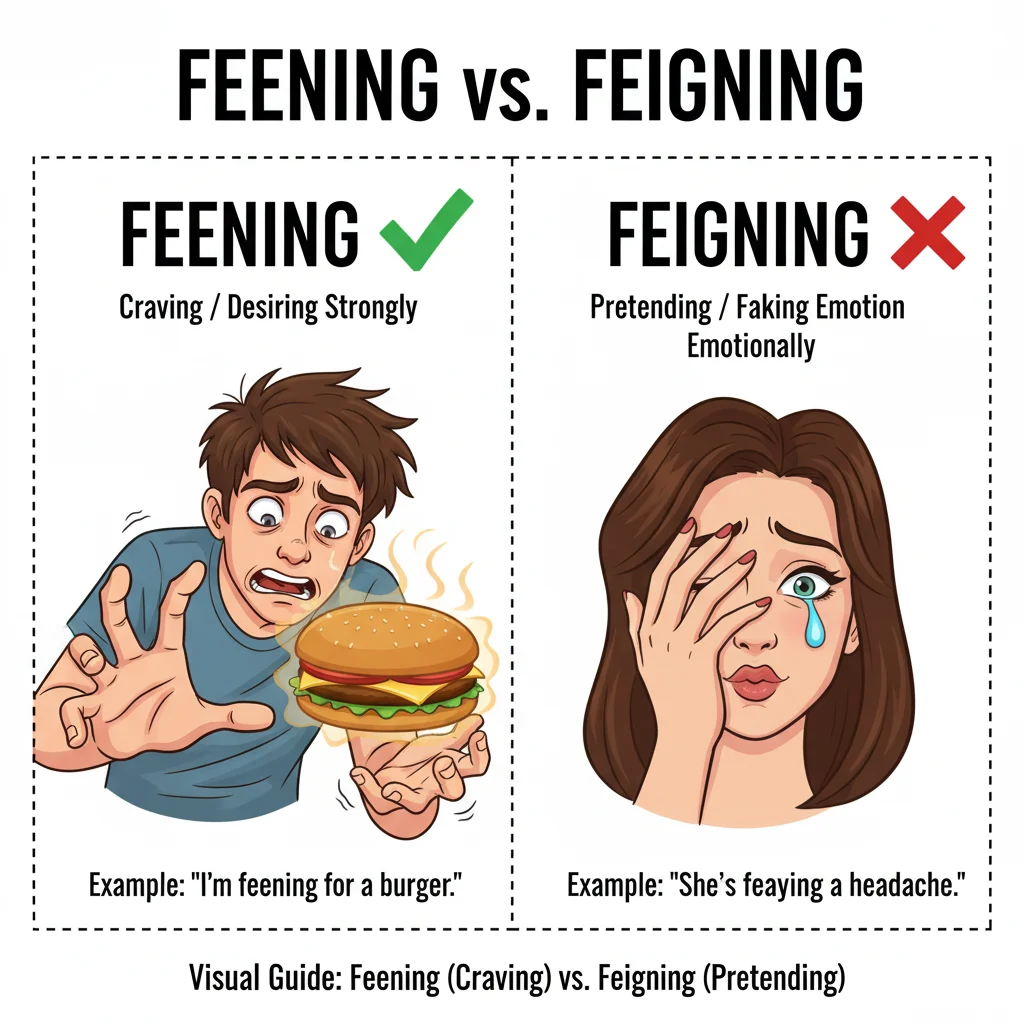
“Feening” means craving something intensely, often used in slang. “Feigning” means pretending or faking something, usually an emotion or action.
Though they sound similar, the two words have completely different meanings and should never be used interchangeably.
Have you ever typed a word confidently, only to realize later that it wasn’t even the right word? If “feening” or “feigning” has ever made you stop and wonder which one is correct, you’re definitely not alone. These two terms sound almost identical, but their meanings couldn’t be more different—and using the wrong one can completely change the message you’re trying to convey.
Whether you’ve seen someone say they’re “feening for coffee” or accuse someone of “feigning interest,” understanding the difference matters in texting, social media, everyday conversation, and even formal writing.
In this article, we’ll break down what each term actually means, their origins, how they’re used across different platforms, and how to avoid embarrassing mistakes. We’ll also look at real conversation examples, related terms, FAQs, and usage do’s and don’ts.
What Does “Feening” / “Feigning” Mean?
Feening Meaning (Slang) :
“Feening” is slang for craving, wanting, or obsessively desiring something, often used playfully or exaggeratedly. It comes from the word “fiending,” originally meaning the intense cravings associated with addiction, but now used casually in texting and social platforms.
Feigning Meaning (Formal English):
“Feigning” means pretending, faking, or giving a false appearance of a feeling, action, or behavior. It comes from Old French and is commonly used in literature, professional writing, and formal speech.
Origin and Popularity
Feening (Fiending → Feening)
- The slang term “feening” evolved from “fiending,” rooted in the word fiend, associated with strong craving.
- Became popular in 90s hip-hop culture, appearing frequently in song lyrics.
- Re-emerged in the 2010s–2020s thanks to Twitter, TikTok, and meme culture.
Timeline:
- 1990s: Hip-hop uses “fiendin’” to mean intense craving
- 2000s: Spreads through urban slang
- 2020s: TikTok normalizes the spelling “feening”
Feigning
- Comes from the Middle English word feinen, meaning to pretend.
- Originated from Old French “feindre,” meaning to pretend or shirk.
- Has been used in literature for centuries.
- Still common in academic, professional, and formal writing.
“Feening” / “Feigning” Meaning in Different Contexts
In Texting
- Feening: Used casually to express craving or desire.
Example: “I’m feening for pizza rn.” - Feigning: Rarely used in everyday texting; more formal.
Example: “She’s feigning surprise but she already knew.”
On Instagram / TikTok
- Feening: Popular in captions and comments.
Example: “Feening over this new outfit 😍” - Feigning: Used ironically or humorously.
Example: “Feigning productivity like 😭”
In Professional or Academic Writing
- Feening: ❌ Never appropriate.
- Feigning: ✔ Used correctly to describe false or staged behavior.
Example: “The employee was feigning interest during the meeting.”
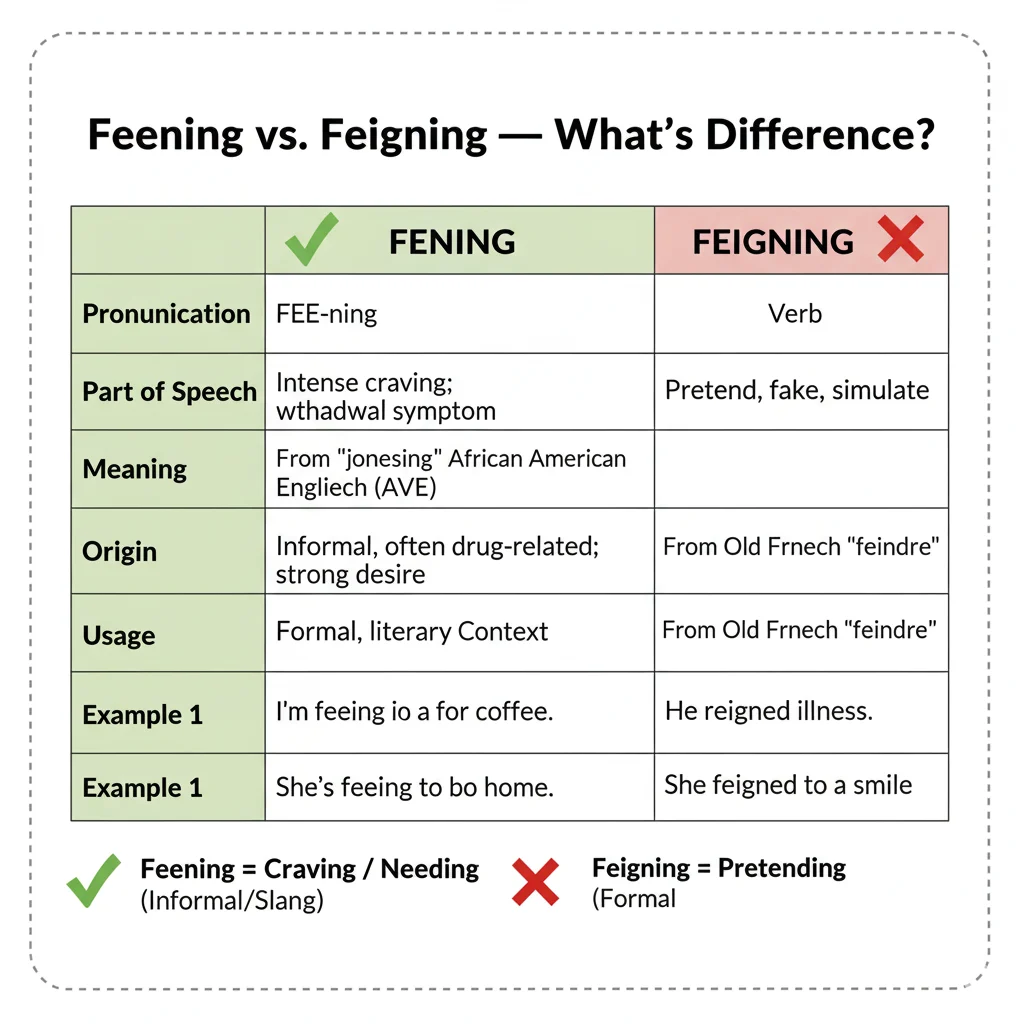
📊 Comparison Table: Feening vs. Feigning
| Feature | Feening | Feigning |
|---|---|---|
| Meaning | Craving something intensely | Pretending or faking |
| Word Type | Slang | Formal English |
| Origin | From “fiending” (hip-hop slang) | Old French “feindre” |
| Usage Level | Casual | Formal |
| Platforms | Texting, TikTok, Instagram | Essays, emails, descriptions |
| Example | “I’m feening for sushi!” | “He was feigning excitement.” |
Examples of “Feening” / “Feigning” in Conversations
Casual Texting Examples
Friend 1: Bro I’m feening for bubble tea right now.
Friend 2: Same! Let’s go get some.
Person A: I’m feening to watch the new season already!
Person B: It drops tomorrow, chill 😂
Social Media Example
Comment: Tell me why I’m feening over this outfit 😭🔥
Formal Example Using “Feigning”
“The manager accused the intern of feigning interest during the presentation.”
Mixed Example
A: She was feening to see him.
B: And he was feigning confidence the whole time.
Similar or Related Terms
Related to Feening
- Craving
- Obsessed with
- Yearning
- Thirsting (slang)
Related to Feigning
- Pretending
- Faking
- Simulating
- Acting
Related Internet Slang
| Slang Word | Meaning |
|---|---|
| WYD | What you doing? |
| LMK | Let me know |
| FR | For real |
| Lowkey | Slightly, secretly |
| Highkey | Openly, obviously |
How to Use “Feening” / “Feigning” Correctly
✔ Do Use “Feening” When:
- Talking casually with friends
- Posting on TikTok or Instagram
- Expressing craving or desire
- Using humorous exaggeration
❌ Don’t Use “Feening” When:
- Writing essays
- Speaking professionally
- Sending formal messages
- Describing real addiction (insensitive)
✔ Do Use “Feigning” When:
- Explaining fake behavior
- Writing reports, essays, or narratives
- Describing emotional pretense
❌ Don’t Use “Feigning” When:
- You mean craving
- You want a slang term
- You’re texting casually (sounds too formal)
Common Mistakes or Misinterpretations
❌ Mistake 1: Using “feening” to mean pretending
Incorrect: “He was feening interest.”
Correct: “He was feigning interest.”
❌ Mistake 2: Using “feigning” in slang contexts
Incorrect: “I’m feigning for ice cream.”
Correct: “I’m feening for ice cream.”
❌ Mistake 3: Misspelling “feening” as “fiending”
Both are used, but:
- Fiending = original hip-hop spelling
- Feening = modern social media spelling
❌ Mistake 4: Thinking they are synonyms
They are not—one is craving, the other is pretending.
FAQ Section
1. What does “feening” mean in texting?
“Feening” means craving or wanting something intensely. It’s a slang term used mostly on social media or in casual conversation to express a strong desire.
2. Is “feening” a real word?
While not officially recognized in most dictionaries, it is widely accepted in modern slang and comes from the word “fiending.” It’s common in internet culture, music, and texting.
3. What does “feigning” mean?
“Feigning” means pretending, faking, or giving a false appearance of something, often a feeling or action. It is a standard English word used in formal contexts.
4. What’s the difference between “feening” and “feigning”?
“Feening” = craving.
“Feigning” = pretending.
They sound similar but have opposite meanings.
5. Can I use “feening” in formal writing?
No. It’s purely slang. Use it in casual speech or social media only.
6. How do I reply when someone says they’re “feening”?
Use a casual response:
“Same!”
“Let’s get it then!”
“Omg me too.”
Conclusion
Now that you know the difference between feening and feigning, you can use each word confidently without confusing the two. Whether you’re texting, posting online, or writing something more formal, choosing the right term ensures your message is clear and accurate.
Feening expresses a craving, while feigning describes pretending—simple, right? The next time someone mixes them up, you’ll know exactly how to explain it. Keep exploring our site for more slang breakdowns and language tips!

Mira Loxley is a passionate language and writing expert at Definevs.com, turning tricky words and grammar into clear, engaging guides for every reader.