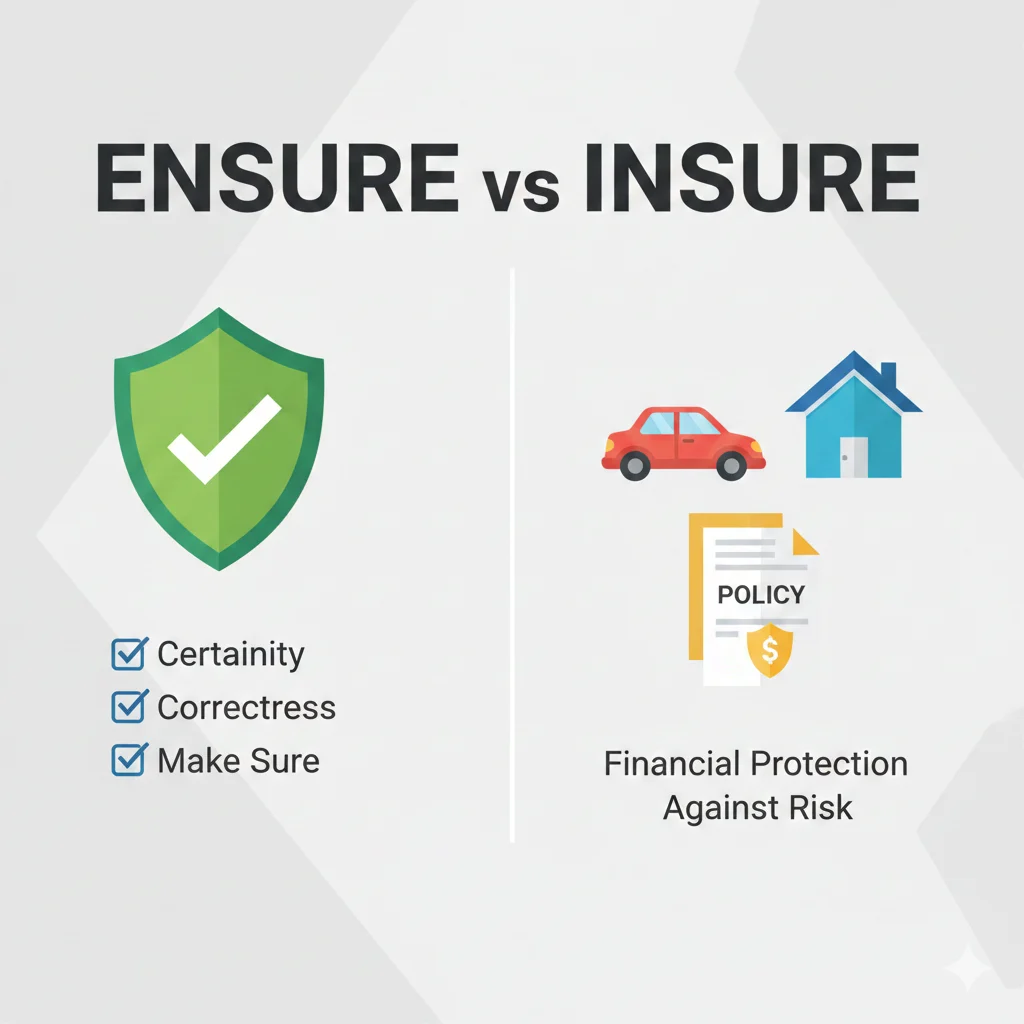
Ensure means to make sure something happens.
Insure means to protect financially with insurance.
Examples:
- Please ensure the door is locked.
- I will insure my car this week.
👉 If money, insurance, or risk coverage is involved, use insure.
👉 If you mean make certain, use ensure.
The confusion between ensure vs insure is one of the most searched grammar questions online. People ask: Is it correct to ensure or insure? When should I use ensure? Which word is more common? The reason is simple—these words look similar, sound similar, and come from the same language roots. But their meanings today are very different.
Writers, students, professionals, and even native English speakers mix them up in emails, contracts, news articles, and social media posts. One wrong word can change the meaning of a sentence, especially in legal or business writing. Imagine writing “We will insure quality” instead of “We will ensure quality.” That small error can confuse readers and hurt credibility.
This guide solves that problem clearly and quickly. You’ll get a fast answer, real-world examples, UK vs US usage, common mistakes, Google Trends insights, and professional advice. By the end, you’ll know exactly when to use ensure, when to use insure, and why assure is different too.
The Origin of Ensure vs Insure

Both ensure and insure come from the Latin word securus, meaning “safe” or “secure.” Over time, they passed through Old French and Middle English.
Originally, the spellings were used interchangeably. As English evolved, meanings split:
- Ensure focused on certainty and guarantees.
- Insure focused on financial protection and risk.
The spelling difference exists today to reduce confusion. British English helped separate the meanings earlier, while American English strongly reinforced the insurance-only meaning of insure.
British English vs American English Spelling
In modern English, both UK and US follow similar rules, but usage frequency differs.
Comparison Table
| Usage Context | British English | American English |
|---|---|---|
| Make sure | Ensure | Ensure |
| Insurance | Insure | Insure |
| Formal writing | Ensure preferred | Ensure preferred |
| Insurance documents | Insure | Insure |
Key point:
There is no spelling difference—only a meaning difference.
Which Spelling Should You Use?
Use this simple rule based on your audience:
- US audience:
- Ensure = make sure
- Insure = insurance only
- UK / Commonwealth audience:
- Same rule applies, but UK writers are stricter about not mixing meanings.
- Global or professional writing:
- Always follow the modern rule. Never use insure unless money or insurance is involved.
Professional tip: In contracts and policies, misuse can cause legal confusion.
Common Mistakes with Ensure vs Insure
❌ Wrong:
- We insured customer satisfaction.
- Please insure the report is ready.
- The policy ensures your car.
✅ Correct:
- We ensure customer satisfaction.
- Please ensure the report is ready.
- The policy insures your car.
Also confusing:
- Assure vs ensure
- Assure = remove doubt from a person
- Ensure = make sure something happens
Example:
“I assure you the plan will work.”
“We ensure the plan is tested.”
Ensure vs Insure in Everyday Examples
Emails
- Please ensure all files are attached.
- We will insure the shipment before delivery.
News
- New laws ensure public safety.
- Drivers must insure their vehicles.
Social Media
- Ensure you back up your data!
- Don’t forget to insure your phone.
Formal Writing
- Steps were taken to ensure accuracy.
- The company insures assets against loss.
Ensure vs Insure – Google Trends & Usage Data
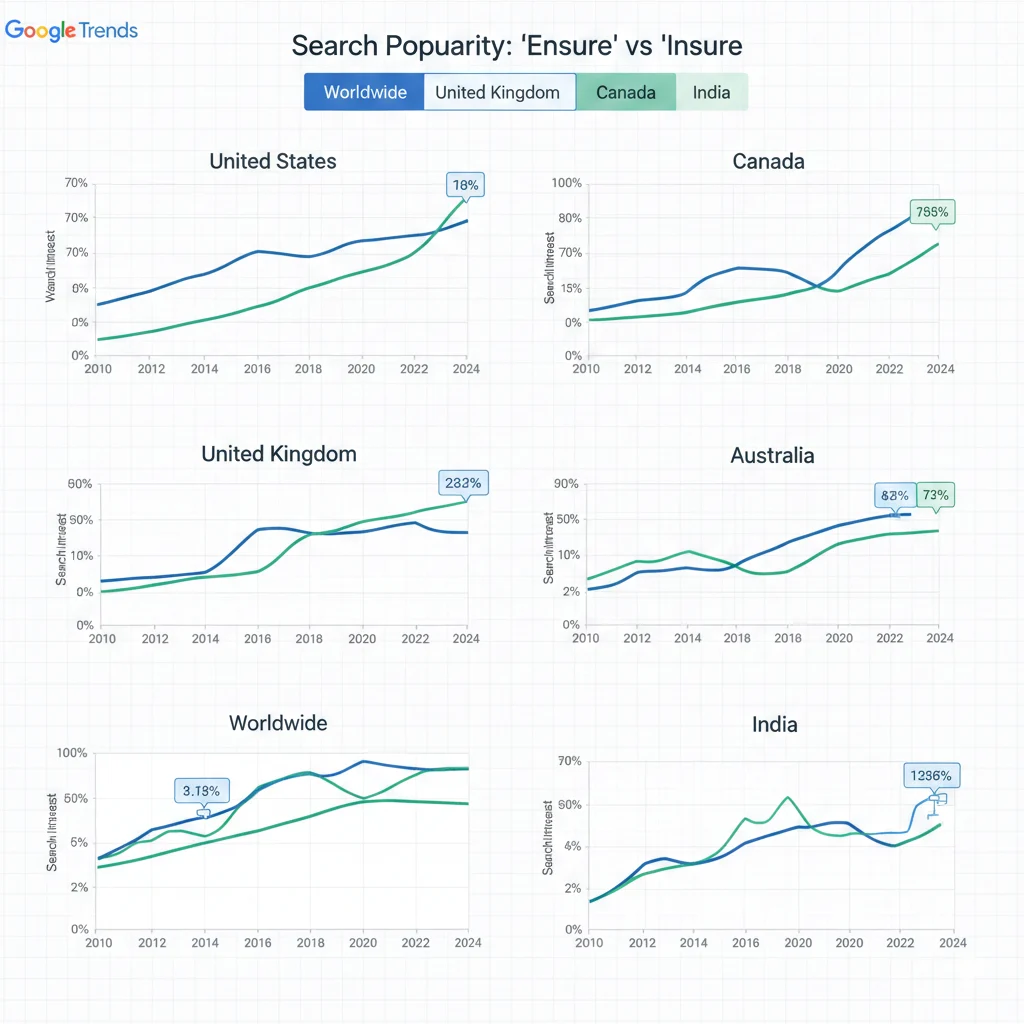
Search data shows:
- Ensure is more common globally.
- Insure spikes in searches related to insurance, cars, health, and business.
- Countries like the US, UK, Canada, and Australia follow the same usage pattern.
People also search for:
- Insure vs ensure examples
- Ensure vs insure UK
- Ensure vs insure insurance
- Insure vs ensure pronunciation
- Ensure meaning
- INSURE vs ENSURE surfactant (technical chemistry usage)
Ensure vs Insure Comparison Table
| Feature | Ensure | Insure |
|---|---|---|
| Meaning | Make sure | Protect financially |
| Insurance related | ❌ No | ✅ Yes |
| Common usage | Very high | High in insurance |
| Formal writing | Yes | Only in insurance |
| Pronunciation | In-shur | In-shur |
FAQs: Ensure vs Insure
1. Is it correct to ensure or insure?
It depends on meaning. Use ensure for certainty. Use insure for insurance.
2. When to use ensure?
Use ensure when you mean make sure something happens.
3. Can “assure” and “ensure” be used interchangeably?
No. Assure is for people. Ensure is for outcomes.
4. Which word is more common: insure or ensure?
Ensure is more common in everyday English.
5. Is ensure vs insure different in the UK?
The meanings are the same, but UK writers avoid mixing them.
6. What about insure vs ensure pronunciation?
They sound almost identical, which causes confusion.
7. What is the plural possessive of peoples?
It is peoples’, used when referring to multiple groups.
Conclusion
Understanding ensure vs insure is easier than it looks. The key is meaning, not spelling. Ensure means to make sure something happens. Insure means to protect against financial loss. Once you connect insure with insurance, the confusion disappears.
This distinction matters in professional writing, emails, legal documents, and public communication. Using the wrong word can confuse readers or reduce trust. The good news? Native speakers follow the same simple rule across the US, UK, and global English.
If you remember one thing, remember this:
👉 Certainty = ensure
👉 Insurance = insure
Use the examples, tables, and FAQs in this guide whenever you’re unsure. With practice, choosing the correct word will feel automatic—and your writing will sound clear, confident, and professional.

Arwen Blythe is a passionate language and culture enthusiast, crafting clear, engaging guides on words, phrases, and modern English for Definevs.com readers.