Elicit means to draw out or bring forth information, feelings, or reactions.
Illicit means illegal or not allowed by law or rules.
Examples:
- The teacher tried to elicit honest answers from students.
- Selling illicit drugs is a serious crime.
👉 If it’s about getting a response, use elicit.
👉 If it’s about something illegal, use illicit.
The confusion between elicit vs illicit is one of the most searched grammar problems in English. These two words look almost identical, sound similar, and often appear in serious topics like law, education, news, and drug use. That’s why people frequently ask: Is it elicit or illicit drug use? or What is the difference between illicit and elicit and solicit?
This confusion can cause embarrassing mistakes, especially in professional writing, exams, emails, or SEO content. One wrong letter can completely change your meaning—from asking a question to breaking the law.
This guide solves that problem clearly and simply. You’ll learn the meaning of elicit, the meaning of illicit, how to pronounce them, how they are used in real sentences, and how to choose the right word every time. By the end, you’ll never mix them up again.
The Origin of Elicit vs Illicit

Both words come from Latin, which explains why they look similar—but their meanings are very different.
Elicit comes from the Latin word elicere, meaning to draw out. Historically, it was used to describe pulling information, emotions, or responses from someone. Over time, it became common in psychology, education, and communication.
Illicit comes from the Latin illicitus, meaning not permitted. It has always been connected to rules, law, and morality. That’s why we hear it with crimes, illegal trade, or illicit drugs.
The spelling difference exists because they evolved from different Latin roots, even though they merged into similar-looking English words.
British English vs American English Spelling
Good news: there is no spelling difference between British and American English for elicit vs illicit. Both regions use the same spelling and meaning.
What differs is context and frequency of use.
| Word | British English Usage | American English Usage |
|---|---|---|
| Elicit | Academic, formal writing | Education, psychology |
| Illicit | Law, media, crime reports | News, law enforcement |
The confusion is global, not regional.
Sit vs Set 🪄 The Surprisingly Easy Way to Remember Both
Which Spelling Should You Use?
Choose based on meaning, not location.
- Use elicit if your audience is academic, educational, or professional and you mean to obtain or draw out.
- Use illicit if your audience relates to law, news, crime, or ethics and you mean illegal or forbidden.
For global audiences, clarity matters more than region. Always ask yourself:
👉 Am I talking about information—or illegality?
Common Mistakes with Elicit vs Illicit
Many writers confuse these words in serious contexts.
❌ The police tried to illicit a confession.
✅ The police tried to elicit a confession.
❌ He was arrested for elicit drug use.
✅ He was arrested for illicit drug use.
Another mistake is mixing elicit vs solicit.
- Elicit = draw out naturally
- Solicit = ask directly, often formally or for money
They are related but not interchangeable.
Elicit vs Illicit in Everyday Examples
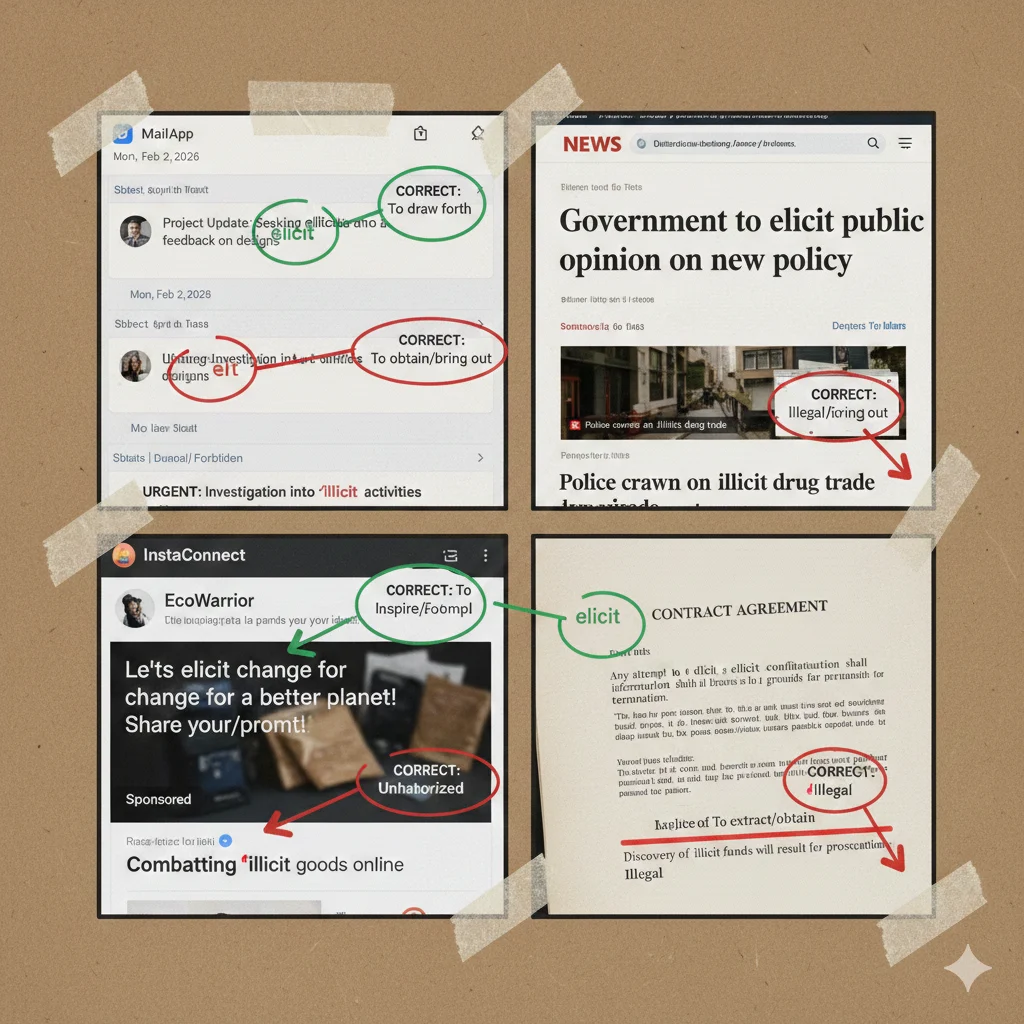
Emails:
- Please ask questions that elicit helpful feedback.
News:
- Authorities shut down an illicit drug operation.
Social Media:
- The post was designed to elicit emotional reactions.
Formal Writing:
- The study aimed to elicit honest responses from participants.
- The report highlighted the rise in illicit trade.
You’ll often see illicit and elicit in a sentence confused online—context is your best guide.
Elicit vs Illicit – Google Trends & Usage Data
Search data shows illicit is more commonly searched in regions discussing crime, drugs, and law enforcement. Elicit appears more in academic, educational, and psychological contexts.
Countries with high searches for illicit drugs often confuse it with elicit, especially non-native English users. This explains why Elicit vs illicit meaning remains a popular query worldwide.
Of vs Off 🤯 The Tiny Detail Everyone Gets Wrong
Comparison Table: Elicit vs Illicit
| Feature | Elicit | Illicit |
|---|---|---|
| Meaning | To draw out | Illegal or forbidden |
| Part of Speech | Verb | Adjective |
| Common Context | Education, psychology | Law, crime |
| Pronunciation | ih-LISS-it | ih-LISS-it |
| Example | Elicit a response | Illicit activity |
FAQs
1. What does it mean to elicit something?
It means to draw out information, emotions, or reactions.
2. Is it elicit or illicit drug use?
Correct usage is illicit drug use because it is illegal.
3. What is the difference between licit and illicit drugs?
Licit drugs are legal; illicit drugs are illegal.
4. What is the difference between illicit and elicit and solicit?
Elicit = draw out, Solicit = ask directly, Illicit = illegal.
5. Are elicit and illicit a pair of confusing words?
Yes, they are commonly confused homophones with different meanings.
6. What is an elicit synonym?
Common synonyms include draw out, evoke, and bring forth.
7. How do you pronounce elicit vs illicit?
Both sound similar: ih-LISS-it, which adds to confusion.
Conclusion
Understanding elicit vs illicit is essential for clear, professional communication. These words may look and sound alike, but their meanings are completely different. Elicit is about drawing out information, emotions, or responses, while illicit refers to actions that are illegal or forbidden.
Confusing them can change the meaning of a sentence dramatically—especially in legal, academic, or professional writing. Whether you are writing an email, news article, exam answer, or SEO content, choosing the correct word improves clarity and credibility.
Always remember this simple rule: If it’s about getting something, use elicit. If it’s about breaking the law, use illicit. With this guide, real-life examples, and clear comparisons, you now have the confidence to use both words correctly every time.

Kael Donovan is a language enthusiast and writer at Definevs.com, simplifying complex words and grammar rules into fun, easy-to-understand guides for readers.