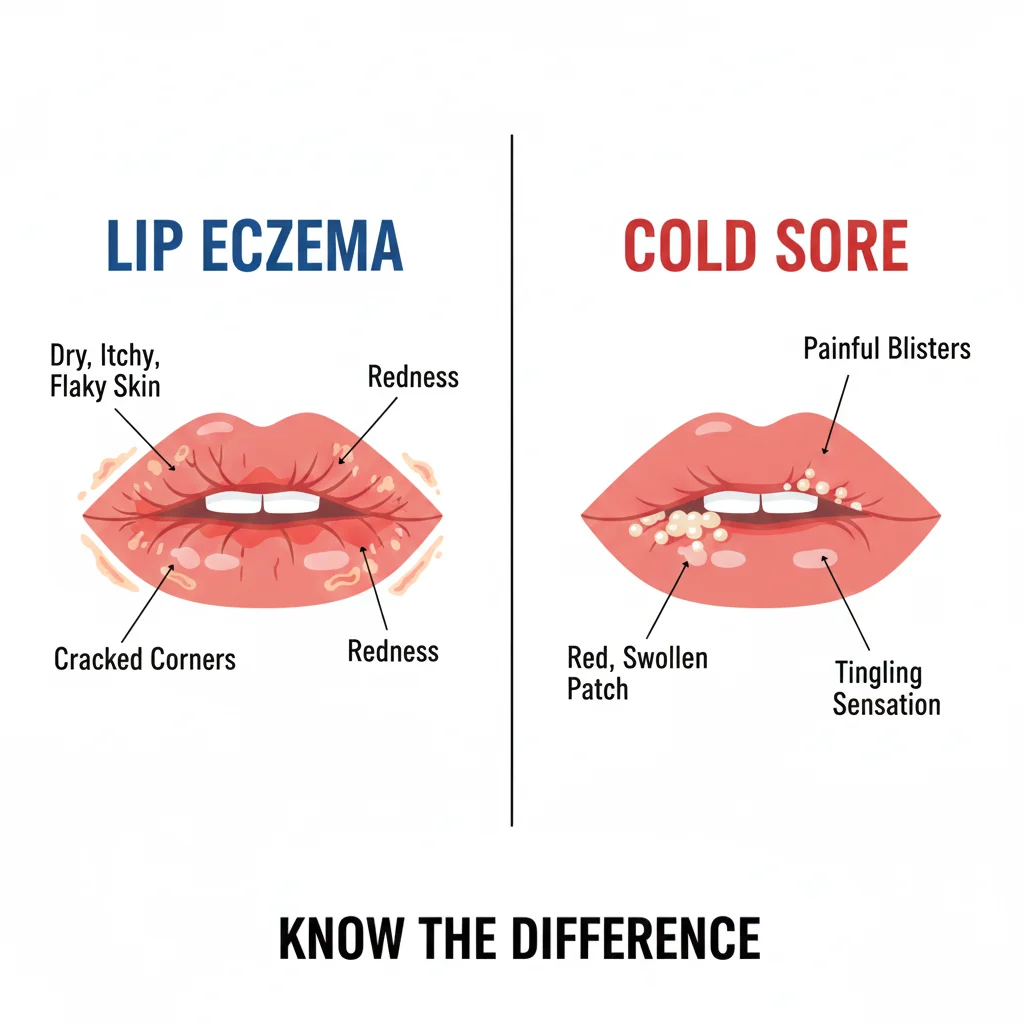
Eczema on lips is dry, itchy, inflamed skin caused by irritation or allergies. Cold sore is a contagious blister caused by the herpes simplex virus.
Do you ever notice a patch on your lips and wonder, “Is this eczema or a cold sore?” You’re not alone. Many people confuse these two conditions because they both affect the lips and can look uncomfortable. But knowing the difference is important because the treatment for eczema is very different from that of a cold sore.
In this guide, you’ll learn what eczema on lips is, what a cold sore is, and how to tell them apart. We’ll show simple examples, real-life situations, and even some quick memory tricks so that next time you notice a lip issue, you’ll know exactly what it is. By the end of this article, even beginners will feel confident distinguishing eczema on lips from cold sores.
What Does Each Word Mean?
Eczema on Lips
Definition:
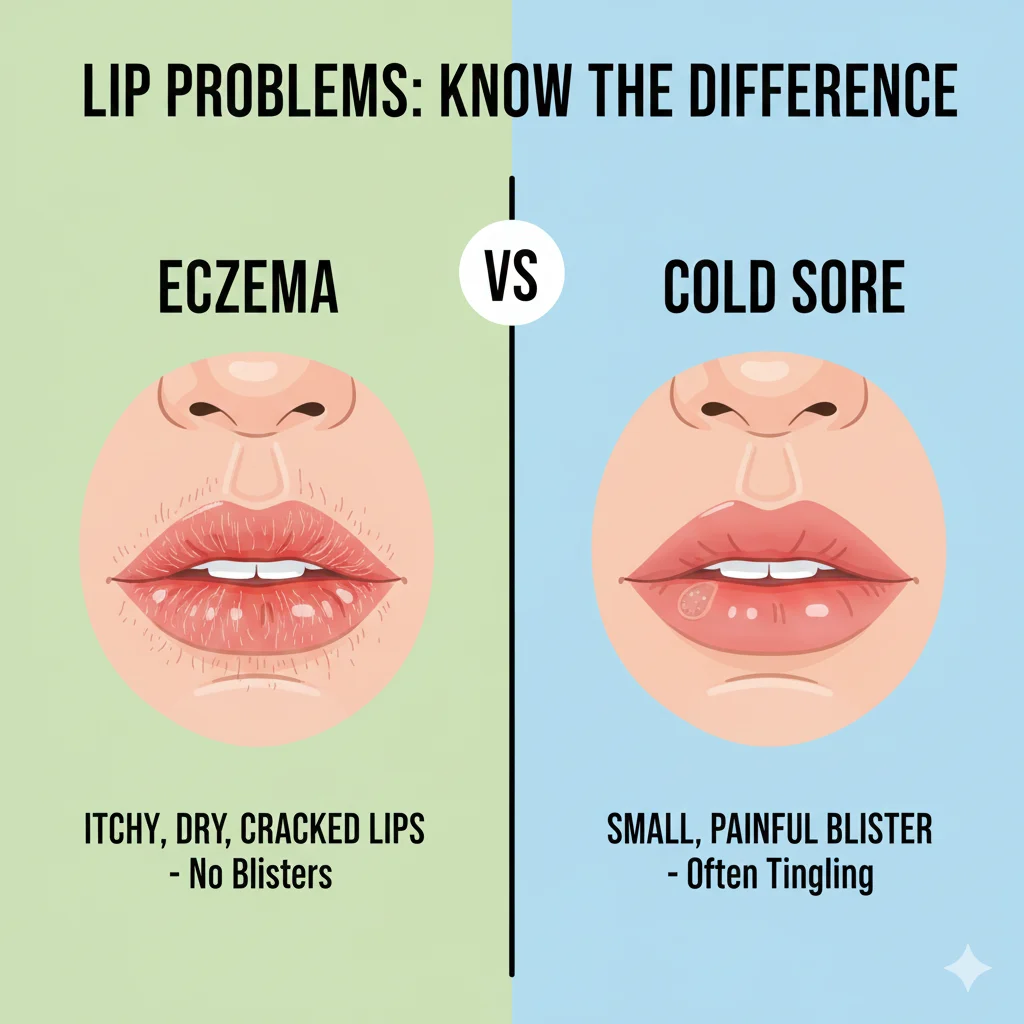
Eczema on lips, also called lip dermatitis, is a skin condition that causes dry, itchy, red, or flaky patches on the lips.
Part of Speech: Noun (a medical condition)
Examples:
- My lips are cracking because I have eczema on my lips.
- She applied a gentle cream to soothe her lip eczema.
- Allergies can trigger eczema on the lips in some people.
Mini Story: Imagine your lips feeling itchy and flaky every morning. That’s usually eczema, caused by irritation or dryness.
Cold Sore
Definition:
A cold sore is a small, fluid-filled blister that usually appears on or around the lips. It’s caused by the herpes simplex virus and is contagious.
Part of Speech: Noun (a medical condition)
Examples:
- He had a painful cold sore after being stressed at work.
- Cold sores can be triggered by sun exposure or fatigue.
- Never share lip balm with someone who has a cold sore.
Mini Story: Imagine a tiny blister forming near your lip corner that tingles and sometimes hurts. That’s a cold sore caused by a virus, not just dryness.
The Key Difference Between Eczema on Lips and Cold Sore
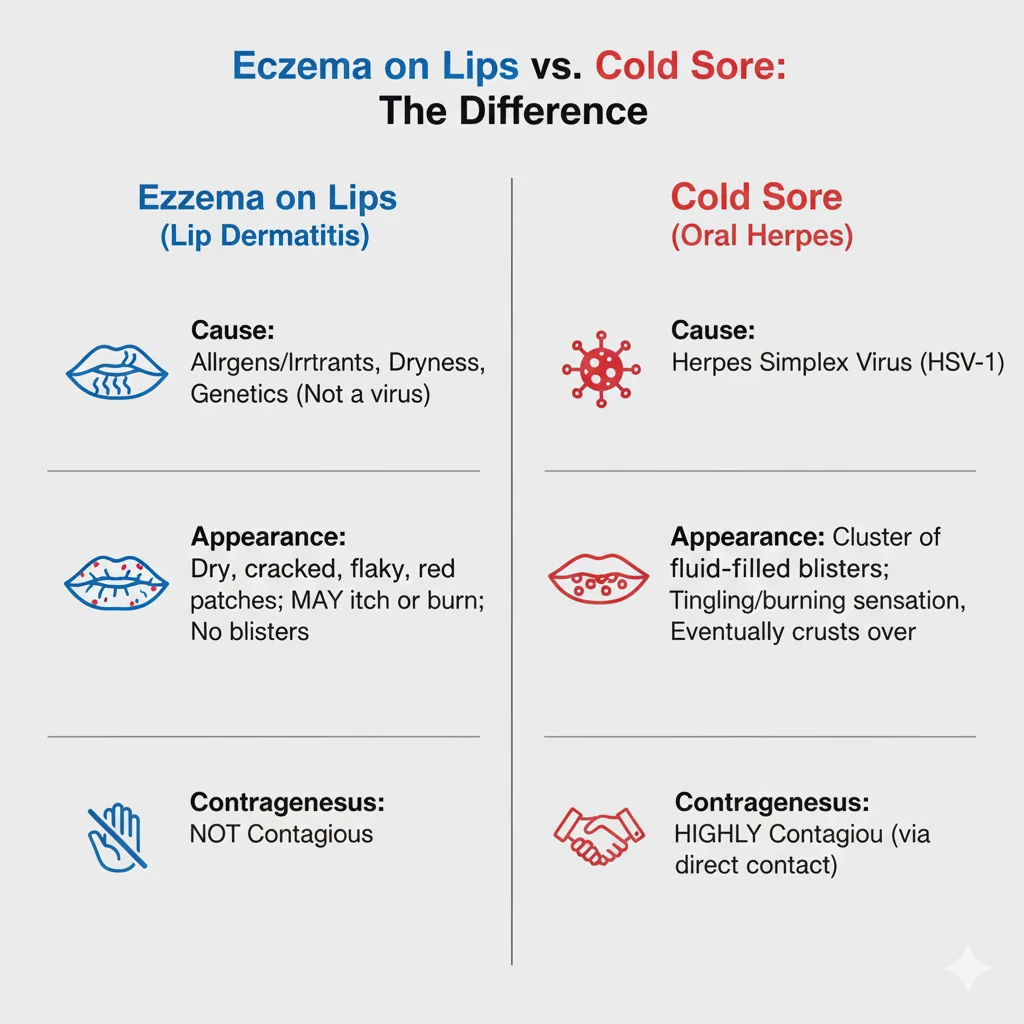
| Feature | Eczema on Lips | Cold Sore |
|---|---|---|
| Cause | Irritation, allergies, dryness | Herpes simplex virus |
| Appearance | Red, dry, flaky, sometimes cracked | Small, fluid-filled blister, often painful |
| Contagious | No | Yes |
| Symptoms | Itchy, sometimes swollen | Tingling, burning, pain, sometimes mild fever |
| Treatment | Moisturizers, gentle creams, avoiding triggers | Antiviral creams or pills |
Quick Tip: If it itches more than it blisters, it’s probably eczema. If it tingles and forms a blister, it’s likely a cold sore.
Common Mistakes and How to Avoid Them
Mistake 1: Treating eczema like a cold sore with antiviral cream.
- Incorrect: I have eczema, so I used a cold sore cream.
- Correct: I have eczema, so I applied a gentle moisturizer.
Mistake 2: Assuming all lip blisters are cold sores.
- Incorrect: That dry patch is a cold sore.
- Correct: That dry patch is eczema; cold sores usually blister.
Why These Happen: People often look only at location (lips) and not symptoms like itching vs tingling.
When to Use “Eczema on Lips”
Use “eczema on lips” in these situations:
- Talking about dry, cracked lips caused by irritation.
- Discussing allergic reactions affecting lips.
- Describing long-term or recurring lip dryness.
- Giving advice on moisturizing and soothing treatments.
Examples:
- My child gets eczema on lips during winter.
- Avoid spicy food to prevent lip eczema flare-ups.
- The doctor prescribed ointment for eczema on my lips.
- Gentle lip balms help control eczema on lips.
Memory Hack: Think “E” for Eczema = Extra dryness.
When to Use “Cold Sore”
Use “cold sore” when referring to a viral blister that can spread:
- Blisters appear suddenly on or around lips.
- Caused by herpes simplex virus.
- Sometimes painful or tingling.
- Can be triggered by stress, sun, or fatigue.
Examples:
- She covered her cold sore before a meeting.
- I get a cold sore every time I’m very tired.
- Never kiss someone when they have a cold sore.
- Antiviral cream can shorten the healing time of a cold sore.
Memory Hack: Think “C” for Cold Sore = Contagious blister.
Quick Recap: Eczema on Lips vs Cold Sore
- Eczema on Lips: Dry, itchy, red; caused by irritation or allergies; not contagious.
- Cold Sore: Blister, tingling, sometimes painful; caused by virus; contagious.
- Quick Tip: Dry and itchy → eczema. Blister and tingling → cold sore.
Advanced Tips
- Origins: Eczema comes from Greek “ekzein” (to boil out). Cold sores are caused by the herpes simplex virus, first described centuries ago.
- Formal Writing: Doctors and health articles use precise terms like “lip dermatitis” vs “herpes labialis.”
- Texting Mistakes: Saying “I have a cold sore” when you have eczema can confuse friends or family about contagion.
Mini Quiz
Fill in the blanks:
- My lips are dry and red; I think I have ______.
- A small, painful blister on your lip is usually a ______.
- ______ is contagious, but ______ is not.
- Applying moisturizer helps ______, not a ______.
- Stress can trigger a ______, while allergies may cause ______.
Answers:
- eczema on lips
- cold sore
- Cold sore; eczema on lips
- eczema on lips; cold sore
- cold sore; eczema on lips
Conclusion
Now you know the clear difference between eczema on lips and a cold sore. Eczema is dry, itchy, and caused by irritation or allergies, while cold sores are contagious blisters caused by a virus. Recognizing symptoms like itching versus tingling, or dryness versus blistering, makes it easy to choose the right treatment. Remember to moisturize for eczema and use antiviral treatments for cold sores.
Practicing these distinctions in daily life will help you speak and write confidently about lip conditions. Even a small awareness can prevent mistakes, unnecessary worry, or spreading infection. Keep observing symptoms, remember the memory hacks, and soon distinguishing between eczema and cold sores will be second nature. Your lips—and your knowledge—will thank you!

Kael Donovan is a language enthusiast and writer at Definevs.com, simplifying complex words and grammar rules into fun, easy-to-understand guides for readers.