Most ants bite, some ants sting, and a few species can do both. Biting ants use their jaws to pinch the skin, while stinging ants inject venom using a stinger at the back of their body. Fire ants are the most common ants that sting.Do ants bite or sting? This is one of the most common questions children and adults ask—especially after feeling that sharp little pinch on the skin. Many people get confused because some ants only bite, some only sting, and some can do both. If you’ve ever had a painful fire ant encounter, you know how surprising it can be.
In this simple, friendly, and complete guide, you’ll learn what ants do, which ants bite or sting, how these actions work, why ants attack, and how you can easily tell the difference. Everything is explained in plain English so even a class 4 student can understand it clearly. You’ll also see examples, mini-stories, visuals, a quiz, and a quick recap to help you remember the differences easily.
What Does “Bite” Mean? What Does “Sting” Mean?
To understand whether ants bite or sting, we first need to know what each action actually means.
What Is a Bite?
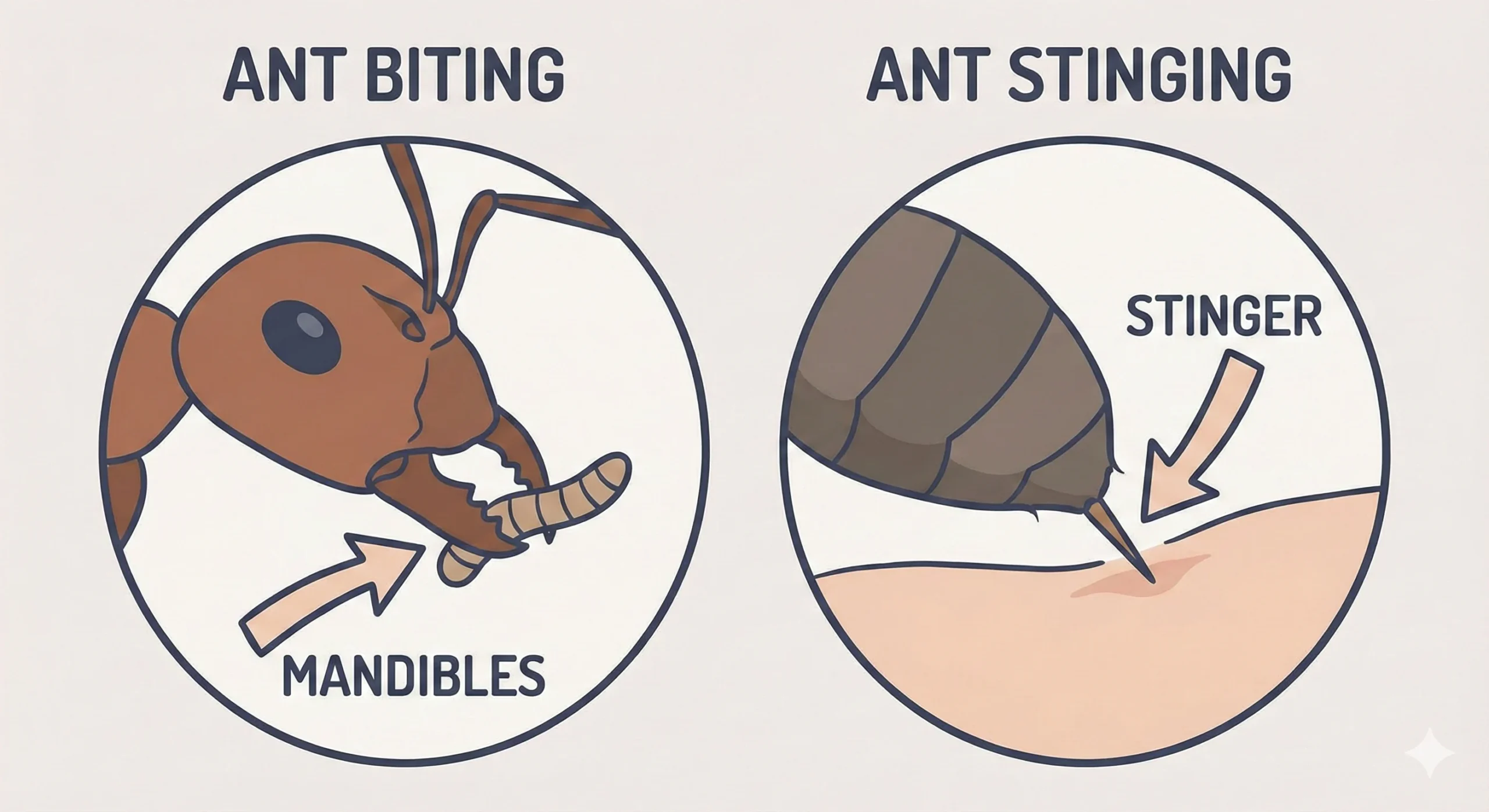
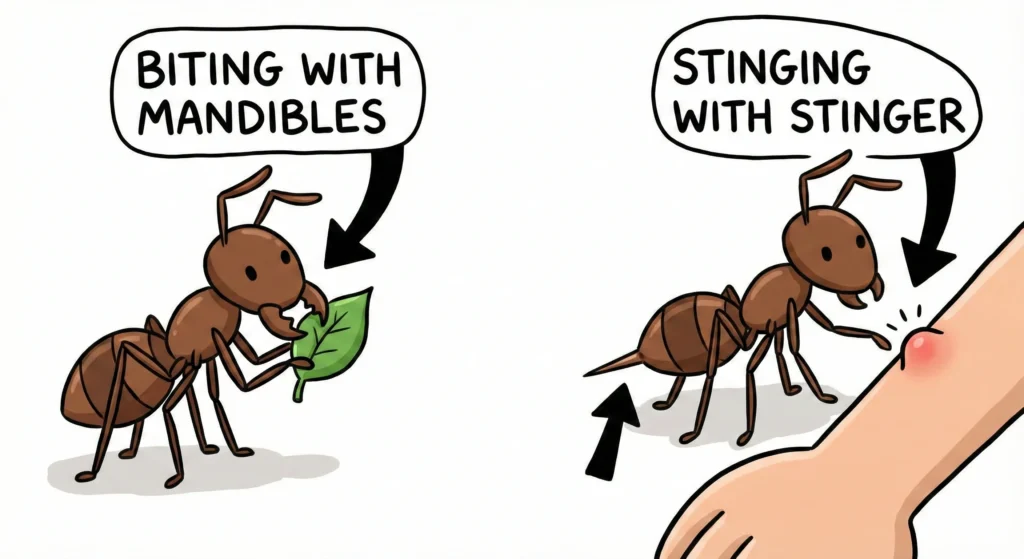
A bite happens when an ant uses its mandibles (jaws) to grip or pinch your skin.
Simple definition:
A bite is when an ant pinches you with its jaws.
Easy examples of biting (in everyday life):
- A child bites into an apple.
- A mosquito bites your arm.
- An ant bites your finger when you touch its nest.
Mini-story example:
Imagine you pick up a cookie from the ground, and a tiny black ant is still on it. It suddenly pinches your finger. That pinch is an ant bite.
What Is a Sting?
A sting happens when an ant uses a stinger at the back of its body to inject venom into your skin.
Simple definition:
A sting is when an ant injects venom using a stinger.
Easy examples of stinging:
- A bee stings someone who steps on it.
- A fire ant stings when it feels threatened.
- A wasp stings to protect its nest.
Mini-story example:
If you accidentally step on a fire ant pile, you may feel burning pain. That burning sensation is from a fire ant sting.
The Key Difference Between Biting and Stinging
Even though both hurt, they are not the same.
Comparison Table: Bite vs Sting
| Action | Body Part Used | Pain Level | Species That Do It | Does It Use Venom? | Example |
|---|---|---|---|---|---|
| Bite | Mandibles (jaws) | Mild to moderate | Black ants, carpenter ants | No (usually) | Small pinch |
| Sting | Stinger at back | Sharp, burning | Fire ants, red ants | Yes | Burning sensation |
Quick Tip to Remember
- Bite = Jaws (front).
- Sting = Stinger (back).
Front = bite. Back = sting.
Common Mistakes People Make
Many people misunderstand ant attacks because they feel both actions at the same time.
Mistake 1: “All ants sting.”
❌ Incorrect — most ants only bite and cannot sting.
Mistake 2: “Fire ants bite only.”
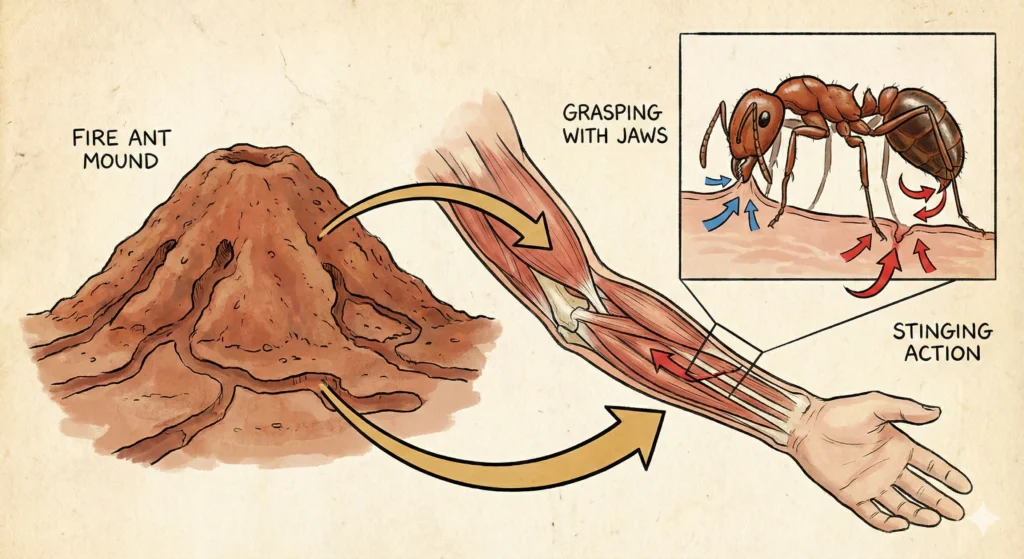
❌ Wrong — fire ants bite and then sting, making it very painful.
Mistake 3: “A bite and a sting feel the same.”
❌ Not true —
- Bites feel like pinching.
- Stings feel hot or burning.
When Do Ants Bite?
Ants bite mostly when they feel threatened or touched. Most common household ants only bite, not sting.
You may get bitten when:
- You put your hand near their food.
- You disturb their trail.
- You touch their nest.
- Ants crawl on your skin and feel trapped.
- You squash or press them accidentally.
Examples of sentences (real life):
- “The black ant bit me when I picked up the rock.”
- “Ants bite when they think their nest is in danger.”
- “A carpenter ant bit my finger while I was gardening.”
- “Ant bites usually feel like small pinches.”
Easy Memory Trick:
Bite = Pinch = Front of ant.
Just imagine the ant saying, “I pinch with my front!”
When Do Ants Sting?
Only certain ants—like fire ants, red ants, and harvester ants—can sting. Not all ants have stingers.
Ants sting when:
- You step on their mound.
- You disturb thousands of ants at once.
- They crawl inside your shoe or socks.
- They feel the whole colony is at risk.
- You press them against your skin.
Examples of sentences:
- “A fire ant stung me when I walked in the grass.”
- “Ants sting to protect their home.”
- “The sting felt hot and burning.”
- “Only some ants have venom stingers.”
- “I got stung because I kicked a fire ant nest.”
Easy Memory Trick:
Sting = Fire = Burning = Venom.
If it burns, it’s a sting, not a bite.
Quick Recap: Do Ants Bite or Sting?
Here are the main points in simple bullet form:
- Most ants bite.
- Some ants sting.
- Fire ants can bite and sting.
- Bites = jaws, pinch.
- Stings = stinger, venom, burning feeling.
- Small black household ants usually only bite, not sting.
Advanced Tips
Even though this topic is simple, here are some deeper facts for curious readers:
1. Ant venom varies by species
Fire ant venom causes a burning feeling and can leave white bumps.
2. Evolution shaped ant behaviors
Ants developed biting for grabbing food and stinging for defense.
3. Misunderstanding bites vs stings causes fear
People often panic because they assume all ants are dangerous, but most are harmless.
4. Stinging ants are more common in warm climates
Fire ants love hot weather and moist soil.
5. In science, bites and stings have different functions
- Bites = hold, cut, or defend.
- Stings = inject venom.
Mini Quiz + Answers
Fill in the blanks:
- Ants use their ______ to bite.
- Fire ants can bite and ______.
- A sting usually feels ______.
- A bite feels like a small ______.
- Not all ants can ______.
Correct Answers:
- Mandibles
- Sting
- Burning
- Pinch
- Sting
FAQs
1. Do all ants bite?
Most ants bite, but not all bites are painful.
2. Do ants inject venom when they bite?
Usually no. Venom comes from stings, not bites.
3. Why do fire ants hurt more?
Because their stings inject venom that burns.
4. Do black ants sting?
No, most black ants only bite.
5. How can I avoid ant bites and stings?
Avoid stepping on mounds, shaking clothes before wearing them, and keeping food covered.
Conclusion
Now you clearly know whether ants bite or sting — and the simple difference between the two. You learned what a bite is, what a sting is, why they happen, and how each feels. You also saw examples, tips, visuals, a comparison table, and a quick recap to help you remember everything easily. Whether you’re a student, a parent, or just curious, this guide makes it simple to understand how ants defend themselves. With this knowledge, you can avoid painful encounters and feel more confident outdoors.

Mira Loxley is a passionate language and writing expert at Definevs.com, turning tricky words and grammar into clear, engaging guides for every reader.