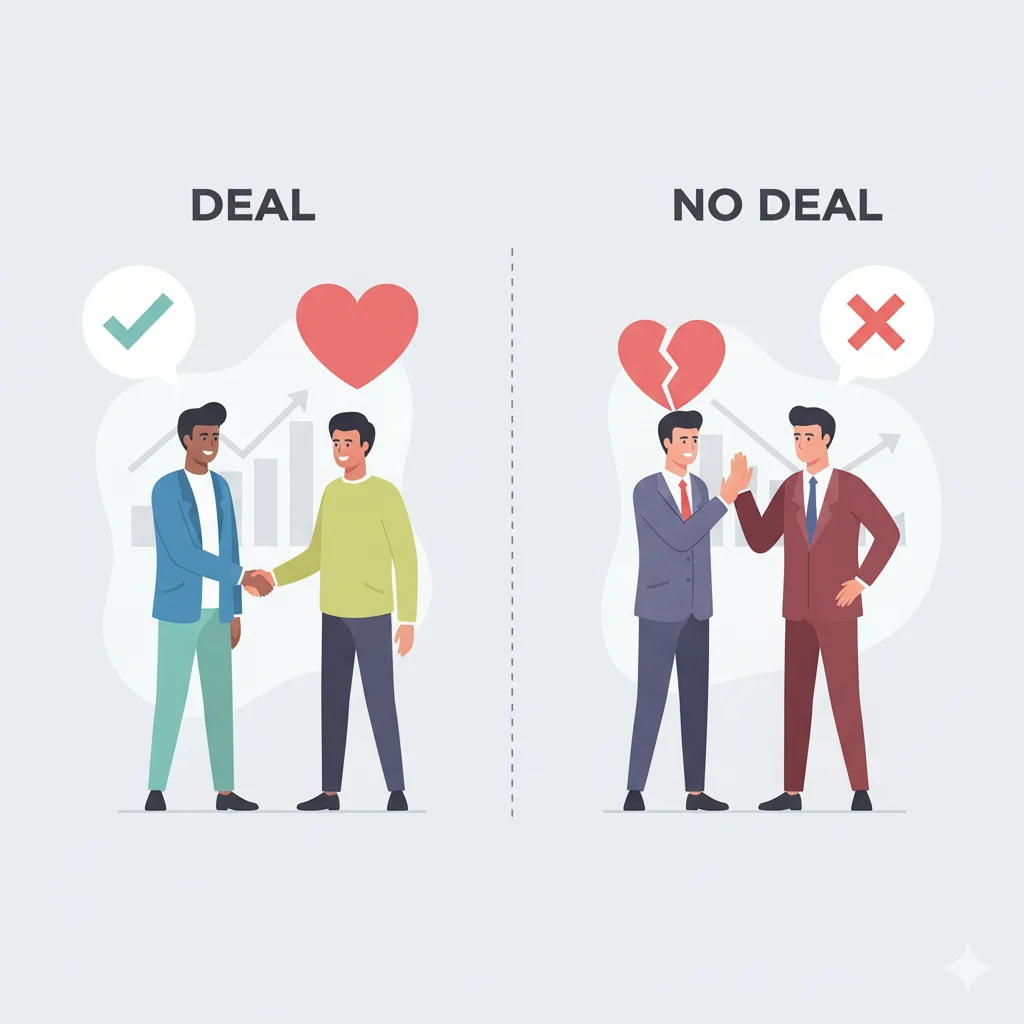
Have you ever heard the phrase “Deal or No Deal” and wondered what it really means? 🤔
You’re not alone! People often use it in different ways — sometimes as a question, sometimes as a challenge, and sometimes as a reference to the popular TV game show.
In this simple guide, we’ll break down:
- The meaning of “deal” and “no deal”
- The difference between them
- How to use each phrase in everyday English
- Examples, grammar tips, and a fun mini quiz to test your understanding
By the end, you’ll easily know when to say “Deal!” and when to say “No deal!” — just like a pro negotiator or game show contestant!
🧠 What Does Each Word Mean?
Let’s look at both words separately before putting them together.
1. Deal — Meaning and Usage
“Deal” is both a noun and a verb.
It usually means an agreement, offer, or arrangement between two or more people.
Simple Definitions:
- As a noun: An agreement or arrangement.
- As a verb: To give, distribute, or make an agreement.
Examples:
- We made a deal to share the project work.
- The shop offered a great deal on clothes.
- Let’s deal fairly with everyone in class.
In short: “Deal” = agreement or offer.
2. No Deal — Meaning and Usage
“No deal” is a short, strong way to say “I don’t agree” or “I refuse the offer.”
It’s commonly used in negotiations, business, and everyday talk to reject a proposal.
Examples:
- They wanted to trade my bike for old books — no deal!
- If you can’t lower the price, then no deal.
- She smiled and said, “No deal, sorry!”
In short: “No deal” = refusal or rejection of an offer.
🔍 The Key Difference Between “Deal” and “No Deal”
Here’s a simple breakdown of how these two phrases differ in meaning and usage:
| Aspect | Deal | No Deal |
|---|---|---|
| Meaning | Acceptance or agreement | Rejection or refusal |
| Emotion | Positive / cooperative | Negative / firm |
| Used in | Agreements, contracts, decisions | Negotiations, rejections |
| Example Sentence | “It’s a deal! Let’s start tomorrow.” | “Sorry, that’s too risky — no deal.” |
🟩 Quick Tip to Remember:
👉 When you accept, say “Deal!”
👉 When you refuse, say “No deal.”
❌ Common Mistakes and How to Avoid Them
Even native speakers mix up how to use these phrases correctly. Let’s fix that!
| ❌ Incorrect | ✅ Correct | Explanation |
|---|---|---|
| “That’s no deal, I agree.” | “That’s a deal, I agree.” | “Deal” means acceptance. |
| “Deal! I don’t want it.” | “No deal! I don’t want it.” | “No deal” means rejection. |
| “I said deal but walked away.” | “I said no deal and walked away.” | Avoid using “deal” when refusing something. |
💡 Tip: Remember — “Deal” = Yes, “No deal” = No.
📘 When to Use “Deal”
Use “deal” when:
- You accept an offer
- You agree with a suggestion
- You confirm a fair arrangement
Examples:
- “You help me with homework, and I’ll buy you ice cream.” → Deal!
- “We both win if we work together.” → Deal!
- “That’s a good price.” → Deal!
- “It’s a deal, teacher — I’ll do my best!”
- “We shook hands and said, ‘Deal.’”
🧠 Memory Trick:
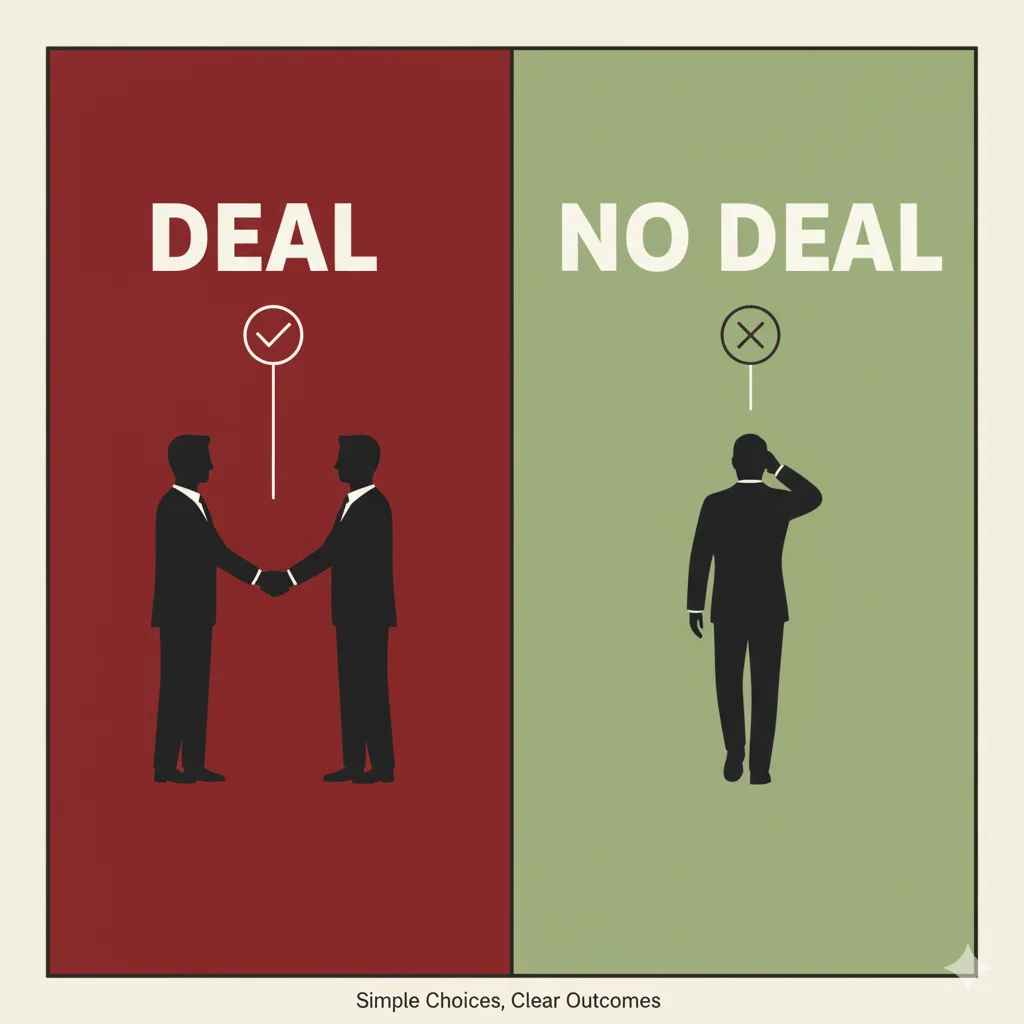
Think of a handshake 🤝 — when people shake hands, they’ve made a deal.
🚫 When to Use “No Deal”
Use “no deal” when:
- You refuse an unfair offer
- You disagree with conditions
- You don’t want to continue a negotiation
Examples:
- “That doesn’t sound fair — no deal.”
- “They tried to cheat us — no deal!”
- “I won’t take less than I deserve — no deal.”
- “If you can’t be honest, then no deal.”
- “He asked for my notes but didn’t help me — no deal.”
💡 Memory Hack:
If something feels wrong, say “no deal.” It’s like pressing the “reject” button. ❌
🧾 Quick Recap: Deal vs No Deal
Here’s an easy summary you can remember:
- Deal = Yes / Agreement / Accept
- No Deal = No / Rejection / Decline
- Use “Deal” when you agree to something.
- Use “No Deal” when you refuse an offer.
🟢 Think of it like a choice:
- You like it → Deal!
- You don’t like it → No Deal!
📚 Advanced Tips
Even though “Deal or No Deal” became famous from the TV game show, its real meaning comes from everyday English and negotiation language.
✴️ Origin and Usage
The phrase dates back to business talk where people made deals (agreements). When one side didn’t agree, they’d say, “No deal.” The TV show later turned it into a dramatic question: “Deal… or no deal?”
✍️ In Formal Writing
In essays or reports, use “agreement” or “arrangement” instead of “deal.”
Example:
- Informal: “We made a deal to work together.”
- Formal: “We reached an agreement to collaborate.”
📱 In Texting or Social Media
People use “Deal or no deal?” playfully when making offers or jokes:
- “I’ll buy pizza if you bring snacks — deal or no deal?” 🍕
- “You finish your homework and I’ll watch your show — deal or no deal?”
🧩 Mini Quiz: Test Your Understanding
Fill in the blanks with “deal” or “no deal.”
- You agree to help your friend with math homework. → “It’s a ______!”
- The price is too high, so you say, “Sorry, ______.”
- “I’ll clean your room if you cook dinner.” → “______!”
- “You didn’t keep your promise, so ______.”
- “It’s fair for both of us, so ______.”
Answers: 1) Deal, 2) No deal, 3) Deal, 4) No deal, 5) Deal.
❓ FAQs About “Deal or No Deal”
1. What does “Deal or No Deal” mean in English?
It means choosing whether to accept or reject an offer or agreement. It’s a question that asks for a decision — yes (deal) or no (no deal).
2. Is “Deal or No Deal” only from the TV show?
No. The show made it popular, but the phrase existed earlier in English to talk about real-life agreements and negotiations.
3. What’s the difference between “Deal” and “No Deal”?
“Deal” means you accept something; “No Deal” means you reject it.
4. Can I say “Deal!” in texting or online chat?
Yes! It’s common to say “Deal!” in messages to show you agree. Example: “You bring dessert, I’ll bring snacks — deal!”
5. Is “Deal or No Deal” formal English?
Not really. It’s casual and friendly, used in daily conversations, games, or social media.
🏁 Conclusion
So, what’s the final answer — Deal or No Deal?
Now you know! ✅
- “Deal” means yes, you accept.
- “No Deal” means no, you reject.
These phrases are easy, fun, and used everywhere — from school to business to games. Keep practicing with friends, and soon you’ll be using them confidently in every conversation.
Remember: Every word you master brings you one step closer to fluent, confident English. Keep learning — you’ve got this! 🌟

Mira Loxley is a passionate language and writing expert at Definevs.com, turning tricky words and grammar into clear, engaging guides for every reader.