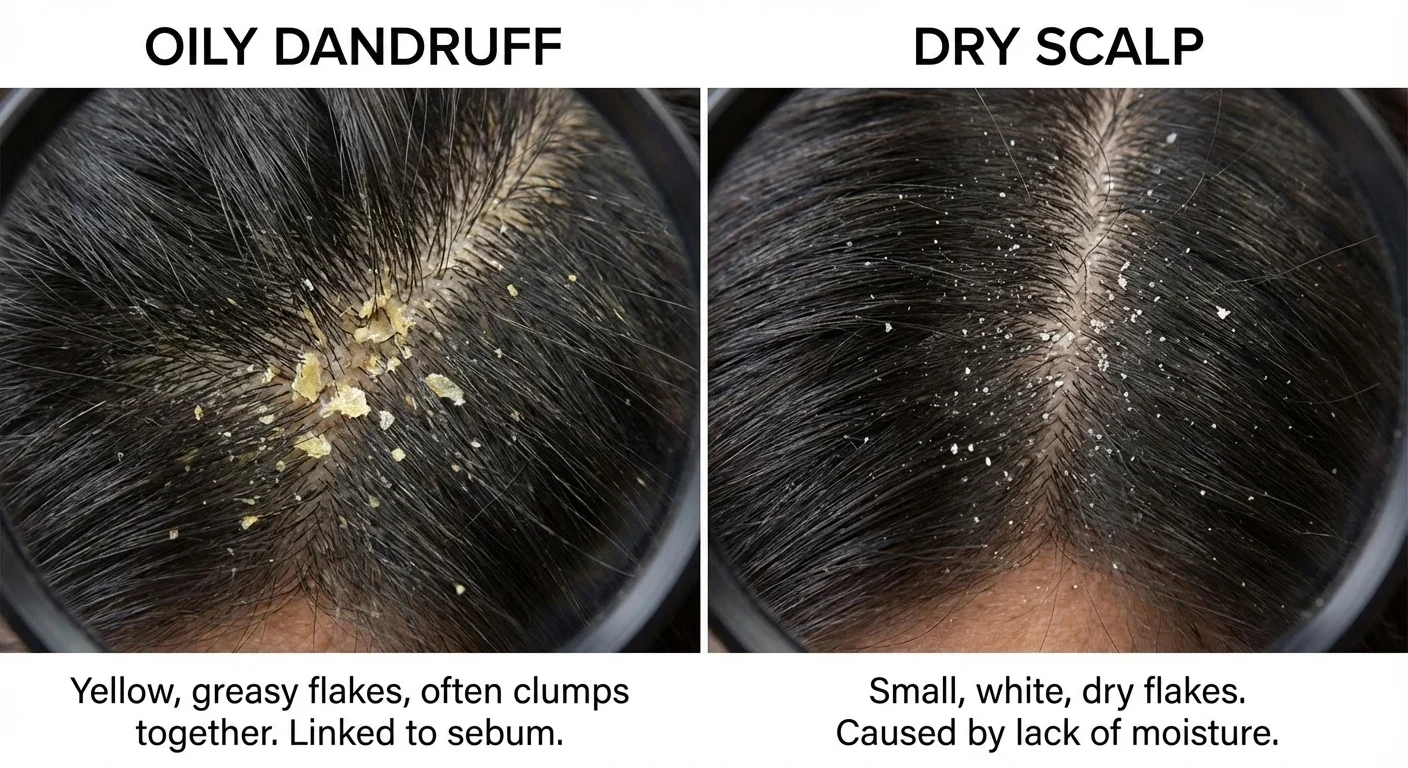
Dandruff and dry scalp are not the same.
- Dandruff is caused by excess oil and yeast. It creates yellow or white flakes and often feels itchy.
- Dry scalp is caused by lack of moisture. It creates small, dry flakes and feels tight or rough.
👉 Quick tip: Oily scalp = dandruff. Dry, tight scalp = dry scalp.
Many people see white flakes on their shoulders and immediately say, “I have dandruff.” But that’s not always true. Often, the real problem is dry scalp, not dandruff. Because both look similar, people mix them up and use the wrong treatment.
In this easy guide, you’ll learn the difference between dandruff and dry scalp, what each word means, when to use each term correctly, and how to avoid common mistakes. Everything is explained in simple English, with real-life examples, so even beginners can understand. By the end, you’ll know exactly whether it’s dandruff or dry scalp—and why that difference matters.
What Do the Words “Dandruff” and “Dry Scalp” Mean?
What Does Dandruff Mean?
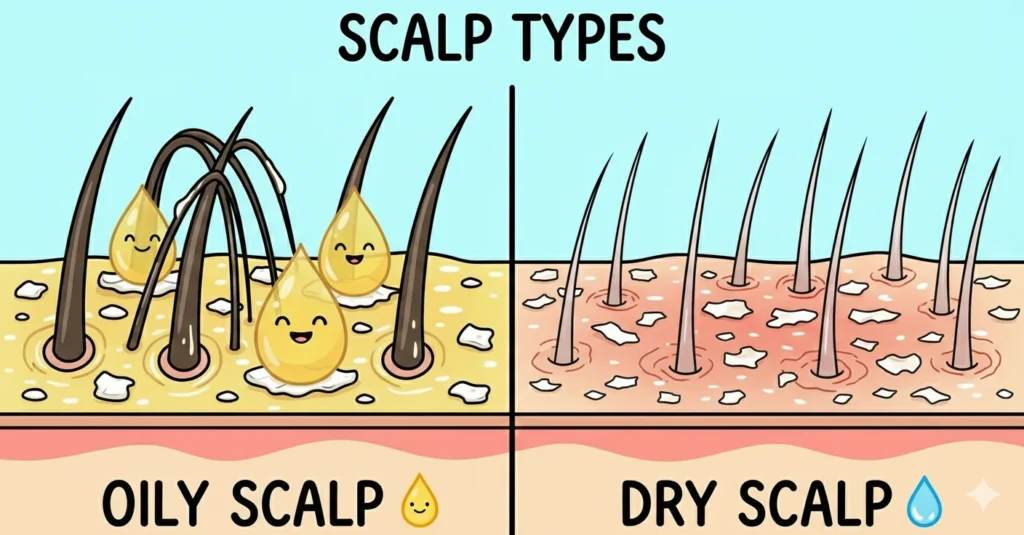
Dandruff is a noun.
It means a scalp condition where dead skin flakes fall off because of extra oil and yeast on the scalp.
Simple examples:
- He uses a medicated shampoo to control dandruff.
- Her black shirt shows white dandruff flakes.
- Stress can make dandruff worse.
Easy story:
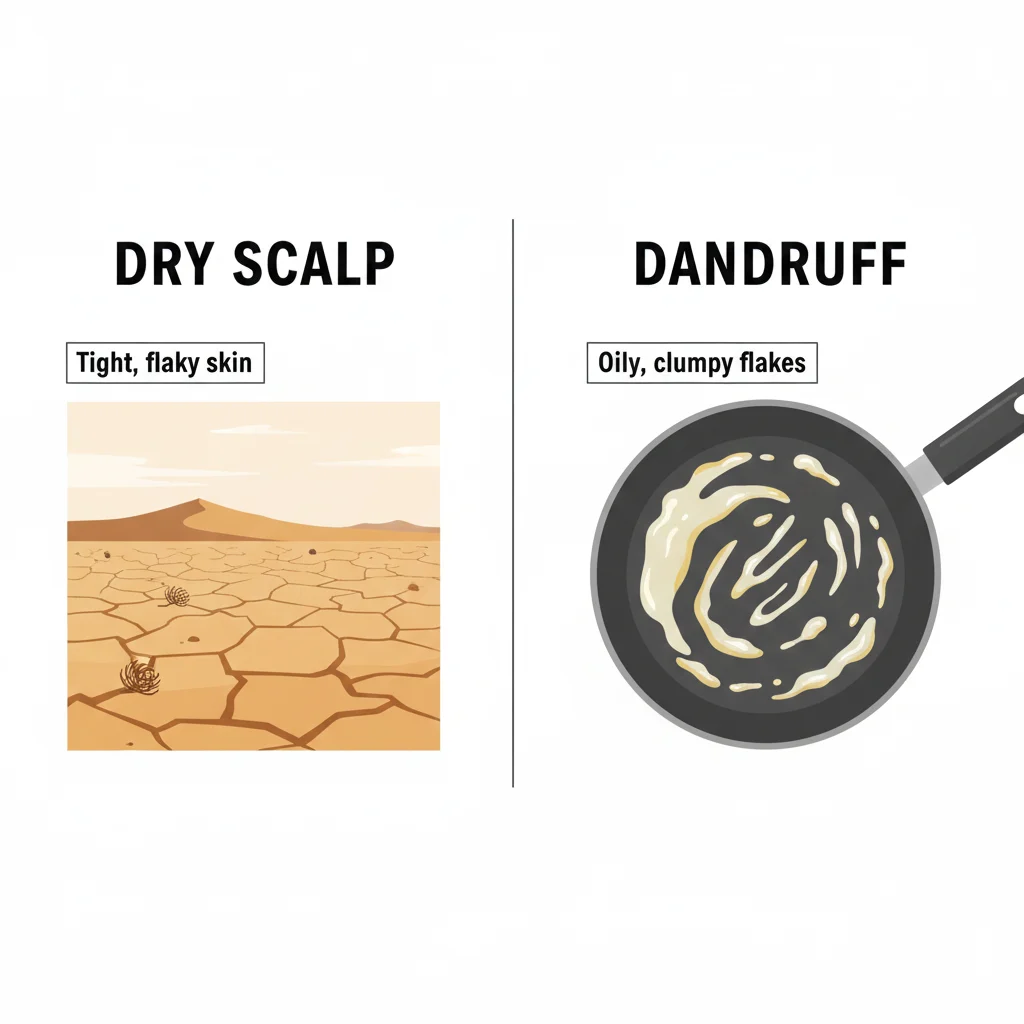
Think of dandruff like too much oil on a pan. The oil causes mess and buildup. That buildup turns into flakes.
What Does Dry Scalp Mean?
Dry scalp is also a noun phrase.
It means the scalp does not have enough moisture, so the skin becomes dry, tight, and flaky.
Simple examples:
- Winter weather gave me a dry scalp.
- My scalp feels tight because of dry scalp.
- Moisturizing oils help fix dry scalp.
Easy story:
Dry scalp is like dry soil with cracks. There’s no oil or moisture, so the skin flakes off.
The Key Difference Between Dandruff and Dry Scalp
| Feature | Dandruff | Dry Scalp |
|---|---|---|
| Main cause | Too much oil + yeast | Lack of moisture |
| Flake type | Yellow or white, oily | Small, white, dry |
| Scalp feel | Oily and itchy | Tight, dry, rough |
| Common season | Any time | Mostly winter |
| Needs | Anti-dandruff shampoo | Moisture and oils |
Quick Tip to Remember:
- Oil problem = dandruff
- Dry problem = dry scalp
Common Mistakes and How to Avoid Them
Mistake 1: Calling All Flakes “Dandruff”
❌ I have dandruff because my scalp feels dry.
✅ I have a dry scalp because my skin feels tight.
Why it happens:
People think flakes always mean dandruff. But flakes can come from dryness too.
Mistake 2: Using Anti-Dandruff Shampoo for Dry Scalp
❌ I use strong shampoo, but my flakes got worse.
✅ I use gentle, moisturizing shampoo for dry scalp.
Why it happens:
Anti-dandruff shampoos reduce oil. Dry scalp needs moisture, not oil removal.
Mistake 3: Ignoring the Scalp Feeling
❌ I didn’t notice my scalp felt oily.
✅ I checked if my scalp felt oily or tight first.
Fix:
Always feel your scalp before choosing treatment.
When to Use the Word “Dandruff”
Use dandruff when the scalp problem is caused by oil and yeast.
You should say dandruff when:
- Flakes are oily or yellow
- Scalp feels greasy
- Itching is strong
- Hair gets oily fast
Example sentences:
- My dandruff gets worse in hot weather.
- This shampoo helps remove dandruff.
- Stress increased my dandruff problem.
- He asked a doctor about severe dandruff.
- Dandruff flakes stick to my hair.
Memory Hack:
Dandruff = “D” for “Dirty oil buildup.”
When to Use the Words “Dry Scalp”
Use dry scalp when the scalp lacks moisture.
You should say dry scalp when:
- Flakes are small and powdery
- Scalp feels tight
- Skin feels itchy but not oily
- Weather is cold or dry
Example sentences:
- Winter air causes dry scalp.
- Oil massage helps my dry scalp.
- My dry scalp improved after changing shampoo.
- Drinking water helps prevent dry scalp.
- My child has dry scalp, not dandruff.
Memory Hack:
Dry scalp = “Dry like desert.”
Quick Recap: Dandruff vs Dry Scalp
- Dandruff: Oil problem, yeast, greasy flakes
- Dry Scalp: Moisture problem, tight skin, dry flakes
- Wrong treatment = worse flakes
- Correct word helps correct care
Advanced Tips (Simple but Helpful)
- The word dandruff comes from old English and French words meaning dirty skin flakes.
- In formal writing or exams, always describe symptoms before using the word.
- In texting, saying “dandruff” when you mean “dry scalp” can confuse advice and treatments.
bg3 glut or spaw ⚔️ The Secret Decision Most Players Get Wrong
Mini Quiz: Test Yourself
Fill in the blanks with dandruff or dry scalp.
- Oily yellow flakes usually mean _________.
- Tight, itchy skin in winter is called _________.
- Anti-dandruff shampoo treats _________.
- Moisturizing oils help _________.
- Yeast on the scalp causes _________.
- Cold weather often leads to _________.
Quiz Answers:
- dandruff
- dry scalp
- dandruff
- dry scalp
- dandruff
- dry scalp
FAQs
1. Is dandruff the same as dry scalp?
No. Dandruff is caused by oil and yeast. Dry scalp is caused by lack of moisture.
2. Can dry scalp turn into dandruff?
Yes. If dryness leads to oil imbalance, dandruff can develop.
3. Does dandruff mean poor hygiene?
No. Dandruff is a medical scalp condition, not dirt.
4. Can children get dandruff?
Yes, but dry scalp is more common in children.
5. Which flakes are bigger?
Dandruff flakes are usually bigger and oily.
Conclusion
Now you clearly know the difference between dandruff and dry scalp. Dandruff comes from too much oil and yeast, while dry scalp comes from lack of moisture. They look similar, but they are not the same—and using the wrong word can lead to the wrong treatment.
Always check how your scalp feels before deciding. With the right understanding, you can choose better care and explain your problem correctly. Keep learning small differences like this—because clear knowledge leads to better health every day.

Arwen Blythe is a passionate language and culture enthusiast, crafting clear, engaging guides on words, phrases, and modern English for Definevs.com readers.