Have you ever wondered why people get confused between dairy and diary? You’re not alone. Every day, writers, students, and professionals search for “Dairy vs Diary meaning” because these two words sound similar but carry completely different meanings.
One refers to milk and milk products, while the other is a personal record of thoughts or daily events. Mixing them up can lead to awkward sentences, embarrassing typos, or even miscommunication in emails and formal writing.
Understanding the difference is more than just a spelling exercise—it helps you write clearly, appear professional, and avoid common grammar mistakes. For instance, saying “I bought a new diary at the dairy” instantly confuses readers.
In this guide, we’ll break down Dairy vs Diary examples, pronunciation, history, spelling rules, and everyday usage so you never make that mistake again. By the end, you’ll know how to remember diary and dairy, when to use each, and even the subtle differences between British and American English spellings.
Dairy vs Diary means
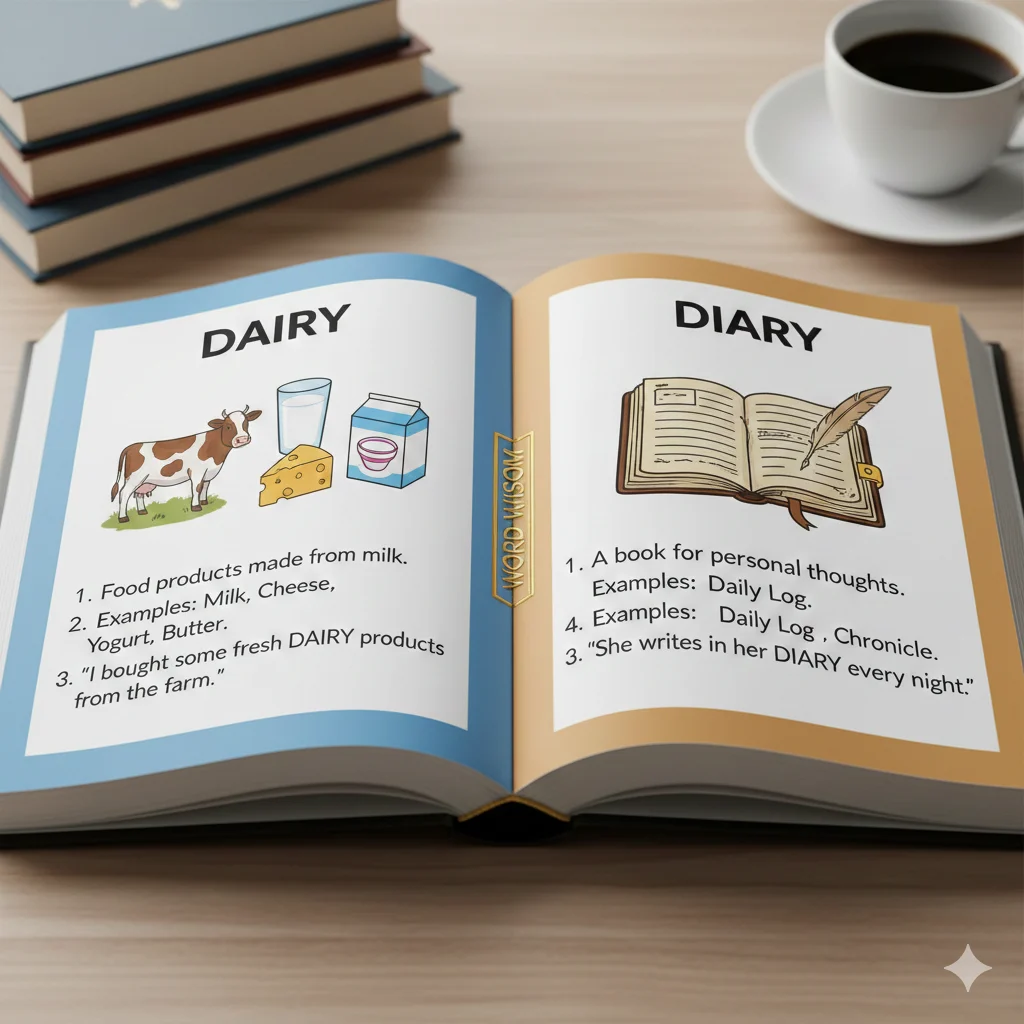
Dairy refers to milk or products made from milk, such as butter, cheese, or yogurt.
Diary is a personal journal or a record of daily events, thoughts, or plans.
Examples:
- Dairy: “I bought fresh milk from the dairy.”
- Diary: “She writes her feelings in her diary every night.”
Quick tip: Think “dairy = drinks & food” and “diary = daily thoughts”.
Dairy vs diary pronunciation:
- Dairy → /ˈdɛəri/ (sounds like “dair-ee”)
- Diary → /ˈdaɪəri/ (sounds like “die-ree”)
The Origin of Dairy vs Diary
Understanding their origins helps explain why English has such confusing spelling.
- Dairy: Comes from the Old English word dæġe meaning “daily” or “daily milk production.” Historically, a dairy was a place where milk was kept or processed. The term evolved to include all milk-based products.
- Diary: Comes from Latin diarium, meaning “daily allowance” or “daily record.” Originally, it referred to a daily journal for keeping track of events, money, or notes.
The similarity in pronunciation but difference in meaning is purely coincidental. English borrowed diary from Latin and dairy from Old English, creating a tricky pair for modern writers.
British English vs American English Spelling

The good news is that dairy and diary are spelled the same in both British and American English. There is no difference in this case.
However, pronunciation can vary slightly:
| Word | British English Pronunciation | American English Pronunciation | Example Sentence |
|---|---|---|---|
| Dairy | /ˈdeə.ri/ | /ˈder.i/ | “I visited the local dairy for cheese.” |
| Diary | /ˈdaɪ.ə.ri/ | /ˈdaɪ.ə.ri/ | “She keeps a personal diary.” |
Note: Spelling rules differ for related words:
- Diaries → plural of diary
- Dairies → plural of dairy
This makes it crucial to check context before writing.
Elicit vs Illicit: The Hidden Meaning That Changes Everything 🔍
Which Spelling Should You Use?
Here’s a quick guide:
- Use “dairy” when referring to milk, milk products, or a place producing them.
- Use “diary” when referring to a personal journal, planner, or daily record.
Audience-based advice:
- US & UK English: Both spellings are correct; context is key.
- Global English: Follow the same rules, but always check for plural forms to avoid mistakes like diaries vs dairies.
Tip: If you are writing for international readers, consider adding a brief explanation if the context is unclear. For example: “I keep a diary (personal journal, not a dairy).”
Common Mistakes with Dairy vs Diary
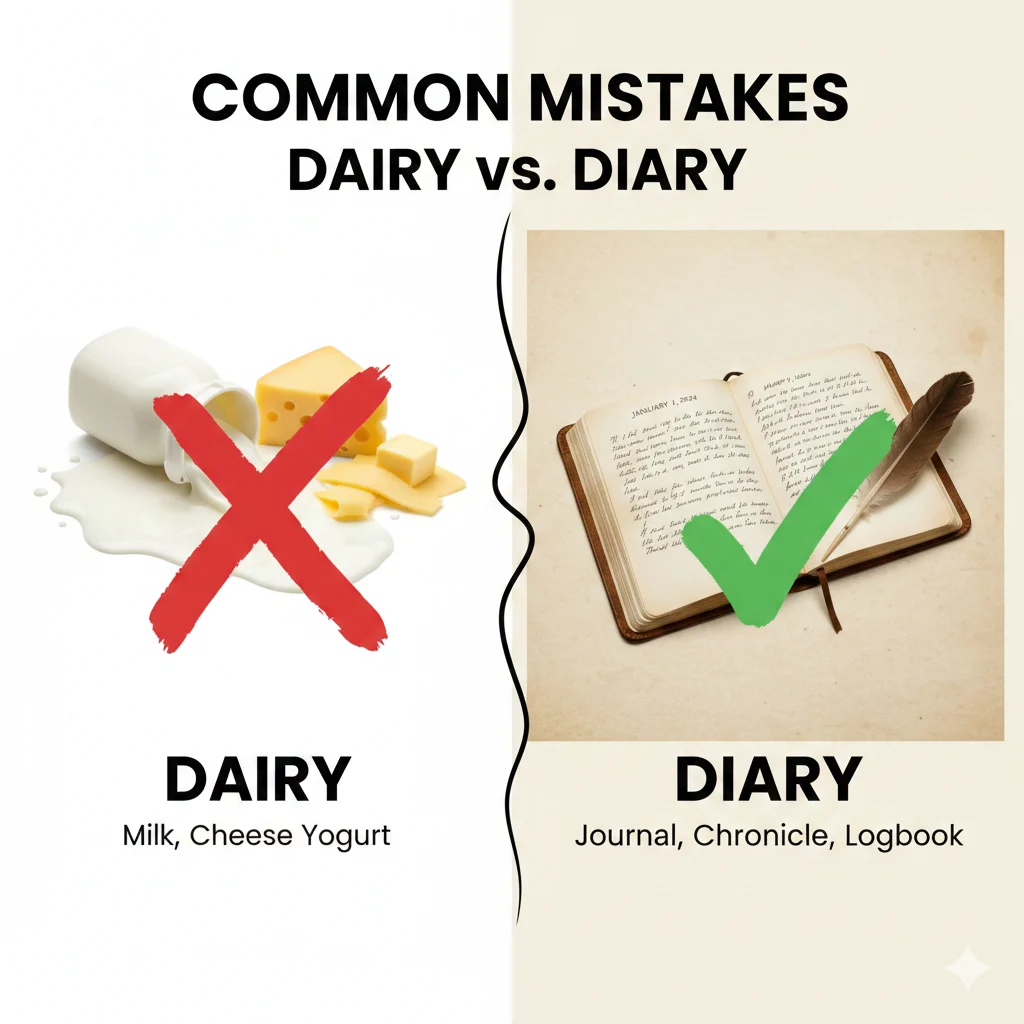
Even native speakers make mistakes. Here are common errors and corrections:
| Mistake | Correction | Explanation |
|---|---|---|
| “I bought a diary at the dairy.” | “I bought a diary at the bookstore.” | Dairy sells milk, not diaries. |
| “She drank her diary every morning.” | “She drank milk from the dairy every morning.” | Diary = journal, not beverage. |
| “My dairies are private.” | “My diaries are private.” | Plural of diary is diaries. |
| “The dairy is full of cheese entries.” | “The dairy is full of cheese products.” | Dairy refers to milk products, not records. |
How to remember diary and dairy:
- Diary = die + ary → your life “dies” on paper (memory trick).
- Dairy = milk → drink → daily nutrition.
Dairy vs Diary in Everyday Examples
Emails:
- Correct: “Please check your diary for available meeting times.”
- Wrong: “Please check your dairy for available meeting times.”
News Articles:
- Correct: “The dairy industry in 2026 has grown by 5%.”
- Wrong: “The diary industry in 2026 has grown by 5%.”
Social Media:
- Correct: “Just updated my diary with today’s adventures.”
- Wrong: “Just updated my dairy with today’s adventures.”
Formal Writing:
- Correct: “Milk products from the local dairy are certified organic.”
- Wrong: “Milk products from the local diary are certified organic.”
Dairy vs Diary – Google Trends & Usage Data
Google Trends shows that searches for “diary vs dairy” peak during back-to-school seasons, especially in August and September.
- Top countries searching:
- India
- United States
- United Kingdom
- Canada
- Popular related searches:
- Diary vs journal
- Dairy Milk
- Correct spelling of diary
- What do you mean by dairy?
This indicates users often confuse these words in academic and professional contexts. Understanding Dairy Diary 2026 trends can help writers produce content that targets both informational and commercial intent.
Dairy vs Diary Comparison Table
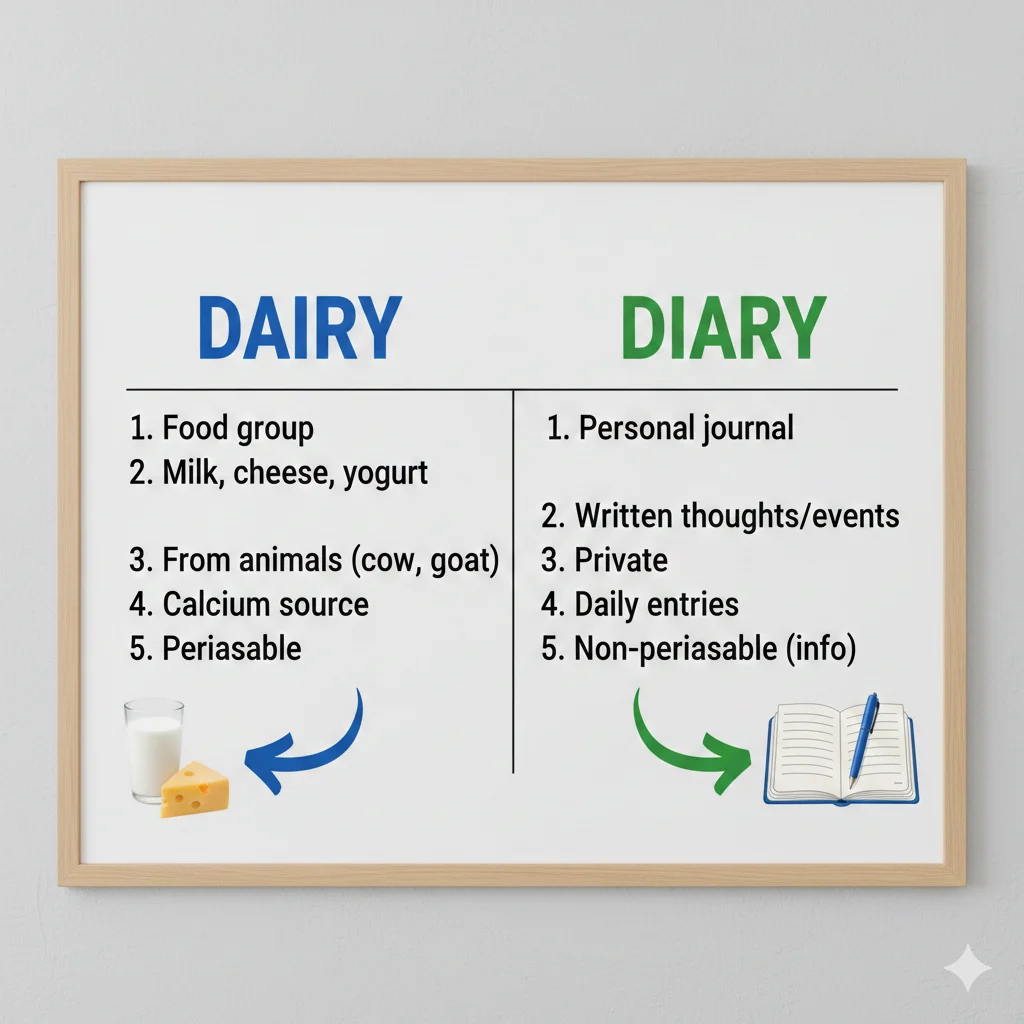
| Feature / Word | Dairy | Diary |
|---|---|---|
| Meaning | Milk products or milk farm | Personal journal or daily record |
| Pronunciation | /ˈdɛəri/ | /ˈdaɪəri/ |
| Origin | Old English dæġe | Latin diarium |
| Plural | Dairies | Diaries |
| Common Usage | Dairy Milk, cheese, butter | Diary entries, personal journal |
| Example Sentence | “I work at the dairy.” | “I write in my diary every night.” |
| Confused Often With | Diary | Dairy |
FAQs
1. What’s the difference between diary and diaries?
- Diary = one journal; diaries = multiple journals.
2. How do you spell daily dairy?
- Correct: dairy refers to milk products. “Daily dairy” = everyday milk intake.
3. What do you mean by dairy?
- Dairy = milk, butter, cheese, yogurt, or a place producing them.
4. Diary vs journal – are they the same?
- Similar, but a diary is usually personal and private, whereas a journal can be professional or academic.
5. How to remember diary and dairy?
- Diary → personal writings; dairy → drinks & milk products. Think “milk daily from the dairy.”
6. Correct spelling of diary?
- One “a” after the “i”: diary. Plural: diaries.
7. Can dairy refer to chocolate?
- Yes, brands like Dairy Milk use it to indicate milk chocolate content.
Conclusion
Confusion between dairy and diary is common but easily avoidable with a little practice. Remember: dairy is all about milk and milk products, while diary is your personal journal or daily record. Paying attention to pronunciation, context, and plural forms can prevent embarrassing mistakes in writing, emails, social media, or formal publications.
British and American English spell both words the same way, though pronunciation may vary slightly. For global audiences, clarity is more important than accent. Use the comparison tables, tips, and everyday examples we’ve provided to reinforce your understanding. Whether you are a student, professional, or content creator, mastering Dairy vs Diary meaning and usage will improve your writing credibility and avoid common pitfalls.
Next time you pick up a notebook or milk carton, you’ll immediately know whether it belongs to a diary or a dairy—and you’ll never confuse the two again.

Mira Loxley is a passionate language and writing expert at Definevs.com, turning tricky words and grammar into clear, engaging guides for every reader.