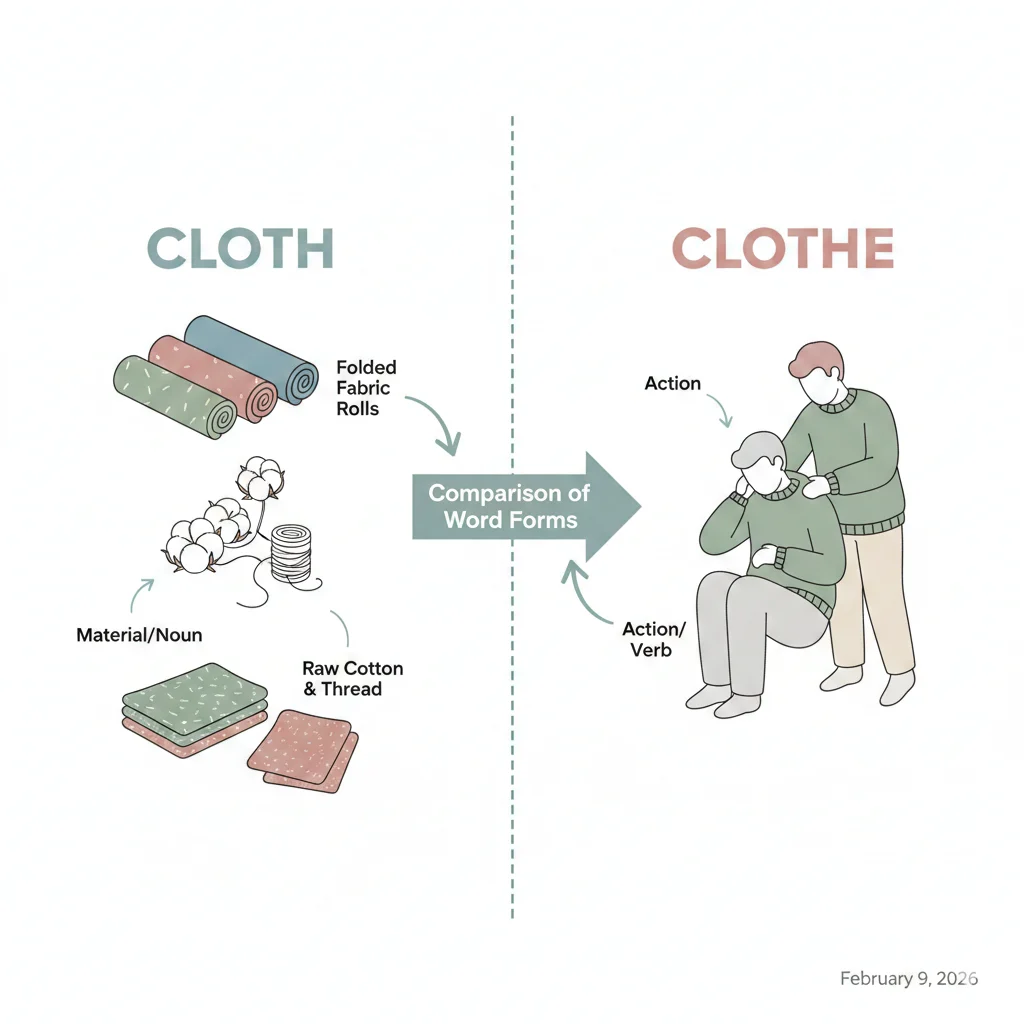
Cloth is a noun that means fabric or material.
Clothe is a verb that means to dress or cover someone with clothes.
Examples:
• This shirt is made from cotton cloth.
• The charity helps clothe people with low-income .
English learners and even native speakers often feel confused when they see the words cloth and clothe. They look similar, sound related, and both connect to clothing, yet they are not interchangeable. This confusion leads people to search questions like cloth vs clothe meaning, which one is correct cloth or clothe, and how do you use cloth and clothe in a sentence. The problem becomes bigger when words like cloths, clothes, pronunciation differences, and plural rules enter the picture.
In daily writing, emails, school exams, and online discussions, a small spelling mistake can completely change meaning. This article removes that confusion step by step. You will get a fast answer, simple explanations, real-world examples, and expert usage advice. By the end, you will clearly understand where we use cloth, why we use clothe, and how both differ from clothes in modern English.
The Origin of Cloth vs Clothe
The history of cloth and clothe explains why people confuse them today. Both words come from Old English. Cloth comes from clāþ, which meant fabric, textile, or covering material. In early English, cloth was valuable and often mentioned in trade, homes, and religious texts. Over centuries, its meaning stayed stable and concrete.
Clothe developed from the same root but evolved into a verb. It described the action of covering the body or providing garments. The added “e” at the end helped signal movement or action in older English grammar. This change did not create a spelling difference between British and American English, but it created a functional difference. One word names a thing, while the other describes an action. Understanding this origin helps learners avoid mistakes and remember usage more easily.
British English vs American English Spelling
There is no spelling difference between British English and American English for cloth and clothe. Both varieties use the same forms, meanings, and grammar rules. However, differences appear in related vocabulary and pronunciation.
In American English, people usually say washcloth, while British speakers often say flannel. Pronunciation of clothes also differs slightly between regions, which adds to learner confusion.
| Feature | American English | British English |
|---|---|---|
| Cloth spelling | Cloth | Cloth |
| Clothe spelling | Clothe | Clothe |
| Wash cloth term | Washcloth | Flannel |
| Clothes pronunciation | kloʊðz | kləʊðz |
Dairy vs Diary: Understanding the Difference and Correct Usage
Which Spelling Should You Use?
The correct choice depends on what you want to say. Use cloth when you are naming material, fabric, or cleaning items. Use clothe only when describing the act of dressing or covering someone.
For US audiences, clothe sounds formal and is mostly used in writing about charity, religion, or literature. Everyday speech prefers clothes instead. In British and Commonwealth English, clothe still appears in formal and written contexts. For global audiences, using cloth for objects and clothe only when necessary keeps your writing clear and professional.
Common Mistakes with Cloth vs Clothe
One common error is writing a soft clothe when referring to fabric. The correct form is cloth. Another frequent mistake is mixing cloths, clothes, and clothe.
• Cloth is fabric.
• Cloths are cleaning pieces of fabric.
• Clothes are garments people wear.
• Clothe means to dress someone.
People also ask, Is cloth the same as clothes? No. Cloth is material, while clothes are finished items made from cloth. Pronunciation causes problems too, especially for learners comparing cloth vs clothes pronunciation in British and American English.
Cloth vs Clothe in Everyday Examples
Emails:
Please clean the desk with a dry cloth.
The organization aims to clothe families in need.
News:
Factories export cotton cloth worldwide.
Aid groups clothe refugees during winter.
Social media:
Love this sofa cloth texture.
Programs that clothe children save lives.
Formal writing:
The ancient burial cloth was preserved carefully.
Royal servants clothed the king in ceremonial robes.
These examples also answer questions like How do you use cloth and clothe in a sentence? and Where do we use cloth?
Cloth vs Clothe – Google Trends & Usage Data

Search trends show cloth is used far more often than clothe. It appears in fashion, cleaning, manufacturing, and home topics. Clothe has lower search volume and is usually searched with learning intent, such as cloth vs clothe reddit or cloth vs clothe meaning.
Countries like India, Pakistan, and the UK show high interest in questions like plural of cloth in English, singular of clothes, and difference between cloth and clothes in Hindi. In the US, people often ask Is it spelled clothes or cloths? This data confirms that users want clarity, not advanced grammar theory.
Then vs Than – Common Mistakes and How to Avoid Them
Comparison Table: Cloth vs Clothe vs Clothes
| Feature | Cloth | Clothe | Clothes |
|---|---|---|---|
| Part of speech | Noun | Verb | Noun |
| Meaning | Fabric or material | To dress | Garments |
| Countable | Yes / No | No | Plural only |
| Example | Table cloth | Clothe the people with low-income | New clothes |
FAQs
When should I use cloths vs clothes?
Use cloths for cleaning fabric items and clothes for garments.
Is it wash cloths or clothes?
You wash cloths when cleaning surfaces and clothes when washing garments.
Which one is correct, cloth or clothe?
Both are correct, but they serve different grammatical purposes.
Why do we use cloth?
Cloth is used because it is flexible, reusable, and easy to clean.
What is a sentence for cloths?
She bought new cleaning cloths for the kitchen.
Are clothes made of cloth?
Yes, clothes are made from different types of cloth.
How do we call washing clothes?
It is commonly called doing the laundry.
Conclusion
Understanding cloth vs clothe becomes easy when you focus on function. Cloth is a thing you can touch, cut, wash, or measure. Clothe is an action you perform when dressing or covering someone. The confusion increases because English also uses cloths and clothes, each with different rules and pronunciation. Remember that clothes has no singular form, while cloth does. In daily writing, emails, exams, and professional content, choosing the right word improves clarity and credibility. Native speakers may rely on instinct, but learners benefit from clear rules and examples. By mastering this difference, you avoid common errors, write more confidently, and communicate more effectively. Whether you are answering a grammar question, writing online content, or learning English for work, using cloth and clothe correctly shows strong language control and attention to detail.

Isla Merrin is a language and writing expert at Definevs.com, creating simple, engaging guides to help readers master words, grammar, and modern English usage.