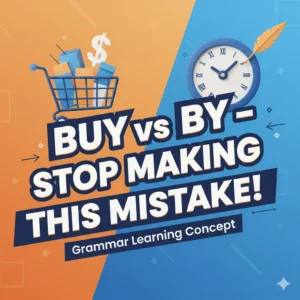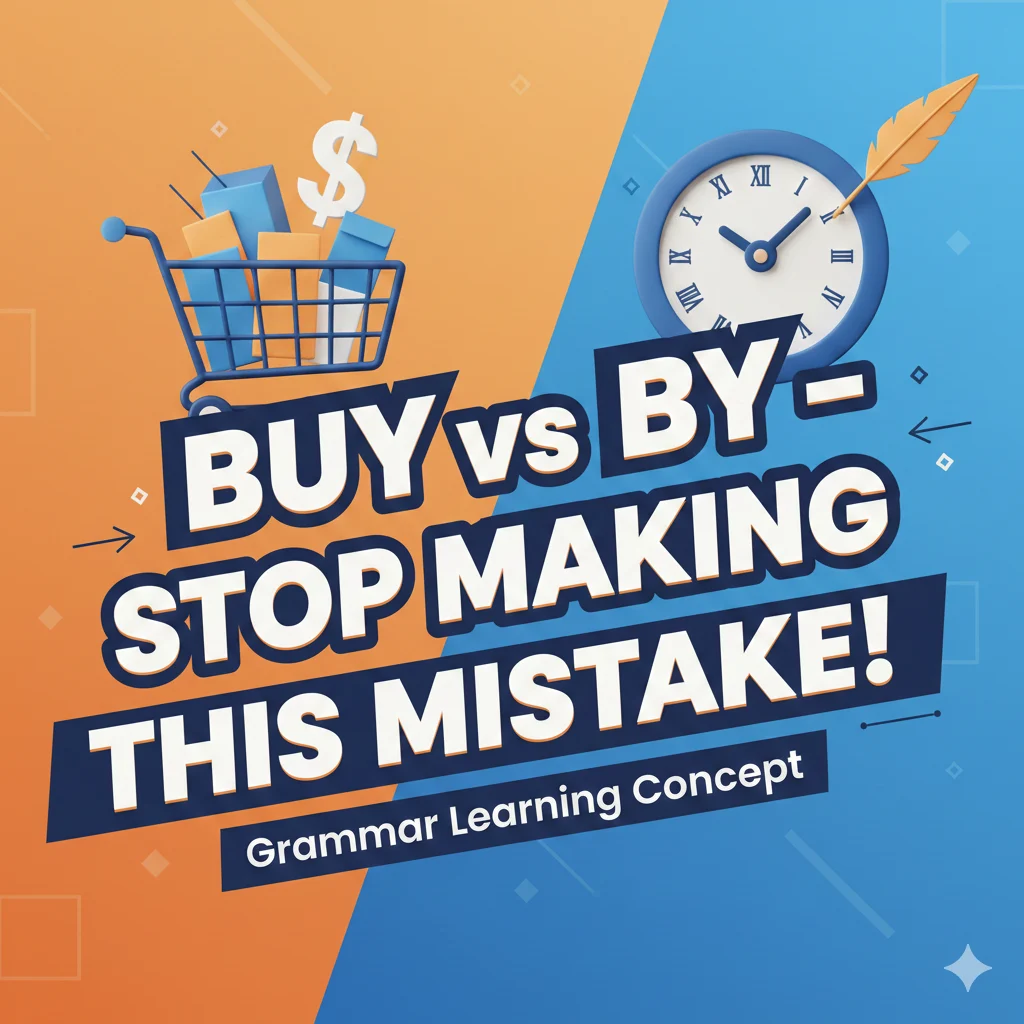
Buy vs By:
- Buy means to purchase something.
Example: I want to buy a new phone. - By shows place, time, method, or author.
Example: The book was written by Ali.
Buy is a verb (action).
By is a preposition (position or relation word).
Both sound the same, but their meanings are very different.
Many people search for Buy vs By meaning, Buy vs By grammar, and Buy vs By examples because these words sound the same. They are homophones. This means they have the same sound but different spelling and meaning.
Students, bloggers, and even professionals mix them up in emails, social media posts, and formal writing. A small mistake like “I will by a car” instead of “I will buy a car” can look unprofessional.
This article solves that confusion in a simple way. You will learn the difference between buy and by, see easy examples, understand grammar rules, and avoid common mistakes. We will also explain buy vs by vs bye, because many people ask, “Is it buy or bye?”
Let’s make it clear once and for all.
The Origin of Buy vs By
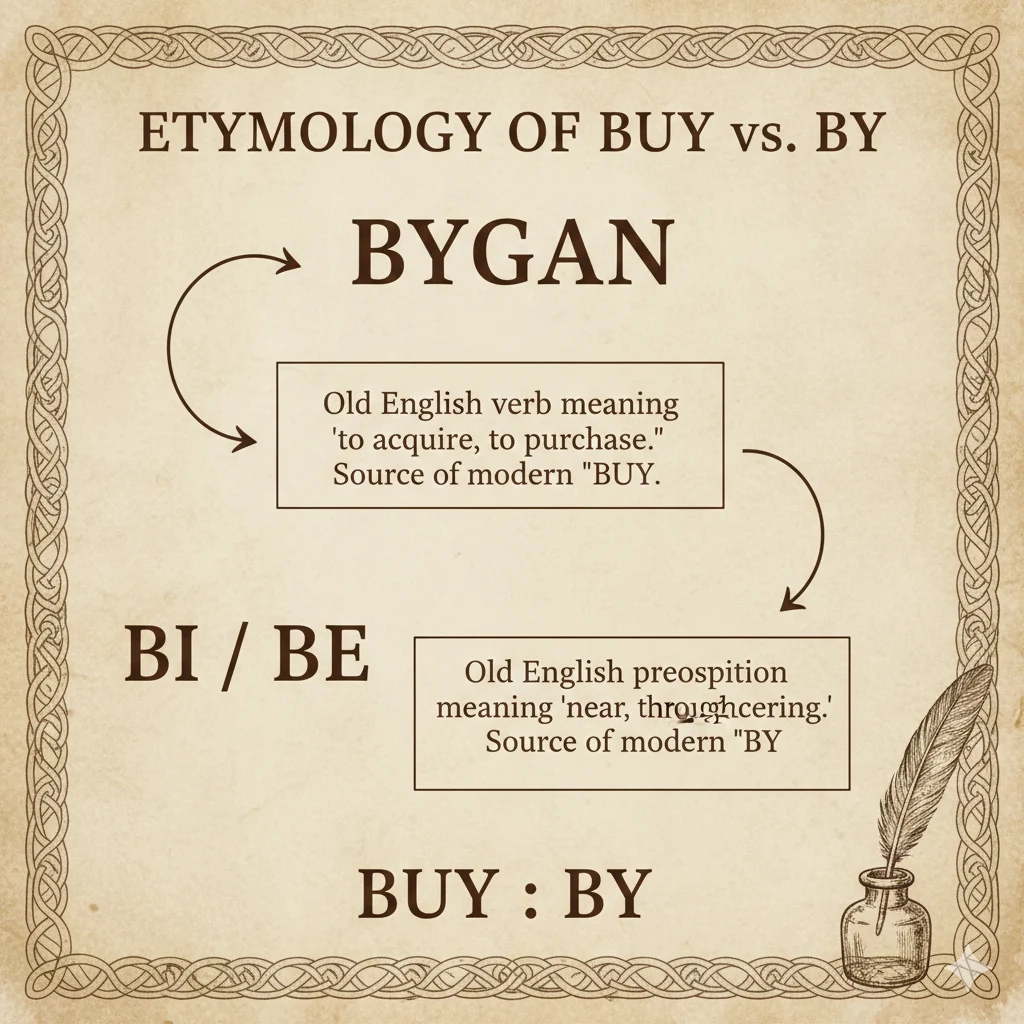
Understanding the origin helps you remember the difference.
Buy comes from Old English bycgan, which means “to purchase” or “to obtain by paying money.” Over time, the spelling changed, but the meaning stayed the same. It is always related to getting something in exchange for money or value.
By comes from Old English bi or be, which means “near,” “beside,” or “through.” That is why today we use by to show location, method, author, or deadline.
The spelling difference exists because the words developed from different roots. They only sound alike today. This is why they are called homophones: buy, by, bye.
British English vs American English Spelling
Good news: There is no spelling difference between British and American English for buy and by. Both countries use the same spelling and meaning.
However, usage style may differ slightly in context. For example, Americans may say “purchase,” while British writers may also use “buy” in formal writing.
Here is a comparison table:
| Word | British English | American English | Meaning | Example |
|---|---|---|---|---|
| Buy | Buy | Buy | To purchase | I will buy shoes. |
| By | By | By | Near, through, before, author | The letter was written by Sara. |
Unlike other words, there is no spelling variation. The confusion is purely grammatical.
Then vs Than – Common Mistakes and How to Avoid Them
Which Spelling Should You Use?
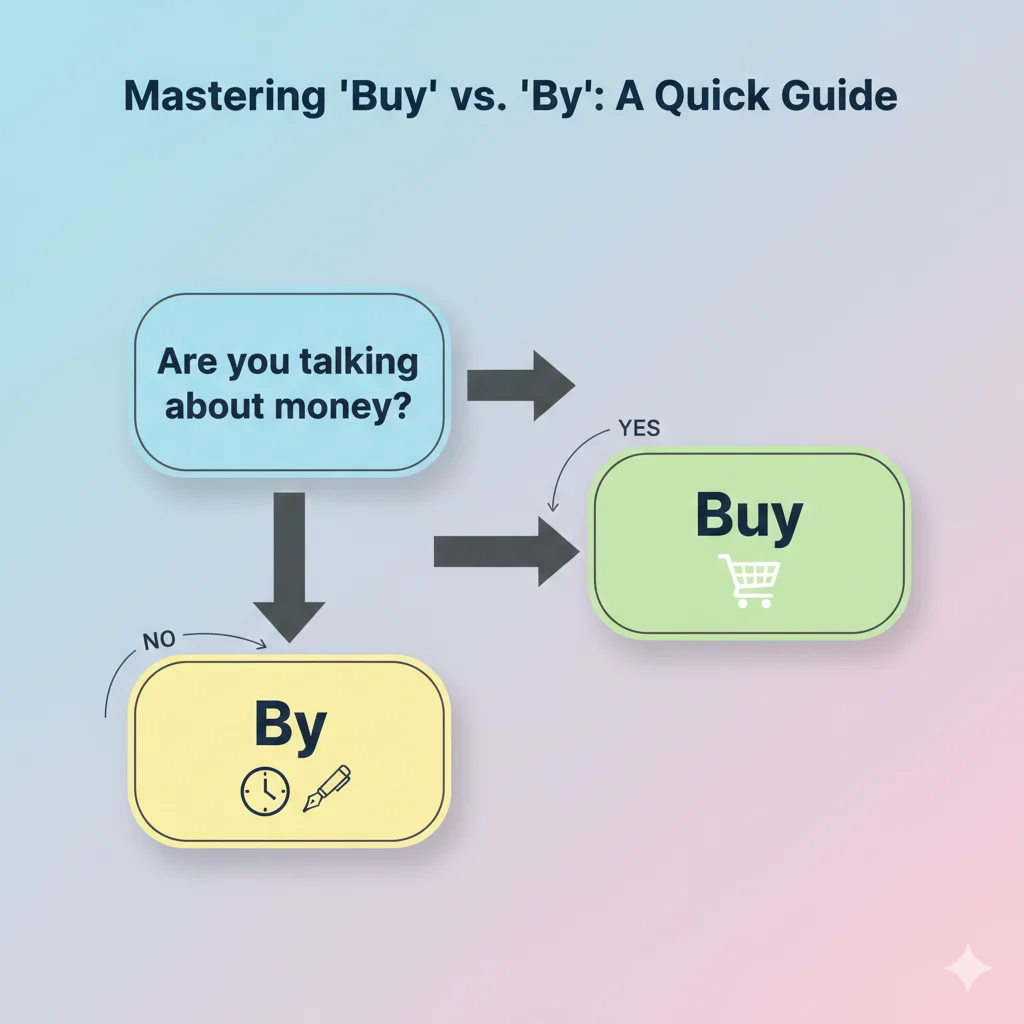
The answer depends on meaning, not country.
Use Buy when:
- Talking about money
- Talking about shopping
- Talking about getting something
Use By when:
- Showing who did something
- Showing how something happened
- Showing location
- Showing deadline
If you write for a global audience, keep it simple. Follow grammar rules. Google’s EEAT (Experience, Expertise, Authoritativeness, Trustworthiness) algorithm values clear and correct language. Correct word choice builds trust.
If you are unsure, ask yourself:
“Am I talking about purchasing?”
If yes → use buy.
If not → use by.
Common Mistakes with Buy vs By
Here are frequent errors people make:
❌ I want to by a laptop.
✅ I want to buy a laptop.
❌ This poem was written buy John.
✅ This poem was written by John.
❌ I will finish this buy tomorrow.
✅ I will finish this by tomorrow.
Many also confuse bye vs buy meaning.
- Bye means goodbye.
- Buy means purchase.
Example:
“I will buy the book. Bye!”
Another confusion is between buy and purchase. The difference between buy and purchase with example is simple:
- Buy is informal and common.
- Purchase is formal.
Example:
I will buy groceries.
The company will purchase equipment.
Buy vs By in Everyday Examples
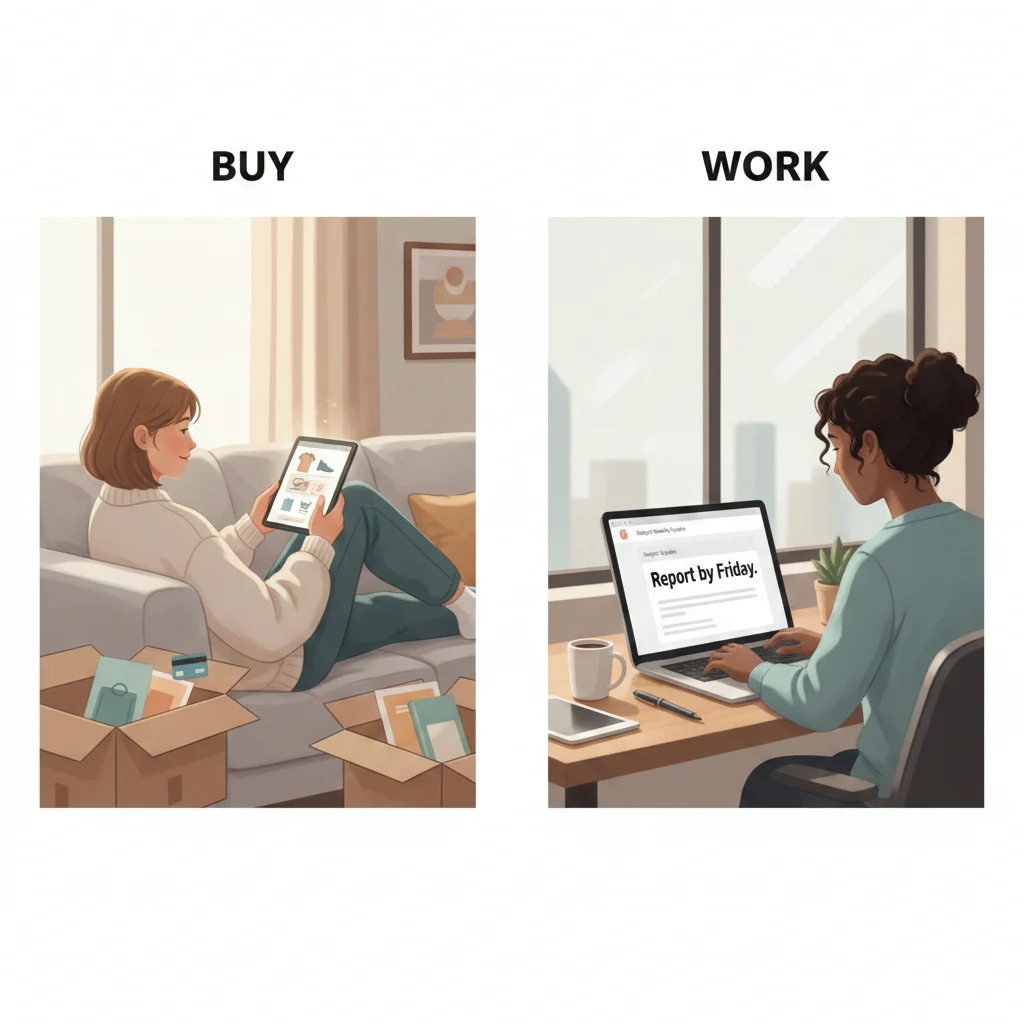
Let’s look at real-life usage.
Emails:
Please submit the report by Friday.
I plan to buy new software.
News:
The painting was sold by the museum.
Many people buy electric cars now.
Social Media:
I want to buy this dress!
Photo by Ahmad.
Formal Writing:
The research was conducted by experts.
Consumers buy products online daily.
By, and buy in a sentence:
I will buy coffee by 5 PM.
Notice how both can appear in the same sentence but mean different things.
You may also hear:
Best Buy (a company name).
Here, “Buy” refers to purchasing.
Buy vs By – Google Trends & Usage Data
Search data shows that many users look for:
- Buy vs by meaning
- Buy vs by grammar
- Buy vs by vs bye
- What is the difference between buy and by?
These searches are common in countries like the United States, United Kingdom, India, and Pakistan. Students preparing for exams often search this topic.
The confusion increases because English learners struggle with homophones. According to language trend data, “buy vs by examples” is a rising query. This shows strong user intent for quick answers and clear explanations.
Understanding these differences improves writing clarity and helps content rank better in search engines.
Cloth Vs Clothe 🪡 One Letter Mistake Ruining Your English
Buy vs By Comparison Table
Here is a side-by-side comparison:
| Feature | Buy | By |
|---|---|---|
| Part of Speech | Verb | Preposition |
| Meaning | To purchase | Shows method, author, time, place |
| Related Words | Bought, buying | Nearby, beside |
| Example | I will buy food. | Sit by me. |
| Money Involved? | Yes | No |
| Common Confusion | Buy vs bye | Buy vs by |
This table makes the difference simple and clear.
FAQs – Buy vs By
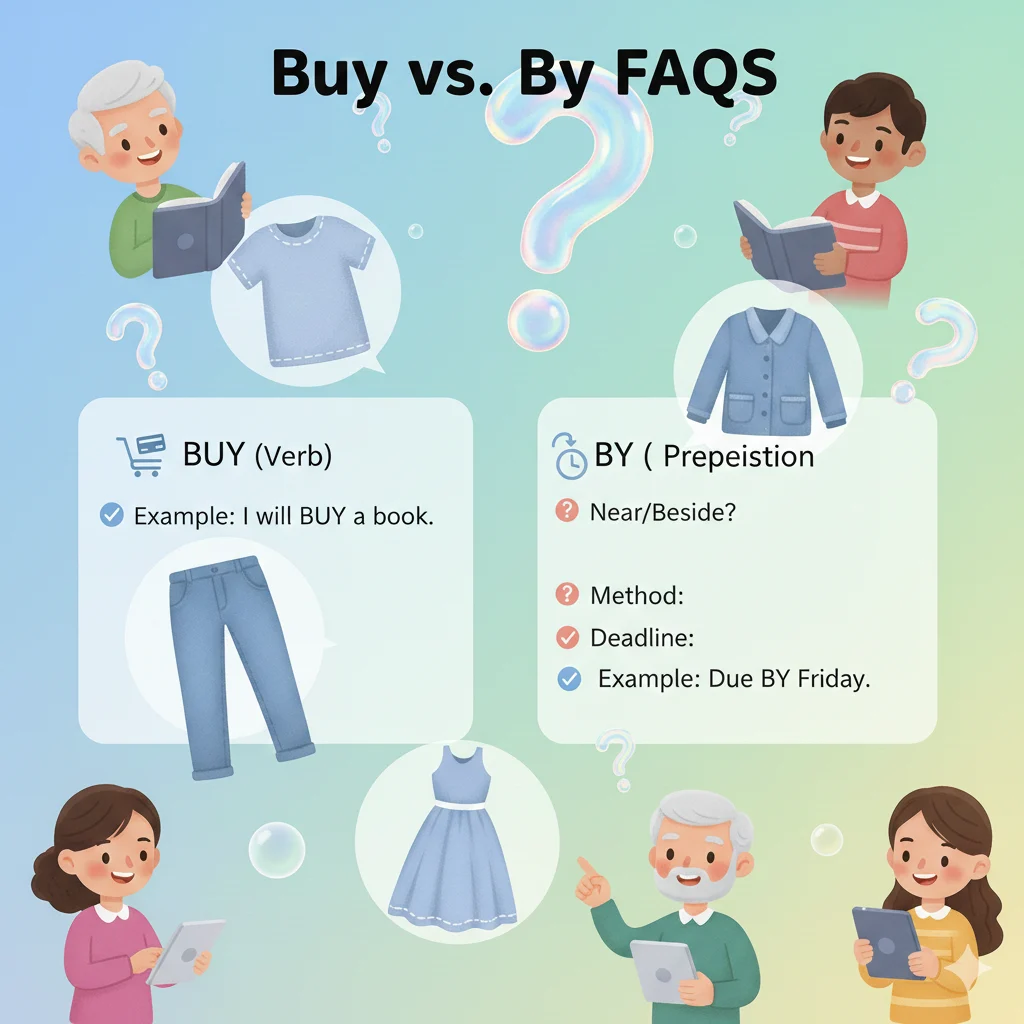
1. What is the difference between buy and by?
Buy means to purchase something. By shows location, method, author, or deadline.
2. Is it buy or bye?
Buy means purchase. Bye means goodbye. They sound the same but have different meanings.
3. Where should I use by?
Use by to show who did something, how it happened, location, or deadline. Example: By Monday.
4. How to use by or bye?
Use by for time or author. Use bye when saying goodbye.
5. Are buy and by homophones?
Yes. They sound the same but have different spelling and meaning.
6. Can buy and by be used in one sentence?
Yes. Example: I will buy snacks by evening.
7. What is buy vs by vs bye?
Buy = purchase.
By = near, through, before.
Bye = goodbye.
Conclusion
The difference between Buy vs By is simple once you understand the grammar. Buy is always about purchasing something. Money or exchange is involved. By is about position, method, author, or time. It never means purchase.
These words are homophones, which makes them confusing. Many learners search for buy vs by meaning, grammar rules, and examples because the words sound the same. Small spelling mistakes can affect professional writing, SEO content, emails, and exams.
Remember this easy trick:
If money is involved, use buy.
If not, use by.
Also, do not confuse them with bye, which means goodbye.
Correct word choice improves clarity, builds authority, and supports strong writing. Whether you write for school, business, or online content, mastering buy vs by helps you communicate clearly and confidently.

Kael Donovan is a language enthusiast and writer at Definevs.com, simplifying complex words and grammar rules into fun, easy-to-understand guides for readers.