Brunette / Brunet: The Hidden Difference You’re Getting Wrong Ever seen someone online refer to themselves as a brunette, then suddenly stumble upon the word brunet and wonder if it’s a typo? You’re not alone. These two near-identical words confuse millions every year because they look and sound similar — yet they don’t mean the exact same thing.
Whether you’re writing a character description, a social media caption, or simply trying to avoid an embarrassing spelling mistake, knowing the difference between brunette and brunet matters.
In this guide, you’ll learn:
- The clear definition of brunette and brunet
- Their linguistic origin and how they became popular
- How the meanings shift depending on context
- Examples you can copy and use
- Common mistakes and FAQs
- When to use each term correctly
Let’s dive in!
What Does “Brunette / Brunet” Mean?
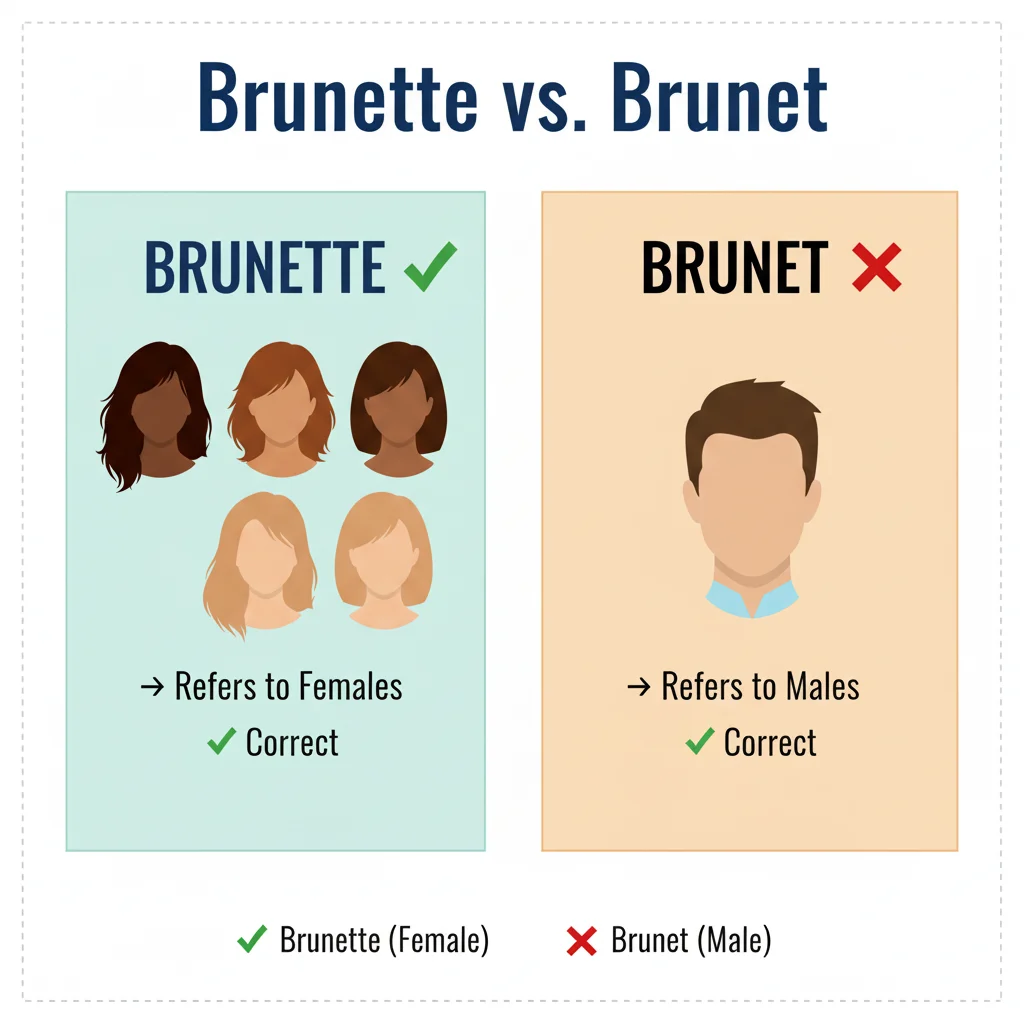
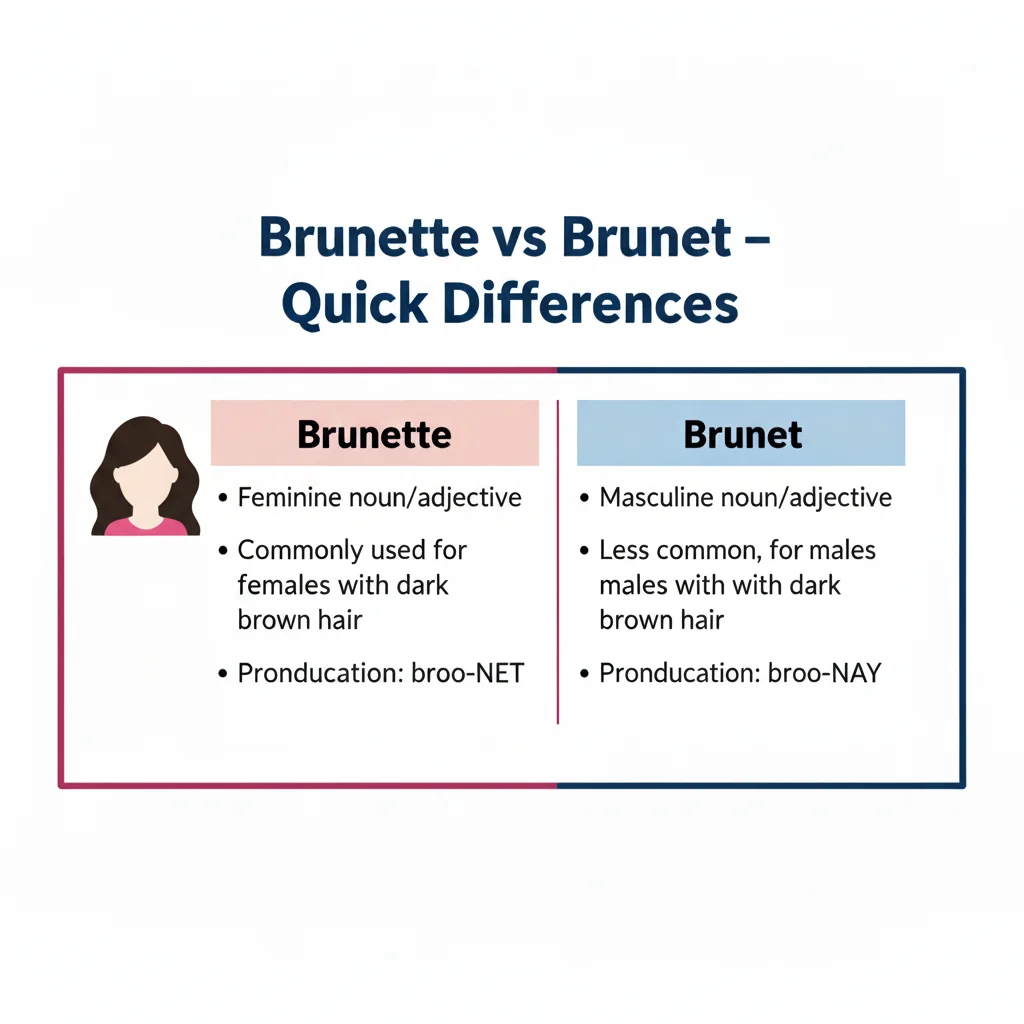
“Brunette” means a woman or girl with brown hair, while “brunet” means a man or boy with brown hair.
Both terms describe brown-haired people, but brunette is the feminine form borrowed from French, and brunet is the masculine form.
Type: Not slang — these are descriptive English words used in writing, beauty, and everyday speech.
Commonly Used: In conversation, literature, fashion, and social media captions.
Origin and Popularity
The words brunette and brunet come from the French words brun (brown) and its diminutive forms brunet (masculine) and brunette (feminine). These forms indicated “a little brown one” or “brown-haired person.”
⭐ Timeline Snapshot
- Middle Ages (France): Brun used to describe dark-haired individuals
- 17th century: Brunette enters English through literature
- 19th–20th centuries: Popularized in beauty and fashion writing
- Modern era: Brunette becomes the dominant term for all genders, while brunet becomes rare
Today, you’ll see “brunette” far more often — even describing men — simply because English tends to drop gendered forms.
Brunette / Brunet Meaning in Different Contexts
1. In Everyday Conversation
- Brunette is commonly used regardless of gender.
- “Brunet” is understood but uncommon.
Example:
“She’s a gorgeous brunette.”
“He’s a tall brunette.” (acceptable in modern usage)
2. In Writing & Literature
Writers often use brunet when describing a male character to stay true to classical grammar.
Example:
“The brunet man stepped into the dimly lit café.”
3. In Fashion, Beauty & Media
- Magazines, hair stylists, and influencers almost always use brunette.
- It’s the industry standard term.
Example:
“Top brunette hair trends for fall.”
4. On Social Media (Instagram, TikTok, Pinterest)
Users commonly tag themselves as:
- #brunette
- #brunettegirl
- #brunettebaddie
“Brunet” almost never appears in hashtags.
Feening / Feigning: The Hidden Truth Most People Get Wrong 😱
Examples of “Brunette” and “Brunet” in Conversation
Casual Conversations
Friend 1: I’m thinking of going brunette this summer.
Friend 2: Do it! Dark brown would look amazing on you.
Person A: Is he the brunet guy you were talking about?
Person B: Yes, the one wearing the leather jacket.
Social Media Caption Examples
- “Feeling cute with my new brunette balayage.”
- “Brunette glow-up season!”
Formal or Descriptive Writing
“A tall brunet waiter approached with a warm smile.”
“The actress, a soft-spoken brunette, entered the room gracefully.”
Similar or Related Terms
Below are terms commonly associated with hair color or mistaken for brunette/brunet:
| Term | Meaning |
|---|---|
| Brown-haired | Neutral, gender-free way to describe someone with brown hair |
| Chestnut hair | Brown hair with reddish undertones |
| Dark-haired | Broad descriptor, not specific to brown |
| Auburn | Reddish-brown hair |
| Blonde/Blond | Gendered hair color pair similar to brunette/brunet |
How to Use “Brunette” and “Brunet” Correctly
✅ Do’s
- Use brunette when talking casually.
- Use brunet when writing formal descriptions of males.
- Use brown-haired when you want a gender-neutral term.
- Use brunette for beauty, fashion, and social media.
❌ Don’ts
- Don’t assume brunet is a misspelling — it’s just less common.
- Don’t use gendered terms in professional documents unless stylistically intended.
- Don’t mix up brunette with auburn, black, or dark blonde — these are separate shades.
Common Mistakes or Misinterpretations
1. Thinking “brunette” applies only to women
While originally feminine, modern English often uses brunette for anyone.
2. Assuming “brunet” is incorrect
It is correct — just rare.
3. Using brunette/brunet as hair colors
They describe people, not shades.
The hair color itself is “brown,” “dark brown,” or “chestnut.”
4. Confusing with other brown-related words
Words like auburn or mahogany are different shades, not synonyms.
FAQ Section
1. What does “brunette” mean?
“Brunette” refers to a woman or girl with brown hair, though modern usage often applies it to any gender. It describes a person, not a hair shade.
2. What does “brunet” mean?
“Brunet” is the masculine form and refers to a man or boy with brown hair. It’s correct but much less common than “brunette.”
3. Is “brunette” slang?
No. It’s a standard English word used in conversation, media, and descriptive writing, originally borrowed from French.
4. What’s the difference between “brunette” and “brunet”?
Brunette = feminine
Brunet = masculine
However, brunette is widely used for all genders in modern English.
5. Can you call a man a brunette?
Yes. In everyday English, calling a man a “brunette” is widely accepted and more common than using “brunet.”
6. Should I use these words in professional writing?
Use them only in descriptive or creative writing. For formal contexts, “brown-haired” is clearer and gender-neutral.
Conclusion
Understanding the difference between brunette and brunet helps you write more confidently, avoid common mistakes, and sound polished whether you’re crafting a novel, posting on Instagram, or describing someone casually.
While brunette has become the go-to modern English term for any gender, brunet remains the technically correct masculine form — especially in literature or detailed descriptions.
Now that you know the meaning, origin, and proper usage of both words, you’ll never be confused again. Keep exploring our site for more clear, simple guides to common terms, phrases, and style choices!

Kael Donovan is a language enthusiast and writer at Definevs.com, simplifying complex words and grammar rules into fun, easy-to-understand guides for readers.