Have you ever heard someone say someone “got a bad rep” — or was it a “bad rap”? 🤔
These two phrases sound almost identical but have very different meanings. Many English speakers mix them up, even in professional writing or online posts.
In this simple guide, you’ll learn:
- The difference between “bad rap” and “bad rep”
- What each phrase actually means
- When and how to use them correctly
- Common mistakes and easy memory tricks
By the end, you’ll never confuse “bad rap” with “bad rep” again — and you’ll sound more confident when speaking or writing English!
💡 What Does Each Phrase Mean?
Let’s break down both phrases so you can understand their meanings easily.
🗣️ “Bad Rap” — The Correct Phrase
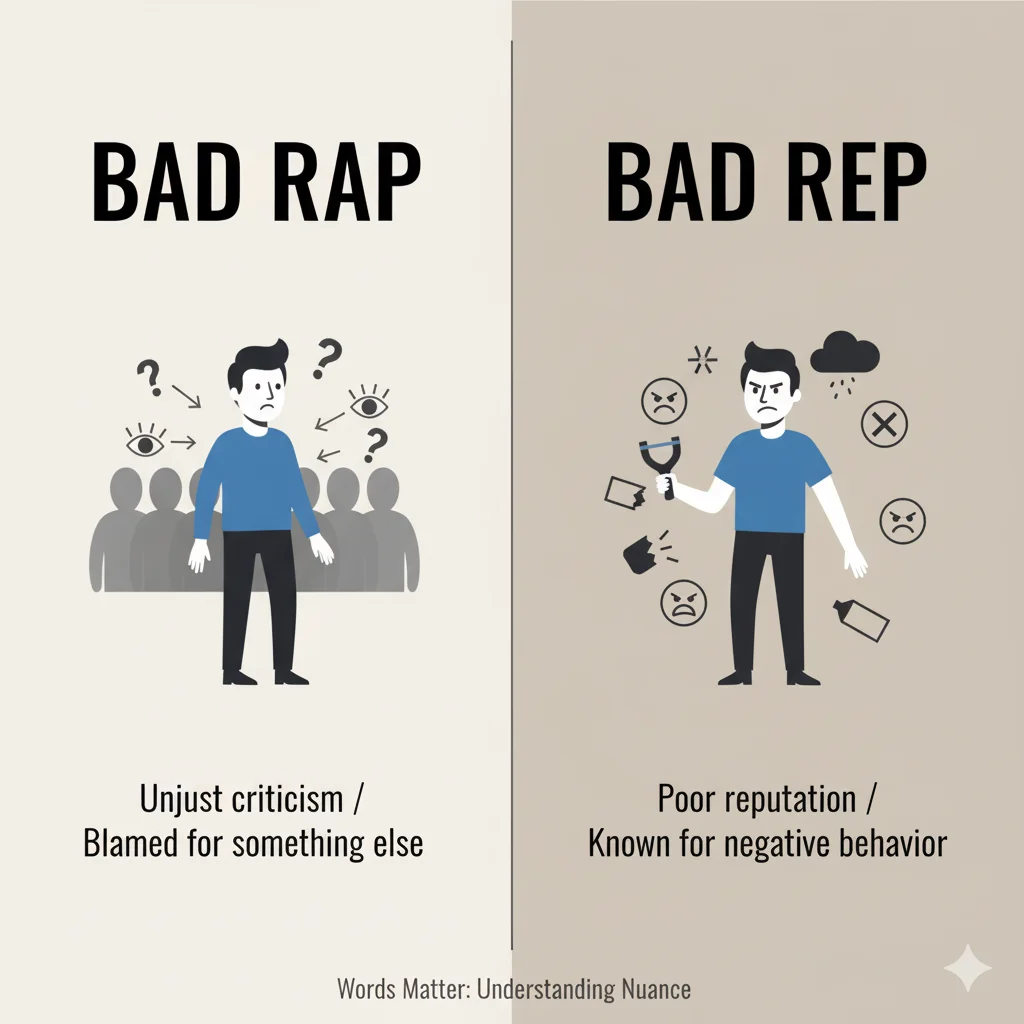
Meaning: “Bad rap” means getting unfair criticism or a bad reputation that someone doesn’t deserve.
It comes from the word “rap” meaning blame, charge, or criticism.
Examples:
- He got a bad rap for being lazy, but he actually works really hard.
- Fast food gets a bad rap, even though it’s fine in moderation.
- That movie has a bad rap, but it’s actually quite funny!
So when someone says “bad rap,” they mean unfair judgment or undeserved blame.
🧾 “Bad Rep” — Common But Incorrect (Most of the Time)
Meaning: People often say “bad rep” instead of “bad rap,” but it’s technically wrong in formal English.
“Rep” is short for reputation, so a “bad rep” literally means a bad reputation — but that’s a different expression and not the same idiom.
Examples:
- She has a bad rep at school because of rumors.
- That teacher has a bad rep for being strict.
- He’s trying to fix his bad rep after the argument.
So “bad rep” can work in casual speech, but “bad rap” is the original and correct idiom in formal English.
⚖️ The Key Difference Between “Bad Rap” and “Bad Rep”
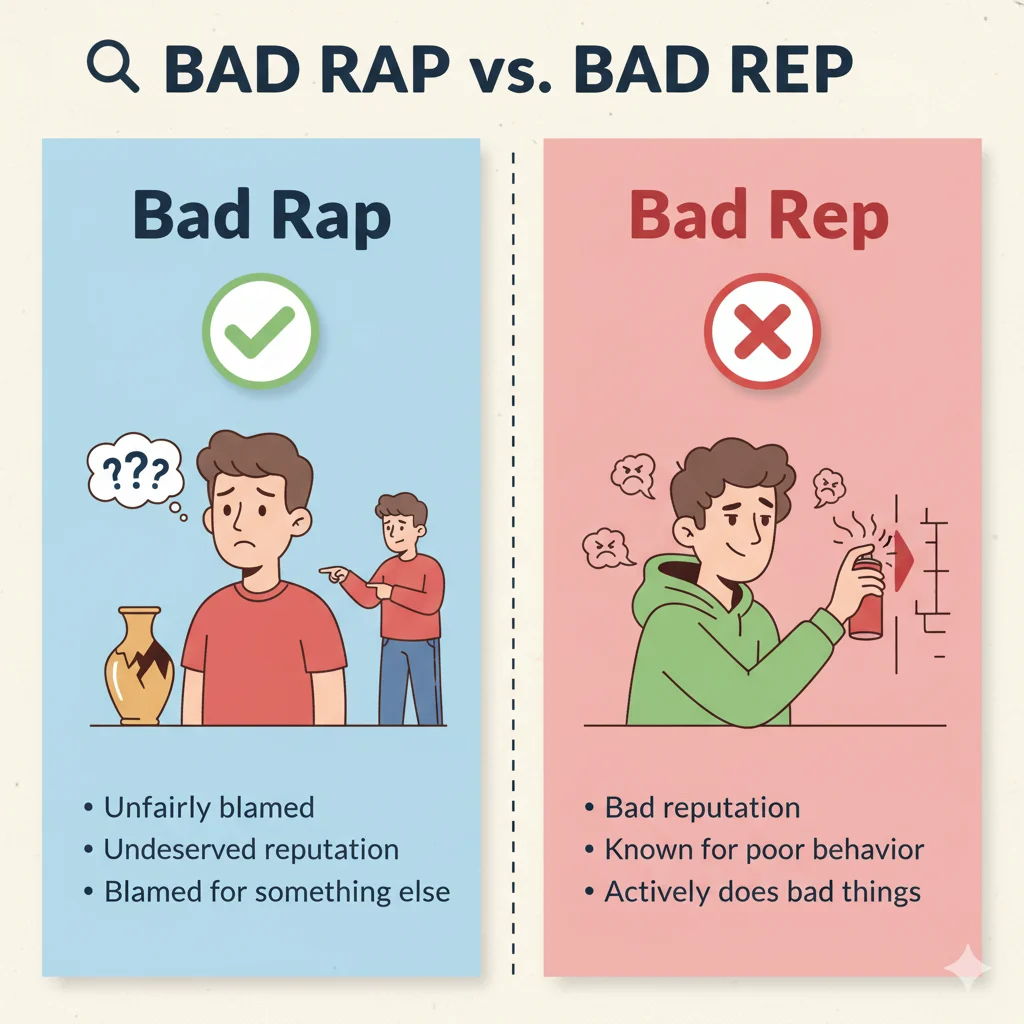
Here’s a quick side-by-side comparison to make it super easy to remember:
| Phrase | Meaning | Correctness | Example Sentence |
|---|---|---|---|
| Bad Rap | Unfair blame or criticism | ✅ Correct | “Video games get a bad rap for causing violence.” |
| Bad Rep | A bad reputation (literally) | ⚠️ Informal / Not the idiom | “He has a bad rep at school.” |
Quick Tip to Remember:
👉 Think of “rap” as “criticism or charge” — so “bad rap” = bad or unfair judgment.
“Rep” just shortens “reputation,” but it’s not part of the original idiom.
🚫 Common Mistakes and How to Avoid Them
Even fluent English speakers confuse these phrases! Here are a few common errors:
❌ Wrong: He got a bad rep for being rude.
✅ Correct: He got a bad rap for being rude.
❌ Wrong: Fast food has a bad rep these days.
✅ Correct: Fast food has a bad rap these days.
Why it happens:
- “Rap” and “rep” sound almost identical.
- People think “rep” (short for reputation) fits naturally.
- But idiomatically, “bad rap” is the correct and original phrase meaning unfair blame.
📚 When to Use “Bad Rap”
Use “bad rap” when you’re talking about unfair judgment, criticism, or blame — especially when the person or thing doesn’t deserve it.
Examples:
- Dogs like pit bulls often get a bad rap for being aggressive.
- That city has a bad rap, but it’s actually beautiful.
- Homework gets a bad rap, but it helps you learn discipline.
- He got a bad rap after one mistake.
- Celebrities often get a bad rap in the media.
💡 Memory Hack:
Remember — “Rap” can mean a “charge” or “accusation.”
So, “bad rap” = “bad accusation” → unfair blame.
🗞️ When to Use “Bad Rep”
You can use “bad rep” casually to mean someone has a bad reputation. It’s not technically wrong in everyday conversation, but it’s not the idiom “bad rap.”
Examples:
- He has a bad rep with teachers because he’s always late.
- That restaurant has a bad rep for slow service.
- She’s working hard to fix her bad rep online.
- The coach has a bad rep after last season’s loss.
- He got a bad rep for being too strict.
💡 Memory Hack:
“Rep” = Reputation.
If you literally mean someone’s reputation, “bad rep” works.
If you mean unfair criticism, use “bad rap.”
🧩 Quick Recap: Bad Rap vs Bad Rep
Here’s a quick summary to help you remember forever:
- Bad Rap = Unfair blame or undeserved criticism. (✅ Correct idiom)
- Bad Rep = Bad reputation (⚠️ Informal or literal meaning)
- Sound Similar: Yes, but mean different things.
- Formal Writing: Always use bad rap.
- Casual Talk: “Bad rep” might appear, but it’s not standard.
✅ Simple Trick:
If you can replace it with “unfair blame,” use bad rap.
If you can replace it with “bad reputation,” use bad rep.
🧠 Advanced Tips
- Origin: “Bad rap” comes from U.S. slang in the 20th century, where “rap” meant “a criminal charge” or “blame.”
- Cultural Use: It appears in music, headlines, and conversations.
- Example: “Rappers get a bad rap for their lyrics.”
- Writing Tip: In essays, news, or professional writing, always choose “bad rap.”
- Casual Speech: “Bad rep” might sound fine in texting or social media, but not in formal contexts.
📝 Mini Quiz — Test Yourself!
Fill in the blanks with bad rap or bad rep:
- Fast food often gets a __________ for being unhealthy.
- He’s trying to change his __________ at work.
- That company got a __________ after one bad review.
- Cats get a __________ for being unfriendly, but they’re sweet.
- She’s fixing her __________ by helping others.
✅ Answers: 1. bad rap, 2. bad rep, 3. bad rap, 4. bad rap, 5. bad rep
❓ FAQs
1. What does “bad rap” mean?
“Bad rap” means unfair criticism or undeserved blame — when someone or something gets judged too harshly.
2. Is “bad rep” wrong?
It’s not grammatically wrong but it’s not the original idiom. “Bad rep” means “bad reputation,” while “bad rap” means “unfair criticism.”
3. How can I remember the difference between “bad rap” and “bad rep”?
Think: Rap = accusation, Rep = reputation. Use “bad rap” for unfair blame and “bad rep” for a literal reputation.
4. Which phrase is used in formal writing?
Always use “bad rap” in essays, reports, or professional writing.
5. Why do people confuse them?
Because they sound the same when spoken — but their origins and meanings are different.
🎯 Conclusion
Now you know the real difference between “bad rap” and “bad rep.”
- Bad rap = unfair criticism (correct idiom)
- Bad rep = bad reputation (informal, literal)
Next time you write or speak, you’ll know exactly which one to choose — and sound smarter for real! Keep practicing, and soon these grammar confusions will be a thing of the past.

Mira Loxley is a passionate language and writing expert at Definevs.com, turning tricky words and grammar into clear, engaging guides for every reader.