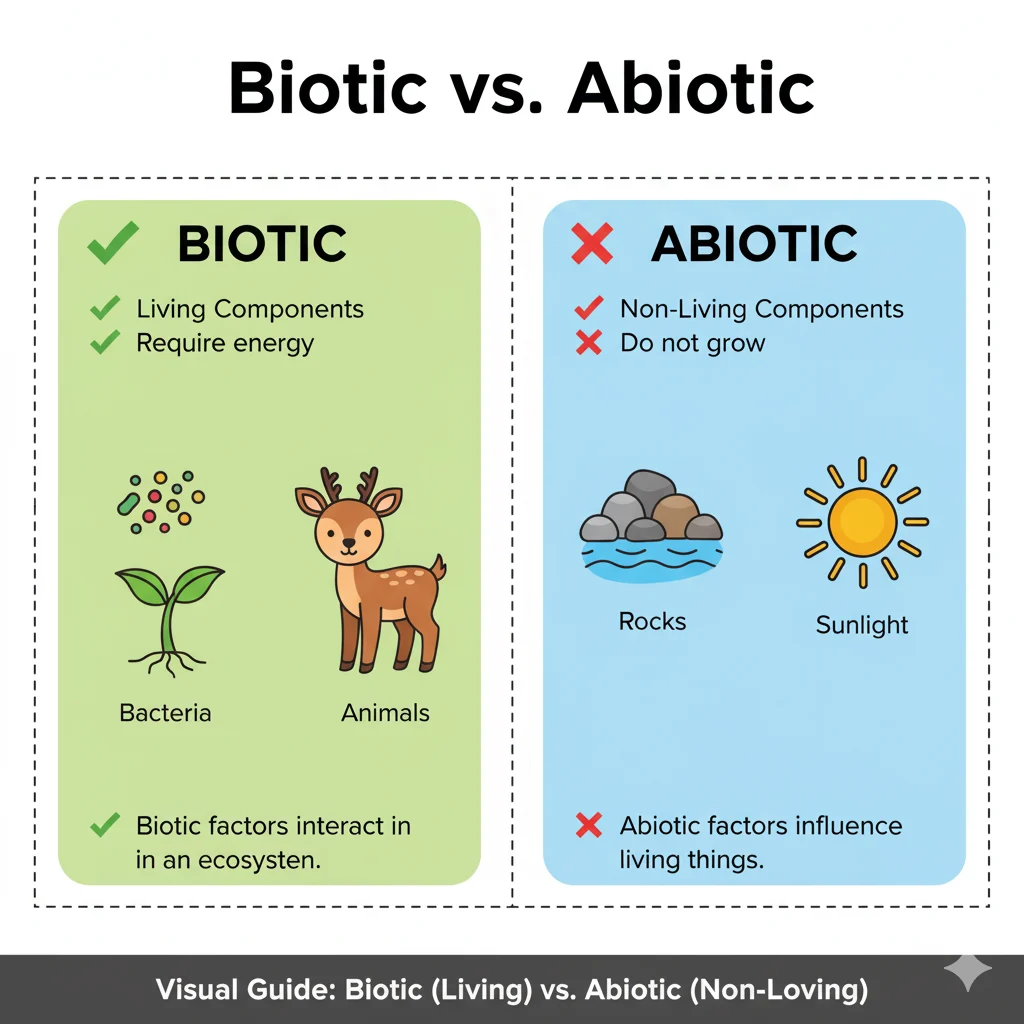
Bacteria are biotic because they are living organisms, while abiotic refers to non-living things like water, sunlight, or soil. Simply put: bacteria = life, abiotic = no life.
Have you ever wondered why bacteria are called biotic while things like rocks or sunlight are abiotic? It’s a common question because both exist all around us, yet they’re completely different.
In simple terms, biotic means living or once-living things, while abiotic means non-living elements in the environment. Knowing the difference is important not just for science class but also for understanding how life interacts with nature.
In this guide, you’ll learn:
- The meaning of bacteria, biotic, and abiotic
- The key differences between them
- Easy examples from daily life
- Common mistakes and how to avoid them
By the end, even beginners will confidently know when something is biotic or abiotic — no confusion!
What Does Each Word Mean?
Bacteria
Meaning: Bacteria are tiny, single-celled organisms that live almost everywhere — soil, water, and even inside our bodies. They are alive, which makes them biotic.
Part of speech: Noun
Examples:
- Yogurt contains bacteria that are good for digestion.
- Some bacteria cause diseases, so washing hands is important.
- Scientists study bacteria to make antibiotics.
Biotic
Meaning: Biotic refers to anything that is living or was once living in an ecosystem. This includes animals, plants, fungi, and microorganisms like bacteria.
Part of speech: Adjective
Examples:
- Trees and biotic organisms make a forest lively.
- Fish and algae are part of the biotic environment in a pond.
- Humans interact with biotic factors every day.
Abiotic
Meaning: Abiotic describes non-living parts of the environment like water, air, sunlight, and soil. They help biotic organisms survive but are not alive.
Part of speech: Adjective
Examples:
- Sunlight is an abiotic factor essential for plant growth.
- Temperature and rainfall are abiotic conditions in a desert.
- Rocks and soil are abiotic parts of nature.
The Key Difference Between Bacteria, Biotic, and Abiotic
| Feature | Bacteria | Biotic | Abiotic |
|---|---|---|---|
| Definition | Single-celled living organisms | Any living or once-living thing | Non-living parts of the environment |
| Alive or Not | Alive | Alive | Not alive |
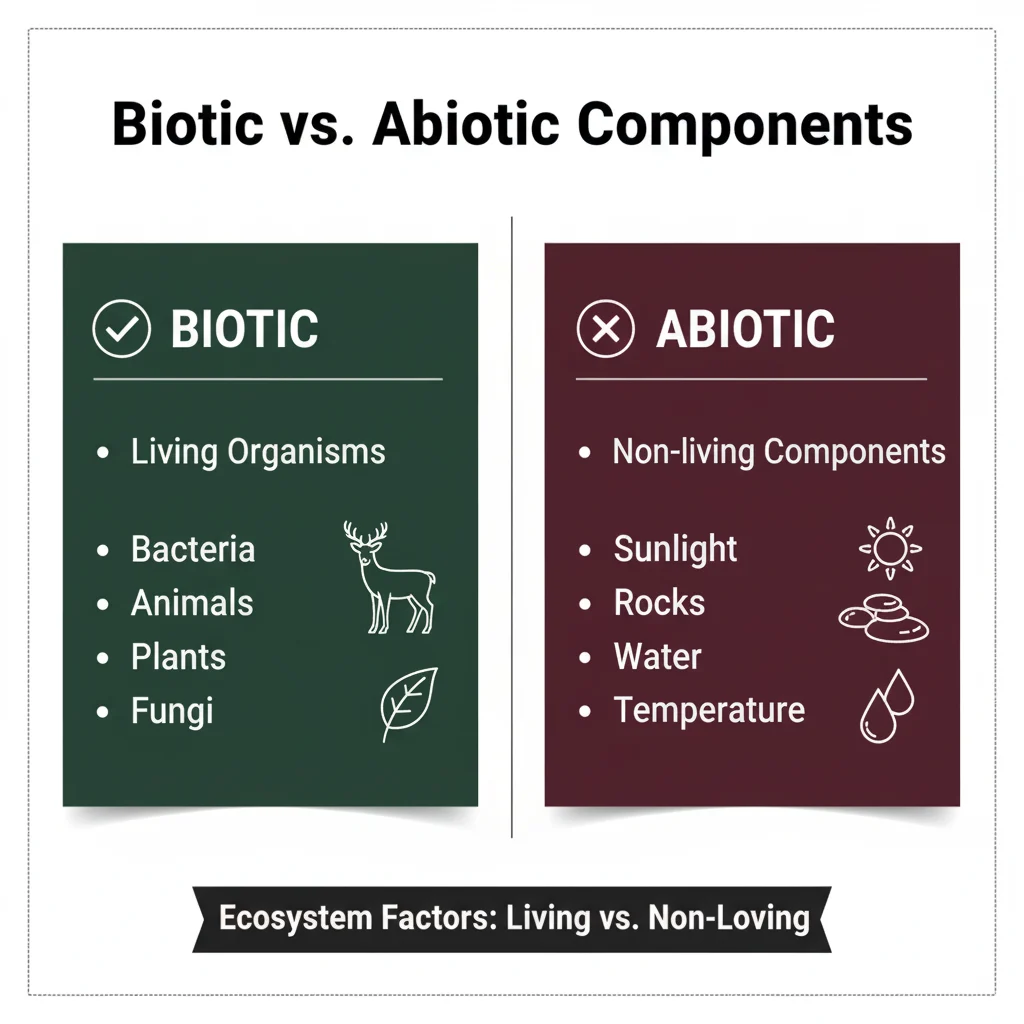
| Examples | Yogurt bacteria, gut bacteria | Plants, animals, fungi | Water, rocks, sunlight |
| Role in Environment | Helps recycle nutrients | Interacts with abiotic factors | Supports life but cannot live |
Quick Tip:
If it breathes, grows, or reproduces, it’s biotic. If it doesn’t, it’s abiotic.
Common Mistakes and How to Avoid Them
Mistake 1: Thinking bacteria are abiotic because they are tiny.
Correction: Bacteria are alive, so they are biotic, even if we can’t see them.
Mistake 2: Calling sunlight or water biotic because they affect living things.
Correction: They are abiotic, as they do not grow or reproduce.
Mistake 3: Confusing biotic with bacteria only.
Correction: Biotic includes all living things, not just bacteria.
When to Use Bacteria (Bacterial Contexts)
Situations:
- Talking about microorganisms in science class.
- Explaining food fermentation like yogurt.
- Discussing disease-causing germs.
Examples:
- Bacteria in the soil help plants grow.
- Good bacteria in our gut aid digestion.
- Scientists discovered new bacteria in the ocean.
- Washing hands prevents harmful bacteria from spreading.
When to Use Biotic
Situations:
- Explaining ecosystems or environmental science.
- Talking about interactions between living organisms.
- Writing about plants, animals, or microorganisms.
Examples:
- Forests have many biotic components like trees and birds.
- Humans are part of the biotic environment.
- Coral reefs are rich in biotic life forms.
- Biotic factors affect how animals survive.
Memory Hack:
Think “BIO = life” → Biotic = anything alive.
When to Use Abiotic
Situations:
- Discussing climate, soil, water, or sunlight.
- Explaining environmental influences on living things.
- Writing about non-living ecosystem components.
Examples:
- Rainfall is an important abiotic factor in agriculture.
- Rocks are abiotic but provide shelter for animals.
- Temperature changes are abiotic influences in nature.
- Air quality is an abiotic factor affecting health.
Quick Recap: Bacteria vs Biotic vs Abiotic
- Bacteria = tiny living organisms, always biotic.
- Biotic = all living or once-living things in an environment.
- Abiotic = non-living things that support life.
- Remember: Alive = biotic, not alive = abiotic.
- Use real-life examples to easily spot each.
Advanced Tips
- Origin: “Biotic” comes from the Greek “bios” meaning life. “Abiotic” adds “a-” meaning without.
- Formal Writing: In essays or science reports, always classify bacteria as biotic.
- Online Misuse: Some students mistakenly tag bacteria or soil as abiotic in notes or posts — always check if it grows or reproduces.
Mini Quiz
Fill in the blanks with biotic, abiotic, or bacteria:
- Sunlight is an ______ factor in every ecosystem.
- Yogurt contains helpful ______.
- Trees, birds, and insects are all ______ components.
- Rocks and soil are ______ parts of nature.
- Harmful ______ can make you sick.
- Fish in a pond are ______ factors.
- Water is an ______ factor that supports life.
- Abiotic
- Bacteria
- Biotic
- Abiotic
- Bacteria
- Biotic
- Abiotic
FAQs
1. Are bacteria biotic or abiotic?
Bacteria are biotic because they are living microorganisms that grow, reproduce, and interact with their environment.
2. What does biotic mean in simple words?
Biotic means anything alive or once alive, like animals, plants, or bacteria.
3. Can abiotic factors become biotic?
No. Abiotic factors, like rocks or water, cannot grow, reproduce, or die, so they remain non-living.
4. Why is it important to know the difference?
Understanding biotic vs abiotic helps explain how ecosystems work and how living things depend on non-living elements.
5. Is bacteria part of every ecosystem?
Yes, bacteria are everywhere and help recycle nutrients, making them a vital biotic component.
Conclusion
Now you know the difference between bacteria, biotic, and abiotic. Bacteria are living microorganisms, biotic refers to all living things, and abiotic means non-living elements in nature. Using these words correctly will improve your science knowledge and communication.
Remember: life = biotic, no life = abiotic. Practice spotting them in your surroundings — from yogurt to rocks — and you’ll master these terms in no time!

Kael Donovan is a language enthusiast and writer at Definevs.com, simplifying complex words and grammar rules into fun, easy-to-understand guides for readers.