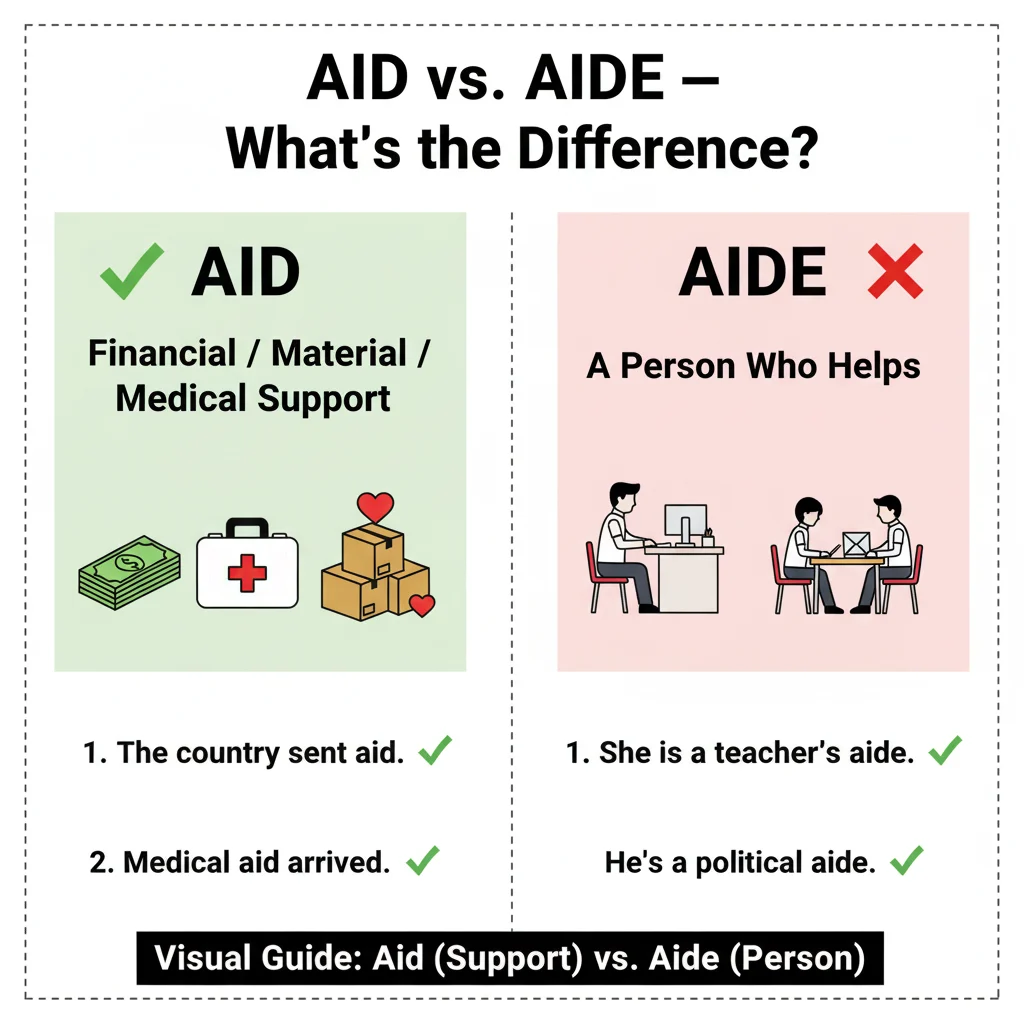
“Aid” is financial, practical, or medical assistance, while “Aide” refers to a person who provides help or support. They are related but used differently in writing and speech.
Ever sent a message or wrote a sentence and paused, unsure whether to use “aid” or “aide”? You’re not alone. These two words sound identical but carry slightly different meanings depending on context. Misusing them can make your writing look careless or confusing, whether it’s for school, business, or casual conversation.
In this article, we’ll break down everything you need to know about aid / aide:
- Definition – Learn the precise meaning of each word.
- Origin and Popularity – Discover where these words come from and why they matter.
- Platform-Specific Usage – Find out how they appear in texting, social media, and professional settings.
- Real-Life Examples – See them in action to understand their proper usage.
- Related Terms and FAQs – Clear up common confusions and similar words.
By the end, you’ll confidently know when to use aid and when aide is appropriate.
What Does Aid / Aide Mean?
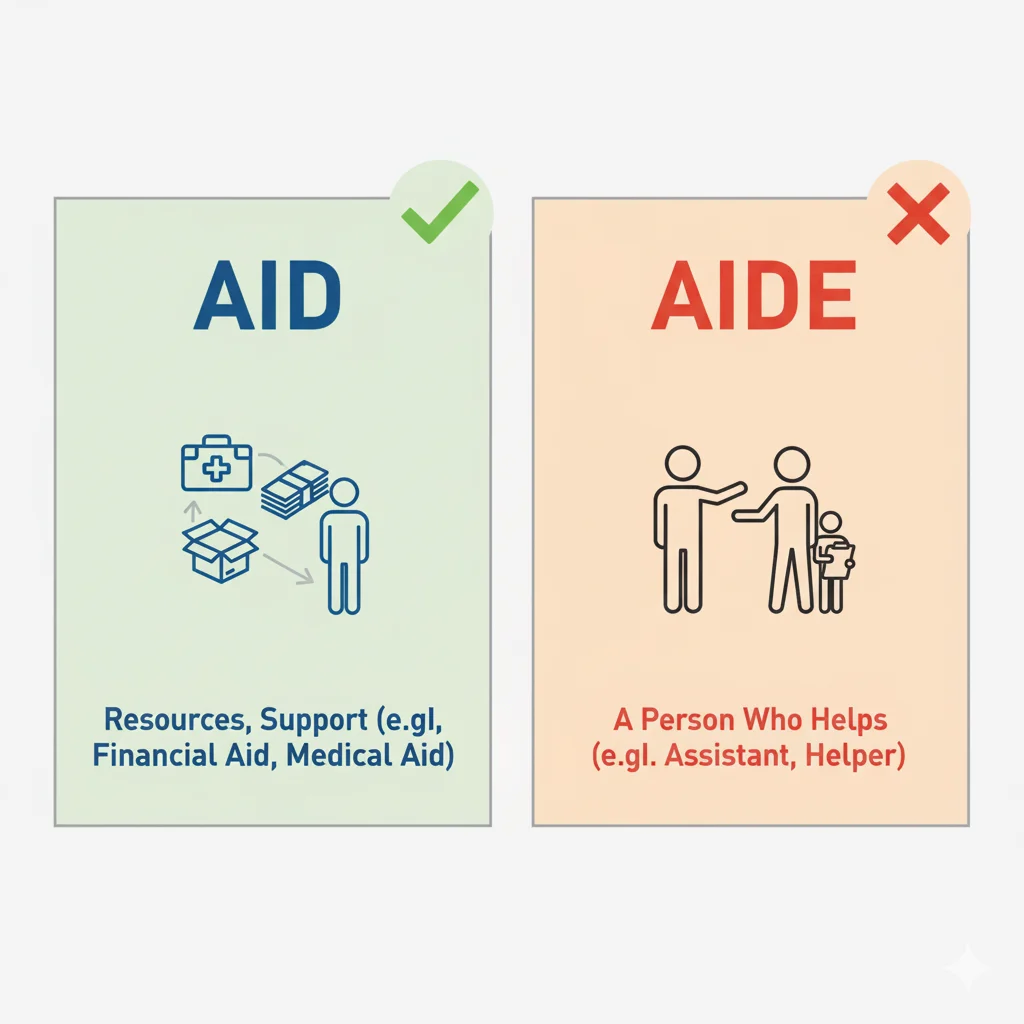
Aid (noun/verb): Assistance, help, or support in the form of money, resources, or actions.
Aide (noun): A person who helps or supports someone, usually in a professional or organized capacity.
Usage Context:
- Aid → Humanitarian, medical, educational, or financial support.
- Aide → Assistant roles in workplaces, schools, or government offices.
Examples:
- Aid: The government sent food aid to flood victims.
- Aide: The teacher’s aide helped students understand the lesson.
Origin and Popularity
Both words have French roots but diverged in English usage:
- Aid comes from Old French aide, meaning “help, assistance.” It has been used in English since the 14th century to describe support in general.
- Aide also derives from French aide, but in English, it specifically came to mean a person providing assistance. It gained popularity in professional and governmental contexts in the 18th century.
Timeline of Popularity:
- 14th century: “Aid” appears in English texts describing help or support.
- 18th century: “Aide” is used for assistants in courts and offices.
- 20th–21st century: Both words are common in humanitarian, educational, and corporate communications.
These terms continue to be widely used in both formal and casual contexts, making understanding the difference essential for clear communication.
Aid / Aide Meaning in Different Contexts
1. In Texting or Casual Messaging
- Aid: Rarely used in casual texting unless discussing help or donations.
- Aide: Very uncommon in casual texting; might appear when talking about personal assistants.
Example:
- Friend: “Do you want to volunteer for flood aid this weekend?”
- Friend: “Sure! I can help with aid distribution.”
2. On Social Media (Instagram / TikTok)
- Aid: Often seen in captions related to charity, medical help, or government support.
- Aide: Could appear when talking about an assistant or support staff in political or corporate posts.
Example Table:
| Context | Aid Usage | Aide Usage |
|---|---|---|
| Texting | Asking about help: “Need any aid?” | Rare |
| Instagram / TikTok | Fundraising posts, health tips | Posts about staff or assistants |
| Business / Formal | Financial support, disaster relief | Personal assistant roles |
Examples of Aid / Aide in Conversations
Casual Conversation Examples:
Friend 1: Can you give some aid for the school fundraiser?
Friend 2: Sure! I’ll donate online today.
Friend 1: Did the organization send aid to the hurricane victims?
Friend 2: Yes, they delivered food and medical supplies.
Professional Example:
Manager: The senator’s aide will provide the schedule for our meeting tomorrow.
Employee: Thank you! I’ll coordinate with the aide to confirm timings.
(Visual suggestion: Chat-style formatting to show conversation flow.)
Similar or Related Terms
Including semantically related terms improves understanding :
| Term | Meaning |
|---|---|
| Assistance | General help or support |
| Support | Aid in resources, advice, or guidance |
| Helper | Person assisting, informal variant of aide |
| Relief | Aid in emergencies, humanitarian focus |
| Secretary / Personal Assistant | Roles similar to an aide in business |
These related words often overlap in meaning but differ in formality and context.
How to Use Aid / Aide Correctly
Do’s and Don’ts:
✅ Aid: Use for support, help, or resources.
❌ Avoid using “aid” to refer to a person.
✅ Aide: Use when referring to an assistant, helper, or support staff.
❌ Don’t use “aide” for general help or resources.
Tone & Audience:
- Aid: Neutral to formal, suitable for reports, articles, humanitarian discussions.
- Aide: Formal or semi-formal, suitable for office or educational contexts.
Common Mistakes or Misinterpretations
Many confuse aid and aide because they are homophones. Common mistakes include:
- Writing: “The teacher gave aid to students” (correct, referring to help/resources)
- Writing: “The teacher’s aid helped students” (incorrect, should be aide)
Key Tip: If it’s a person, use aide; if it’s help or support, use aid.
FAQ Section
Q1: What does aid mean in texting?
A: In texting, “aid” refers to help, resources, or support. It’s formal and mainly used in discussions about donations, assistance programs, or emergencies.
Q2: Is aide slang or formal?
A: “Aide” is formal, referring to a person providing assistance. It is rarely used in casual or slang contexts.
Q3: What’s the difference between aid and aide?
A: Aid is help or support, while aide is a person who provides help. Use aid for resources and aide for people.
Q4: How do you reply if someone says “aid”?
A: Respond with acknowledgment or offer help. Example: “Yes, I can provide aid for the project.”
Q5: Where is aid most used?
A: In humanitarian, medical, educational, and financial contexts. It’s common in formal reports, news, and charity campaigns.
Q6: When should you not use aide?
A: Avoid using “aide” when referring to resources, assistance programs, or general help—it always refers to a person.
Conclusion
Now that you know the difference between aid and aide, you can use them correctly in writing and conversation. Remember: aid is for support, help, or resources, and aide is for a person providing that support. Knowing this distinction ensures your writing is clear, professional, and error-free.
Next time you see these words, you’ll never hesitate. Keep practicing, and your communication—whether casual, professional, or academic—will be spot on.
Friendly reminder: Now that you know what aid / aide means, you’ll never be confused again! Keep exploring our site for more English tips, trending phrases, and language insights.

Isla Merrin is a language and writing expert at Definevs.com, creating simple, engaging guides to help readers master words, grammar, and modern English usage.